


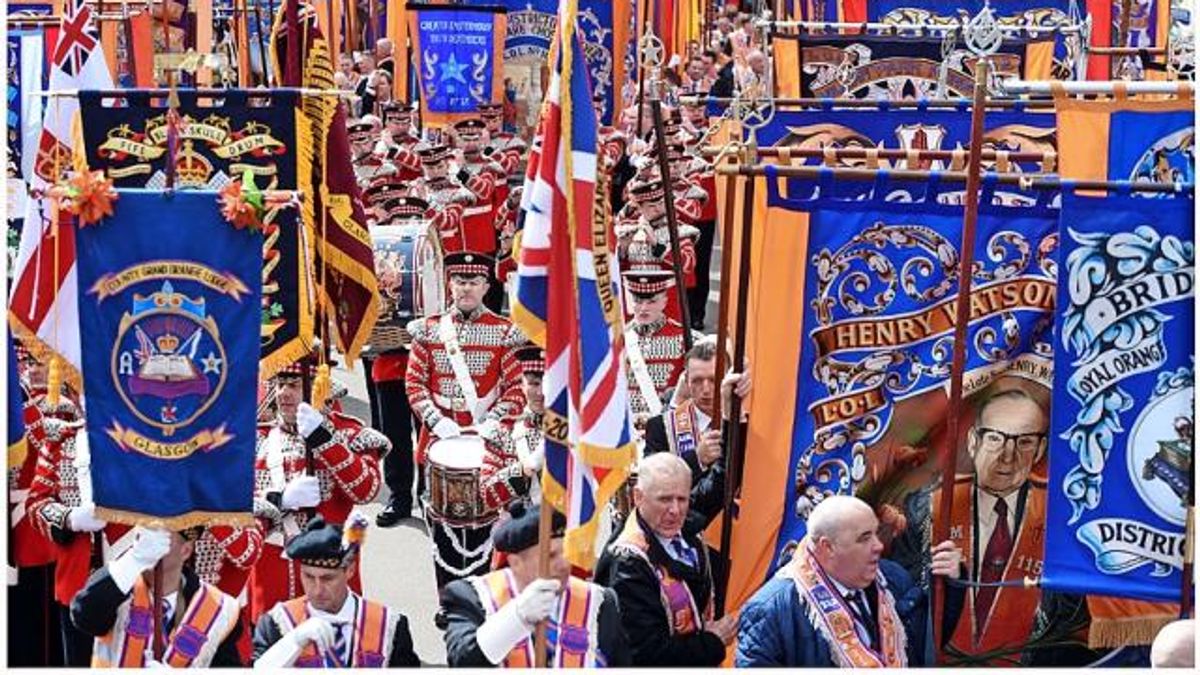
Anti-sectarian campaigners have demanded Police Scotland force officers to declare links to Freemasons, the Orange Order and Opus Dei.
Scottish charity Nil by Mouth, which has campaigned against bigotry for 25 years, say such police memberships must be declared to ensure transparency within the ranks.
It comes after the Metropolitan Police in London added Freemasonry to its list of associations that must be disclosed by officers.
 View 2 Images
Police Scotland(Image: Stuart Vance/ReachPlc)
Critics say secret police links to such groups fuel concerns about bias, corruption and an “old boys network”, especially in Scotland, where sectarian tensions have long raised fears over fairness in public institutions.
Despite mounting pressure, Police Scotland has so far refused to follow the Met’s lead, saying only the matter remains “under review”.
Scotland’s Chief Inspector of Constabulary Craig Naylor has stepped up calls for Police Scotland to make a decision on the issue, in a significant intervention.
While the Association of Scottish Police Superintendents (ASPS), which represents senior officers, has expressed qualified support for the policy change.
Nil By Mouth was founded in 2000 by Cara Henderson following the 1995 sectarian murder of her friend Mark Scott, 16, while walking past a Rangers pub in Bridgeton.
Charity director Dave Scott said: “When it comes to standards in public life, and those who officially monitor and enforce these, I’d be in favour of those individuals publicly declaring membership of religious groups such as the Freemasons, Orange Order or Opus Dei.
“Whilst membership of these groups should not preclude membership of enforcement agencies such as the police, given the often opaque nature of their various practices it would be in the interests of public transparency and accountability for membership to be declared.
“These groups state publicly that they are law abiding and have nothing to hide, so I’d struggle to see why any member in such a position would have an issue with declaring their involvement.”
Craig Naylor, His Majesty’s Chief Inspector of Constabulary in Scotland, said: “I am aware that Police Scotland is currently keeping this issue under review and would be supportive of them determining their position.”
Police Scotland admit they have no idea how many officers may be members of the groups, stating in an FOI response that the information is “not held”.
They added: “There is no requirement for Police Scotland officers to divulge such information, nor for it to be recorded on their personnel record – in this instance, it would instead be up to the individual officer whether to share that information or have it recorded.”
The Loyal Orange Institution of Scotland rejected calls for officers to be forced to be open about membership.
Chief executive David Walters said: “The Loyal Orange Institution of Scotland is a law-abiding Christian organisation which has existed in Scotland since 1798 and the state has never, hitherto, felt it necessary to make membership of it a declarable interest.
“The Order is at a loss to understand why, after nearly 230 years, this should now be deemed necessary.”
Opus Dei also rejected suggestions it should be added to any list, insisting it was neither exclusionary, secretive nor sectarian.
A Police Scotland spokesperson said: “There is currently no requirement for Police Scotland officers to divulge such information, nor for it to be recorded on their personnel record.
“Police Scotland continues to keep this subject matter under review.”
Article continues below
Scottish Freemasons were contacted for comment.
Get more Daily Record exclusives by signing up for free to Google’s preferred sources. Click HERE.