


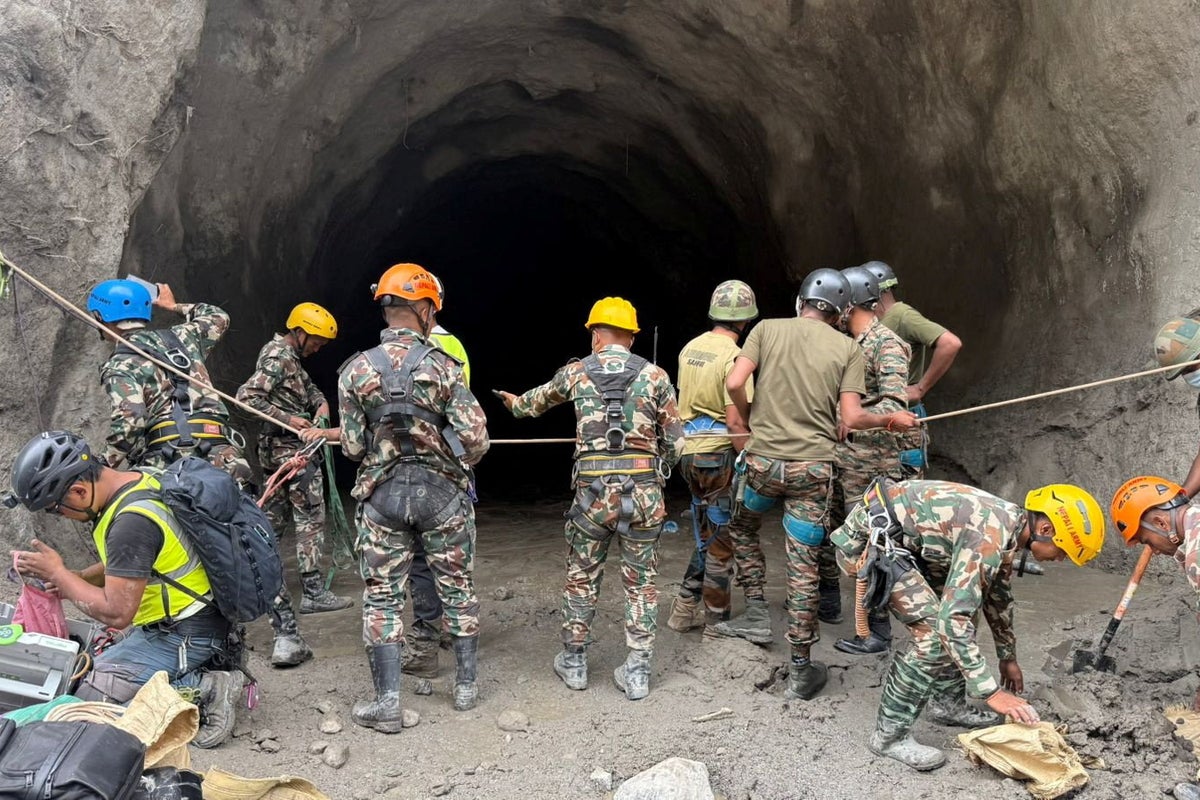
Prime minister Balendra Shah said the catastrophic floods that tore through northern Nepal along the Tibet border were driven by the climate crisis and demanded international action as the Himalayan country assessed damage.
Nepal officials said at least 939 bodies have been recovered, while almost 4,000 people, including 538 foreign nationals, remained missing as rescuers raced against time to find survivors on day seven of the operation.
“The flood in the Bhotekoshi river in Rasuwa was not an ordinary flood,” said Mr Shah in a late-night post on social media.
The rapper-turned-politician is facing his biggest challenge since being elected to power earlier this year, but has largely remained away from speaking to reporters and instead turned to social media for sharing updates.
“It was one of the region’s major disasters, triggered by an avalanche of snow and ice in the Himalayan region,” Mr Shah said.
He said the disaster indicated “the risks we face in the Himalayan region are increasing alongside climate change”.
 open image in gallery
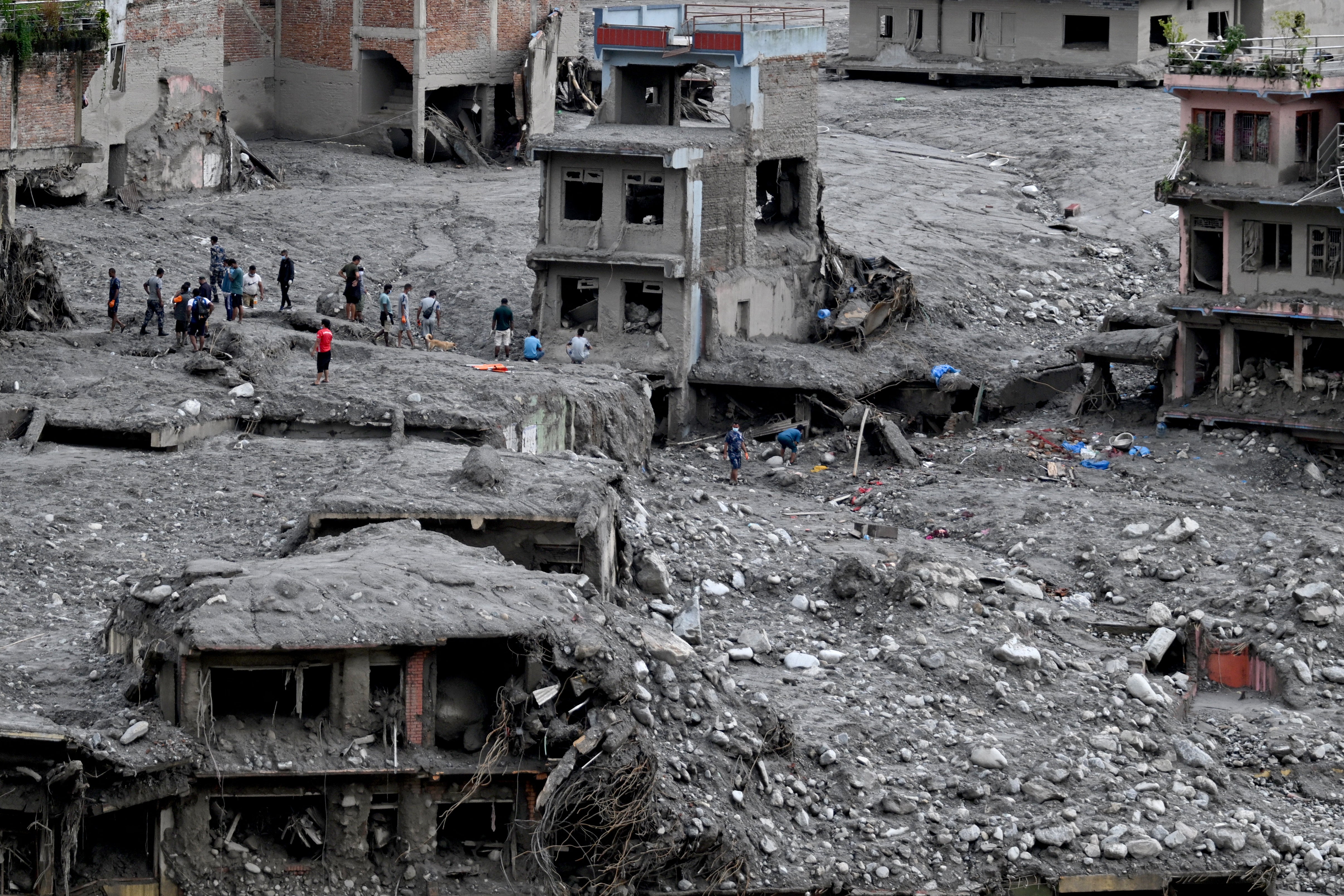
It began with the collapse of part of a glacier in Tibet, which led a huge mass of ice and rock travelling rapidly into the valley below and striking the Lhende river, temporarily damming the water before the barrier gave way and released a powerful flood downstream.
The prime minister said Nepal should “strongly raise” with the international community the series of disasters it faced “as a result of climate change”.
Mr Shah, in a previous Facebook post, said the flood was an “unprecedented and devastating natural disaster” and it remained challenging to compile a complete assessment of the damage. “Despite the adverse weather, difficult terrain and continuing risks, we are moving forward with determination to save the lives of our citizens,” he added.
The Himalayan nation of less than 30 million people, has contributed little to the emissions driving global warming, yet it is bearing the brunt of a crisis fuelled by larger nations.
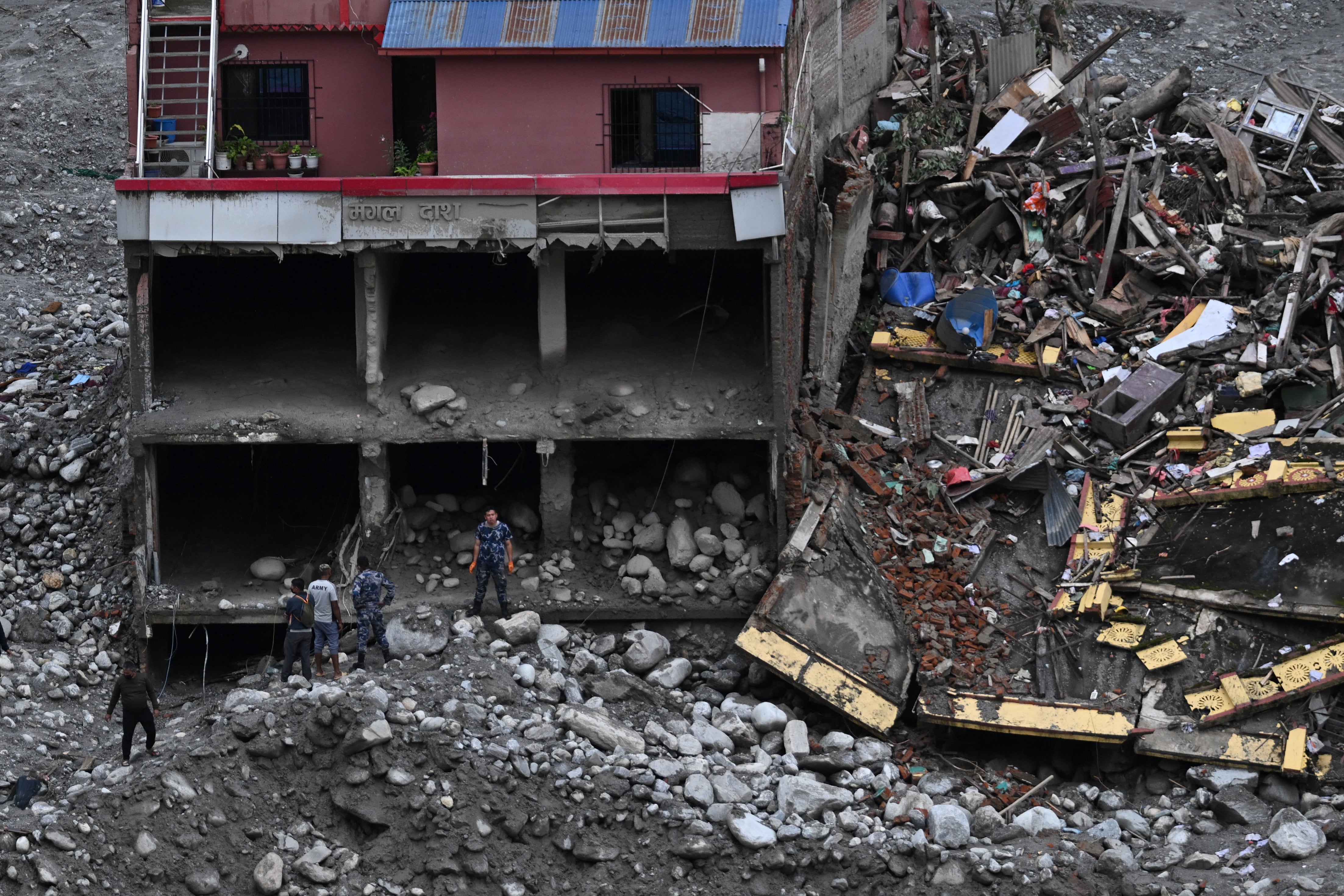
Steep Himalayan landscapes have always experienced landslides, avalanches and floods. However, scientists say, the climate crisis has aggravated weather events.
 open image in gallery
Glaciers across the Hindu Kush mountain systems are losing ice at an accelerating rate, while permafrost degradation, unstable slopes, glacial lakes and increasingly erratic rainfall raising the risks of floods, landslides and debris flows, according to reports by Kathmandu-based International Center for Integrated Mountain Development.
Nepal’s finance minister, Swarnim Wagle, said initial estimates suggest the country may need up to $5bn or $3.6bn to rebuild the Rasuwa and Nuwakot districts near the Tibet border.
“We will require much less than what we needed for the 2015 earthquake. Loss and damage is being assessed,” he told Reuters, without elaborating on why the reconstruction bill was expected to be less than the $9bn spent after the 2015 magnitude-7.8 quake, that killed 9,000 people.
Coalition for Disaster Resilient Infrastructure estimates that $124bn or £100bn worth of Nepal’s infrastructure is exposed to climate-driven disasters, creating the potential for hundreds of millions of dollars in losses each year.
A report by the coalition earlier this year found that Nepal’s average annual losses are nearly $760m or £561m from various disasters, while the country’s national disaster funds is only a fraction of this amount.