


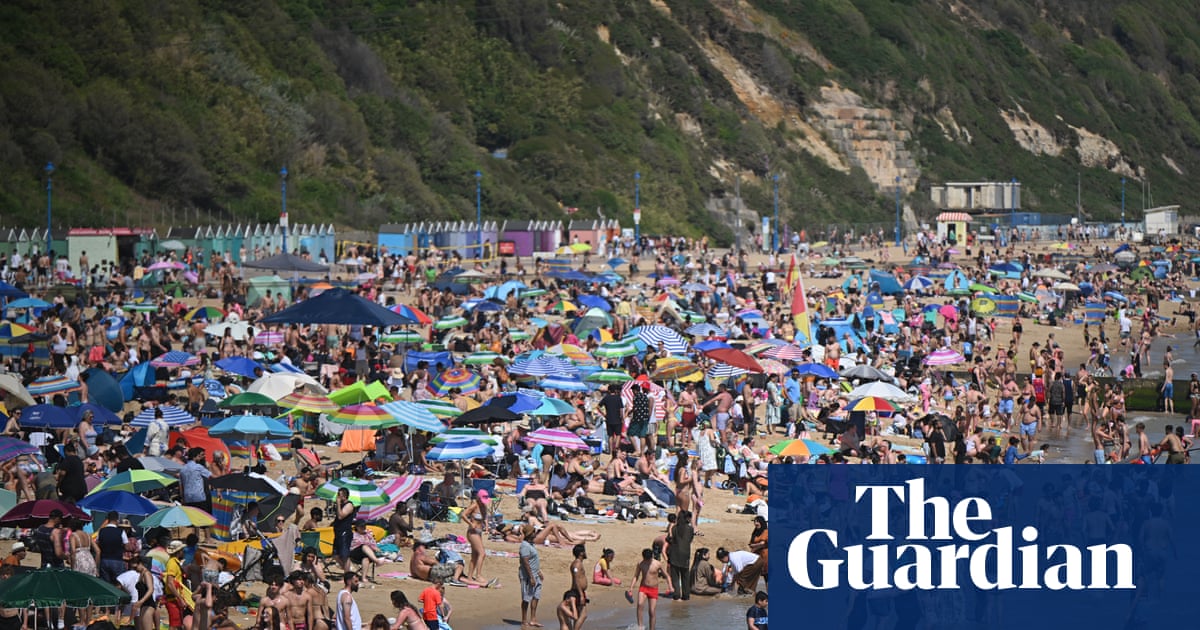
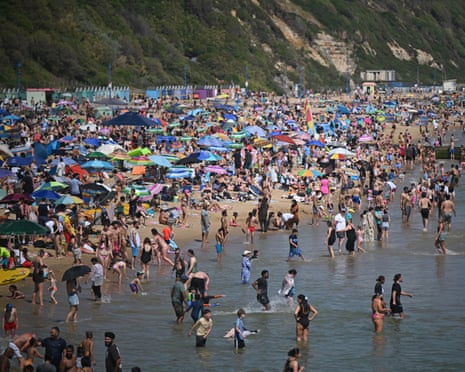
Water safety experts warn of dangers of outdoor swimming as heatwave grips UK
At least nine people have died in recent days as people have tried to cool off in Britain’s waterways
Water safety experts have warned about the dangers of outdoor swimming after a number of drownings in recent days as people try to escape soaring temperatures by cooling off in rivers, lakes, reservoirs and other bodies of water.
Emergency services have reported at least nine deaths because of water-related incidents in the past few days, seven of them young people, as Britain’s heatwave sends crowds of people to the seaside and other swimming spots.
On Wednesday, Cheshire Constabulary said they had recovered a body after searching for a 17-year-old boy who was last seen in the water at Pick Mere, a lake in Northwich. This week, a teenage girl and five boys died in separate incidents in Yorkshire, Warwickshire, Hampshire, Lincolnshire and Lancashire.
And on Monday, a man in his 60s died after suffering cardiac arrest having entered the water at Tregirls Beach near Padstow, in Cornwall, to help two relatives who had got into trouble. On Sunday, a 72-year-old woman died after being pulled from the water at West Angle Bay beach in Pembrokeshire, Wales.
Dr Heather Massey, an associate professor in extreme environments and physiology at the University of Portsmouth, urged parents to ensure children visited supervised swimming locations where lifeguards were on hand, and that they knew what to do if they or others got into difficulty in the water.
Deaths from drowning often rise in May as hot weather arrives and more people head to open water locations to cool down. Many fatalities are thought to be triggered by cold water shock as the water remains very cold even when the air temperature soars.
“Unfortunately, this is something we see every year,” Massey said. “It’s a known problem when the air temperature increases rapidly but the water is still very cold. At this time of year, it hasn’t had time to warm up.”

Data published on Wednesday by the UK’s National Water Safety Forum revealed that the number of people who died in water-related incidents last year rose in May and remained high until the end of August. The vast majority of those who drown are young men and more than half occur in inland waterways rather than on the coast.
“It’s important people are aware of the water being cold,” Massey said. “If you’ve been on a beach or by the side of a river and you’ve been in the sun for some time, your skin is going to be really hot. But some of our waterways may still be very cold, and when you enter the water, the rapid reduction in skin temperature triggers involuntary gasps and rapid breathing and a big increase in heart rate.”
Cold water shock is particularly dangerous when people jump or dive into water because it can cause them to gasp before they surface and take water into their lungs.
Massey advises people to cool off at locations with lifeguards and to enter the water gradually to allow their breathing to settle before swimming. “The cold shock peaks in about the first 30 seconds and lasts for two to three minutes,” she said. “Once you’ve let your breathing settle down, and you’re able to swim around and control your breathing, you can dip under the water.”
Research from Bournemouth University in 2024 found that deaths from accidental drowning were three times higher on days when the temperature rose above 25C, compared with average UK summer temperatures. Most deaths were in men, with the greatest risk in those suspected of drinking alcohol.
Beyond understanding the risks of cold water, people should know what to do if they fall in accidentally, get into difficulty or see someone else in trouble, Massey said. The National Water Safety Forum’s Float to Live campaign advises people to roll on to their back and tilt their head back until their ears are in the water. This protects the nose and mouth from water and gets the body in position to float. “Allow your breathing to calm down and then move your arms and legs as much as you need to stay afloat,” Massey said.
When others are in difficulty, the advice is phone, float, throw. First phone the coastguard or fire brigade for help, then tell the person to float on their back and stay calm, then throw them something buoyant to hold on to until help arrives.
Gavin Ellis, the drowning prevention lead at the National Fire Chiefs Council, said: “No family should have to experience the devastation of losing a loved one in the water. We know that warm weather encourages people to visit rivers, lakes and reservoirs, but these places can be extremely dangerous.
“We’re asking parents and carers to have open conversations with children and teenagers about the risks, and for young people to look after each other and make safe decisions around water. These incidents can happen very quickly, but many are preventable.”