


UK government reviews why police ceding criminal cases to US military
Exclusive: ministers and police chiefs examining how cases involving US military personnel on UK soil are handled after Guardian revelations
The UK government and police chiefs are reviewing the process through which US military personnel accused of committing serious crimes on UK soil are avoiding the British justice system.
The effort, involving multiple government departments, is examining why UK police forces, which have primary responsibility for investigating such cases, have been ceding jurisdiction to US military investigators.
Such decisions pave the way for alleged perpetrators to be tried in a US military court martial process, an alternative justice system in which victims are often not given the same protections as they would get in a British court.
The government and police reviews were launched after the Guardian uncovered a series of cases in which British police forces allowed the American military to take over investigations into allegations of serious sexual offences.
When the first case was revealed in June, Downing Street said it was “very concerning” that UK authorities were not involved in the prosecution of an American fighter pilot accused of raping and strangling a British woman, Sarah Steele, in his apartment after they met on a dating app.
After Cambridgeshire police allowed US military police to take control of the case, the pilot, Capt Jacob Wulfson, was prosecuted in a court martial on a US airbase in Suffolk. The jury, an all-male panel of air force officers, convicted Wulfson of strangling an intimate partner but acquitted him of sexual assault.
Victims of sexual attacks by US military personnel that would meet a common definition of rape in the UK are finding that their attackers are instead being prosecuted for lesser offences.
Under the set of laws that govern US forces, known as the Uniform Code of Military Justice (UCMJ), the crime of rape carries a narrower definition than that adopted by the British courts, meaning many cases are charged instead as sexual assault.
Wulfson was given a six-month sentence which he is serving at the US base RAF Lakenheath.
In recent weeks, Home Office and justice ministers met Steele to discuss her case and whether changes should be made to how UK police and prosecutors handle cases involving US military personnel.
A government spokesperson said Steele had “shown incredible bravery in coming forward” and ministers had “committed to identifying and learning any lessons from this case to ensure that victims are supported and treated with the seriousness, dignity and compassion they deserve”.
The spokesperson said officials were working closely with the National Police Chiefs’ Council (NPCC) “to look at the guidance in place to ensure that cases are correctly referred to the Crown Prosecution Service for advice”.
Ministers have promised to press the US government for a full account of what happened in the Wulfson case. In a statement, the Foreign Office said it had “been engaging with the US on this matter”.
The Guardian has unearthed several other cases involving US air force personnel who avoided UK courts despite their alleged crimes occurring while off duty. In each, local police handed over the investigation to military prosecutors, sometimes within days of receiving a report of a crime on UK soil.
Hannes Marschalek allegedly exposed himself to a 16-year-old girl and four young women in Littleport, Cambridgeshire. He admitted a charge of indecent conduct after negotiating a plea bargain at a court martial. The conviction was later quashed on technical grounds.
Tyrion Davis allegedly raped two British woman in Suffolk. He was convicted of one count of sexual assault when he was court martialled but acquitted of 10 further counts of sexual assault and abusive sexual contact.
James Loubeau, who was accused of a “spree” of rapes and sexual assaults in East Anglia, drugging some women and breaking into the homes of others, also avoided the British courts.
He was acquitted at a court martial where he was tried over allegations from just one of the six women who accused him of attacking them. He was later convicted in a court in Miami over another woman’s allegations, after an FBI investigation into his alleged attacks on women in England.
Suffolk police had handed over the Loubeau case to military prosecutors just 11 days after two British women contacted the force to say he and another US airman had drugged and raped them after a meeting in a nightclub.
In response to the Guardian’s reporting on such cases, Gavin Stephens, the chair of the NPCC, has written to all chief constables in England and Wales to ensure forces understand their legal obligations in cases involving visiting US forces.
A source familiar with discussions in government said ministers were alarmed to learn that UK police forces may not be seeking advice from the CPS before handing over investigations to the US military.
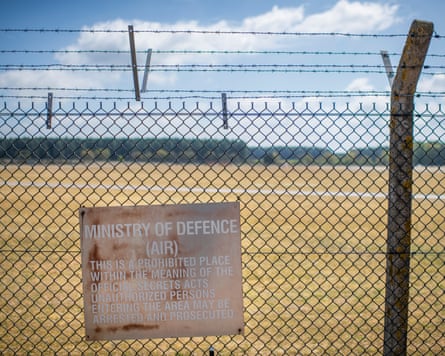
Under legislation dating back to the 1950s, visiting US armed forces in the UK can prosecute their own personnel if the offences were committed while they were on duty or against another member of the military, its property, or a dependant such as a spouse or child.
In all other cases, the British police have the first option on whether to launch an investigation into visiting US military personnel. However, the cases uncovered by the Guardian suggest the US has pushed to take control of investigations over which it does not have primary jurisdiction. British police appear to be acquiescing to these requests.
Two police forces – Suffolk and Cambridgeshire – are conducting their own reviews of how they handle investigations involving US military personnel.
In a statement, Cambridgeshire police said: “We are conducting a policy review being led by our investigation standards department.” The force added that the review was looking at cases going back to 2018, and it did not yet know how many there had been.
Suffolk police said: “We are in the process of reviewing the decision-making surrounding the transfer of primacy to the US air force and around case transfer practices more generally.”
More than 12,000 US military personnel are stationed in the UK, operating from at least 15 bases and facilities. The largest concentration of personnel is at two US military installations in Suffolk, RAF Lakenheath and RAF Mildenhall. Large numbers of US forces live in the surrounding areas, including in Norfolk and Cambridgeshire.
Concern about US service personnel avoiding the British justice system has been raised by MPs from across the political parties. Nick Timothy, the Conservative justice spokesperson, said Wulfson “should have been fully investigated by the English police and prosecuted in our courts”.
Jess Brown-Fuller, the Liberal Democrats’ justice spokesperson, said: “The British public expect crimes committed in England to be prosecuted in the English courts under English law. That expectation should not change simply because the accused is a member of the foreign military.”
Responding to a question in parliament about the Steele case earlier this month, the justice minister, Sarah Sackman, said: “Our thoughts are with the victim, and with the other victims whose experiences have subsequently come to light.”
Explore more on these topics