


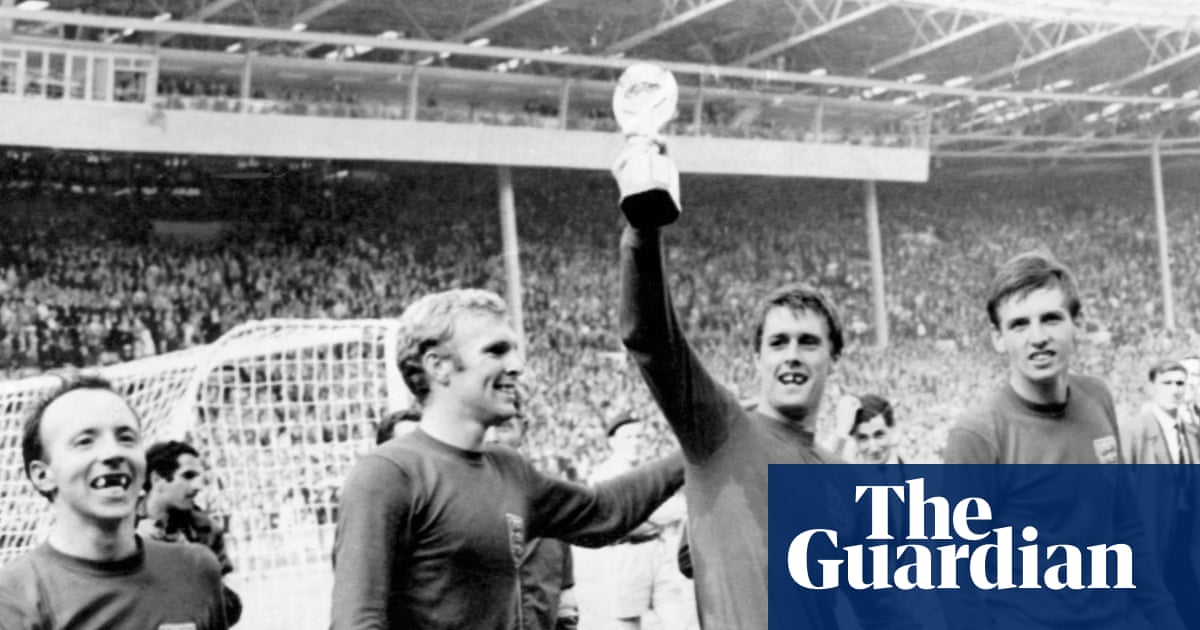
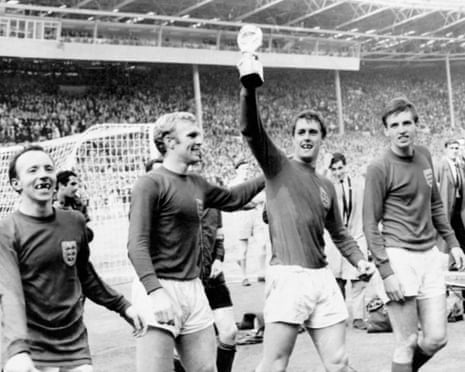
England’s 1966 World Cup heroes were fun, humble and unlike today’s stars
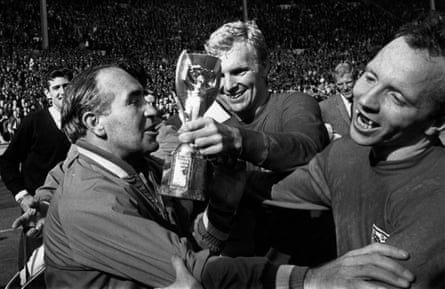
After lifting the trophy 60 years ago, some still supplemented their income by performing in working men’s clubs and as after dinner speakers
With each passing World Cup I am reminded of the times I spent in the company of those wonderful “Boys of 66”. What a privilege it was getting to know them in a much simpler era when, unlike today’s mollycoddled stars, household names remained unaffected by money and fame.
Where were you on 30 July 1966, the day England won the World Cup? I was at my nan and grandad’s house. They had a minute television which seemed no bigger than a matchbox. Intermittently the picture, which was in black and white, would roll around the screen. It was infuriating. My grandad talked about needing to get the “horizontal hold fixed” (unless you are of a certain age you will need to Google that). I was nine years old.
Thirty years (of hurt) on from that final, there was a knock at my front door. It was a surreal experience to see Geoff Hurst standing on my doorstep and even more bizarre as he went to one end of my front room and stood behind the settee. I went to the other end and sat on a chair.
Geoff, England’s World Cup hat- trick hero, had come to my house to rehearse his after-dinner speech. The settee acted as a makeshift top table. I was the only member of his audience.
His performance began. “I was at Paddington station one day and a chap came running up to me and said, ‘Geoff, Geoff, I’ve been waiting 20 years to meet you, I know exactly where I was that day in 1966 when you scored your hat-trick.’ ‘Where was that?’ asked Geoff. ‘Pentonville prison,’ replied the man. ‘We were so happy we smashed the cell up.’”
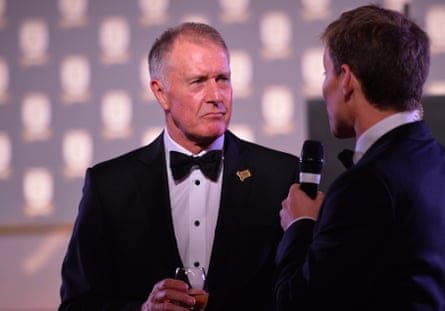
I had written some of Geoff’s script and I helped him with his presentation, but he quickly became a natural performer.
Another of Geoff’s stories provides a fascinating insight into how the manager, Alf Ramsey, made sure his players never became complacent. In one England match Hurst played in, after the World Cup final, the players returned to the team hotel. They said their goodbyes and Hurst turned to Ramsey and said: “See you next time Alf.”
“Perhaps, Geoff, perhaps,” replied Ramsey. Geoff said it was a comment that really made him think that, despite scoring a hat-trick, his place wasn’t guaranteed.
Ramsey’s starting salary as England manager was £4,500 a year rising to a maximum of £5,000. He also asked the Football Association to help him buy a house.
In the 1980s, and for many years afterwards, there was a huge circuit of sporting dinners. They were often in the north of England and held at the traditional working men’s clubs. Many of the 1966 England team were regular performers. Unlike today’s Premier League stars, who earn hundreds of thousands of pounds a month the “Boys of 66” supplemented their income by performing on the circuit, which is where I got to know them.
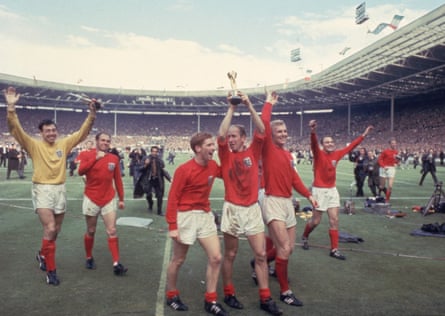
Sometimes they would do their own routines, on other occasions I would interview them and tee them up for their anecdotes. On stage one night I said to Jack Charlton: “Jack, how’s your brother Bobby?” Bobby could sometimes be very serious and he didn’t smile very often. “Not great” replied Jack. “Oh, why’s that?” I enquired. “Well, he’s now been banned from his local pub, the landlord said he didn’t want him there during the happy hour.”
Those England players were involved in English sport’s greatest day but you would never have known. They didn’t act like unapproachable superstars. If I left a message on their home answerphone they would call straight back. It was so different to the majority of football personalities I tried to interview in later years for the BBC.
Some of the events I worked at with the 1966 team were for amateur football clubs. We would be part of the entertainment alongside a tribute act, or a local comedian. The evening would sometimes start with a game of bingo. One dinner was very different. I was asked by the Institute of Directors to host a show and book as many of the England team as possible for a corporate lunch in London. I waited in the green room and they started filling in. It was like being in a dream and I imagined I was in the Wembley dressing room. In they trooped: George Cohen, Ray Wilson, Nobby Stiles, Hurst, Roger Hunt, Alan Ball, Martin Peters, Bobby and Jack Charlton, and for good measure BBC TV’s Kenneth Wolstenholme, who delivered the greatest commentary line in the history of sports broadcasting.
after newsletter promotion
Stiles was a great raconteur. One of his favourite anecdotes was based around the game England played against Argentina in the quarter-final. Before the match, Nobby, the hard man of the team, was taken to one side by Ramsey. “Nobby, Argentina’s best player is Antonio Rattín, I want you to mark Rattín,” said Ramsey. After a perfectly timed pause Nobby delivered the punchline: “Alf, do you want me to mark him for the match or for his entire life?”
It was a story that brought the house down.
In 1982 I was asked by Ian Thomas, my editor at BBC Radio Sport, to meet Ramsey at Liverpool Street station. Ramsey had been booked by the BBC to give his reaction to the draw for the 1982 World Cup finals. He immediately reminded me of Captain Mainwaring from Dad’s Army. He spoke with a posh voice, in clipped tones, and came across as a very serious man. I was just 24 years old, and I couldn’t believe my luck.
These were very different times. I still find it incredible that, on the morning of the 1966 final, Peters told me that, “time seemed to be dragging” so some of the players went shopping on Hendon’s high street. And after England’s win at Wembley the FA arranged an evening banquet for the players but, astonishingly, their wives were not invited. The players were very angry and when the dinner finished Hurst told me that he and several of the other players and their wives headed to Danny La Rue’s cabaret club.
How times have changed and how lucky was I knowing the 1966 team? They were humble and really fun to be with and I still find it incredible that I spent so many great times with them.
Garry Richardson presents a special 1966 World Cup anniversary programme on Boom Radio on 30 July
Explore more on these topics