


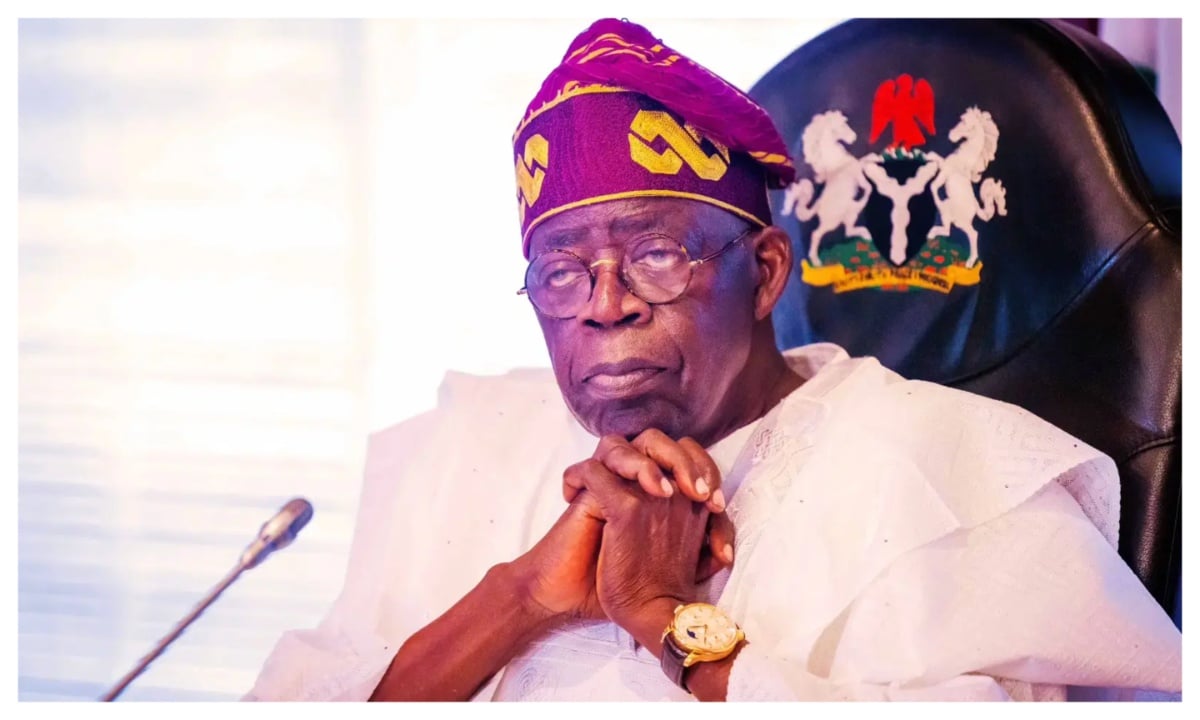

Reactions have trailed the existence of fake agencies in the Federal Civil Service under the current administration of President Bola Tinubu.
Many Nigerians from all walks of life have come down heavily on Tinubu’s administration, with some questioning the policies he and members of his cabinet are adopting while piloting the affairs of the country of over 200 million people.
The Independent Corrupt Practices and Other Related Offences Commission (ICPC) exposed the Presidential Foreign Intervention Promotion Council (PFIPC), a ghost agency that secured office space, opened Central Bank accounts and received budget allocations.
For much of 2025, nothing set the PFIPC apart from the many other agencies that make up Nigeria’s federal bureaucracy.

Fintiri receives Bamanga Tukur’s remains in Yola

Revive NNDC to end economic hardship, regional insecurity – KACRAN tells northern governors

Bamanga Tukur: Nigeria has lost a statesman — Adebayo
The agency presented itself as a body created to attract foreign investment into Nigeria, operating from an office inside the Federal Secretariat in Abuja — the huge complex that houses Nigeria’s government ministries.
It was gathered that career civil servants were assigned to the agency and ran a website on the government’s official .gov.ng domain and even won approval to hire more than 300 staff, at a time when the government had frozen public-sector recruitment. Meanwhile, the website has been taken down, but its Instagram account is still working.
The self-acclaimed director-general of the agency, Adeniyi Adeyemi, was said to have met cabinet ministers, financial regulators, the head of Nigeria’s anti-corruption agency and foreign diplomats.
The said agency was in the 2026 national budget when it was signed into law, with an allocation of N1.3 billion ($950,000; £700,000).
Adeyemi had alleged that Femi Gbajabiamila, Chief of Staff to President Bola Tinubu, received N400 million through proxies and demanded another N200 million to facilitate his appointment. He also questioned how a ‘ghost agency’ appeared in official budget allocations.
In response, the Presidency cleared Gbajabiamila of the allegations, dismissing the PFIPC as a non-existent, fictitious agency.
The government called Adeyemi a con artist exploiting public trust to deflect criminal accountability, noting that Gbajabiamila had no knowledge of the circulated appointment letter.
In the course of the investigation ordered by President Bola Tinubu, a Federal High Court issued an arrest warrant for Adeyemi. He was subsequently arrested by police operatives and the case was brought before Justice Umar for legal proceedings.
The ICPC subsequently uncovered another fake agency, ‘National Brands Development and Made in Nigeria Special Project Office’, which was found operating inside the Office of the Secretary to the Government of the Federation (SGF) and promoted by Prince George Buchi Nwabueze.
Following the second discovery, President Tinubu ordered the immediate suspension of three permanent secretaries — M.S. Danjuma, Engr. Nadungu Gagare and Richard Pheelangwah — linked to the unauthorised establishment of the second fake office.
Speaking to DAILY POST, some Nigerians expressed shock at how fake agencies could operate in a highly organised government establishment to the point of having office space at the Federal Secretariat.
Divine Akor said the reported existence of fake agencies within the Federal Government is not merely an administrative embarrassment but a serious indictment of the machinery of governance.
According to him, the disturbing question is simple: How can an organisation allegedly without a lawful mandate present itself as a Federal Government agency, operate within government premises and interact with public officials without being detected earlier?
“Government agencies are not private associations that can be created with a letterhead, office and fancy title. They require legal backing, an approved structure, a supervising authority and verifiable government records.
“If the safeguards against fake agencies were bypassed, then the Tinubu administration must accept that there is a serious failure of institutional oversight,” he said.
On his part, Isaac Adeyemo stated that President Tinubu deserves credit for ordering investigations, noting, however, that ordering an investigation after the damage has been done is not enough.
“The more important question is: Who allowed these entities to exist and operate in the first place? The Office of the Head of the Civil Service, the SGF’s office, relevant ministries and other supervisory authorities must explain what checks failed.
“And if insiders facilitated or protected these operations, they must be investigated alongside the alleged perpetrators,” he stated.
Also speaking, Blessing Ede asserted that Nigerians deserve clear answers: Were public funds, government facilities, official documents, contracts or privileges accessed through these entities?
She demanded the publication of a comprehensive register of all legally recognised federal agencies and their establishing laws, as well as the immediate verification of organisations occupying government premises.
“Audit the financial activities connected to the alleged fake agencies. Investigate both external perpetrators and government insiders who may have enabled them. Strengthen digital verification of every federal institution,” she added.
In the same vein, Paul Ogbole asked relevant authorities to hold officials accountable for serious supervisory failures.
According to him, if not for the lawlessness, nepotism, lethargy and inherent corruption that characterise the Nigerian government and governance, the architects of the discovered fake agencies should have been duly prosecuted, as well as the dismissal of regulatory-cum-supervisory agencies under whose watch such illegality occurred.
“The President cannot personally monitor every government office, but he is ultimately responsible for the integrity of the executive machinery. Nigeria does not need another scandal that ends with a few arrests while the loopholes remain open.
“If a fake agency can allegedly operate inside the Federal Government without immediate detection, then the real scandal is not only the fake agency. The real scandal is a system that made its existence possible,” he stated.

UNN sued over Peter Obi’s academic records

Abiodun wins national award for Ogun’s digital transformation

Nigerian Newspapers: 10 things you need to know Sunday morning
