


Want to bookmark your favourite articles and stories to read or reference later? Start your Independent Premium subscription today.
`;
document.body.appendChild(modal);
modal.addEventListener(‘click’, () => {
document.cookie = ‘mos-plan-select=; Max-Age=0; path=/; expires=Thu, 01 Jan 1970 00:00:00 UTC;’;
});
modal.querySelector(‘.subscribe-link’)?.addEventListener(‘click’, (e) => {
e.preventDefault();
document.cookie = ‘mos-plan-select=; Max-Age=0; path=/; expires=Thu, 01 Jan 1970 00:00:00 UTC;’;
setTimeout(() => {
window.location.href = ‘https://www.independent.co.uk/subscribe?regSourceMethod=Bookmarks’;
}, 500);
});
});
Drinking spirits in the daytime is largely a thing of the past for me, but a vodka cocktail at 11am suddenly feels like an excellent idea on the Rocky Mountaineer. Time seems to move at a different tempo on a long-distance train journey – you can’t get off, so leaning into a slower pace and partaking in a little of what you fancy is arguably the most prudent course of action. And if it’s indulgence you’re seeking, coupled with some of North America’s finest landscapes, this two-day rail route from Canada’s British Columbia to Alberta really is the pinnacle of luxurious slow travel.
My train departs Vancouver early in the morning to blue skies and blazing sunshine. As part of the Rocky Mountaineer service, I leave my bulging suitcase in my hotel room; the next time I see it is in Kamloops, the arid crossroads city where passengers spend the night after their first day on the train. Our final destination is Jasper, the rugged alpine town in Alberta, where we expect to arrive early evening the following day. There are no stops along the way, so it’s a case of settling in and getting comfortable.
This is an easy task, thanks to our affable onboard hosts, Tony and Kelly, whose job it is to make guests feel as comfortable as possible courtesy of regular snacks, anecdotes and generous drink top-ups. An easy-listening soundtrack of Bill Withers and Elvis plays in the background as I watch the cityscape slip away. Before long, we connect with the Fraser River, a vast, historic waterway in British Columbia (BC) that’s central to First Nations communities and home to some of the world’s largest salmon runs. It’s a corridor that winds its way through the Rockies to the Pacific Coast and one that the train hugs for much of the first day.
 open image in gallery
Read more: 12 crowd-free state parks that are just as beautiful as U.S. national parks — and they’re free
It’s here we spot our first of many bald eagles. One of the joys of the Rocky Mountaineer is that – much like a famous Dutch beer – it reaches the parts others can’t, cutting through remote canyons and forests to reveal pristine wilderness and wildlife you’d struggle to see any other way.
In the distance, we see the majestic snow-capped peak of Mount Baker across the border in Washington State. It’s something of an anomaly, however; this fertile section of the Fraser Valley is green, flat, populated by livestock and home to about 50 per cent of BC’s agricultural produce.
 open image in gallery
Read more: Vancouver is the North American city I return to time and again
Although there are few people around, those we do see across on our journey make the effort to wave at the passing train, while haulage truckers sound their horn. Even the most cynical can’t help but raise a smile.
We pass a thrift store in the tiny Gold Rush town of Yale that looks as if it’s been there since prospecting days, and peer into the back gardens of people’s homes. From here, the river starts to get lively. We approach Hell’s Gate, the narrowest part of the Fraser River, a place of towering rock and dangerous rapids named by the 19th-century explorer Simon Fraser who was so intimidated by this wilderness he gave it its ominous moniker. Ironically, it’s now a popular tourist attraction.
 open image in gallery
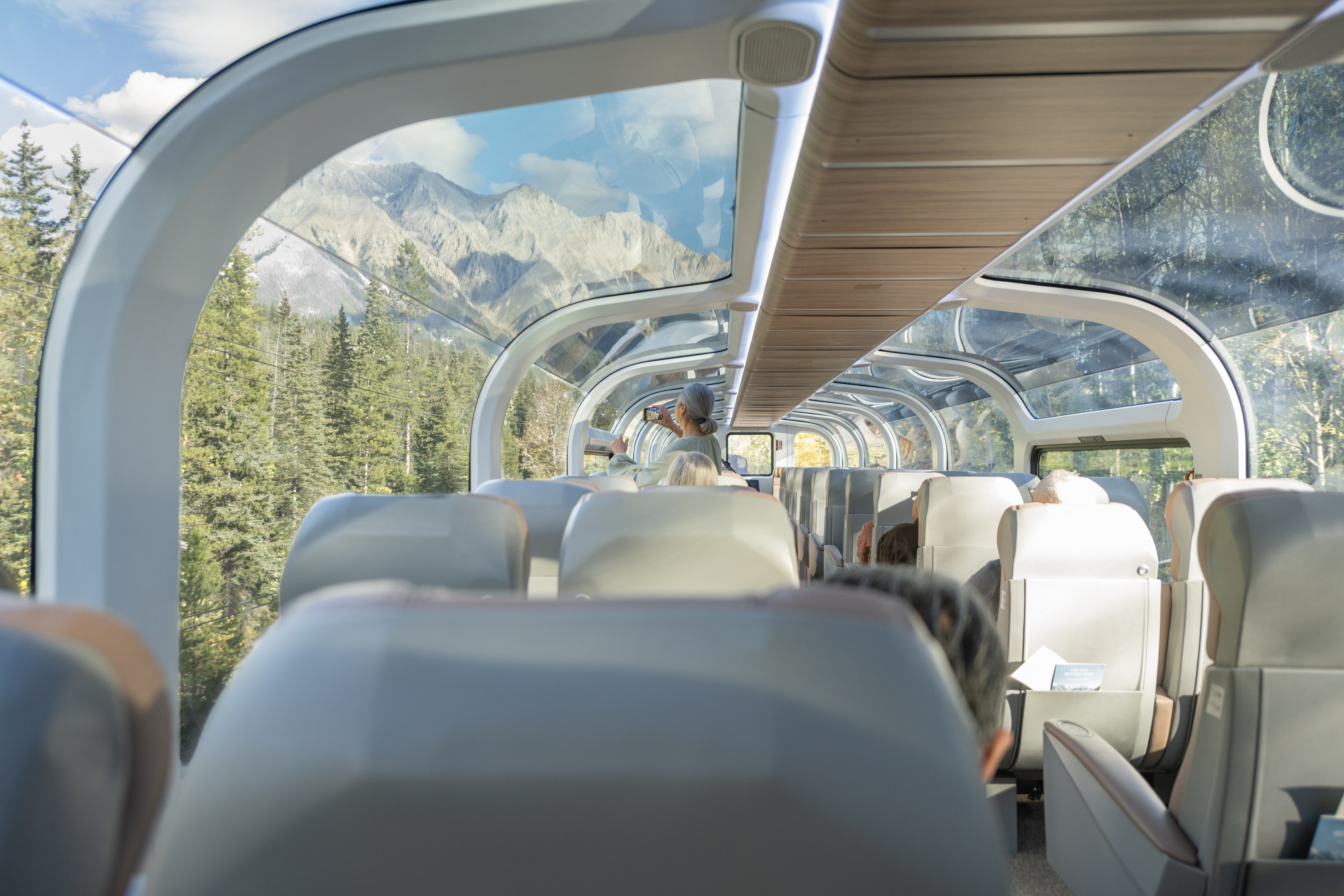
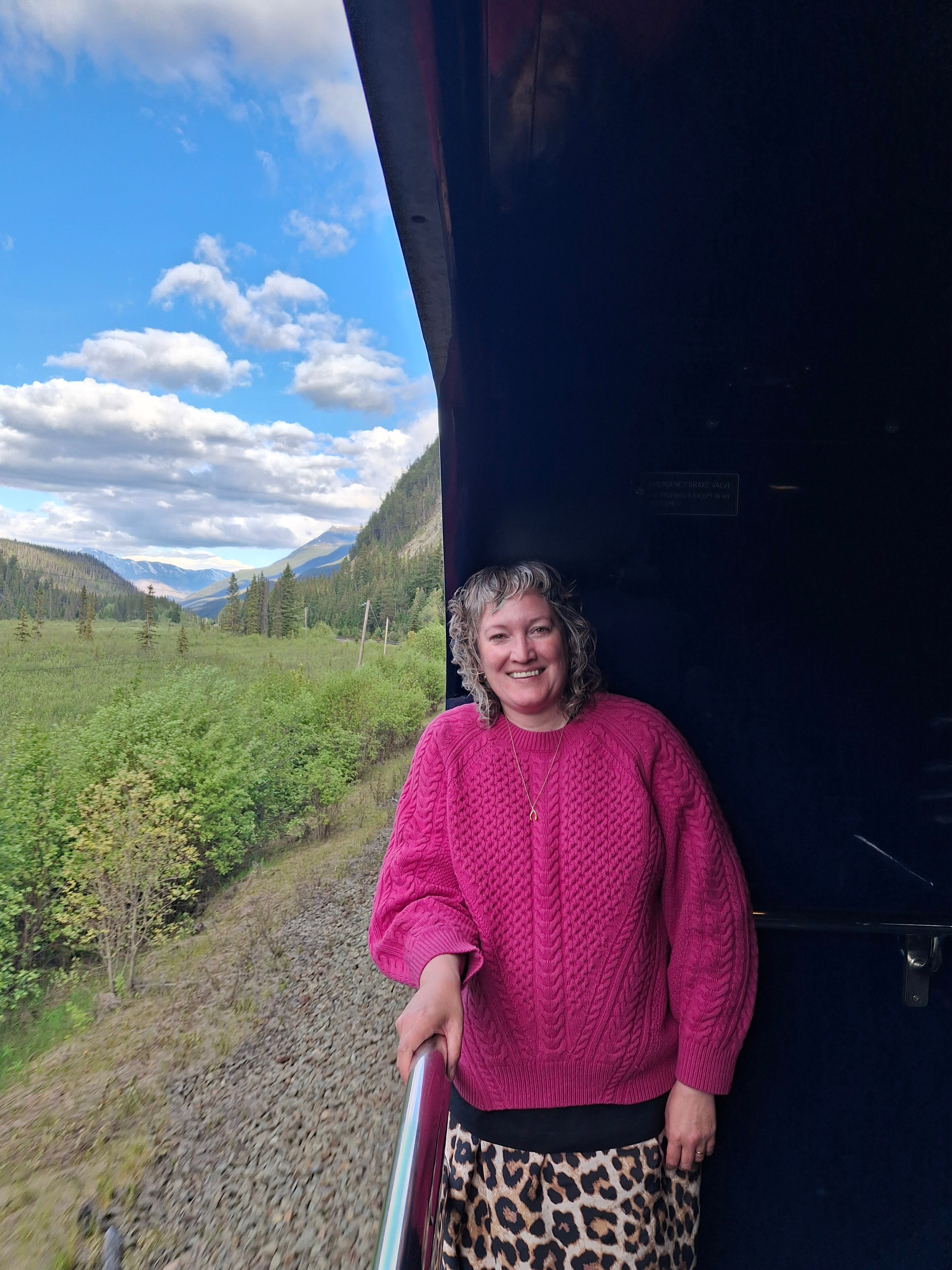
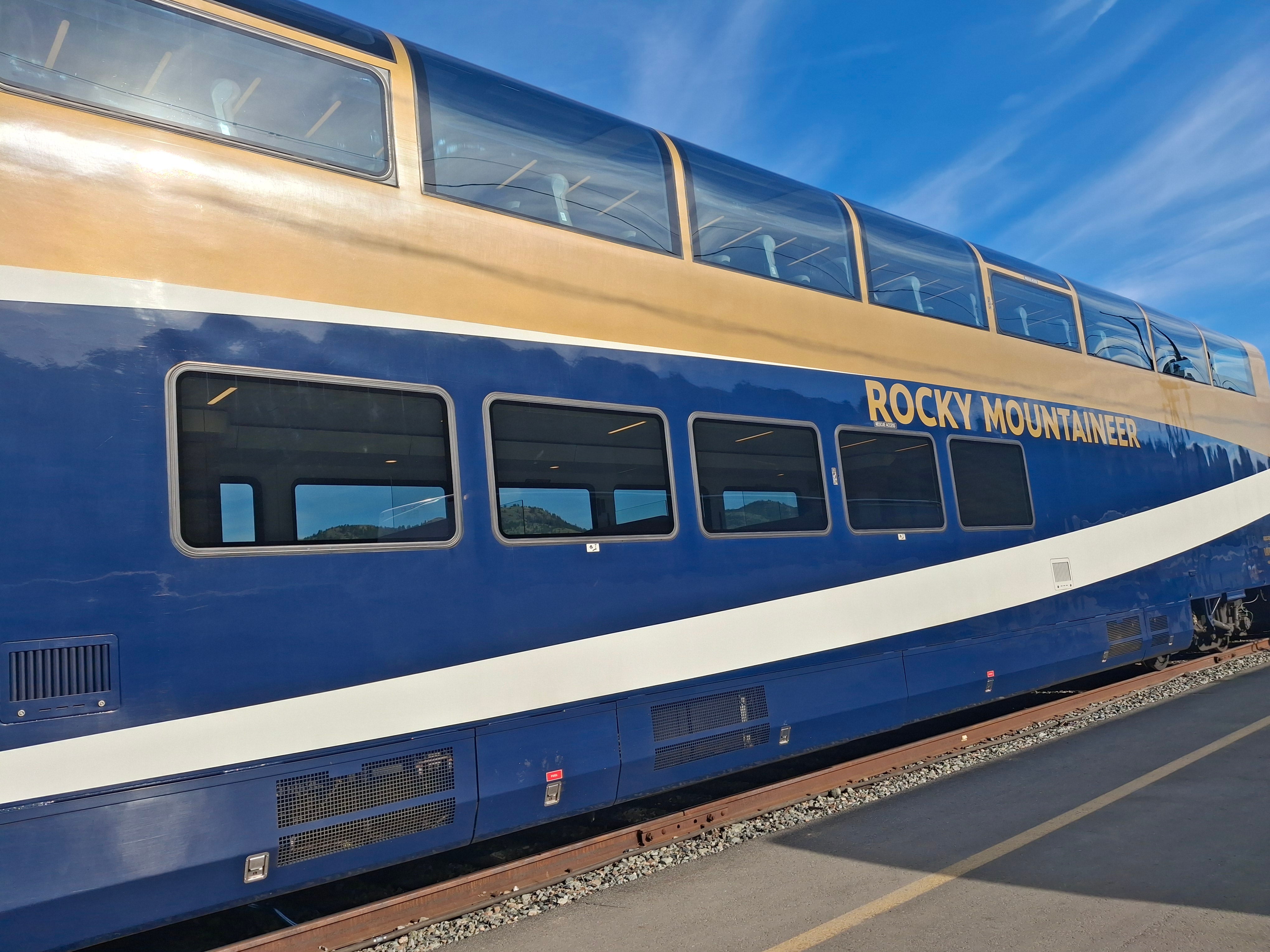
Passengers on this Journey Through the Clouds service from Vancouver to Jasper can choose Silver or Gold Leaf service. As a previous Silver Leaf traveller, I’d argue it’s worth the upgrade. In addition to glass-dome panoramic windows to gawp out of and a separate dining carriage, a covered open-viewing platform that lets you immerse yourself in the landscape and feel the warm air on your skin significantly enhances the entire journey.
Another advantage of the Rocky Mountaineer is that most of the trip has neither wifi nor mobile phone service, making it ideal for anyone seeking a digital detox.
Food and drink are all locally sourced – and are very good. Lunch is a three-course affair in which I tuck in to a seared albacore tuna steak with greens and olive tapenade, washed down with a delicious slice of rich chocolate torte that’s just the right side of bitter.
Read more: Victoria is the overlooked Canadian city you need to visit
A desert-like landscape replaces the fertile land of the Fraser Valley as we approach Lytton. Not only is it one of the driest places in Canada, with less than 10 inches of annual rainfall, it also holds the record as home of the hottest ever recorded temperature in Canada. I watch a goods train hug the steep rock face with hundreds of boxcars in bright colours; some of these locomotives measure up to 5km in length.
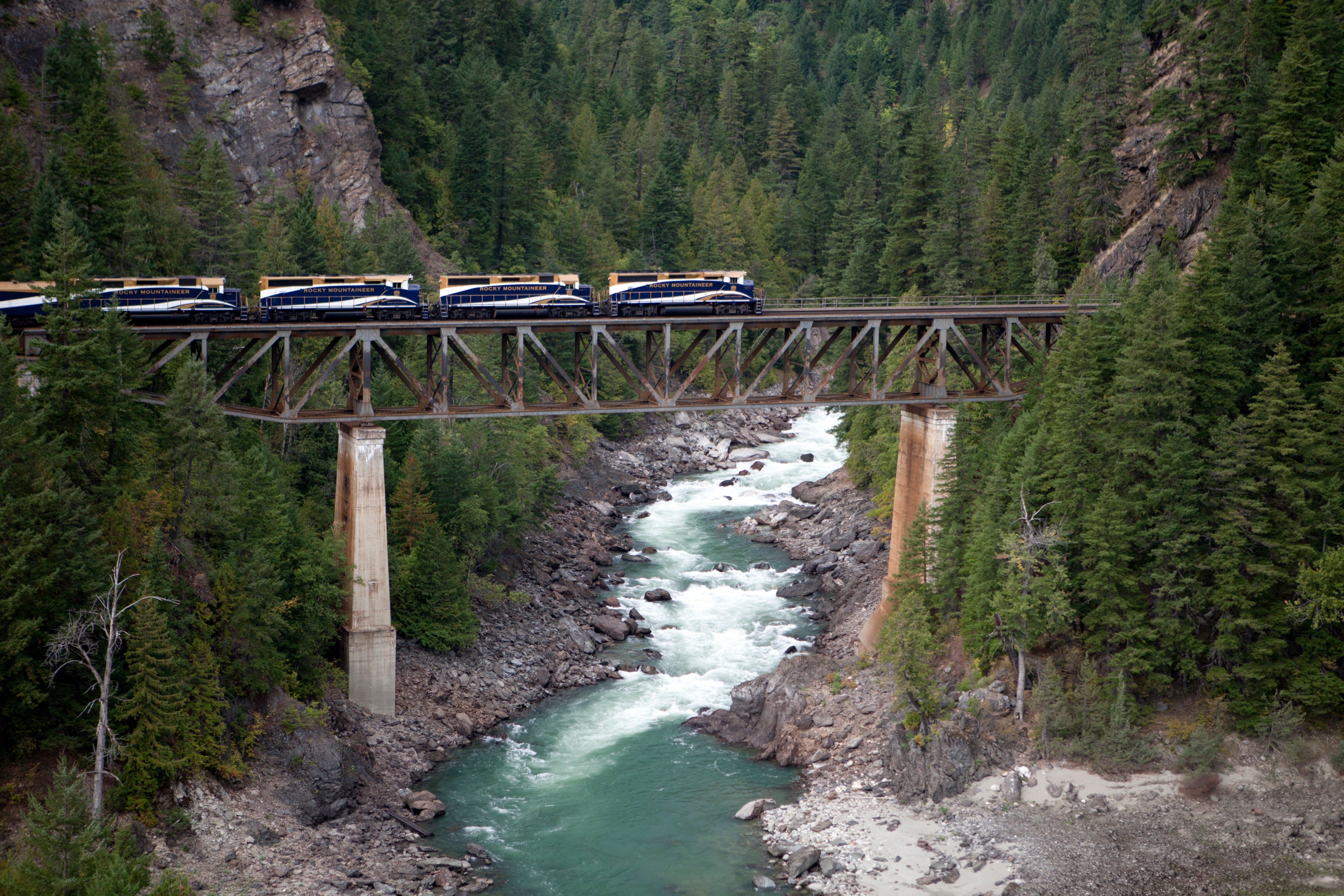
Osprey nests are some of the biggest in North America and we pass several perched atop telephone poles. These magnificent birds construct them from sticks and decorate them with blue and orange pieces of rope discarded along the river. They can reuse them for up to 70 years, so making sure they look tip-top is evidently a priority. While the Rocky Mountaineer doesn’t stop, it slows right down at particularly scenic locations or points of interest, such as this, so passengers can appreciate the view.
 open image in gallery
The train’s speed is part of the easy-going vibe. Its average is a relaxed 30mph, all the better to gaze at the landscape. And it really feels like we’re in the middle of nowhere. White-tailed deer gaze back at us, while flocks of bighorn sheep seem disinterested in our presence. We pass a tiny church that appears ancient, burnt out and incapable of holding more than a dozen people. Life out here seems unimaginable and it’s the perfect place for fantasising about an entirely different kind of existence.
After a good night’s sleep in Kamloops, we board the train for our second day – and it’s not long before we leave the arid landscapes behind. Instead, we’re confronted with billions of trees: ponderosa pines, western hemlock, Douglas firs and trembling aspens in 50 shades of green. We are approaching the peaks of the Rocky Mountains.
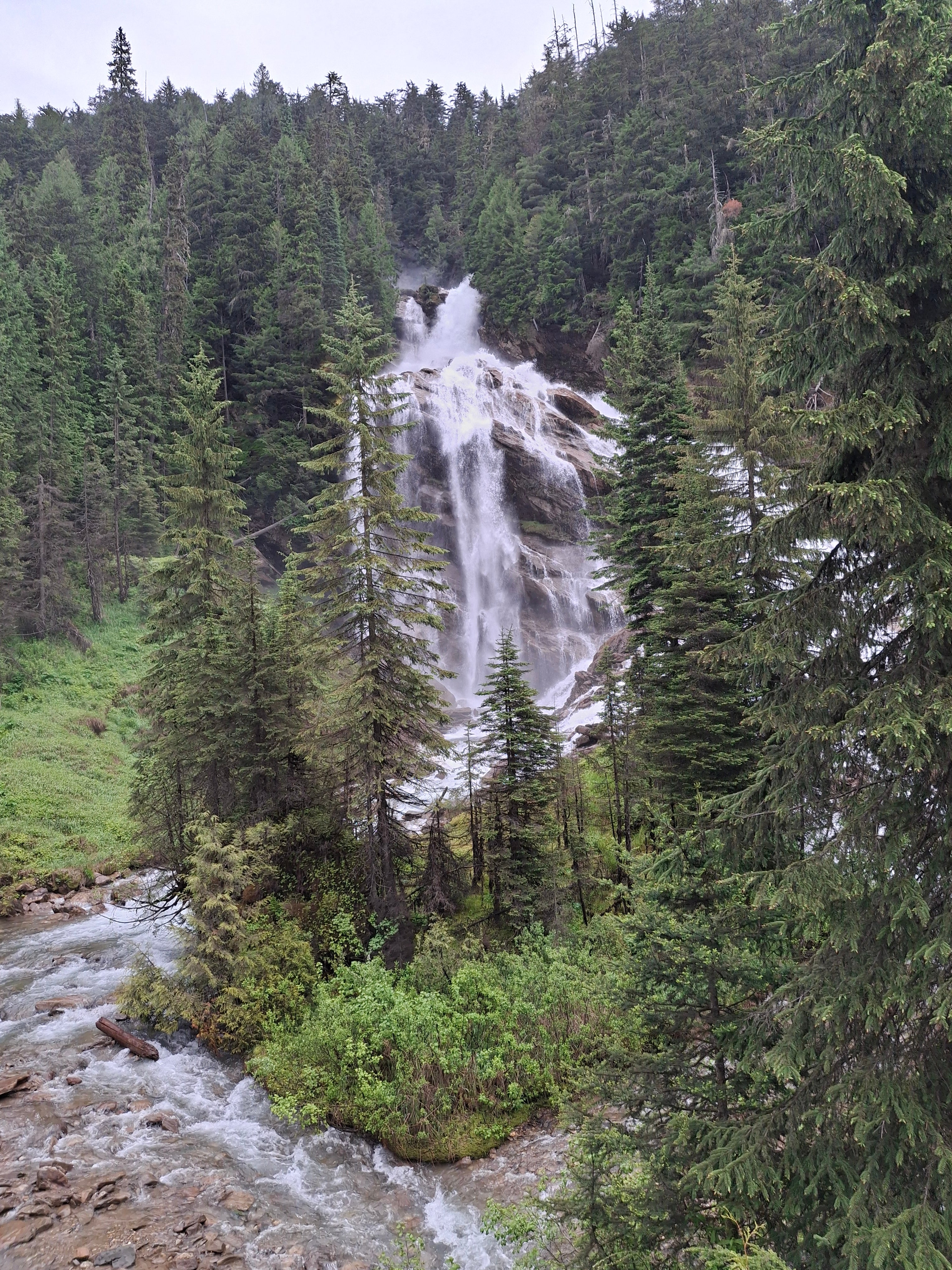
The train slows as we approach Pyramid Falls, which cascades down a tree-covered mountain for nearly 100 metres. Snowmelt has swollen the flow, which can only be seen up close by train. To universal jubilation, we see a black bear scurrying into the bush after being startled by the train.
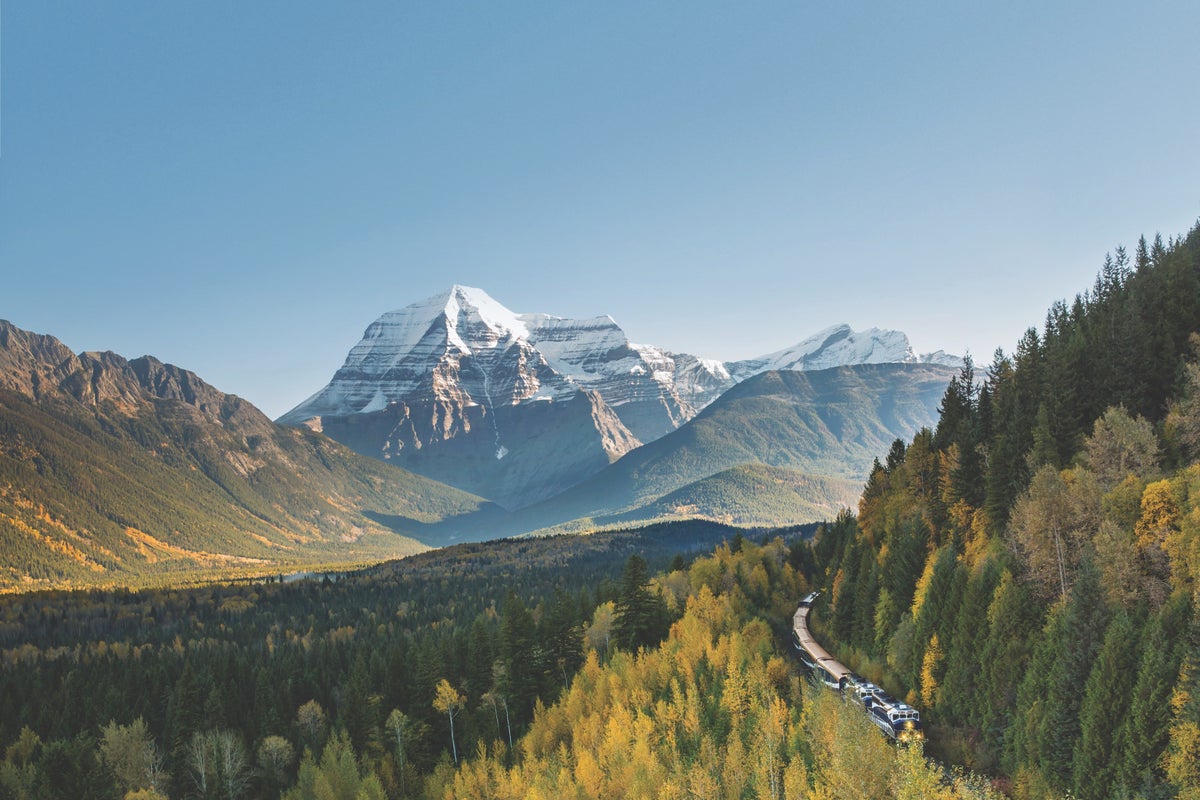
Before long, the majestic snow-covered summit of Mount Robson, the highest peak in the Canadian Rockies, comes into view. At nearly 4,000 metres in height, a sense of anticipation starts to build as we head northwest and approach the BC/Alberta border.
 open image in gallery
We pass Moose Lake, a turquoise lake framed by mountains and dense forest, and drop across the Continental Divide into Alberta. The atmosphere feels more dramatic, with sharper snow-topped peaks and denser spruce forests. From the viewing platform, I smell the burning rubber of the train’s brakes and listen to the deep horn echo through this vast wilderness. We’ve entered the pristine landscape of Jasper National Park.
I step off the train with a sense of peace and a smile on my face. Two long days of eating and drinking well, to the backdrop of some of Canada’s most beautiful landscapes, has been an absolute treat. The company’s goal is to give guests “non-stop glimpses of amazing”. Mission accomplished.
Joanna was a guest of Rocky Mountaineer and Super, Natural British Columbia
How to do it
A Silver Leaf package on the Journey Through the Clouds service starts from £1,379 per person, while a Gold Leaf package starts from £1,871 per person.
How to get there
British Airways and Air Canada fly direct from the UK to Vancouver with a flight time of around nine hours and 30 minutes from £628 return.