


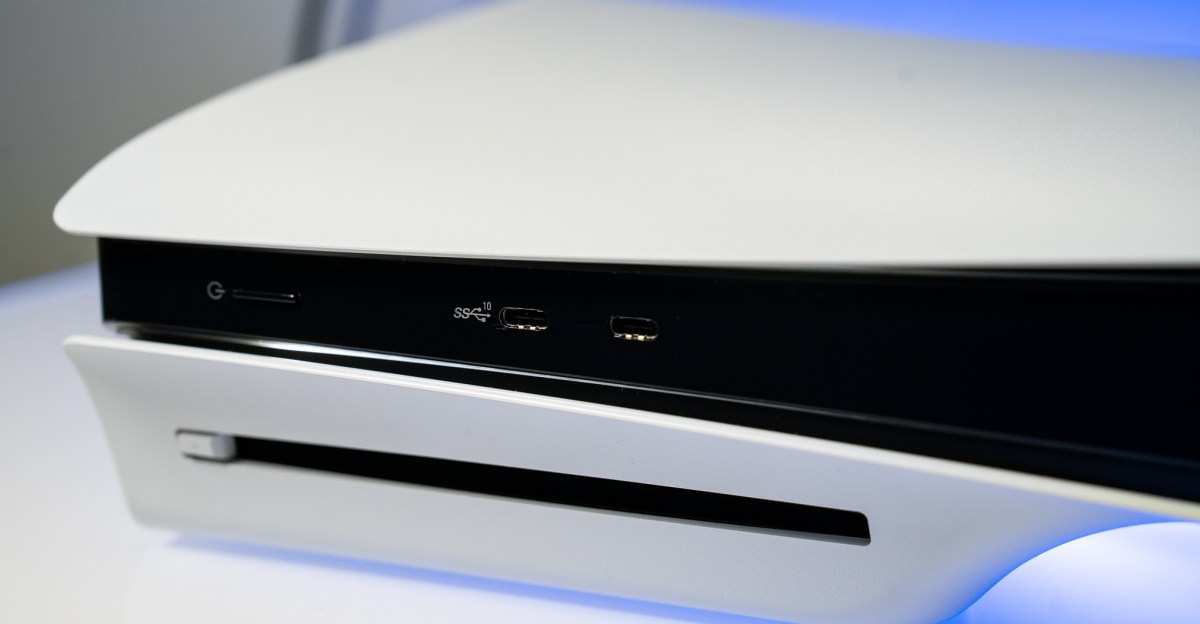
The funeral for PlayStation discs has begun
PlayStation’s discless future will make things much harder for groups like preservationists and retailers.
PlayStation’s discless future will make things much harder for groups like preservationists and retailers.
by Jul 1, 2026, 10:03 PM UTC Photo by Antonio G. Di Benedetto / The VergePart OfKeeping the classics alive: how archivists are preserving video game historysee all updates
  Jay Peters is a senior reporter covering technology, gaming, and more. He joined The Verge in 2019 after nearly two years at Techmeme.
Cody Spencer, the co-owner of the small games retail chain Pink Gorilla Games, put it well when I asked about the impact of Sony’s recent announcement that it will stop making discs for new games starting January 2028. “It’s sad to see. This decision is only a negative for gamers. We’re losing the ability to sell games, to share games, and to own games.”
Sony’s announcement has been devastating news for many in the games industry. Not just players, but also groups like independent retail stores and preservationists that try and make gaming more accessible.
“This is unfortunate news for those who still prefer buying games on physical media, and is certainly a significant hit to consumer rights, the resale market, and game creators whose businesses rely on the physical market,” Frank Cifaldi, executive director of the Video Game History Foundation, says in a statement.
Boutique publishers are also lamenting PlayStation’s announcement. “We are profoundly disappointed by Sony’s decision to suspend physical games production in 2028,” says iam8bit in a statement. “Physical games are vital to games preservation, ownership, and consumer choice, values that have guided iam8bit since our first physical release in 2016. Our commitment to these values remains unchanged. Long live physical media.” Lost in Cult, in its own statement, says that it aims to “do everything in our power to preserve video games to the best of our ability and will continue to do so for as long as we can.”
But the move isn’t exactly unexpected. For a long time now, video game sales have primarily been digital — just look at Capcom saying that 93 percent of its game sales were digital over its last fiscal year. Still, it’s disappointing for people who want to have games in a more tangible form than as data on a hard drive.
The reality is that, despite the outcry, things aren’t going to be different for most people right away. “Physical sales of new PlayStation 5 games have been declining for some time,” Spencer says. “So immediately after the switch to digital only I don’t think we’ll see much of a change.”
In five to 10 years, Spencer expects to see “increased prices for the physical titles printed before 2028 and a niche but strong demand for our products.” While that’s good for business, “I’d personally rather not have [that] be the case.”
Even further down the road, “the very idea of physical video games will be foreign and more seen as a novelty, which will not be good for us at all,” Spencer says. “Our type of store may be seen more like a record store. A place for largely the most passionate fans of the medium rather than a spot everyone goes.”
Sony has already been inching toward a potential digital-only future for a while now. The PS5, after all, launched in 2020 with a cheaper version without a disc drive, and the PS5 Pro requires a separate disc drive purchase if you want to play physical games at all. And this generation isn’t even the first time Sony has launched digital-only hardware; 2009’s PSP Go handheld didn’t have a UMD drive, Andrew Borman, director of digital preservation at The Strong National Museum of Play, reminded me.
“The challenges of digital preservation aren’t new”
“The challenges of digital preservation aren’t new, nor are they exclusive to the video game industry,” Borman says, pointing to things like required online connectivity, frequent game patches, and “much of the game development process happening only using digital tools.” But he says that “it is important that we act now to preserve the history of the industry.”
Borman says there will always be a market for used and new physical games, pointing to the resurgence of vinyl records. But losing the option of physical PlayStation games still stings. “From a consumer perspective, choice matters, and losing that choice is unfortunate, especially for those who may not have reliable or fast Internet connections — or just like to feel ownership over their purchases,” Borman says.
Cifaldi says that the shift won’t have “as much of an impact as you might expect” to the work of professional preservationists. “The reality is that this continues to be a trend,” Cifaldi says in a slightly different version of the statement sent to The Verge. “Sony PlayStation isn’t the first ones doing this nor will they be the last, as the vast majority of video games produced over the last two decades were not made for dedicated home video game consoles, let alone pressed to physical media. And even when they were released on physical media, a day-one digital patch was all but guaranteed, meaning that even though a disc is preserving data in an accessible way, it may not represent the game that people actually played. Museums and archives like ours have been preparing for this future for a while, with the expectation that putting discs on a shelf isn’t going to be a long-term solution for preserving new games.”
It is worth noting that platform holders are doing some preservation to make their older games available to play. Sony has an IP Preservation team, Microsoft has made a bunch of older games playable on modern Xbox hardware thanks to the backward compatibility program, and the Nintendo Switch Online retro catalog is jam-packed with classics, including titles from as recent as the GameCube era.
GTA VI, which will be sold in physical stores but only as a download code in a box, is likely a preview of what’s to come. Since it won’t be sold on a disc, you can’t sell the game, borrow it from a friend, or come across a cheap used copy for a fraction of the $79.99 price. People might put up with that for GTA VI, one of the biggest games of all time, but it won’t feel so good when it’s the experience for every video game box on the shelf in a store.
Cifaldi is calling on trade groups such as the Entertainment Software Association, which has opposed preservation efforts in the past, to “offer meaningful solutions for archives and museums to legally preserve digital-only content and make it accessible for research.” Cifaldi says that the industry “needs to meaningfully come to the table on this issue, because expecting museums to download a copy of Grand Theft Auto VI and hope it’ll run in 50 years is not a preservation solution.”
Follow topics and authors from this story to see more like this in your personalized homepage feed and to receive email updates.