


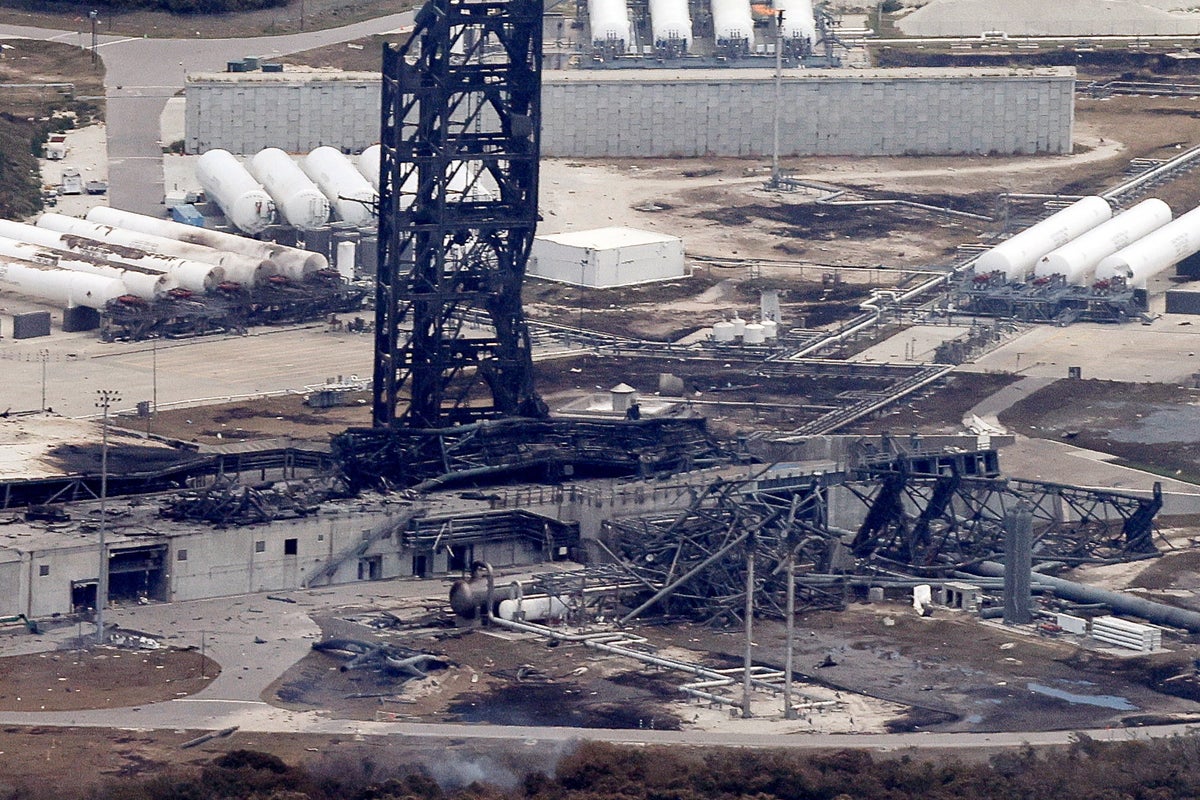
The public has been warned to avoid any Blue Origin debris that could wash ashore after a New Glenn rocket exploded during a test firing, causing significant damage and sending shockwaves for miles.
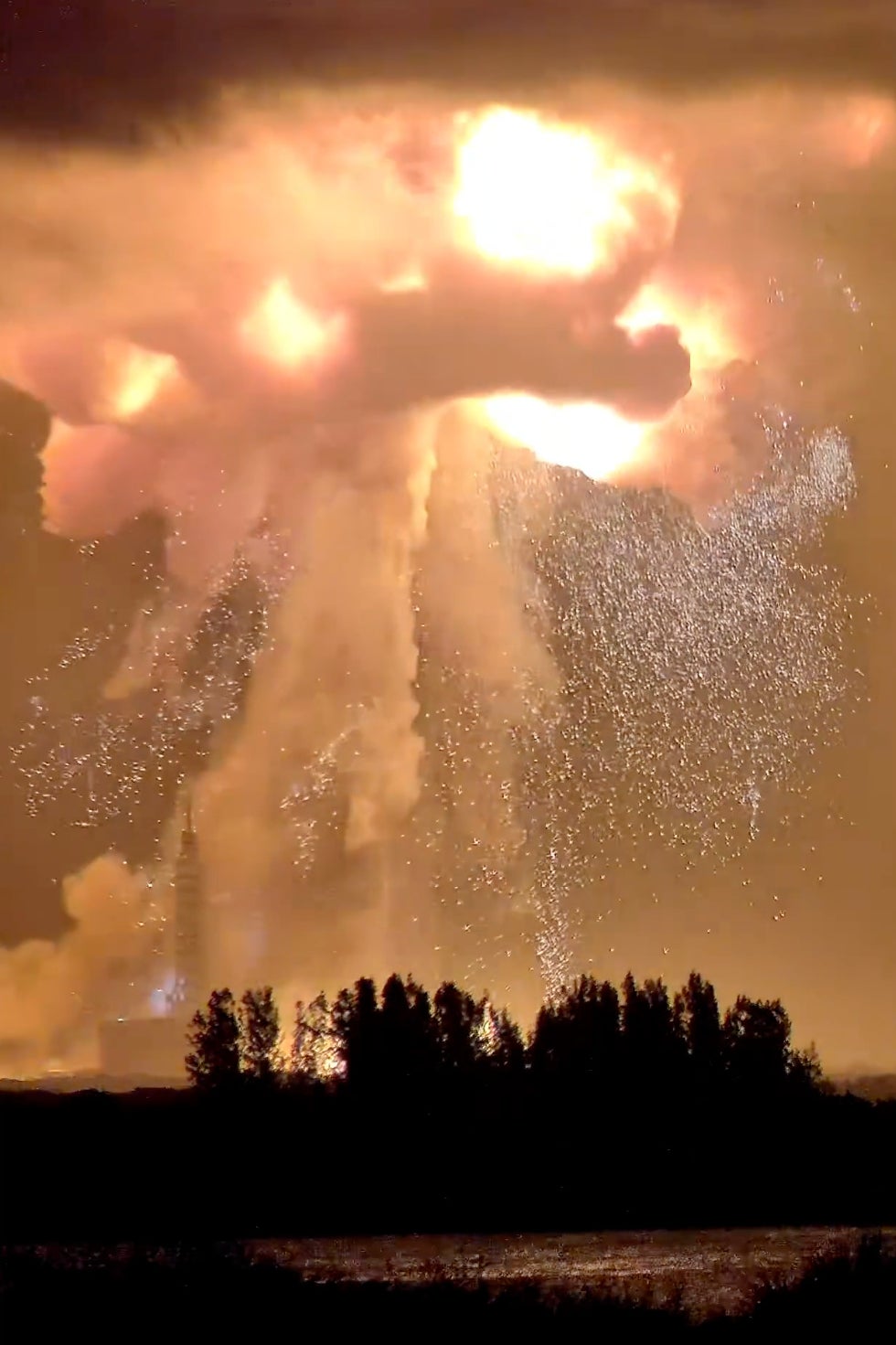
A massive orange fireball erupted at Jeff Bezos’ Blue Origin launch pad Thursday night as the company fueled the towering 321-foot (98-meter) rocket, intending a brief engine ignition ahead of a planned satellite launch next week.
Instead, the rocket detonated, destroying a portion of the launch infrastructure. No deaths or injuries were reported.
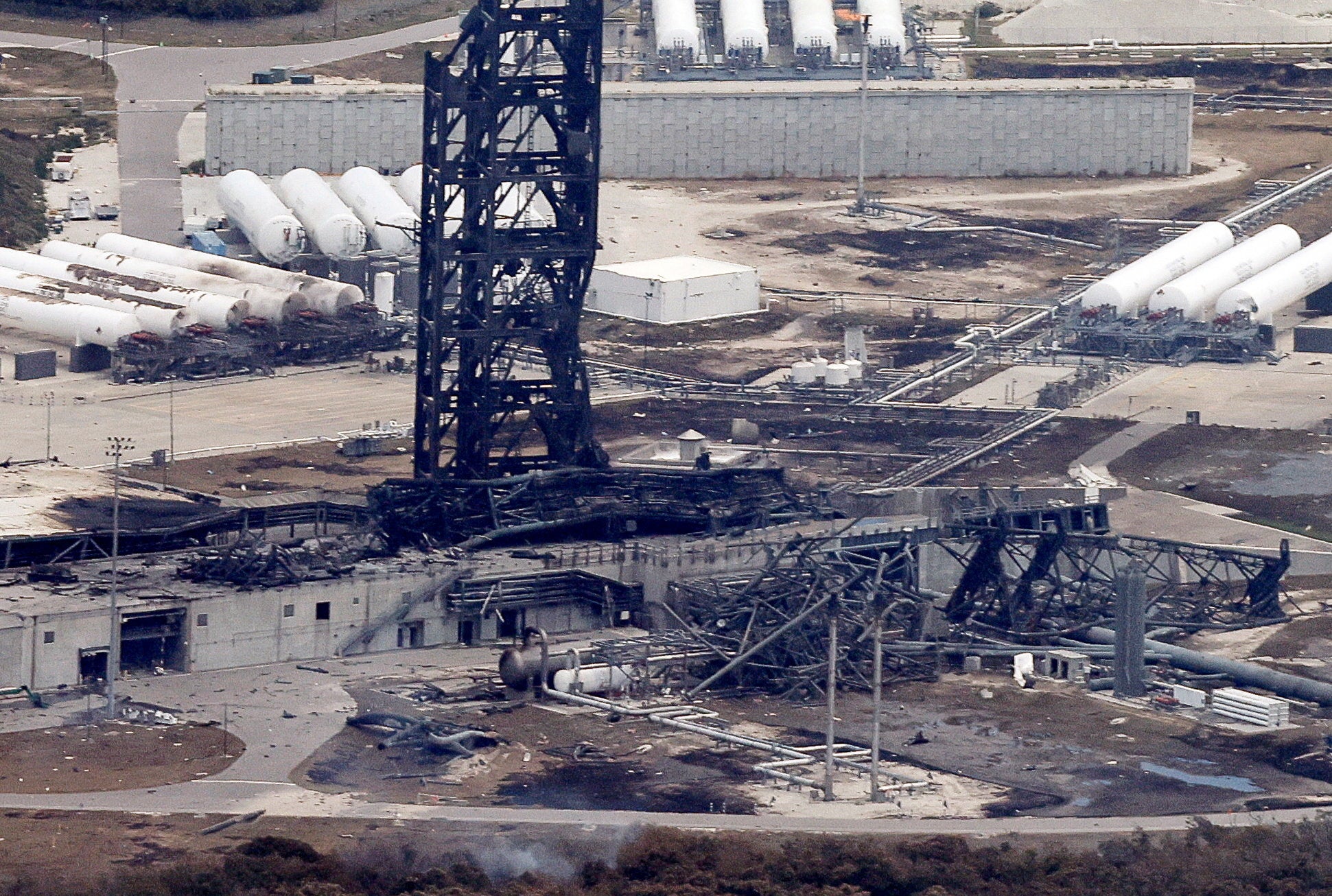
Aerial assessments on Friday revealed a scene of crumpled wreckage, with only a single tower and the water tank remaining intact. Emergency services issued urged the public to avoid any debris that might wash ashore and to contact 911 immediately.
The explosion marks a considerable setback for Blue Origin, following closely on the heels of another issue just last month when the entire New Glenn fleet was grounded due to an upper-stage engine malfunction that resulted in a satellite being deployed into an incorrect orbit.
 open image in gallery
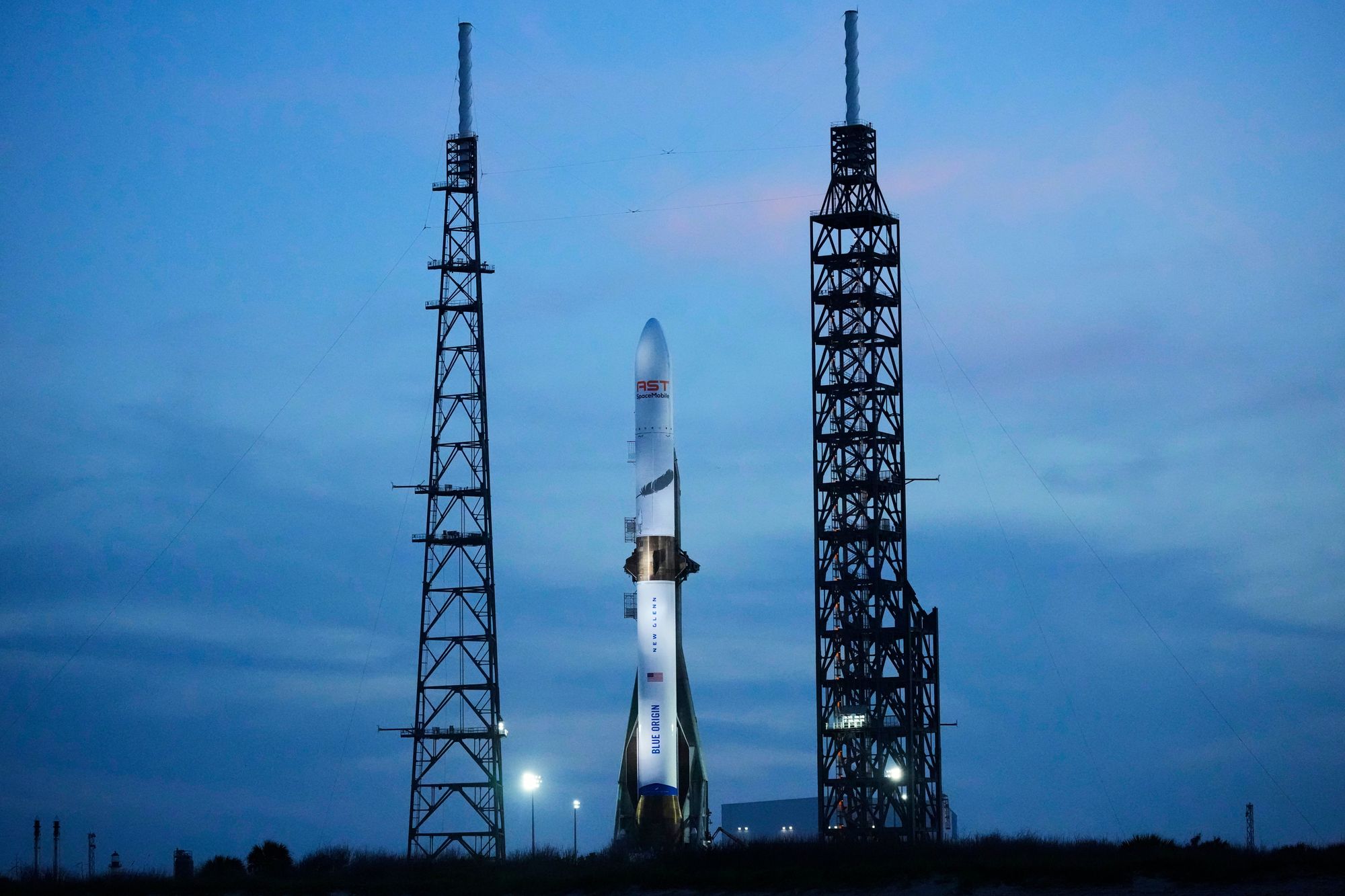
Named in honor of John Glenn, the first American to orbit Earth, the New Glenn rocket is central to Blue Origin’s ambitions to launch lunar landers for NASA’s Artemis program. This initiative aims to establish a sprawling base near the moon’s south pole and land the first Artemis moonwalkers as early as 2028. Earlier this week, Blue Origin had secured a new contract from the space agency worth hundreds of millions of dollars.
The New Glenn is one of the largest rockets designed to reach orbit, powered by seven first-stage engines that use liquid oxygen and liquefied natural gas, essentially methane. It has previously flown three times. Crucially, none of the 48 Amazon Leo satellites assigned to future missions were on board the rocket when the blast occurred.
Another batch of Amazon Leo satellites, which compete with SpaceX’s Starlinks in providing internet service to remote areas, was awaiting liftoff several miles away at Cape Canaveral Space Force Station, slated for launch via United Launch Alliance’s Atlas V rocket.
 open image in gallery
In a stark contrast, within 12 hours of the Blue Origin explosion, SpaceX successfully launched more Starlinks into orbit Friday morning. SpaceX CEO Elon Musk operates two active launch pads in Florida: one at the Space Force side, from which the latest Falcon 9 lifted off, and another at NASA’s Kennedy Space Center.
Blue Origin, however, relies on a single Florida pad: Launch Complex 36, a site with a rich history dating back to the early 1960s, having hosted launches for NASA’s Mariner and Pioneer interplanetary probes, as well as the moon-bound Rangers and Surveyors. The Washington state-based company invested over $1 billion in rebuilding the complex, converting it from double pads to a single one, after leasing it from the Air Force in 2015.
The company’s smaller New Shepard rockets, which carry tourists and scientific experiments on suborbital flights, operate from Texas. These suborbital hops were paused in January to allow Blue Origin to concentrate on the New Glenn and its upcoming lunar missions. All these operations are now on hold, pending the ongoing investigation into the explosion.
 open image in gallery
NASA Administrator Jared Isaacman said late Thursday that the space agency would assess the near-term impacts on the Artemis program.
The Artemis II mission, which saw four astronauts orbit the moon in April, was launched by NASA’s Space Launch System rocket.
Prior to the explosion, Blue Origin had planned to launch a prototype lunar lander to the moon on a New Glenn this fall, with another lander scheduled to enter Earth orbit in 2027 for docking practice by the soon-to-be-announced Artemis III crew.
A touchdown by two astronauts on Artemis IV, utilizing either a Blue Moon lander or SpaceX’s Starship depending on readiness, was targeted as early as 2028.