


Burnham pauses prisoner early release scheme before September launch
Probation union and crime victims had raised doubts over plan to free 6,000 offenders across England and Wales
Andy Burnham has paused an early release scheme for 6,000 prisoners that was due to start in September after an outcry from crime victims.
The prime minister said an “urgent review” will aim to “minimise risk to the public” amid concerns that killers, rapists and sex abusers would be freed on tags.
Probation officers have warned that a “sense of chaos” had descended across the Prison Service, with staff unable to make preparations for the mass release.
The mother of police officer Andrew Harper said on Thursday that the proposed early release of her son’s killers was “another letdown” for their family.
In a statement, Burnham said: “I am working closely with the new justice secretary and have instructed my team to put a pause on the changes that were due to start in September.
“No prisoners will be let out under this policy until we have conducted an urgent review and done everything we can to minimise risk to the public. Where changes are needed, we will not hesitate to make them.”
Under the early release proposals, killers, rapists and sex offenders would be released early into the community and monitored by tags.
Tania Bassett, Napo’s national officer, told the Guardian the union had asked prison managers whether all preparations for early release across England and Wales should continue but received no response.
She said: “The prime minister’s statement saying he will review early release plans for September has created a sense of chaos in His Majesty’s Prison and Probation Service.
“Napo has asked HMPPS what the plan is and, as yet, they do not know. This is really worrying for our members who are currently working hard on pre-release work for those due to come out in September. It was already an incredibly short timeframe to meet the implementation date.
“This review could potentially reduce the timeframes even further, putting more pressure on our already overworked members. We urge the prime minister for clarity as soon as possible.”
According to the union, preparations for release require probation staff to carry out extensive work that usually takes at least six to eight weeks.
This includes reviewing risk assessments, making referrals for accommodation, carrying out home visits, coordinating with victim liaison officers and domestic abuse support officers and developing multi-agency safeguarding plans.
It can also take several weeks to ensure that tagging measures are in place before an offender is placed in accommodation. Unless probation staff received “imminent, concrete direction” about who will be considered, established release plans could collapse, a union official said.
The review has caused chaos in prisons, where managers are responsible for calculating release dates over several weeks from 2 September.
The Sentencing Act 2026 introduces an “earned progression model” that replaces automatic halfway release for prisoners serving standard determinate sentences in England and Wales with a tiered, behaviour-based system.
after newsletter promotion
It will allow most prisoners to be released after serving a third of their sentence behind bars rather than 50%, with the rest of their sentence served under strict supervision in the community with the help of electronic tagging.
Prisoners serving time for sexual or violent offences where the automatic release stage is set at two-thirds will become eligible for release at the halfway point, provided they have not committed serious breaches of prison rules.
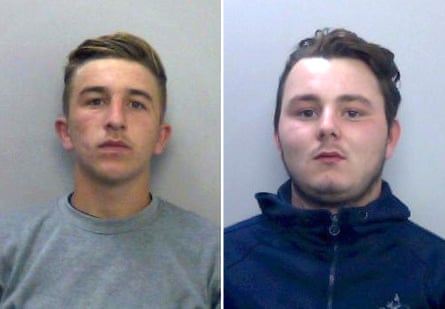
This applies to Albert Bowers and Jessie Cole, two of Harper’s killers who were jailed for 13 years in 2020 for manslaughter. Burnham confirmed that Henry Long, the main perpetrator, “will not be subject to any early release” under the scheme.
Burnham has been urged to pause early release for all serious offenders.
Mark Fairhurst, the national chair of the POA union for prison officers, said: “He needs to seriously rethink this policy so that there are exemptions which will allow him to keep serious offenders behind bars, and that includes violent offenders, sexual offenders and those convicted for domestic abuse so that the victims can at the very least feel a sense of justice.
“We can free up capacity by releasing people convicted of less serious crimes who shouldn’t be locked up and can be supervised in the community. But this prime minister should try to get the public on his side.”
The chief secretary to the Treasury, Emma Reynolds, told BBC Radio 4’s Today programme that Burnham wanted to look at the implementation of the early release policy. Asked if that meant it might not happen, she replied: “That is something that he and the justice secretary will set out in the coming weeks.”
-
Additional reporting by Jayni Makwana
Explore more on these topics