


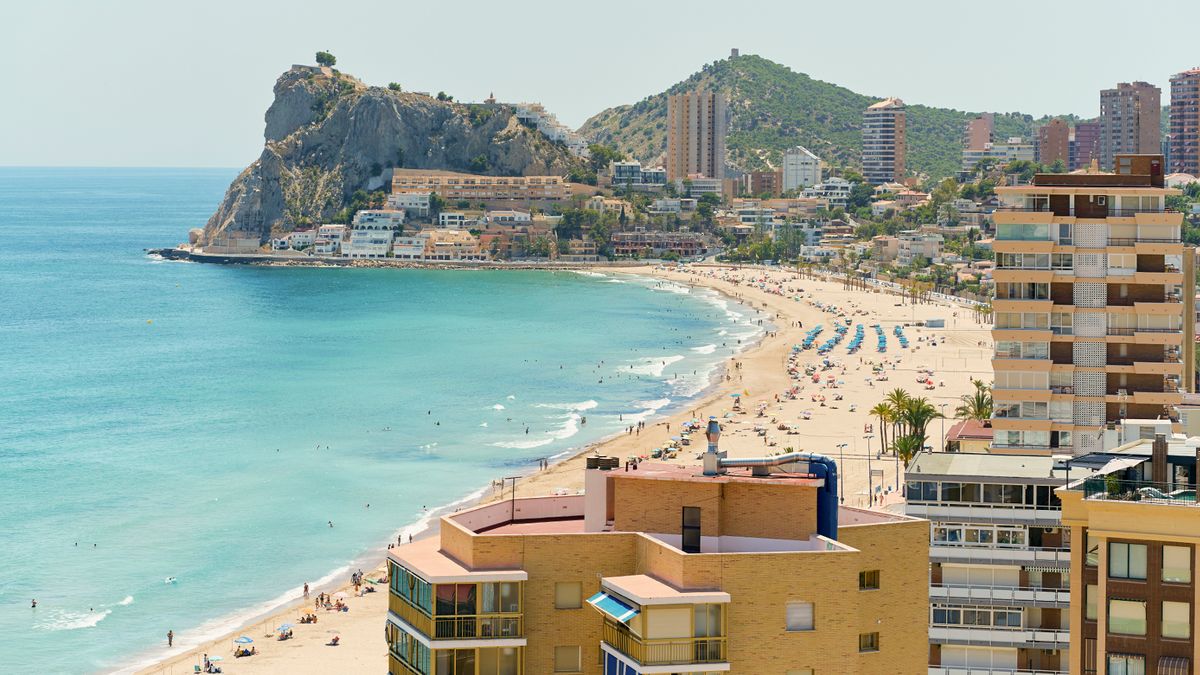
An earthquake in southern Spain has been felt in Benidorm and Alicante.
The 4.1 magnitude quake was recorded at 11.59am on Sunday by Spain’s National Geographic Institute (IGN), with its epicentre near the town of Librilla in the Murcia region.
The tremor lasted several seconds and was also reportedly felt in neighbouring Alicante and Albacete. Alicante is a popular destination for holidaymakers, while nearby Benidorm attracts millions of visitors every year.
The quake was centred at a depth of around three miles, with the city of Murcia located about 18 miles from the epicentre. Emergency services in the Murcia region said they were flooded with calls after the earthquake, reports the Express.
In a post on X, the Region of Murcia’s 112 Emergency Coordination Centre said: “The 112 Emergency Coordination Centre for the Region of Murcia has received more than 80 calls at various points in the region. So far, no personal or material damage has been reported.”
 View 2 Images
The earthquake hit Murcia but was felt as far as Alicante
According to the IGN, the latest quake follows a recent increase in seismic activity in the area.
The institute said there had been seven tremors in the days leading up to Sunday’s earthquake, taking the total number recorded over the past month to 21.
It also said the 4.1-magnitude quake was the strongest recorded in the region during the past six months, surpassing a 2.3-magnitude earthquake recorded on June 3.
The latest tremor comes just days after a powerful 4.7-magnitude earthquake struck Naples, Italy, on Friday, damaging buildings and vehicles and leaving around 20 people injured.
Spain has experienced far more destructive earthquakes in the past. In 2011, a magnitude 5.2 earthquake struck the southern town of Lorca, killing 10 people in what was the country’s deadliest earthquake in decades.
The town, located southwest of Alicante, suffered extensive damage, with several buildings collapsing. Hundreds of residents were forced to leave their homes, while a hospital was evacuated. Cars were also crushed beneath falling masonry.
READ MORE: Flowers left at industrial estate after girl, 9, dies as shocked workers arrive to crime scene
READ MORE: Eggs and bricks thrown at police in house protest with cop car smashed and left ‘unusable’
Southern Spain is one of the country’s most earthquake-prone regions because Andalusia and Murcia sit on the northern edge of the collision zone between the Eurasian and Nubian (African) tectonic plates.
The Nubian plate continues to move northwards towards Eurasia at a rate of around 4mm to 5mm per year.
The movement of the plates, which helped form the Atlas Mountains in Morocco and the Alps in central Europe, still causes seismic activity in southern Spain today.
The activity is concentrated along the Betic Cordillera, a mountain range that stretches from the Gibraltar Arc through Malaga, Granada, Almeria and Murcia to the Mediterranean coast.
Article continues below
Ensure our latest stories always appear at the top of your Google Search by making us a Preferred Source. Click here to activate or add us as your Preferred Source in your Google search settings.