


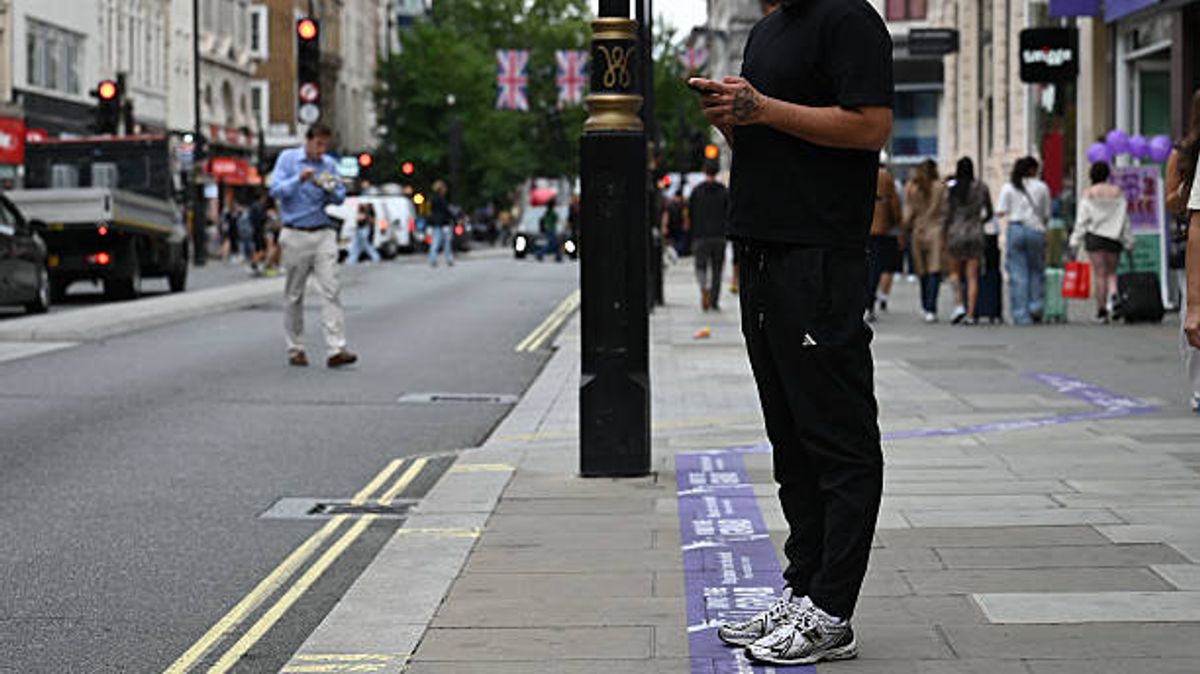
The Met and Apple have reached an agreement that protects mobile phone users and makes stolen phones unusable.
Apple has agreed to install a “kill switch” that will make snatched devices worthless.
The new agreement between the Met and Apple will see stolen device identifiers being shared, creating a joint intelligence picture to track phones and identify whether they reappear in circulation.
Britain’s biggest police force is pushing the Home Secretary to force phone companies to make stolen devices harder to reuse as chief Sir Mark Rowley continues a crusade to make the handsets “unusable bricks”.
Sir Mark issued an ultimatum in March calling on telecoms giants to take action to make phones less desirable to steal by making them impossible to reuse.
To solve the problem, Apple switched on “stolen device protection” as a default setting for all users in a recent global system update of their phones.
On Thursday, the force revealed it has started sharing data with Apple to more closely track whether stolen handsets get reconnected to a phone network after they are taken.
 View 3 Images
The Met have been working to combat the number of phone thefts across the capital
Speaking after an operation that targeted two phone shops in north London on Wednesday, Sir Mark said that the information from Apple will allow officers to build up a global picture of what happens to stolen handsets.
He told the Press Association: “If we share the data we have on the phone stolen, with the data they have on things like reactivations and future uses of phones, we can get a global picture of phones being stolen, are they being reactivated, are they being broken down for parts, where they’re being exported to in the world.
“We’re already seeing, whereas a few months ago the majority of stolen phones were being reactivated because of security flaws, now with the security improvements it’s the minority being reactivated, that means it’s harder for criminals to profit, that will help bring down the crime further.”
The Met has some of the highest rates per thousand people of personal robbery and theft from the person in England and Wales, among which phones are a “significant” problem.
The international trade in stolen phones is worth millions of dollars, with a device stolen in London worth more in countries like China because it has none of the government restrictions put in place by authorities there.
In the UK, the Met has seen adverts on Snapchat offering children as much as £380 to steal a single iPhone, with a bonus of £100 for stealing 10.
Sir Mark Rowley said: “I gave an ultimatum to tech firms – take urgent steps to prevent stolen phones from being resold and reused, or we will call on Government to step in and legislate.
“For the first time, we are routinely sharing intelligence on stolen devices, building a joint picture of how these phones move and whether they reappear in circulation.
“That partnership is already making a difference.
“If stolen phones cannot be reactivated, their value collapses, and so does the incentive to steal them.
“We are driving up the risk for offenders while cutting off the reward.”
 View 3 Images
The change will make it harder to resell stolen phones
The Met has written to the Home Secretary asking for legislation to make phone companies publish data on stolen devices and whether they are reconnected, and to enforce measures to make stolen devices unusable.
It said that in the 12 months from June 2025 to May 2026 the number of thefts and robberies where phones were stolen fell by 14,000, a reduction of 18 per cent on the previous year, and that the first five months of this year saw 6,700 fewer, a drop of 20.6 per cent.
Westminster, where between 69 per cent and 72 per cent of thefts from the person and personal robberies each week involve phones, has seen a reduction of 45.8 per cent so far this calendar year.
At a conference on phone theft in March, the Met called for anti-theft protection to be switched on by default, stolen phones to be rendered unusable, and better access to IMEI (International Mobile Equipment Identity) data to make it easier to return devices to their owners.
Figures released under Freedom of Information legislation show only a fraction of devices taken in London are returned to their owners.
Between 2017 and February 27 2024, a total 587,498 phones were stolen in London excluding the City, 13,998 of which were recovered, and 573,500 were not.
The force also solves one of the smallest proportion of these offences compared with others in England and Wales.
Article continues below
In the year to the end of December 2025, 6.9 per cent of personal robbery cases ended with a suspect being identified and dealt with, while the rate was 0.9 per cent for theft from the person.