



An Alaskan community is split on a plan to create a gold mine in the middle of a national park amid environmental concerns.
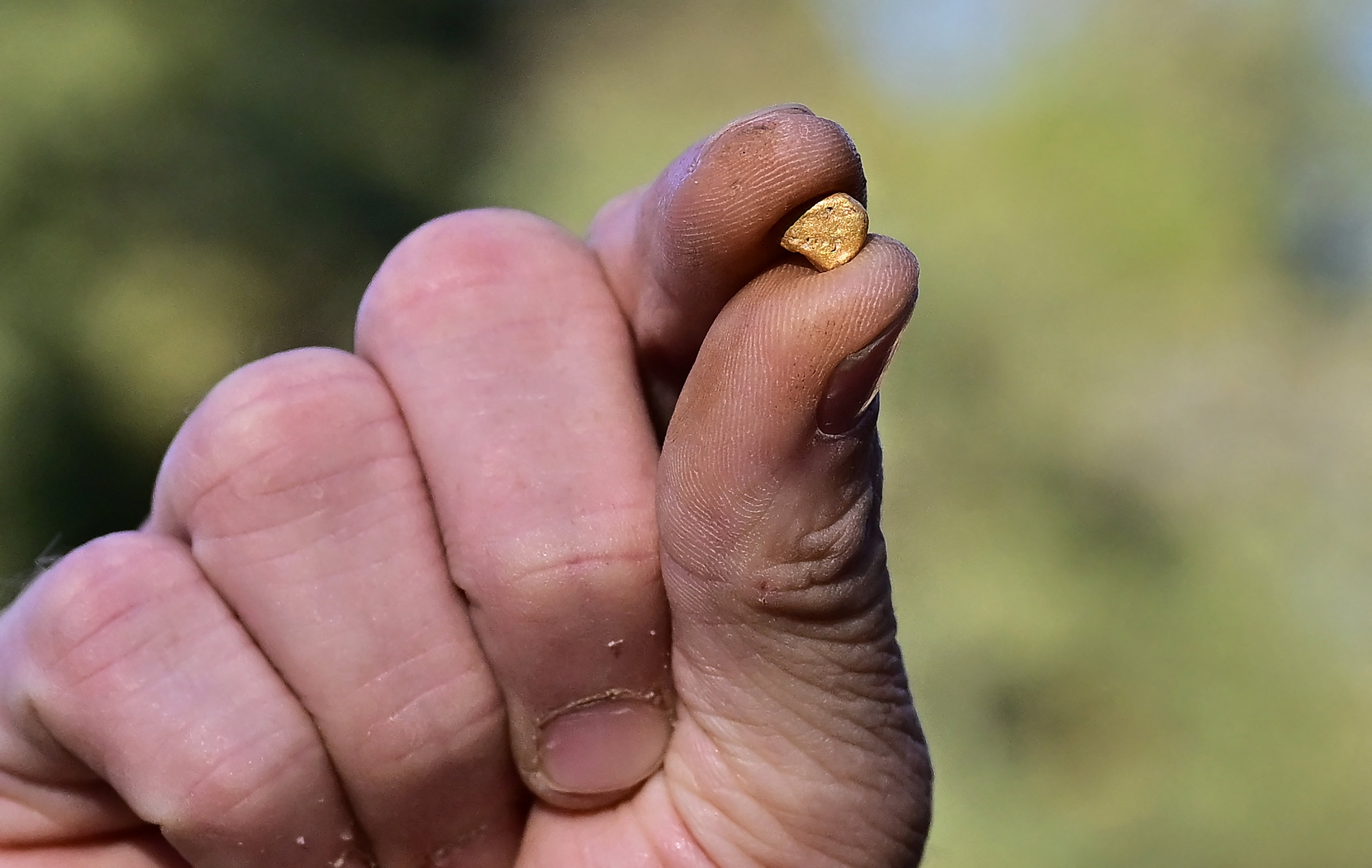
The federal government granted Alaska Native-owned Cook Inlet Region Inc. the rights to Johnson Tract, a nearly 21,000-acre property surrounded by Lake Clark National Park, in the 1970s as part of a land exchange agreement. Mining company Contango Silver & Gold now has a lease agreement with Cook Inlet Region and plans to create a mine on the mineral-rich Johnson Tract.
While opponents of the project have voiced concerns over the potential effects on beluga whales and brown bears in the region, supporters say the environmental impacts will be minimal, and it would be an economic boost for local tribes.
Contango plans to ship ore mined at Johnson Tract to an existing mill facility, instead of processing the materials there. This would lessen the company’s environmental footprint in the area, but according to The Wall Street Journal, local business owners worry transporting ore through the park will scare off the brown bears that visitors come to see.
 open image in gallery
“Over many, many years, they started bringing their cubs into the yard, and then they started nursing in front of us,” Joanne Edney-Coray, who runs the Silver Salmon Creek Lodge with her husband, told the publication. “It can be ruined in an instant with teams of people on mining trucks.”
Environmental groups and the Chickaloon tribal council filed a lawsuit last year against the U.S. Army Corps of Engineers, arguing that it violated the Clean Water Act by granting a permit for the Johnson Tract project.
The Army Corps did not ensure endangered Cook Inlet belugas are protected from water and noise pollution or thoroughly evaluate the project’s potential to cause acid mine drainage and leach contaminants into the nearby Johnson River, the Center for Biological Diversity, one of the plaintiffs in the lawsuit, alleged in a May 2025 press release.
When The Independent reached out to the Army Corps of Engineers, it said it “does not comment on matters in litigation,” and referred to the Justice Department.
 open image in gallery
Contango CEO Rick Van Nieuwenhuyse argued that his company is “not ruining a park.”
“We’re going to do everything in a way that is really minimizing any of the impacts,” he told the Journal.
The Journal noted that Contango is performing a baseline wildlife survey, which includes monitoring the belugas to assess where they swim.
Greg Encelewski, the president of the local Ninilchik Traditional Council, also pointed out the potential economic benefits of the mining project.
“Our tribes are trying to become self-sufficient, and without some type of economic engine we’re not going to,” he told the Journal.
The Independent has reached out to Contango, Cook Inlet Region and the Justice Department for comment.