



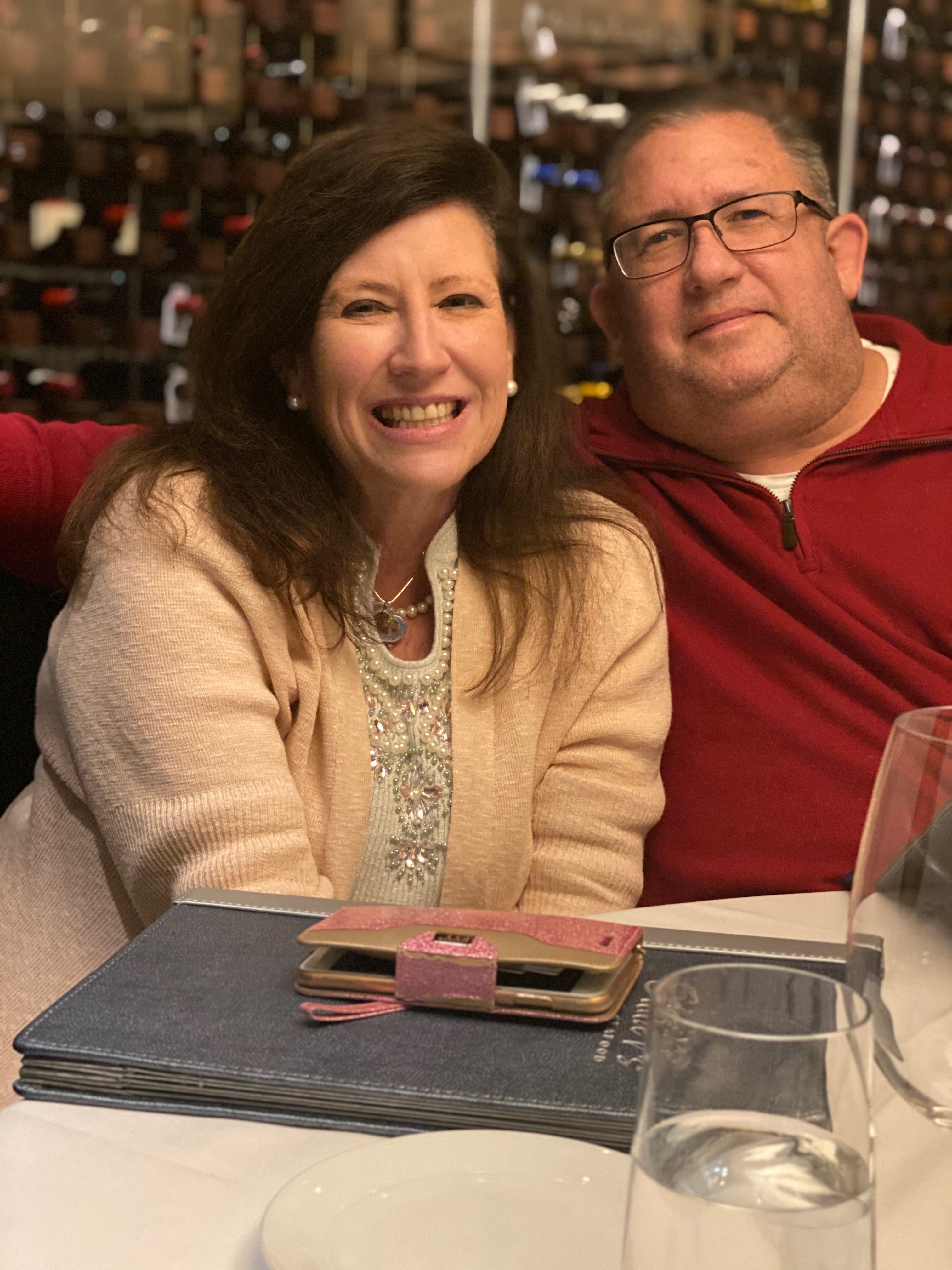
When Debbie Rhodes was diagnosed nine years ago with a terminal blood and bone marrow cancer,an unlikely hero would ultimately come to the rescue: Shark Tank star and billionaire, Mark Cuban.
Rhodes, 50, was initially prescribed imatinib, a drug proven to manage chronic myeloid leukemia as a chronic condition and extend patients’ lives by a decade or more. To the relief of Rhodes, and her husband Randy, the drug was covered by their insurance plan. That relief was reinforced when their local pharmacist in Leawood, Kansas, told them out-of-pocket costs for the medication ranged from $13,000 to $15,000 each month.
The medication worked wonders: After starting treatment, Debbie’s blood work showed the drug was keeping her cancer from progressing and it continues to work for her today.
But two years ago, the couple was delivered a gut punch after Randy, an attorney, discovered his new health insurance policy didn’t cover Debbie’s medication. The couple believed they had little choice but to pay thousands of dollars each month for imatinib, and feared burning through their life savings.
“When we learned it wasn’t going to be covered, there was a little bit of shock and concern on our part,” Randy told The Independent. “We were blessed to be in a situation where we could’ve swung it, but [by] never retiring, getting rid of our assets – it would’ve been a liquidating event for us over a period of many years.”
 open image in gallery
As he scrambled for a solution, he felt resentment toward those involved in the opaque world of drug pricing.
“Disgust was the first thing I felt because of the multiple layers of impact that this price gouging has on people,” Randy said. “As a human being, I was outraged to think about people who lost sleep … because this drug was priced out of their reach.”
The attorney, who has previously been involved in litigation against drugstore CVS over pediatric cancer drugs, spent days searching for imatinib at an affordable price.
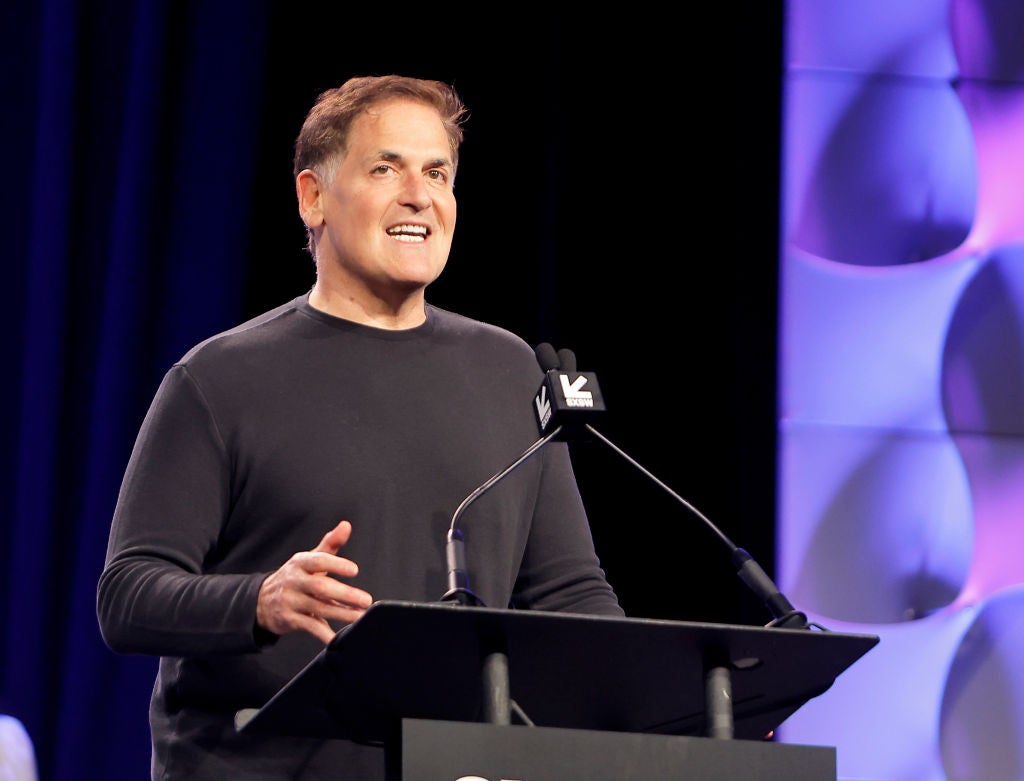
Then he came across Cost Plus Drugs, an online pharmacy founded in 2022 by former Dallas Mavericks owner Mark Cuban. The billionaire entrepreneur founded the company to bring transparency to a corner of healthcare that thrived on secrecy, he explained in a podcast last year.
“It became very obvious the more I dug in, that there was zero transparency, no transparency, and that there were a lot of vested interests that wanted opacity,” Cuban told Hims House. “They want it to be as opaque as possible so that people can’t make good decisions when it comes to their healthcare.”
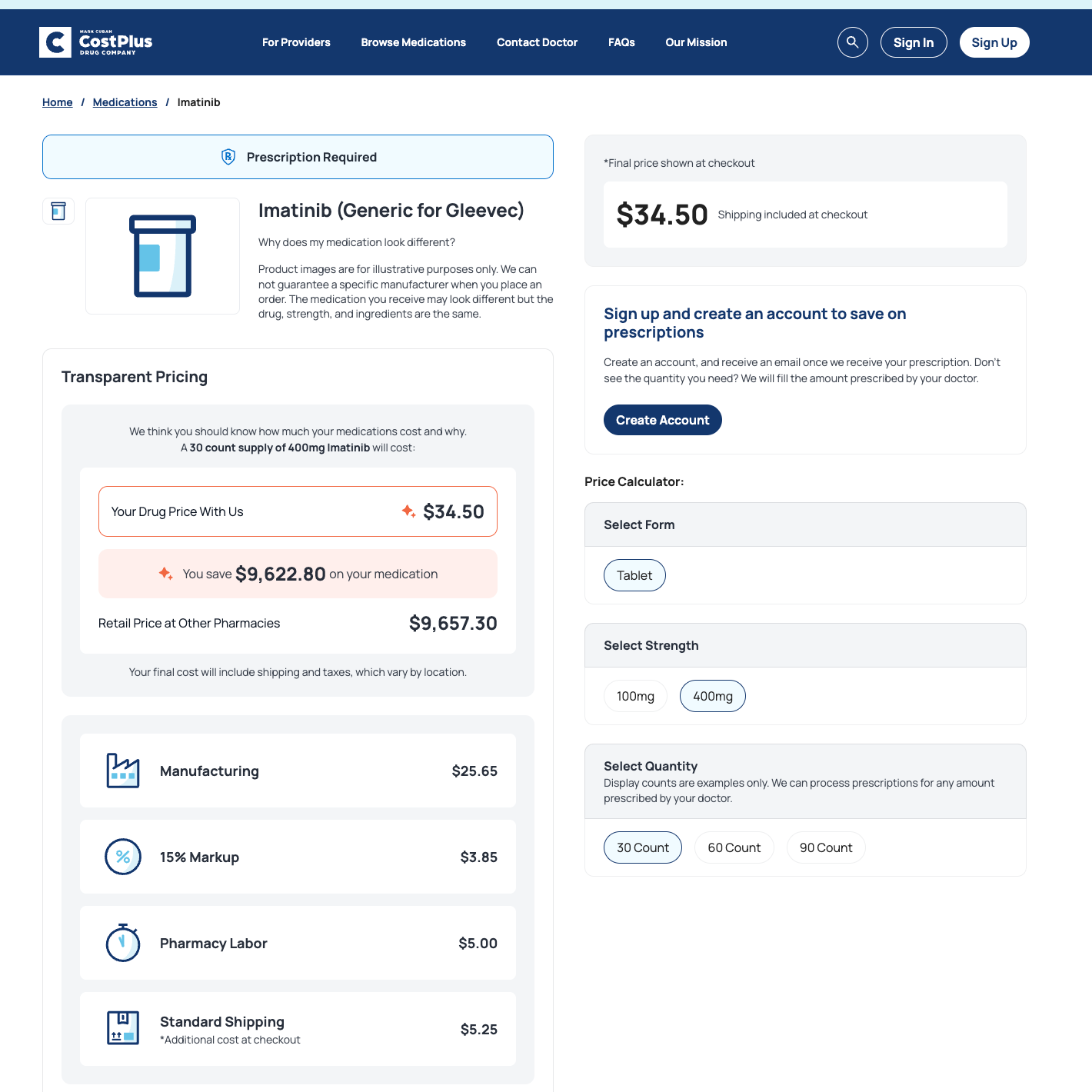
Cost Plus Drug’s operation and others like it have been nothing short of revolutionary in U.S. healthcare. Cuban’s company negotiates prices directly with manufacturers, cutting out insurers and middlemen like pharmacy benefit managers who tend to drive up drug prices. The company then charges its customers a 15 percent markup and and modest fees for labor and shipping, resulting in affordable prescriptions.
The price tag for imatinib on Cost Plus Drugs? Less than $40.
 open image in gallery
 open image in gallery
Randy recalled the moment he told his wife that he’d found the medication for the pharmaceutical equivalent of pocket change.
“I still remember telling her vividly when I found Mr. Cuban’s pharmacy and the price of this drug,” he said. “She broke down into tears … I can’t even begin to articulate my emotions about how I felt when I discovered the real price of the drug and her response to me telling her about it.”
Cost Plus Drugs provided the couple with an itemized breakdown of imatinib’s cost. The quote shows what Cost Plus paid the drug manufacturer, the markup, pharmacy labor to fill the prescription and shipping.
On May 12, a 30-day supply of 400mg of imatinib – a common dosage to treat chronic myeloid leukemia – was $39.75 from Cost Plus Drugs.
This broke down to $25.65 for manufacturing, $3.85 for Cost Plus Drugs, $5 for pharmacy labor and $5.25 for shipping.
The Cost Plus Drugs quote also provided the current out-of-pocket retail price for imatinib: $9,657.30. The Independent has contacted Cost Plus Drugs for comment.
Imatinib is the generic form of Gleevec, a drug first introduced to the pharmaceutical market 25 years ago by drugmaker Novartis. It can treat multiple conditions, including chronic myeloid leukemia.
The drug’s patent expired in 2015 and it eventually became widely available as generic versions of imatinib, approved by the U.S. Food and Drug Administration.
Imatinib has an excellent track record of keeping patients alive past key treatment benchmarks of five and 10 years, according to studies in The New England Journal of Medicine. In contrast the average cancer patient has a 70 percent chance of living another five years after being diagnosed, according to the American Cancer Society.
 open image in gallery
Novartis, one of several manufacturers that makes imatinib, said the variation of the drug’s pricing comes down to the complexity of the U.S healthcare market.
“U.S. out-of-pocket costs can vary considerably depending on insurance coverage, the type of benefit plan, where the prescription is filled, and added costs and fees from third parties,” a company spokesperson told The Independent in an email.
A 2020 study, in the medical journal Lancet Haematology, illustrates that point in both foreign and domestic contexts. At the time of the study, the annual cost for imatinib in Europe was $4,000 per year, compared to an average annual cost of $35,000 in the U.S.
But the study also found a vast range for imatinib in the U.S. – from $4,423 to $72,300 – depending on which manufacturer or distributor was providing the drug.
There are complex reasons behind imatinib’s wild variations in price, said Jesse Mendelsohn, senior vice president at Model N, a revenue optimization and compliance firm for the pharmaceutical, medtech and high-tech industries.
“While European nations generally maintain more transparent net pricing, the U.S. market is more disconnected and heavily influenced by the role of pharmacy benefit managers and private intermediaries,” Mendelsohn told The Independent in an email.
 open image in gallery
Pharmacy benefit managers act as middlemen between drug manufacturers and insurance companies. A manufacturer offers post-purchase rebates or discounts if PBMs can, for example, hit sales numbers for a given drug.
In turn, these managers pitch a drug to insurers and negotiate its coverage. This negotiation decides whether or not the drug gets “preferred” status, which makes it cheaper for patients to buy. Drug manufacturers set a high retail price as a starting point to protect their profit before the pharmacy managers negotiate the price down, Mendelsohn said.
“The retail price is generally a manufacturer-set list price that acts as the baseline for negotiations across the drug supply chain”, he said. “These prices are often set high enough to absorb concessions to intermediaries.”
Not every patient will pay the drug’s retail price, but three groups typically do, Mendelsohn said.
“While most patients do not pay the full retail price, those who are uninsured, have high-deductible plans, or need medications not covered by their insurance are exposed to these high costs,” he said.
Common sense says that the longer a drug is on the market, the cheaper it gets. That’s not always true – as Debbie and Randy’s initial sticker shock shows.
In many cases, generic drugs enter the market at considerably lower prices than their brand-name predecessor. Yet patients without insurance may not see big savings over time. That happened with imatinib, according to CancerToday, a publication from the American Association for Cancer Research, and that’s why its retail price can still be around $10,000 per month.
The complex and often confusing U.S. drug pricing system has been a thorn in the side of Americans for decades. A succession of administrations – from former Presidents Barack Obama and Joe Biden to President Donald Trump – have made attempts to bring prices down.
 open image in gallery
Trump signed an executive order in May 2025 mandating a “most-favored-nation” framework meant to cut down on high drug prices. The order allowed Americans to buy some drugs directly from manufacturers in line with the price paid by other developed countries, and then sell directly to Americans.
To make these lower prices available, the Trump administration set up Trump Rx, a federally-run online program. It offers discounts on a limited number of the most expensive and popular name-brand drugs, including weight-loss medications like Wegovy, Ozempic and Zepbound, to those without insurance.Trump Rx doesn’t provide discounted generic drugs like imatinib.
Still, Americans are finding respite in sites like Cuban’s Cost Plus Drugs and other platforms such as GoodRx, WellRx and SingleCare. If anyone knows what that feels like, it’s Debbie, who is still doing well nine years later.
“Indescribable relief,” she wrote in an email to The Independent. “And later, joy when I shared that information with my oncology team so that other patients who suffer with CML could benefit from Mr. Cuban’s remarkable pharmacy.”