


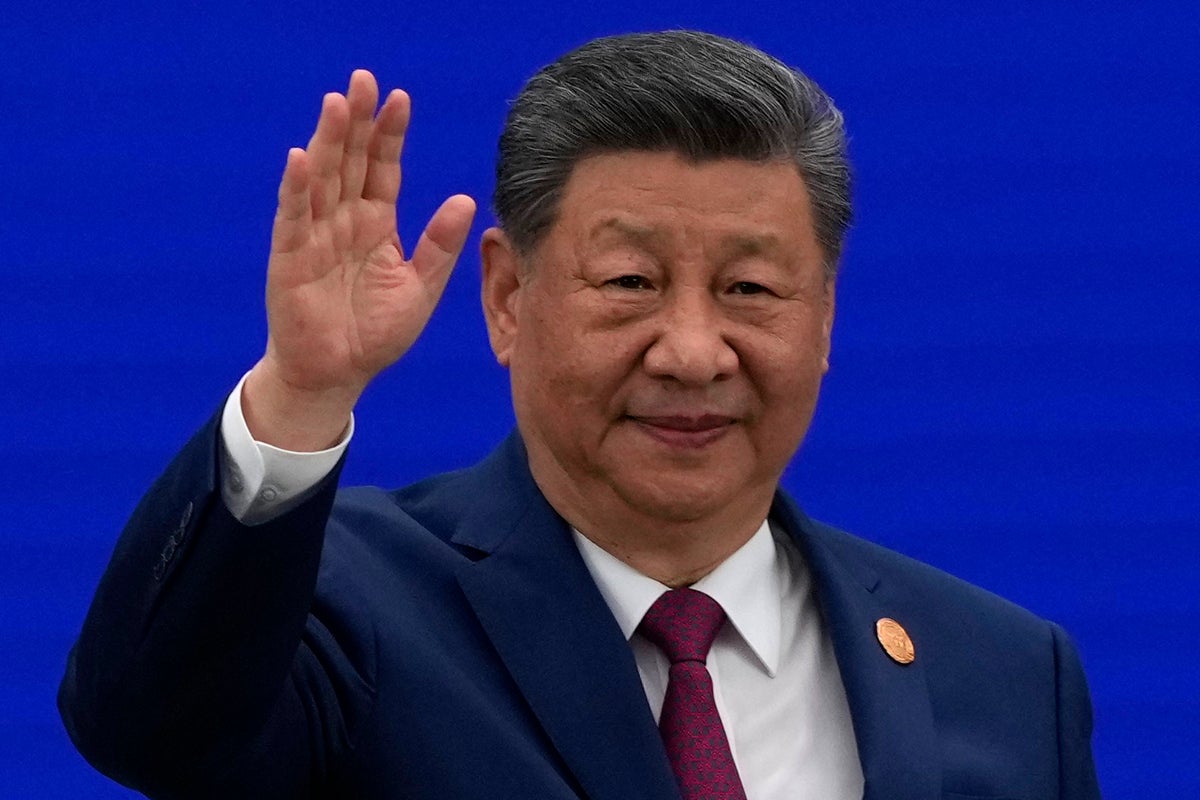
Chinese president Xi Jinping on Monday praised Beijing’s brutal crackdown on the Tiananmen democracy protests as he called on the people to return to an “indomitable fighting spirit” to defend the nation’s sovereignty.
President Xi was addressing top Chinese officials gathered in the Great Hall of the People in Beijing to commemorate the centennial of Jiang Zemin‘s birth, who led the nation from 1993 to 2002.
Zemin, who died in 2022 at the age of 96, was credited with leading China through a decade of rapid economic growth, but was also responsible for the 1989 crackdown on pro-democracy protests at Beijing’s iconic Tiananmen Square.
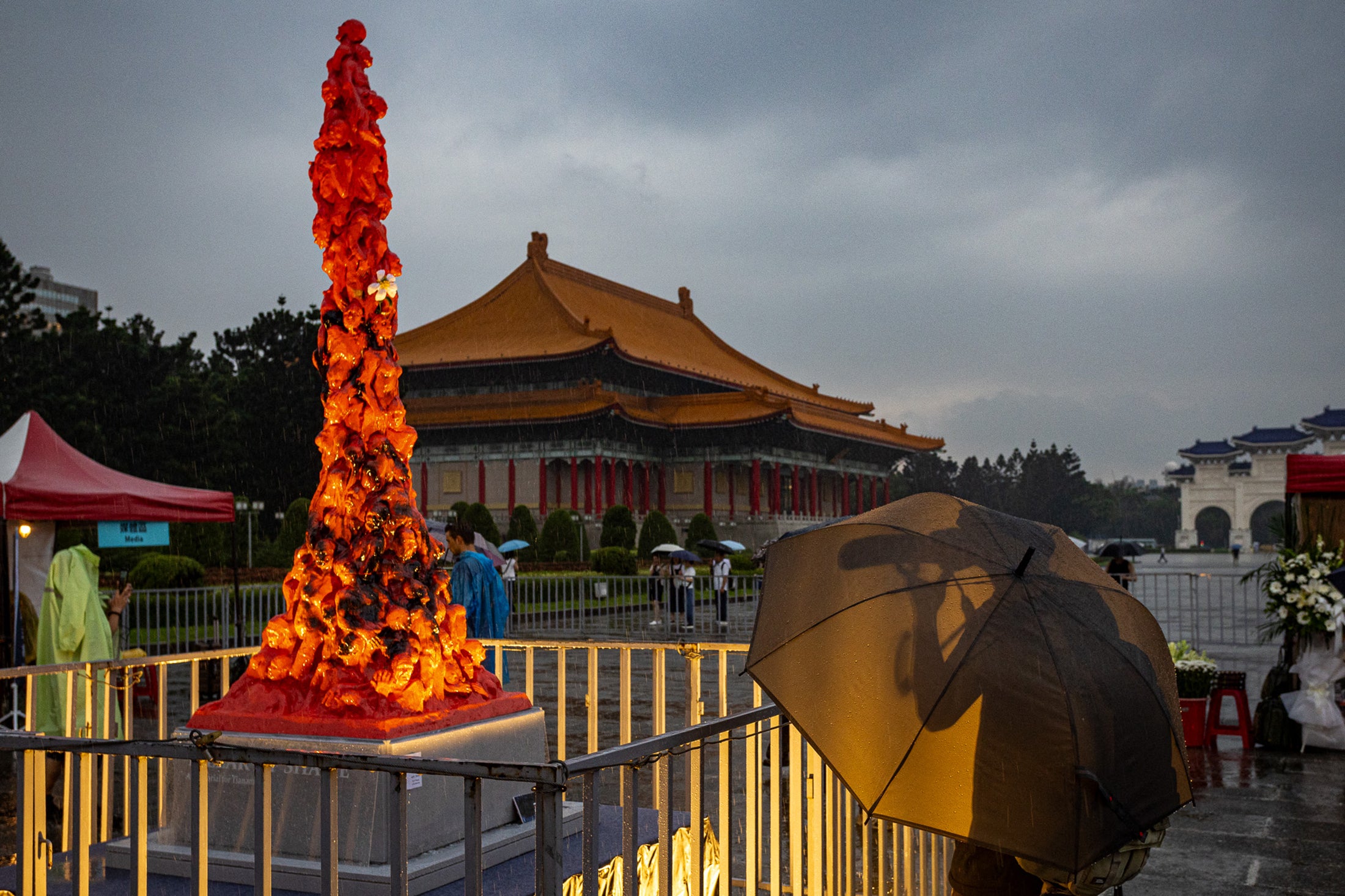
Beijing has banned public commemorations of the Tiananmen Square massacre, where the Chinese army killed at least 10,000 pro-democracy protesters.
During his 40-minute speech, Mr Xi called on the Communist Party to carry forward Jiang’s legacy, presenting the current leadership as the continuation of his political and ideological project.
“With an indomitable fighting spirit and exceptional capabilities, we will actively confront major challenges, whether they be rough seas or even raging storms,” the Chinese leader said.
Mr Xi added: “[We must] resolutely defend our national sovereignty, security, and development interests, thereby writing a new chapter in the two great miracles of rapid economic development and long-term social stability.”
The president mentioned the Tiananmen democracy protests in the long list of achievements credited to Jiang and hailed the Communist Party’s decision to reject the protests.
“In between of the spring and summer of 1989, China experienced a serious political upheaval, Comrade Jiang Zemin resolutely supported and implemented the Central Committee’s correct decisions, effectively maintaining stability in Shanghai,” he added.
Ahead of Monday’s event, China’s state broadcaster aired a 12-part prime-time documentary series chronicling Jiang’s life and achievements.
The programme recounted how, in 1989, Jiang, who had himself been a student protester in the 1940s, forcibly shut down a reformist Shanghai newspaper after it called for greater freedom of speech and voiced support for the pro-democracy demonstrations that culminated in the bloody Tiananmen Square crackdown in Beijing.
The Communist Party ban on the June commemoration has been extended to Hong Kong and Macau in the wake of pro-democracy protests in the former British colony.
Under Jiang and former premier Zhu Rongji, who died last week, China pushed through painful changes: shuttering chronically unprofitable state firms, dismantling the old housing system in favour of a commercial property market, weathering the Asian financial crisis of the late 1990s, and joining the World Trade Organization in 2001.
Mr Xi now faces considerable challenges of his own as he seeks to weather trade frictions with the United States and Europe, tensions over Taiwan, slower economic growth and demographic decline.
Last week, China’s central bank announced plans to issue a set of commemorative coins bearing Jiang’s image later this month to mark the centenary, delighting the late leader’s youthful online fan base.