


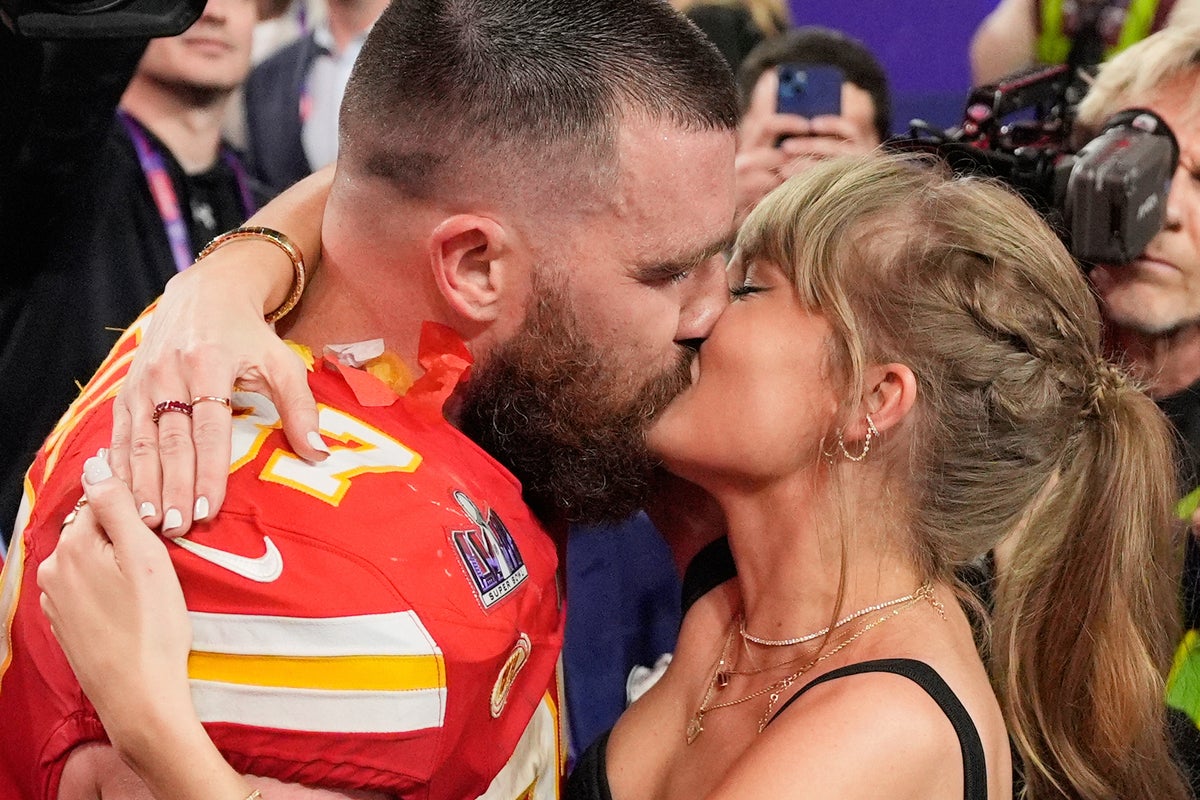
The Taylor Swift-Travis Kelce wedding at Madison Square Garden — over the Fourth of July weekend!! — will hardly be the first time New York has been forced to bend itself around a celebrity. And it’s hardly the first time a celebrity has spent obscene amounts of money on a party, either (recent estimates on how much an MSG-based affair would cost suggested that they’d likely fork out $1 million for lighting alone and as much as $5 million for security). The fact that those estimates exist will tell you all you need to know about the circus and the scrutiny around the couple’s happy day.
I’m one of those rare people who doesn’t feel that strongly about Taylor Swift. I mean, I think the Scottish Fold cats are delightful. Blank Space remains one of the greatest pop songs ever written. As a married mother in my 30s, I still occasionally find myself belting it out in the shower with the sort of unnecessary venom that suggests I’m processing a breakup that happened sometime around 2011. I enjoyed Father Figure and Elizabeth Taylor; I don’t think that she’s unclassy or treacherous for writing openly about her relationships in the way men have gotten away with for decades. Her lyrics don’t rival Leonard Cohen’s and her voice isn’t Whitney Houston’s, but that’s not what I expect from her, so I’m not mad about it.
But, if she and Travis Kelce really are about to throw the celebrity wedding of the decade over July 4 weekend — complete with security cordons, road closures and Manhattan generally grinding itself into a frenzy during a brutal heatwave and one of the busiest holidays of the year — I do reserve the right to sigh. Because every event like this feels like another reminder that New York increasingly exists for everyone except the people trying to live here.
Swift has become such a lightning rod for discourse that there’s an entire subreddit — r/SwiftlyNeutral — dedicated to doing the almost-impossible: discussing her endeavors neutrally. If you want more opinionated content, there’s r/TrueSwifties (“A safer space for Swifties seeking Taylor positivity”) or r/travisandtaylor, the self-identifying “snark sub” (“We’re here to roast and criticize Taylor Swift’s PR stunts (looking at you, Travis), her questionable ethics, and the never-ending antics she wants fans to (literally) buy. If you’re here to defend Mother, you’ve come to the wrong place,” warn the moderators.)
At this point, even Swift’s private jet emissions have become their own meme. Little wonder that the discourse around her engagement has taken up a huge amount of oxygen.
 open image in gallery
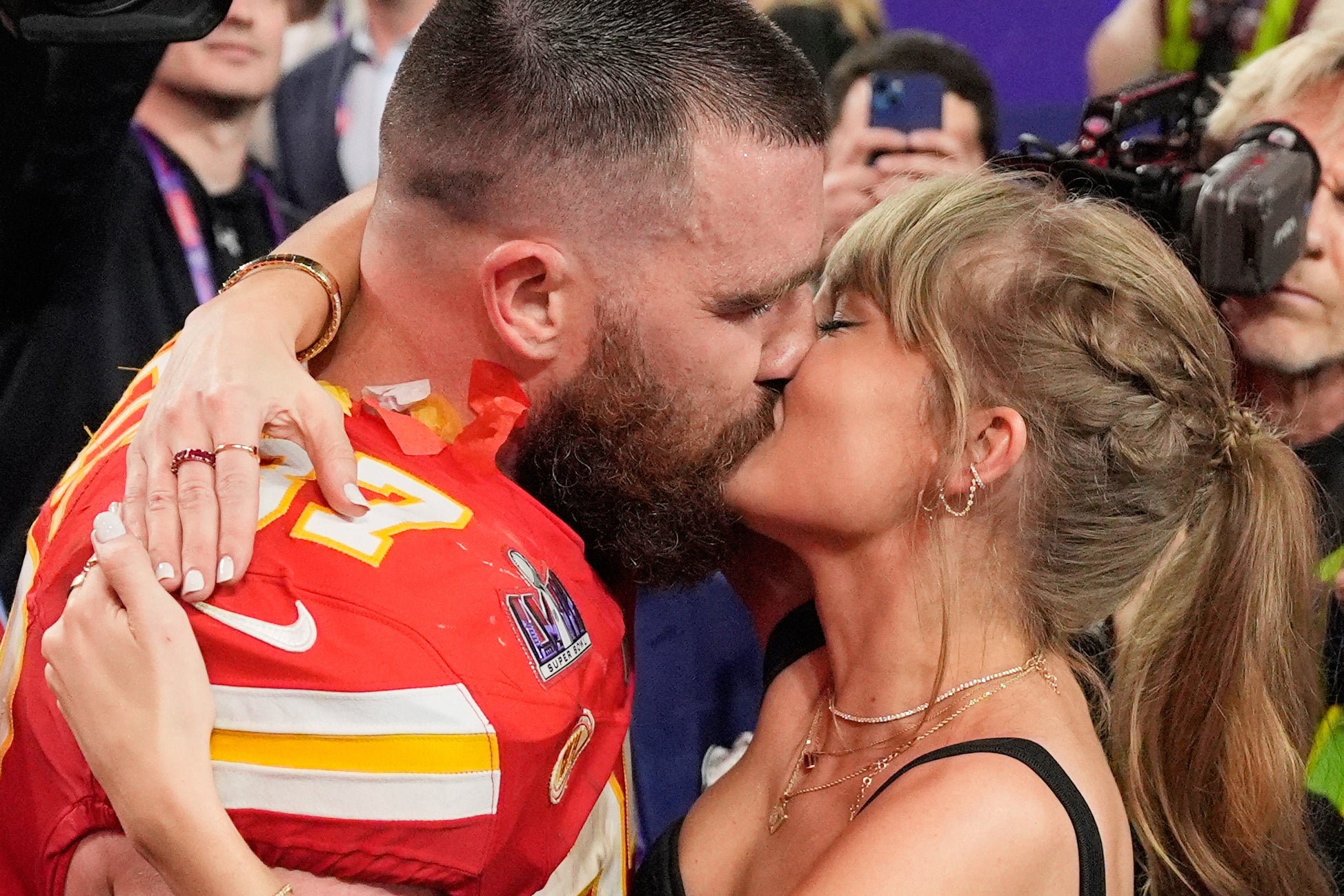
Inevitably, Travis Kelce emerges from The Discourse almost entirely unscathed. And if Manhattan does descend into wedding mania, complete with hundreds of security guards and a “public tent” outside for the plebs to view what’s going on inside MSG, the claim will be that “Taylor shut down New York,” rather than Taylor and Travis.
Meanwhile, down the road in Washington D.C., another celebrity — Donald J. Trump — is making America’s 250th anniversary all about him, pushing family-friendly fireworks displays back to 11p.m. so he can have a glorified rally taking up most of the time normal people would’ve allowed for a nonpartisan celebration of the Fourth. I’d say that’s a more egregious use of the holiday.
So no, Taylor isn’t exactly the problem. She’s simply the most visible example of something much bigger and, selfishly, more personal to me. Because New York has spent years being transformed into a playground for people rich enough to treat the city as a backdrop. And that’d be fine, if the people living there weren’t having such a bad time of it.
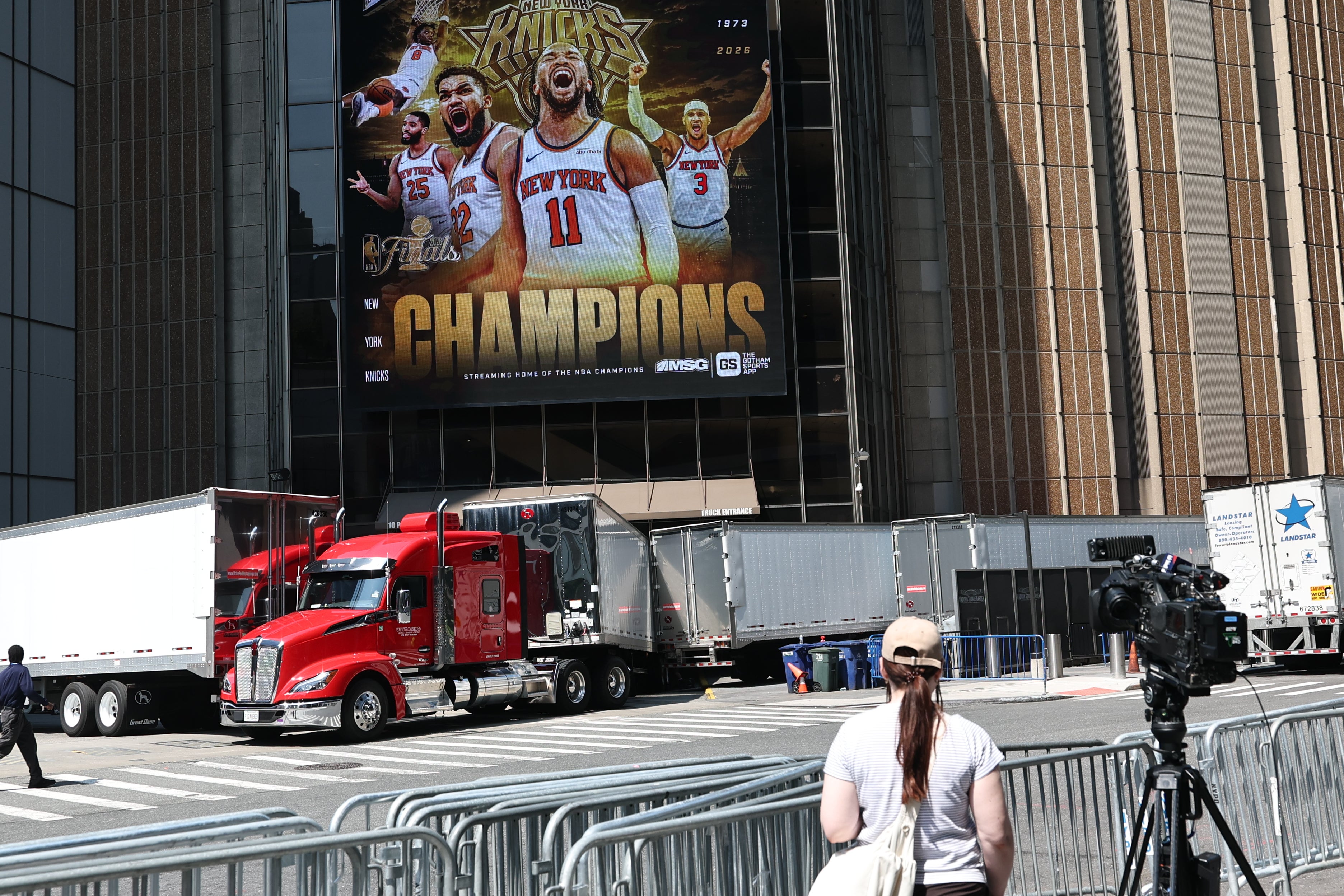
The New York housing crisis is well-known and well-documented: Luxury apartments stand empty because they’re more useful as investments than homes. Entire towers on Billionaires’ Row stand dark at night because their owners bought them as part of an investment portfolio rather than as a place to live. Tens of thousands of rent-stabilized apartments reportedly sit vacant because landlords argue they’re no longer profitable to renovate. Even after the city’s crackdown on short-term rentals and the supposed ban of Airbnb, New Yorkers still spend countless hours trying to compete with investors, speculators and loopholes in the housing market.
 open image in gallery
In the past couple months, my own family joined the search for an apartment after being priced out of our current two-bedroom in Brooklyn. We spent weeks touring apartments that somehow managed to become both astonishingly expensive and impressively tiny.
At one point, well-meaning parents urged us to look at StuyTown, the huge complex in lower Manhattan that was once built as affordable housing for factory workers. It was, they promised, “like living in Hey Arnold!” They talked up community initiatives and beautiful playgrounds. They made it sound like a little haven for families right in the middle of the city.
Well, maybe it used to be that way, before it was handed over to private equity. But what we found were one-bedroom units reconfigured into two-beds with tiny, windowless living rooms of seven feet across that had no room for a table to eat at or a sofa. It’s ideal for students, who like large bedrooms, don’t require large communal areas, and spend most of their time outside. It doesn’t make much sense at all for a family.
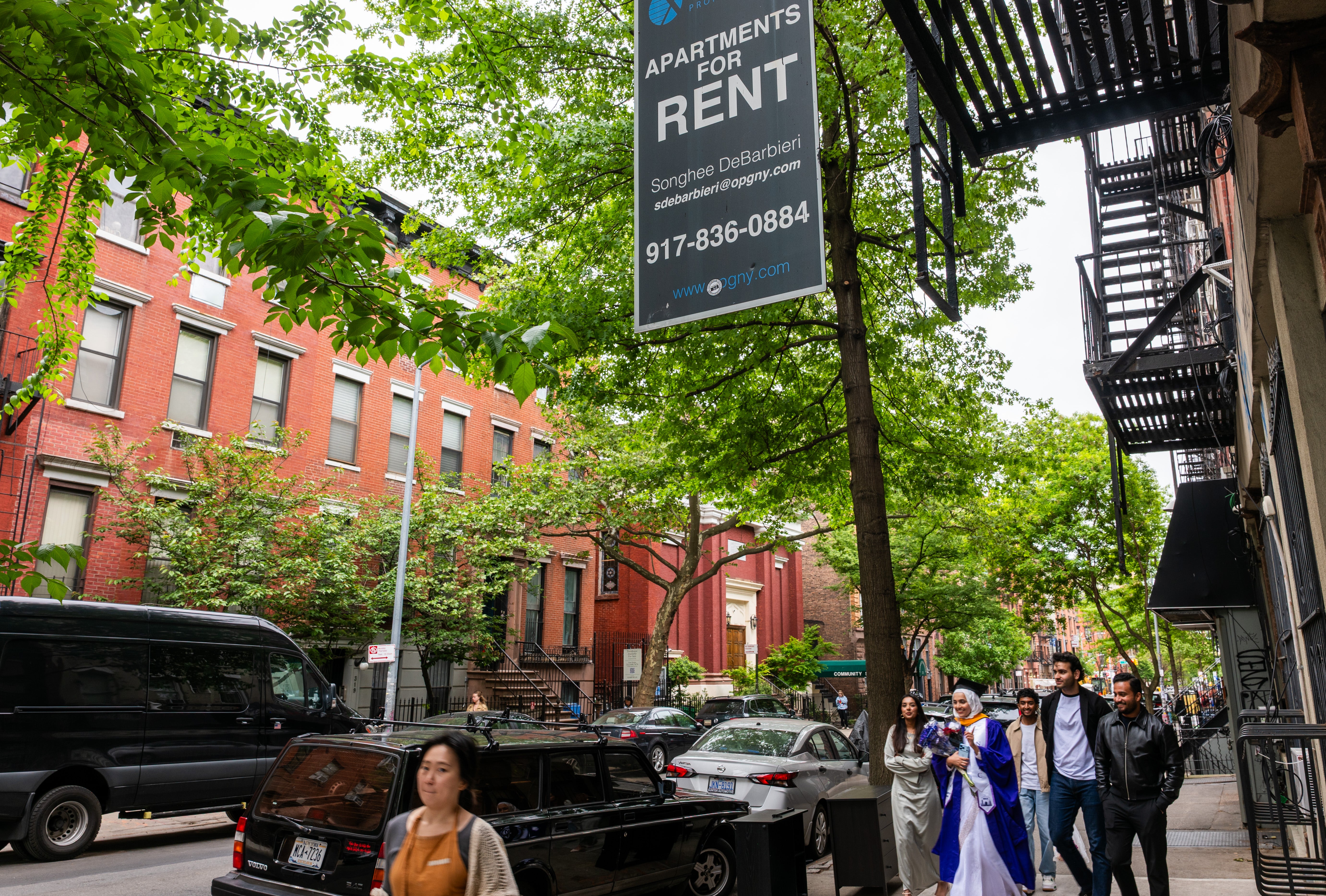
And therein lies the rub. While it’s true that New York is extraordinarily good at creating places to invest, places to visit and places to host spectacular events, it’s increasingly hostile to people who actually intend to stay. As boomers hold onto their housing and young families are priced out, households with young children are in decline — while the population of elderly adults is exploding. Young people are coming back into the city in their 20s, likely students being at least partially bankrolled by their parents, and then a lot of them leave again.
 open image in gallery
The ones who remain in their 30s continue to depend on their richer parents for housing support: in the creative industries, over half of younger people with full-time jobs report that Mom and Dad is helping with their rent. This then creates a vicious cycle, in which rents stay high because most of the people doing the renting are being subsidized.
It also creates an issue wherein the real, scrappy, upstart artists have to go elsewhere, and the ones who can put a year’s rent on Mom’s credit card so they can cosplay for a couple years take up all the space. Those scrappy talents aren’t necessarily moving to a different city to live out their artist dreams and contribute to the economy in Boise, Ohio, either. A lot of them are just giving up on those dreams entirely, or going into banking or retail.
Taylor Swift didn’t invent this version of New York. She isn’t responsible for its housing crisis, its inequality or the sense among so many residents that the city increasingly belongs to somebody else. She isn’t responsible for the K-shaped economy (thank you, again, Donald Trump.)
She just happens to be wealthy enough that, for one glittering holiday weekend, the imbalance becomes impossible to ignore. The rumor that she’s going to set up a tent outside MSG for public viewing of her wedding on screens while the rich and famous people get to watch Stevie Nicks’ set live — and the rest of us elbow our way through crowds and past security cordons in order to get to work — underlines the issue pretty neatly.
Somewhere along the way, New York stopped asking its residents to share the city and started asking them to step aside.
It’s not quite Jeff Bezos using Venice as his own personal Disneyland, but it’s still hard to swallow. At least, it is from a 300-square-foot apartment in an outer borough with no laundry in-unit.