


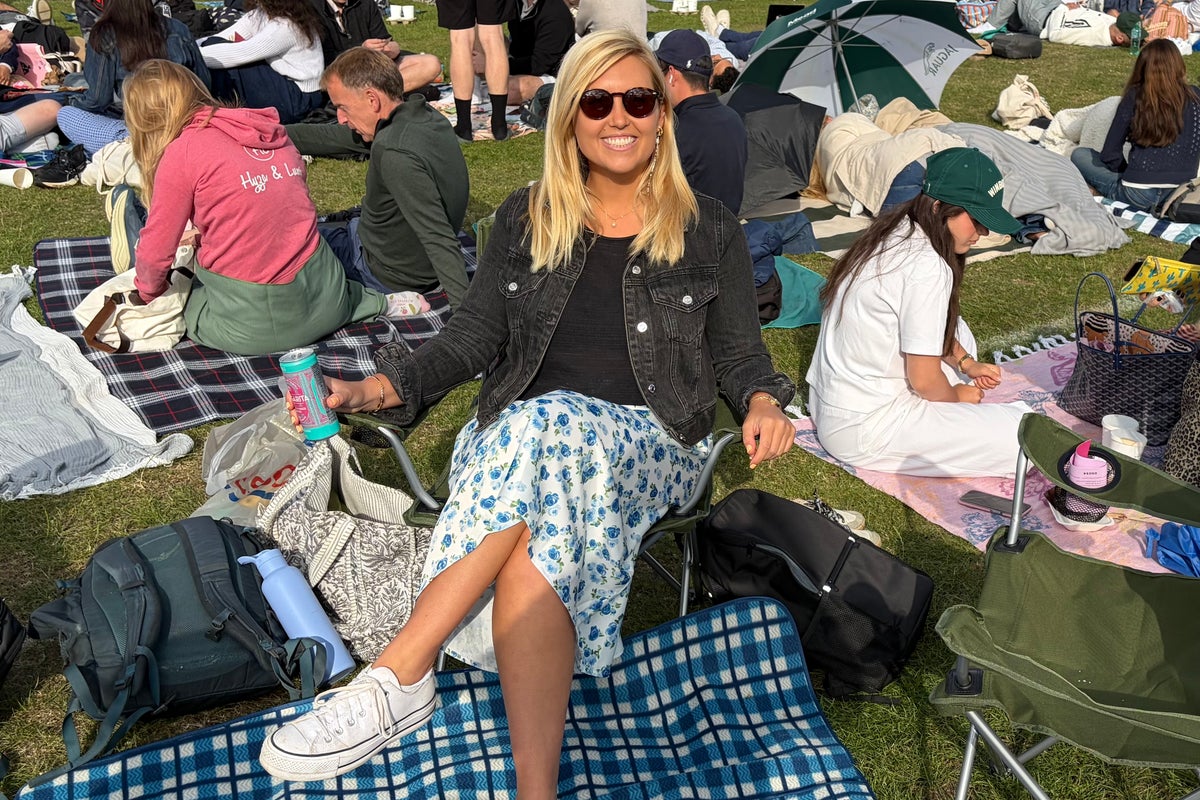
It’s 7.30am in Wimbledon Park, southwest London, and I’m standing in a 100-person queue for a coffee van, listening to the group of twenty-somethings behind me weigh up whether to trade their morning flat white for a Mr Whippy given the relative lack of demand for the nearby ice cream van.
You’d think I wouldn’t be particularly bothered about queueing for coffee when the whole point of the day is queueing for tennis. A queue’s a queue, right?
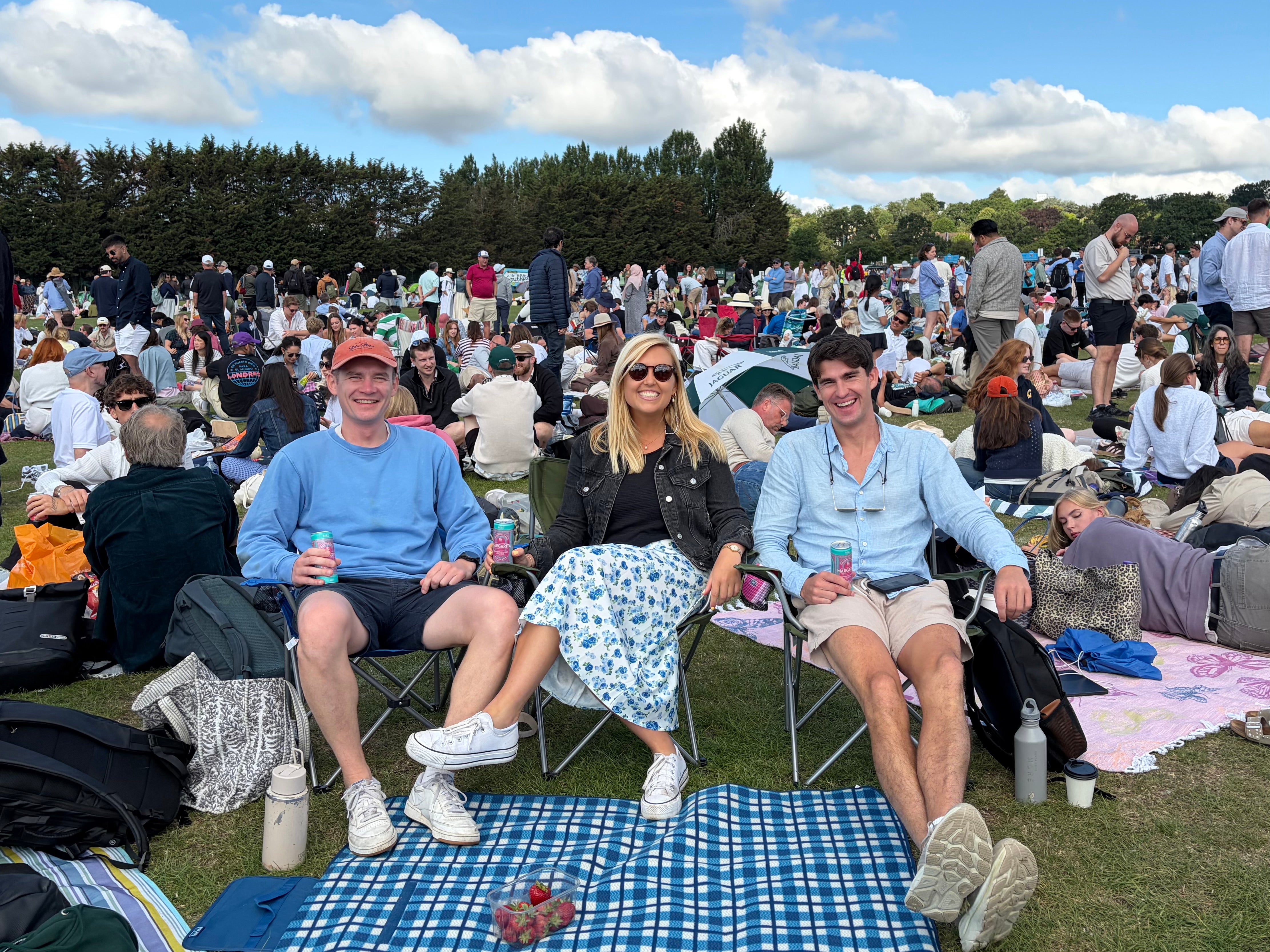
But the Fomo is real. A few hundred metres away, my boyfriend Jon is sinking M&S margarita tinnies with our friend Ben as they watch half a dozen strangers play a makeshift cricket match using water bottles and a half-drunk bottle of rosé.
When I departed camp for my coffee expedition 45 minutes ago, the two of them were using our picnic blanket as a duvet, while fellow queuers lay there in their eyemasks and raincoats. But the sun has just cracked through the clouds and I swear I hear a distant roar.
It’s still hours until the tennis is due to start – surely play can’t have started already?
“That was the most British thing I’ve ever witnessed,” Ben texts our group chat. “Katie, did you hear that? There was a beautiful moment just now when the sun first shone through and the crowd broke into applause.”
 open image in gallery
Read more: The best luxury hotels in London for world-class spas and fine dining with a view
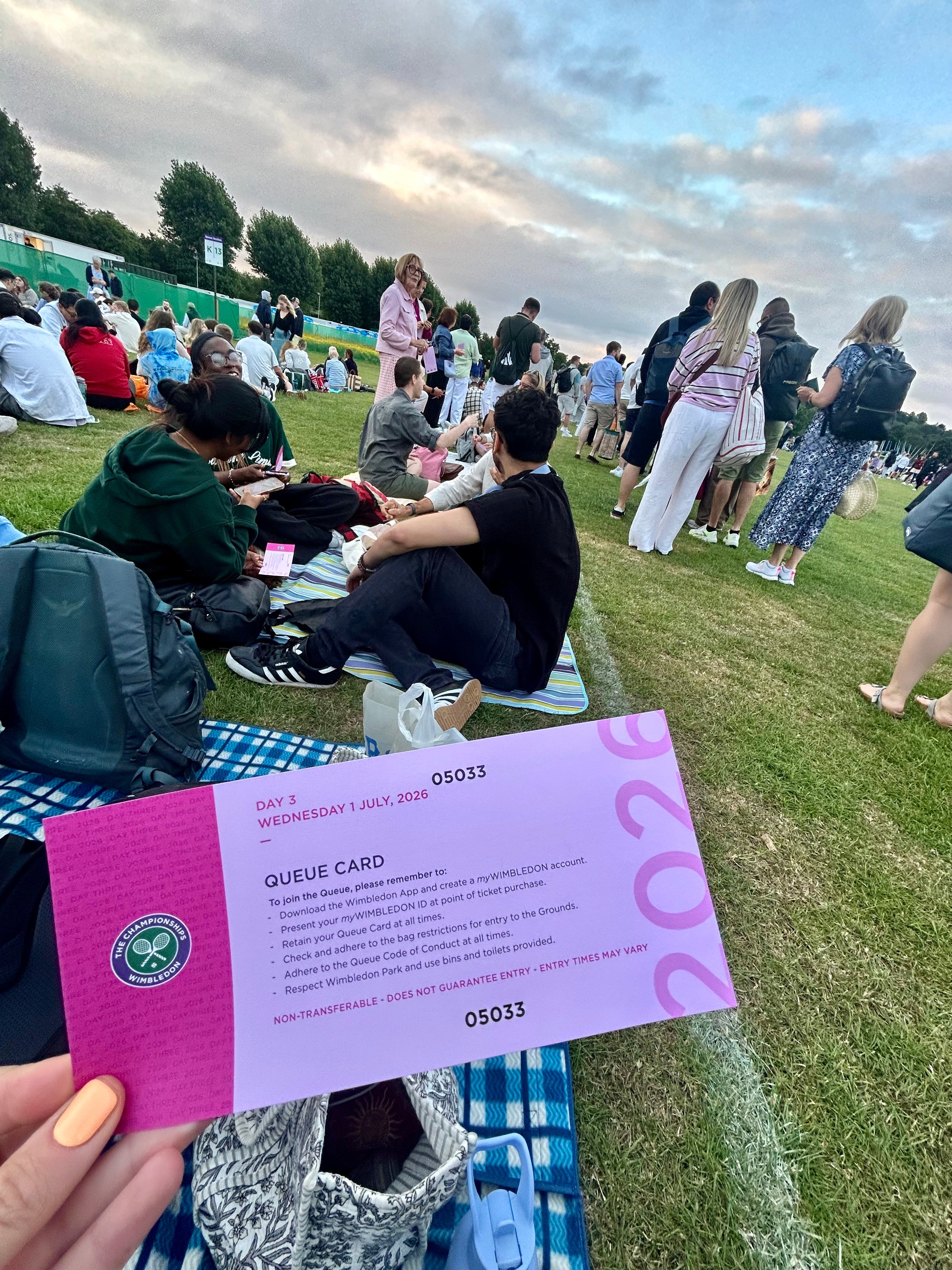
I’m so busy grinning at my phone I almost miss the fact that I’m finally being asked for my order. My alarm went off at 4am. There are ominous grey clouds gathering overhead. I’ve taken a day’s annual leave to voluntarily sit in a field, five-thousand-and-thirty-third in line for a tennis tournament I don’t even have a guaranteed ticket for yet. And somehow, despite every objective measure suggesting I should be questioning my life choices, there is nowhere I’d rather be than at Wimbledon.
Sure, it might have been nice to have more of a lie-in. And no, I probably wouldn’t have turned down tickets to see Djokovic versus Tsitsipas on Centre Court. But am I upset to be witnessing the part-village-fete, part-festival, part-social-experiment that is 10,000 sleep-deprived strangers sharing suncream and fizzy pigtail sweets, while discussing Jack Draper’s backhand in a queue? Quite the opposite. It’s the same fleeting camaraderie you get when you’re waiting in the start pen at the London Marathon or England score in a pub full of strangers: for a few hours, everyone is on the same team.
Queueing should be the tedious bit – the thing standing between you and the fun – but somehow, over the century since it started in 1922, it has become an institution as iconic as the Championships themself. Members of the public can camp overnight if they’re really dedicated or simply brave the early start like we did. Stick it out for a few hours, pay £33 for a Grounds Pass and you’ll get access to every court except Centre, No 1 and No 2, plus the chance to brush shoulders with the world’s best players (later we’ll glimpse Nick Kyrgios, Alexander Bublik and World No 4 Felix Auger-Aliassime).
You can’t do that at any other Grand Slam or major sporting championship. It’s a Wimbledon USP and a British rite-of-passage – no wonder thousands jet into London to take part in it every year.
A few tips for first-timers: you won’t lose your place if you nip off for coffee or the loo (everyone gets a numbered queue card), and don’t forget a picnic blanket, snacks and something to read. Most importantly, arrive by 5am – preferably 4.30am – if you want to be inside before play begins. A mum and daughter who arrived just 30 minutes after us were already 3,000 places further back.
 open image in gallery
Read more: Best museums in London, from family-friendly days out to galleries filled with famous art
Members of The Queue are technically entitled to purchase on-the-day Show Court tickets, if there are any left when they get to the front of The Queue. But in recent years rising queue numbers have meant that even overnight campers are lucky if they’re offered more than Ground Passes.
When my boyfriend camped overnight 17 years ago, he managed to buy Centre Court tickets the next morning. This year you’d need to camp two whole nights ahead of your visit if you want guaranteed court tickets, according to one staffer. “We were at 10,000 by about 8:30am – the queue is effectively full,” Sally Bolton, chief executive of the All England Lawn Tennis & Croquet Club (AELTC) said on Monday.
Once we reached the front of the queue just before midday we took the only option left and bought Ground Passes, which allow you to wander around the entire Wimbledon grounds, sit on Henman Hill and join, yes: yet more queues to get onto courts three to 18. By hour number two of queuing to watch Nick Kyrgios and Alexander Bublik in the doubles, I begin to understand why seasoned Wimbledon-goers keep talking about crowds. So far, most of my day had been queueing for coffee, queueing for lunch, queueing for the toilets and queueing to squeeze onto Court 17 only for the match to conclude a few minutes later.
Wimbledon could probably do with fewer queues once you’re through the gates. That’s partly why the tournament has come under fire this year, with some questioning whether sleeping in a park is still acceptable in 2026, while others argue it has simply admitted too many people.
And yet, somehow, it doesn’t dampen the day when I look back on it. If anything, the sheer number of people now willing to make the pilgrimage only reinforces just how extraordinary Wimbledon is – because The Queue isn’t an outdated custom to be replaced by another online ballot or premium package. For all its quirks, it’s one of the few genuinely democratic traditions left in elite sport.
Even Princess Kate chose to spend time chatting to fans in The Queue before watching the tennis the morning after my visit. If joining it were merely an obstacle to be overcome, why would one of the biggest photo opportunities of the tournament take place there rather than on Centre Court?
 open image in gallery
Social media has undoubtedly transformed what was once a quirky British tradition into a global bucket-list experience. That success brings challenges, and the sad truth is that Wimbledon may eventually have to decide how to preserve it without creating too many of the latter.
A Danish family tell me they’d been dreaming of coming to Wimbledon for years. In the end, they discovered The Queue on Instagram, built an entire holiday around it and plan to join it every day this week, happily setting their alarms before dawn for the chance to watch world-class tennis for just £33 a day.
Whether you’ve flown in from abroad, live down the road in Raynes Park or are a billionaire with your own tennis court, the rules are the same: join the back, wait your turn and you’ll get exactly the same chance as everybody else.
In a world where we’re increasingly told to pay for priority or #optimise every minute of our lives, there’s something comforting about that idea of spending a day where everyone starts in exactly the same place. No shortcuts. There’s also something perfectly British about it. We’ll complain about the weather, then cheer it. We’ll stand in a field all morning, then tell everyone it was the highlight of the day.
By the time we leave, I realise I’ve spent more of the day in queues than I have watching tennis. Ordinarily, that would feel ridiculous – but somehow it doesn’t. I leave with a camera roll full of bottle-cricket and stranger selfies; the offer of a free holiday to Denmark; and the memory of hundreds of adults applauding a patch of sunshine at 7:30am.
The Queue isn’t the price you pay to experience Wimbledon. It’s where the fun of really begins.
Read more: Best things to do in London with children
How to do it
The Queue starts in Wimbledon Park, which is a five-minute walk from Southfields station.
Grounds Pass tickets for Wimbledon cost £33 and enable you to access all courts including No 3 Court, Court 12 and Court 18, as well as The Hill, where matches from Centre and No 1 Courts are screened.