


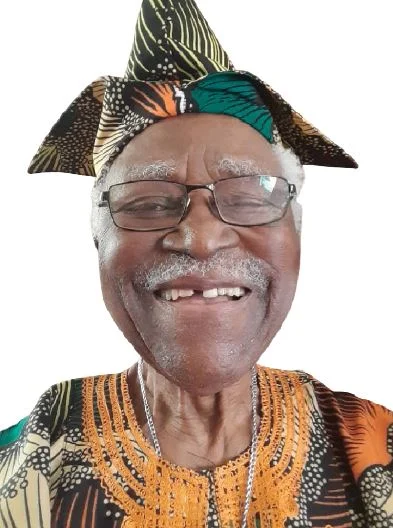
Why I pursued second PhD at 89 — NAS fellow, Prof Nwagwu
August 2, 2026 12:00 am

Nwagwu
A scholar of Cell and Molecular Biology, Prof Mark Nwagwu, tells BIODUN BUSARI how he recently defended his second PhD thesis in Cultural Studies and New Media, and how his professional work in science and the arts has made him the only Nigerian who is both a Fellow of the Nigerian Academy of Science and a Fellow of the Association of Nigerian Authors
How would you describe your childhood?
I grew up in Aba, Abia State. The years covering my primary and secondary education are captured in my memoir, Dreams Dance. During my primary school years, I faced an academic crisis because I used to score zero in arithmetic. I wasn’t good at it at all.
But 1944 was the worst year because that was when I ran away from school because of mathematics. I was flogged all the time. I was miserable. I would leave home as if I was going to school and only return when I saw the other pupils coming back. I joined them as though I had attended school that day.
However, by 1945 and 1946, things became a little better because I was in a different class and had been promoted. By 1948, I was in Standard Five. I had improved in English and arithmetic. My grammar had also improved, and I wasn’t doing too badly.
In 1949, I completed primary school and was ready to proceed to St. Patrick’s College, Calabar. My grades were not bad. I finished around the middle of a class of about 30 or 40 pupils. That was my primary school journey, from about 1942 to 1949.
How did you improve in arithmetic all of a sudden?
It came naturally. All I can say is that it just happened. I began to score about 40 per cent or whatever mark was required for me to be promoted to the next class.
Nobody was teaching me. There were no extra lessons at that time. Extra lessons only came in 1948 when I was preparing for the entrance examination into St. Patrick’s College, Calabar. I had my secondary education there between 1950 and 1956.
Why did you choose a science course when your mathematics wasn’t good?
For primary school, I passed the entrance examination into St. Patrick’s College in English, Mathematics and Religious Studies. I think those were the main subjects then.
When I got to St. Patrick’s College, we were exposed to all the subjects, from the arts to the sciences. I studied English, Geography, Literature, History, Religious Studies, Physics, Chemistry, Biology, Health Science and others. We did a whole gamut of subjects. I performed well in all of them because I graduated with Grade One and credits in all the subjects I took.
Then came the question of what to do next. Should I continue to higher school or look for a job?
Fortunately, St. Patrick’s had started a Higher School Certificate programme in sciences. We were the only college in Nigeria with a Higher School Certificate in sciences. King’s College, Lagos, also had one, but it was in the arts.
Being a Catholic, my father wanted me to continue in a Catholic school. Lagos was far from where we lived in Aba, so I remained at St. Patrick’s. In 1955, I started my Higher School Certificate in Chemistry, Botany and Zoology.
I thought I would obtain the grades to study Chemistry, but I didn’t. Instead, I qualified in Botany and Zoology, and that was what took me to the University College, Ibadan, to study Zoology.
What were the highlights of your first doctorate degree?
I obtained my PhD at Stockholm University between 1962 and 1965. My degree was in Zoophysiology, which involved gas relations, development, differentiation and the biochemistry of differentiation.
It didn’t take me directly into molecular biology, but it introduced me to the rudiments of cellular biology through biochemistry. Molecular biology began with the discovery of DNA in 1957. By the time I completed my PhD in 1965, DNA research was still in its infancy.
When I went to the University of Connecticut between 1966 and 1969, I was exposed to Cell and Molecular Biology, particularly messenger RNA. We published two important papers on the mRNA of myosin with Haywood under the supervision of my mentor.
My real grounding in Cell and Molecular Biology came during those years at the University of Connecticut, Storrs, where I worked on mRNA for the protein myosin. That work later continued in Canada.
What direction in your life made you a poet and novelist?
The first thing to note is that I am a human being, which means every aspect of life is open to me. Everything in life, from physics to art, history and whatever else interests me, is available to me.
My first novel, published in 2007 when I turned 70, was my entry into literature. I wrote it for my granddaughter.
My first poetry collection was Helen Not-of-Troy, which I wrote for my wife. I used to write poems for her from time to time, and she kept them in an envelope.
One day, I saw her with the envelope containing all the poems. She didn’t want to give it to me. When I eventually took it and read through them, I said, “My goodness, I’m going to publish these and add more poems.”
That was how my first poetry collection came out in 2009.
What inspired you to write a novel for your granddaughter?
My wife and I visited my daughter in Newark, New Jersey, in the United States. I noticed that my granddaughter was always reading a book. I asked her mother why, and she told me she couldn’t go a day or two without reading a book.
I was amazed and delighted. I told my granddaughter, “I’m going to write you a novel.”
I went back to our history and culture and found an old manuscript I had written. That became Forever Chimes, my first novel, which was entered for the Nigerian Literature Prize in its early years.
The book had some shortcomings, so I believe I could have done even better. Initially, it was inspired by and written for my granddaughter, Akune Daniels, but by the time it was published, I had more granddaughters, so it became a book dedicated to all of them.
How did you feel about earning a second PhD in your eighties?
I pursued the PhD because I was in the classroom, taking courses. It was a different classroom, with students of different ages and different experiences.
I was 86 when I started in 2023. I’m now 89 and have just defended my thesis.
We attended classes together, wrote essays, commented on assigned readings and sat examinations. We had to score at least an A grade before we could progress from the Master of Philosophy programme to the Doctor of Philosophy.
We were also required to present seminars because it wasn’t just classroom work; it also involved the early stages of our research.
I had an excellent lecturer in Cultural Studies, and we spent many hours learning. I was a grandfather in a class where the oldest of the other students was probably about 35 years old.
We didn’t use blackboards; we used PowerPoint. We all looked at the same material and learnt the same things. Age didn’t matter. Concentration was the key.
I took five courses, three in Cultural Studies and two in Anthropology. I passed all of them with more than 70 per cent, which qualified me to continue my PhD. That classroom experience remains memorable.
What interested you in pursuing a second PhD?
I met a wonderful friend recently who said, “If you don’t know where you’re coming from, how do you know where you’re going?”
He repeated it several times. He pointed out that many people were writing books on Igbo culture, but he wasn’t impressed by what they were doing.
People were talking about CBD, and I told him I would carry out my own research and write about it. Just as I had promised my granddaughter I would write a novel, I realised that writing alone wouldn’t solve the problem, research would.
He promised to support my research.
Along the line, my work moved beyond CBD. My thesis expanded into extravertebral theatre linked with biology and stem cells. That is a fascinating story in itself.
Honestly, I cannot fully explain how the ideas developed in my mind to link culture with the humanities through biology. My background in biology has always been there.
The gastrointestinal stem cells will always be there because the beginning and the end are essentially connected; one can develop into the other and become different.
I found that connection fascinating. To the best of my knowledge, it is the first time such a hybrid of culture, biology and extravertebral theatre in the humanities has been developed. That became my thesis.
What gives you a sense of fulfilment?
I am exceedingly fulfilled and deeply thankful to God.
Is it easy to move from science to literature? I am a Fellow of the Nigerian Academy of Science and also a Fellow of the Association of Nigerian Authors. I am the only Nigerian who holds fellowships in both bodies, and I have excelled in each.
I have earned one PhD and now another. What more can I say?
I am a child of God and a Catholic. I serve Him as best as I can, despite my shortcomings and sins. I try to give Him my very best.
Being fulfilled on earth is only a small part of life. The greater question is: when I stand before God and He asks, “Mark, with all the gifts and graces I gave you, how did you use them?” What will my answer be? That is the question that matters to me.
I attend Mass and receive the Holy Eucharist every day whenever possible. My fulfilment comes from serving God and doing His will in every way I can, including through my studies.
Do any of your children share your interests?
My expectation for anyone is simple: go and do what you love.
I have four children. We lost one in 2006.
All my children are doing what they want to do. I don’t interfere with their choices because my father gave me the freedom to pursue what I wanted, while supporting me greatly.
People have also supported me immensely in my own work.
As for my children and grandchildren, each is pursuing his or her own dreams. My prayer for them is simply, “May the Lord have mercy on them and grant them success in whatever they choose to do.”
As a renowned scholar, what more should intellectuals do to improve society?
I can only influence people through my life. My influence comes through my writings. People who read my books can learn from them and apply what they find useful.
That, to me, is how intellectuals influence society, through what they teach and what they write.
People can also come and sit with me so we can discuss ideas. The question I would ask is: What is intellectualism? Are we interacting? Are we accepting? Are we expanding our minds? Are we learning?
Those are the questions we should continually ask ourselves.
What are your greatest achievements?
I don’t see any of these as achievements. As I said, when I stand before God and He asks me, “Mark, what did you do with the graces I gave you?” what will my answer be? Will I tell Him to look at what I have done in science and literature?
What is your next step?
My next step will depend on whatever lies ahead of me and whatever God presents to me. I’m 89, and I pray that next year I’ll be 90.
Of course, I’m still writing poems every day, so I may publish another book. I may be in Calabar. There are many things staring me in the face, and I will take them up one by one as the occasion arises and as I have the ability to do so.
Biodun Busari is a journalist at Punch Newspapers with five years of experience reporting on human interest, crime, diaspora issues, and feature storytelling. He focuses on producing engaging, informative stories that enlighten the public and provide context on complex topics. Biodun’s work demonstrates hands-on newsroom experience and a strong commitment to accurate, purpose-driven journalism.
All rights reserved. This material, and other digital content on this website, may not be reproduced, published, broadcast, rewritten or redistributed in whole or in part without prior express written permission from PUNCH.
Contact: [email protected]