


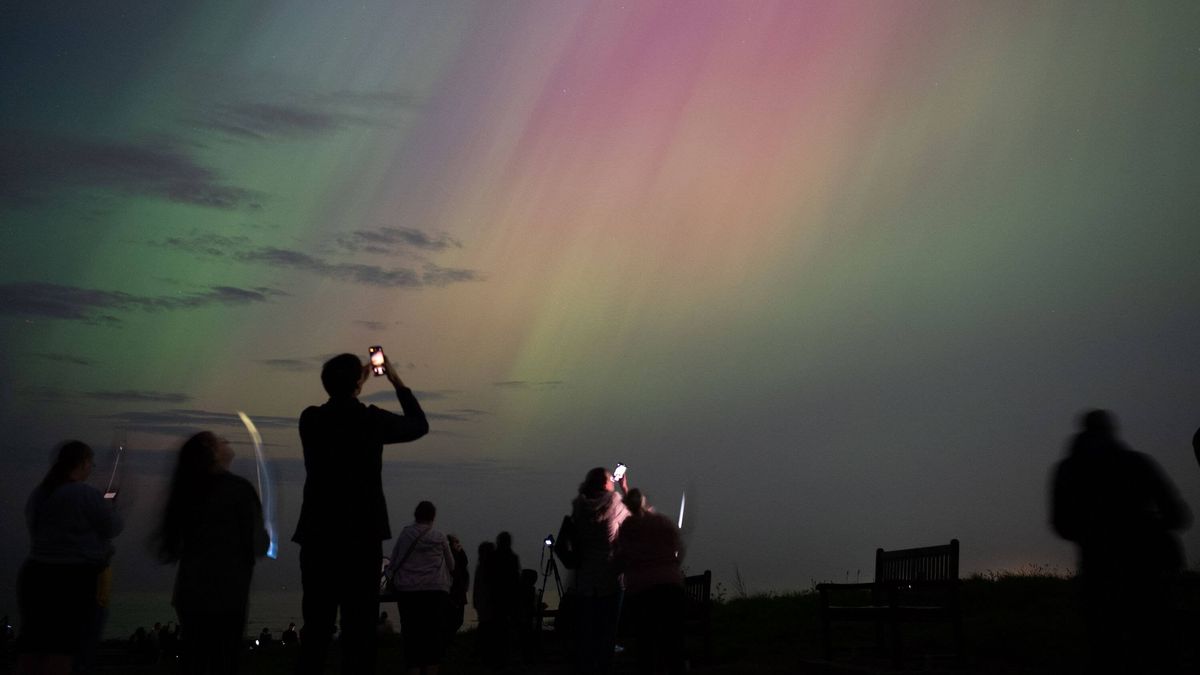
A significant solar flare may trigger northern lights displays across parts of Britain later this week.
The phenomenon stems from a coronal mass ejection (CME) that occurred on May 10 – a massive release of plasma and magnetic field from the Sun’s corona. These events can expel billions of tonnes of coronal material accompanied by powerful magnetic fields.
The eruption took place at 1.13pm on Sunday and is now moving into Earth’s “strike zone” on the Sun’s northeastern edge. As this region becomes visible over the coming days, any substantial solar flares or CMEs will have an increased likelihood of being aimed towards Earth, reports the Express.
 View 2 Images
The northern lights were last seen in the UK in March(Image: David Tipling/Universal Images Group via Getty Images)
According to the Met Office, a portion of the expanding cloud of solar material may graze past Earth around May 13 – just two days away. This could spark minor geomagnetic storm conditions, intensifying aurora displays across the UK and northern United States.
Aurora borealis can be observed in the UK several times annually, especially during periods of heightened solar activity, with 2026 expected to be a peak year.
While most commonly visible in Scotland and high-latitude regions every few months, powerful solar storms occasionally make them viewable throughout the UK, including southern areas, between September and March.
The most recent UK sightings occurred during dramatic displays on 23-24 March 2026, with notable observations reported further south across the nation earlier that year.
Article continues below
These stunning light shows result from solar activity, where electrically charged particles from the Sun’s atmosphere journey through space as solar wind and interact with gases in Earth’s upper atmosphere. These impacts energise oxygen and nitrogen atoms, causing them to emit glowing, vibrant lights as they release energy.
Ensure our latest stories always appear at the top of your Google Search by making us a Preferred Source. Click here to activate or add us as your Preferred Source in your Google search settings.