


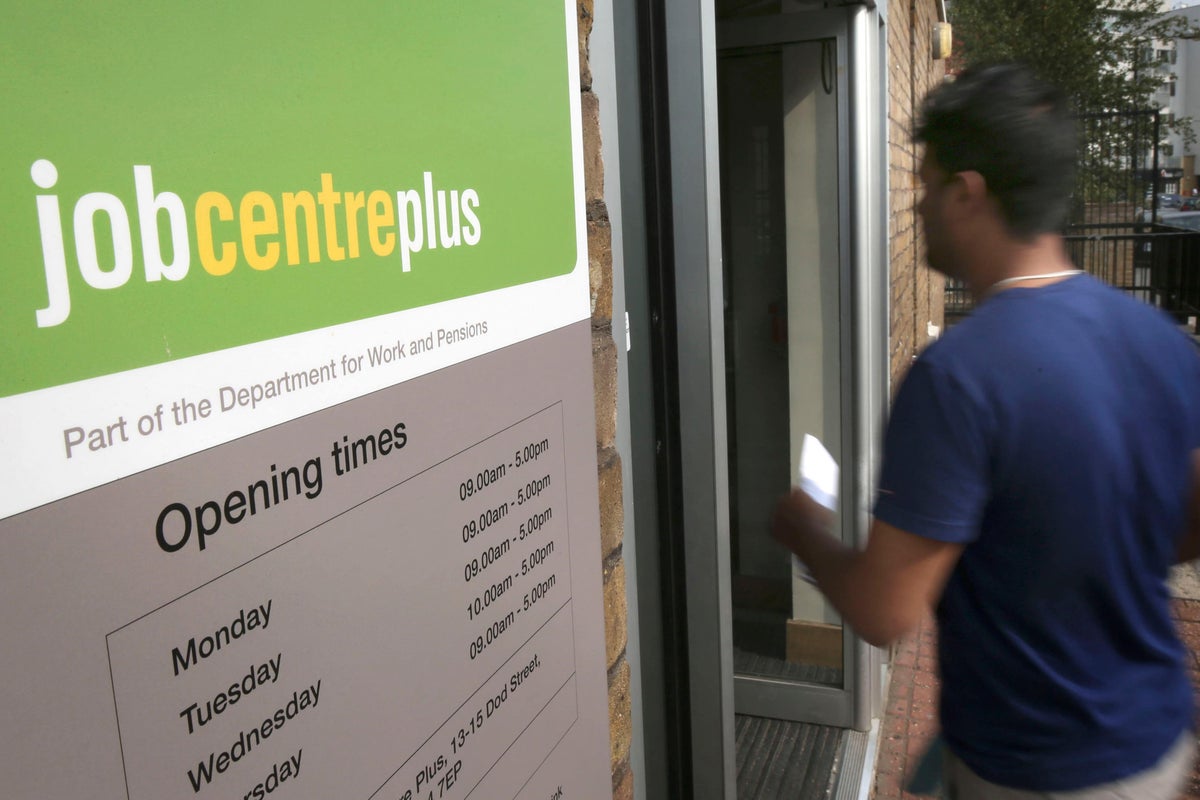
The number of young people not in employment, education or training (Neet) continues to hover around the one million mark, recording a slight fall between April and June.
There were 981,000 young people with Neet status over this period, the latest official data shows, down 30,000 from the 1.01 million recorded for January to March.
This new figure is 30,000 higher than at the same point last year.
Earlier this year, Alan Milburn warned that Britain could see 1.25 million Neets by the early 2030s without urgent government intervention.
The former Labour health secretary is leading a government-commissioned review into youth economic inactivity, expected to call for steps to overhaul schools, the health service, welfare system and jobs market.

Responding to the latest statistics, he said: “Nearly one million young lives on hold is a scar on this country.
“Young people are desperate for an opportunity to learn or earn. Instead, we’re creating a lost generation. They want to work – they just need a chance.
“My review will set out how that can be achieved so that young people get their futures back.”
The issue is far from a new one, with the percentage of people aged 18-24 with Neet status peaking at nearly 20 per cent in late 2010, almost 5 per cent higher than current levels.
But this rate has continued to rise steadily following the Covid pandemic, with experts warning that steps must be taken now to reverse the current trajectory.
What does Neet mean?
A young person is considered Neet if they are:
- unemployed, looking for work; or
- economically inactive, not actively looking for work, and not waiting to start a job or caring for family
Those in formal education, undertaking an apprenticeship or in part-time work are not considered to be Neet.
How many Neets are there?
There are now 981,000 young people aged 16-24 with Neet status in the UK, according to data from the Office for National Statistics published on Thursday. This is equivalent to 13 per cent of all people aged 16 to 24.
Most of these fall into the economically inactive bracket, at 588,000.
The latest figure saw a decline from the 1.01 million recorded for January to March 2026, which had marked a 12 year high.
The largest quarterly Neets total was 1.24 million, recorded in July to September 2011, after the 2008 financial crisis – representing 16.9 per cent of all young people at the time.
What did Alan Milburn say in his report?
The former Labour minister released his interim report in May, focusing more on the causes of the rising number of Neets than on solutions to the problem.
He writes that the UK’s youth unemployment crisis is costing the country around £125bn a year, more than the country spends on education and almost double the defence budget. This sum takes into account lost tax income, alongside higher health and welfare spending.
Mr Milburn’s report also finds that there has been a decline in entry-level jobs, with 1.6 million fewer low and medium skilled jobs roles than in previous decades.
His report also warned of a “bedroom generation”, with anxiety linked to social media and mobile phone usage driving economic inactivity among young people.
Speaking to press about the issue, Mr Milburn added that the UK faces a “chronic problem it is getting worse”, warning that the government has “neither a system or a plan to deal with it”.
What is Labour doing about Neets?
The government’s flagship policy to tackle youth economic inactivity is the ‘Youth Guarantee’.
Backed by £820m over the three years, the plan aims to provide anyone aged 18 to 21 in England with access to an apprenticeship, training, education opportunities or help to find a job.
It will also guarantee anyone who has been Neet for more than 18 months a six-month paid work placement, helping them prepare for a full-time job.
Those who refuse risk being stripped of their benefit entitlement.
Delivering his interim report in May, Mr Milburn said: “This is not a failure of young people. It is a failure of a system stuck in the past. Whether it is education or health or welfare, that system fails to enable their participation in the labour market.
“Instead, all too often it ends up putting young people on a path to a life not in jobs but on benefits. This should be the priority for the government. It should be the priority for all of us.”
Many have predicted that some kind of change to the benefits system specifically for younger claimants will form part of his recommendations, a prospect that some campaigners have pushed back on.