


‘We knew somebody would die’: Teenage patients ‘ignored’ before fatal NHS trust failures
42 minutes agoShareSaveAdd as preferred on GoogleDominic Hughes,Health correspondentandLesley Hitchen,Health producer

 BBC
BBC“We knew somebody would die… and nobody listened.”
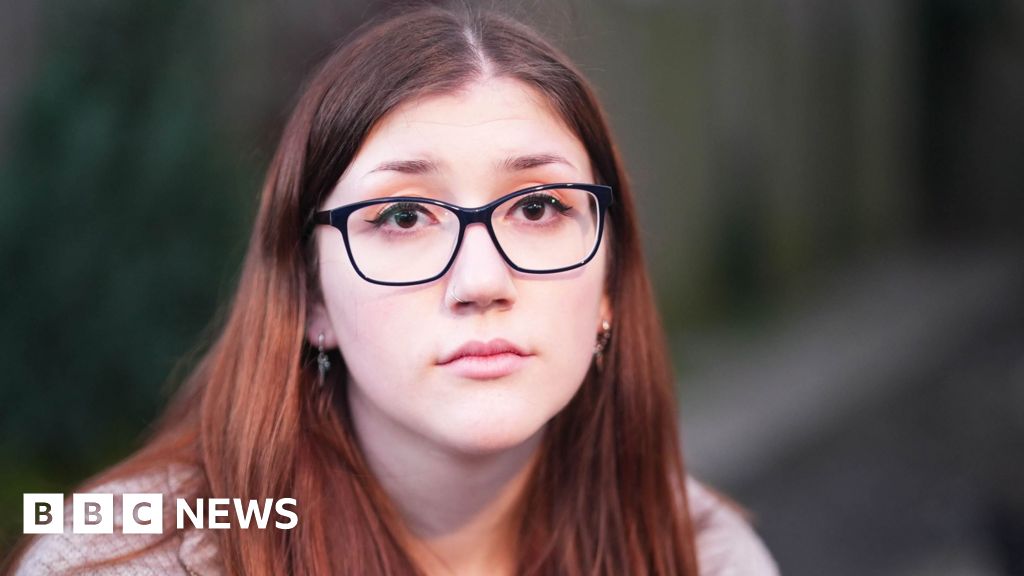
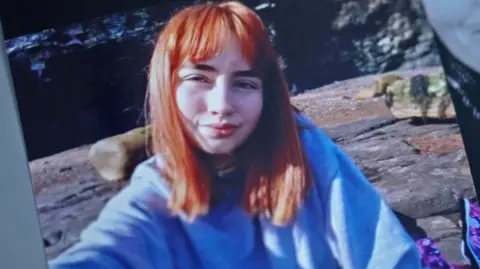
Laura Kenny is remembering her friend Christie Harnett.
Both were patients at a mental health unit in Middlesbrough when Christie took her own life.
Laura says she and other patients had expressed worries about their treatment at the unit – later described in an independent report as “chaotic and unsafe” – but she says nobody listened.
Warning: This article contains distressing details and references to suicide and self-harm
“We’d been warning everyone,” says Laura. “We wrote letters to everyone we could think of saying one of us is going to die.”
In fact, 17-year-old Christie was one of three young women who, within a few months of each other, took their own lives while patients in hospitals run by the Tees, Esk and Wear Valleys NHS Foundation Trust (TEWV) – which covers the whole of North Yorkshire, County Durham and Teesside.
In recent weeks we have spoken to more than a dozen former patients, admitted as young people or as adults, who say they experienced failures in the standard of care at TEWV.
We have also met the families of some of those who died away from hospital, but still under the trust’s care. Nathan Evison was 19 when he killed himself in 2019 and Laurent McNamara died last year.
All have similar stories – describing a lack of compassion among staff and an absence of any meaningful treatment or therapy. Many fear mistakes are still being made.
 Family handout
Those we spoke to, and hundreds more, pushed for a public inquiry. One was announced last December, but families and patients are disappointed by delays in setting it up.
Despite having been promised answers by the end of February, they say a meeting on 31 March with the Department of Health and Social Care (DHSC) left them no nearer to knowing who might lead the investigation, when it might start and where it might be held.
“While our clients appreciate these things take time, they are worried about the continued care being offered by a trust under scrutiny and how, in three months, there appears to be no firm developments,” Alistair Smith, from Ison Harrison Solicitors told the BBC.
The DHSC says it is working “at pace” to confirm who should chair the inquiry.
“We are committed to ensuring the voices of patients and the families affected by failures [at TEWV] are at the heart of this inquiry,” said a spokesperson in a statement to the BBC.

There has already been one independent inquiry into the trust’s treatment of young people admitted to hospital with a mental health problem. Commissioned by NHS England, it published its main report in 2023.
In particular, it looked at Christie’s death, as well as those of two other young women – 17-year-old Nadia Sharif, and Emily Moore who was 18.
The findings backed up patients’ claims of excessive and inappropriate restraint, that staff were told not to intervene in episodes of self-harm, and that failures were tolerated by managers.
TEWV then apologised and said significant improvements had been introduced, but bereaved families and former patients fear that, three years on, the lessons from these failures have not been learned, and that vulnerable people have been badly let down.
Former patients and bereaved families have told the BBC they welcome the statutory public inquiry, which will be a much more detailed investigation than the previous report, with legal powers to call witnesses, summon documents and a focus on preventing past mistakes from being repeated.
But at heart, they say they want to get answers about what went badly wrong at the Trust and to see some measure of justice for those they have lost.
TEWV declined to be interviewed and said it would not comment on individual cases.
In a statement, Alison Smith, chief executive since last September, said the trust would “co-operate fully with the public inquiry with honesty, openness, humility, grace and kindness”.
Three deaths in eight months
Laura Kenny, now in her 20s and studying law at university, has vivid and disturbing memories of the decade she spent as a patient under the trust’s care.
From the age of 13, an eating disorder left her dangerously underweight. Her condition quickly spiralled into episodes of self-harm and suicide attempts.
During this time, Laura spent a lot of time as an in-patient at West Lane in Middlesbrough, a specialist mental health centre for young people. Her friend, Christie Harnett was also treated there.
Laura says staff would react to incidents of self-harm by either shouting at her or Christie, or just ignore what was happening.
- If you or someone you know are affected by the issues raised in this story, BBC Action Line
“Their reaction would be to either leave you for hours headbanging or self-harming, or to just restrain you very quickly to the floor and inject you,” she says. “The idea was to sort of just shut you up.”
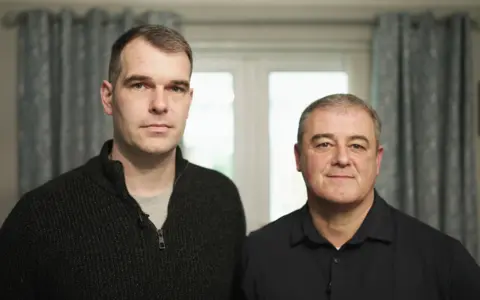
Christie’s stepfather, Michael, has terrible memories of what she told him about the staff’s response to her self-harming.
“They would literally just pin her down, sedate her, put her in bed, and then that was it.”
He adds that when Christie eventually woke up, she told him staff would not talk through the incident, even if she was still covered in blood from her injuries.
Laura says the moment she heard Christie had died was horrific.
“I think the worst thing was that we knew it was going to happen,” she says.
Christie’s death was followed by that of Nadia Sharif and Emily Moore, two other young women under the trust’s care. All three deaths occurred within an eight-month period up to February 2020.
A coroner is still to determine the circumstances around Christie, Nadia and Emily’s deaths.
In 2024, the trust was prosecuted by the Care Quality Commission (CQC), and fined £215,000 for safety failings contributing to the deaths of Christie and another unnamed woman.
The trust pleaded guilty to two charges of failing to provide safe care and treatment to the two women, exposing them to “a significant risk of avoidable harm”.
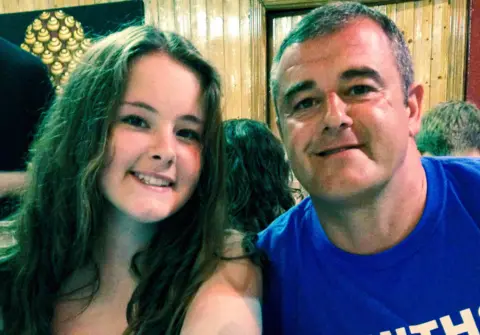 Family handout
Michael has campaigned for a public inquiry alongside Emily’s father, David Moore.
Emily took her own life just after she was transferred from West Lane Hospital to an adult facility.
David says he believes the failures in care have extended far beyond the deaths of the three young women.
“It’s not one death, two deaths, three deaths, it’s multiple, multiple deaths in the trust. It’s just a big failure in the system,” he says.
“Nobody listened at all. And it’s hard to say, but it feels like nobody cared.”
‘He didn’t want to die’
Concerns about TEWV go further than its hospitals.
The family of Nathan Evison believe the standard of care offered to those in the community may have led to the 19-year-old apprentice’s death.
Over a period of just six weeks in 2019, Nathan’s mental health declined rapidly after the breakdown of a relationship.
He lived in an isolated rural cottage with no internet and phone signal. After he had asked for help, a community mental health team from TEWV visited him there.
Nathan’s mother Jess says a bed in a mental health unit had apparently been available, had the team wanted to admit him for his own protection.
But the team chose not to admit Nathan, she says, despite his mental health having spiralled out of control. Within a few hours he was dead.
“It was like he went from 0-60 in six weeks,” she says. “I don’t think he had any help. And he did the right thing, he went and asked. We’ve seen that support for him just wasn’t there.”
Her partner Andrew feels that if the community team had communicated with his parents, things might have turned out differently.
“They only had to ring us up and tell us what was going on that day,” he says. “His friends would have gone, we would have gone, he could have come here. But it never happened, for that one phone call.”
In Harrogate, another family is also coping with the fall-out from a clinical decision at the trust that seems to have gone catastrophically wrong.
Laurent McNamara lived with bipolar disorder – characterised by extreme shifts in mood, and impulsive, sometimes reckless, behaviour.
Last June, during a manic episode, he was detained at Foss Park Hospital in York under the Mental Health Act. But then, unexpectedly and without warning, he was discharged.
The first his father Bill knew was when Laurent phoned to ask if he could be picked up from the hospital car park.
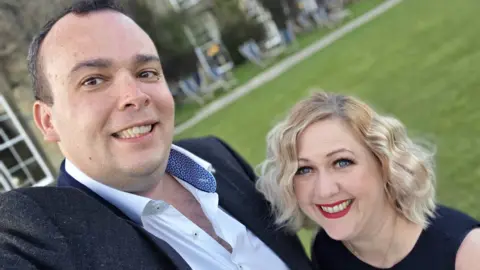 Family handout
Bill says his son clearly still appeared to be unwell, so when they arrived home, he rang the ward to ask why his son had been released.
Within 48 hours, Laurent was found dead at his home, alone, having slipped out of his parents’ house in the small hours of the morning.
Exactly what happened is still to be determined by a coroner, but his family believe he was discharged while still in the grip of a manic episode.
Laurent’s wife Gemma says hospital staff placed too much emphasis on the patient’s wishes, but Laurent was far too ill to know what was best for him.
“He didn’t want to die. If he’d known what was going to happen, he would have definitely stayed in hospital,” she says.
“So they think they’re doing good by doing what the patient wants, but they’re not, because they’re not thinking what they actually need.”
The forthcoming inquiry would be “an opportunity to hear and learn what we could have done better and how we improve the experiences for our patients, families, carers and staff,” said TEWV chief executive Alison Smith in her statement to the BBC.
“Importantly it will also enable those who have been affected to hear how sorry we are.”
The trust told the BBC it does not want to comment on individual cases.
It no longer provides in-patient care for young people – they are treated by neighbouring trusts. More recent reports by the CQC suggest there have been some improvements at TEWV, including around safety and policies to report and act on serious incidents.
But the former patients and families who have now won their fight for a public inquiry hope their many questions about the trust’s care failures can finally be answered, and that it will lead to safer, better care.
Nathan’s Bridge
On a wet February day, high in the North York Moors National Park, we are looking for a small footbridge over the River Dove.
It was named after Nathan Evison by his former colleagues in the National Park, where he was completing his apprenticeship.
We eventually find it, set in a rugged landscape of hills and moors, and even the steady rain can’t disguise its beauty.
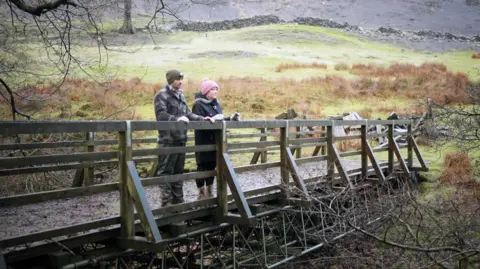
Nathan’s name is just about visible on a little plaque at one end of the bridge, worn dull by the Yorkshire weather in the years since his death.
But this lonely and beautiful bridge is a reminder that treating mental health problems is a complex challenge that can have catastrophic consequences if things go wrong.
Nathan’s mum, Jess, tells me this is the first time she and her partner Andrew have felt able to visit.
“The time’s just not been right. And it is quite emotional, but I know he’d be chuffed that we’re here.”