


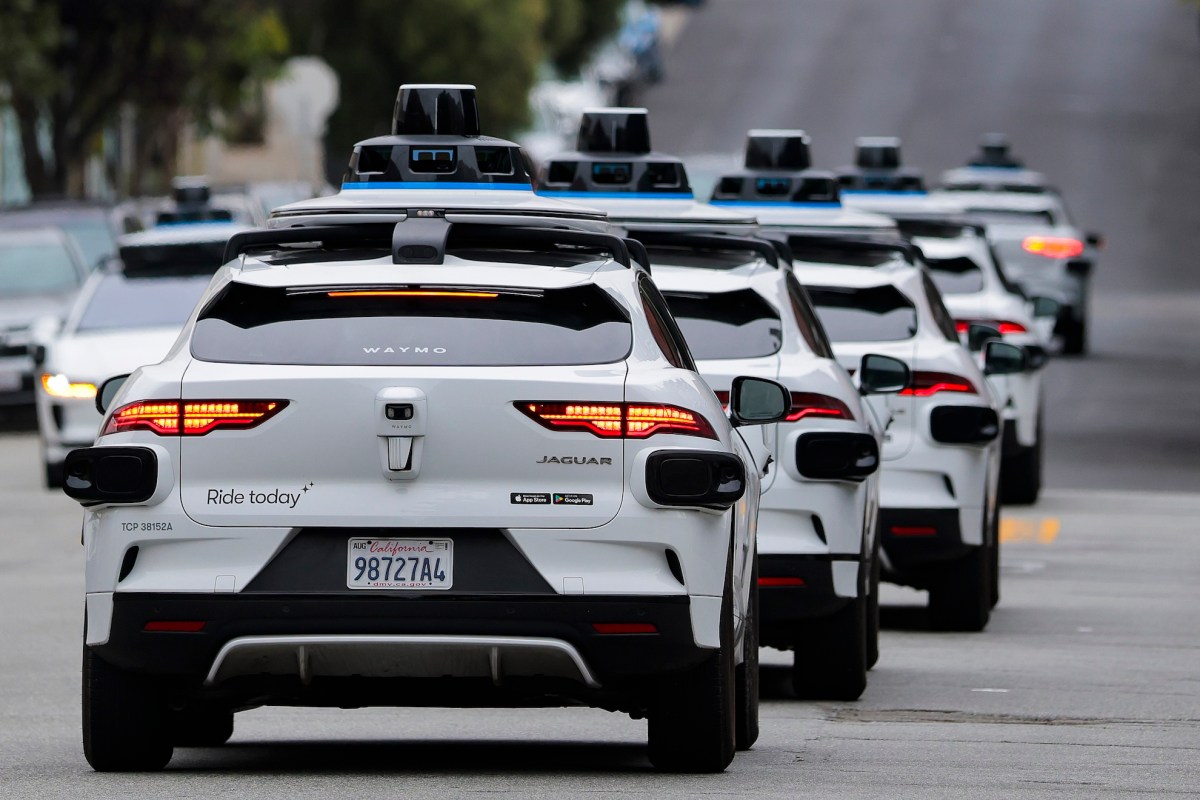
Waymo said Tuesday it plans to launch a robotaxi service in Munich, months after the Alphabet-owned autonomous vehicle company set up an entity in Germany.
The company still must weave its way through mapping and testing, as well as clear regulatory hurdles before it can launch commercial operations.
Waymo will begin, as it has in other 11 cities where it has commercial robotaxi operations, by first manually driving its vehicles to map the streets of Munich. It will then test its autonomous vehicles with human safety drivers behind the wheel, before removing them. Waymo typically allows its employees, media, and other invited guests to ride in its driverless vehicles at this stage.
The company will eventually open its robotaxis to limited service, and eventually to all riders once it receives the regulatory approval required to operate commercially. Waymo said in a blog post on Tuesday that it is working with Germany’s Federal Motor Transport Authority (KBA), state authorities and local officials, and expects to open commercial ride-hailing to the public towards the end of 2027.
Waymo’s entry into Germany comes more than five years after the country’s lawmakers adopted legislation to allow driverless vehicles on public roads, and in that process making it the first country in the European Union to create a legal framework for Level 4 autonomous driving. Level 4 autonomy is a designation by the Society of Automobile Engineers (SAE) that means the self-driving system handles all the driving, with no expectation of a human taking over, in certain conditions or environments.
This legal framework has made Germany a hotspot for autonomous vehicle testing. Today, several companies, including Mobileye and Volkswagen, hold permits to test their autonomous vehicles in the country, according to the KBA’s latest data. Waymo does not currently have any permits.
However, the vast majority, including U.K. self-driving startup Wayve, and Israel-based Autobrains, hold Level 3 permits. Level 3, or conditional automated driving, is a system that can handle all the driving within specific operating conditions, such as low speeds on highways, but the driver must be able to take over when needed.
Germany isn’t the only overseas hotspot for AV developers. The U.K., especially London, is shaping up as another robotaxi battleground. Waymo has said it plans to launch a commercial service in London in 2026, which will pit it against Wayve and its partner Uber. Chinese tech giant Baidu has also started testing autonomous vehicles in the city as part of its partnership with Lyft and Freenow.