


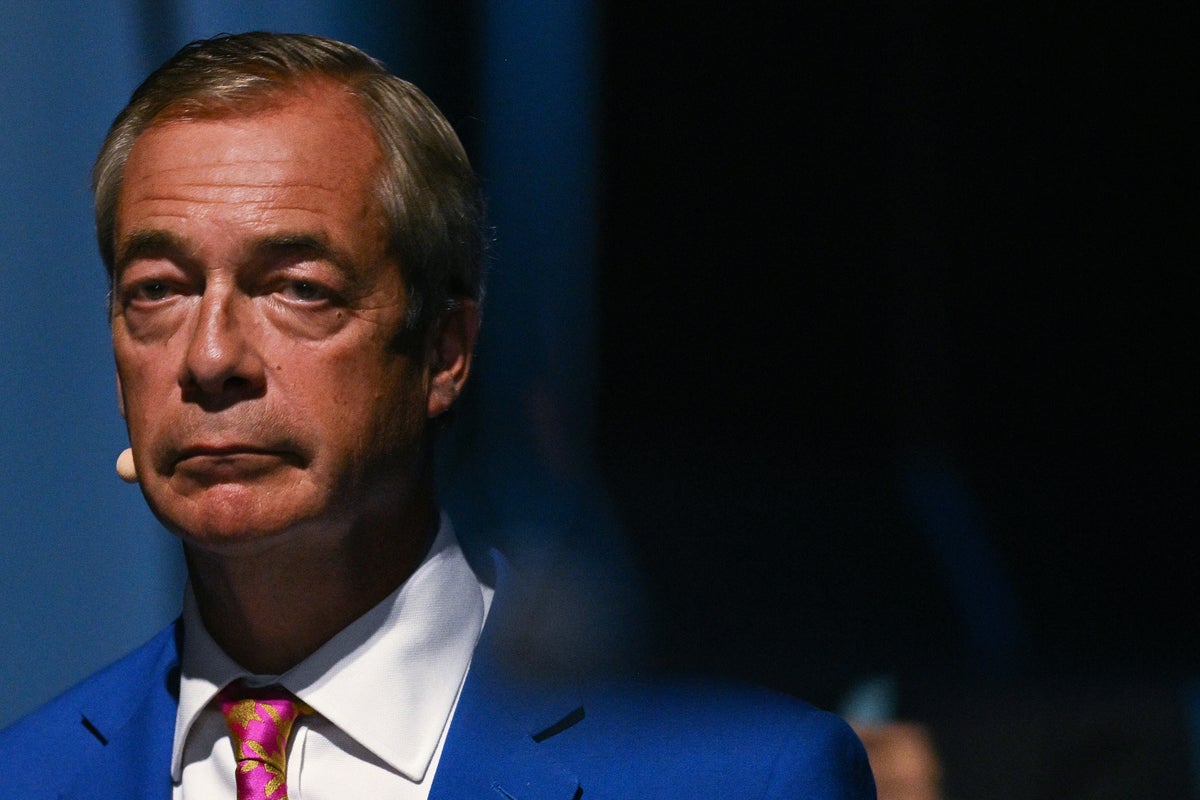
I had better be careful in pronouncing the end for Nigel Farage. I said on TV in 2014 that in five years’ time we will have forgotten who he was, as Farage himself delights in reminding me. There was no use saying I was 48 per cent right.
There is a chance that he might yet recover from this new donations scandal, that British politics will convulse again and make him look like enough of the answer to enough of the people – maybe little more than 30 per cent of them – to give him a majority in parliament at the next election.
But I really do think it is overwhelmingly likely that we are getting towards the end.
That was already the case before Channel 4’s undercover sting. The reason for Farage’s success is also the cause of his repeated failure. He has a gift for “telling it like it is”, for sounding as if he is expressing what everyone thinks but which it is not quite the done thing to say.
And he has a sixth sense for knowing where the limits of decency are drawn, thus avoiding support for those who cross the line, such as Tommy Robinson and Rupert Lowe, and never quite saying anything explicitly racist.
But his pub-wisdom about immigration and sovereignty is not a programme for government, and it has never been enough to sustain a party of government, as opposed to a protest movement.
That is why his career consists of moments – sometimes quite long moments – of national influence punctuated by returns to square one.
He mobilised the demand for a referendum on Europe but, when it came to it, was pushed aside by Dominic Cummings, Boris Johnson and Michael Gove, who led the official Leave campaign.
Farage’s party, Ukip, tore itself apart as he withdrew. He returned to set up a new one, the Brexit Party, dedicated to enacting the decision of the referendum, but again it was Cummings and Johnson who delivered its objective. The Brexit Party changed its name to Reform UK, but Farage left politics again, hoping to pursue unspecified opportunities in Donald Trump’s America.
Then he was back, sensing that the chance had come – finally – to put the Conservative Party out of business. Reform ensured that the Tories secured their worst election result ever, and for a year after the election looked poised to replace them as the main party of the right.
No longer.
For months now, Reform has been on the wane as Farage has struggled to explain why he kept secret a £5m gift from a British (but Thailand-based) crypto billionaire. He has tried to make the party look more professional, only to be thwarted by Zia Yusuf’s undisciplined tweeting. Policies, such as Robert Jenrick’s plan to cut public spending by £100bn a year in the first 100 days of a Reform government, have the unmistakable smell of the back of a cigarette packet.
The Channel 4 sting, appearing to show members of Farage’s inner team conspiring to accept illegal foreign donations, accelerates a decline that was already well under way. It won’t put off the hard core of Farage’s supporters, who will accept his description of it as “entrapment” by the party’s ideological opponents. But it will increase the doubts harboured by soft Reform voters.
Those doubts come not as single spies but in battalions. There is Farage’s support for Trump – an ever-greater embarrassment now that the American president threatens the Falkland Islands. There is the nagging feeling that Farage himself is not totally committed to his own political project, that he doesn’t really want to be prime minister.
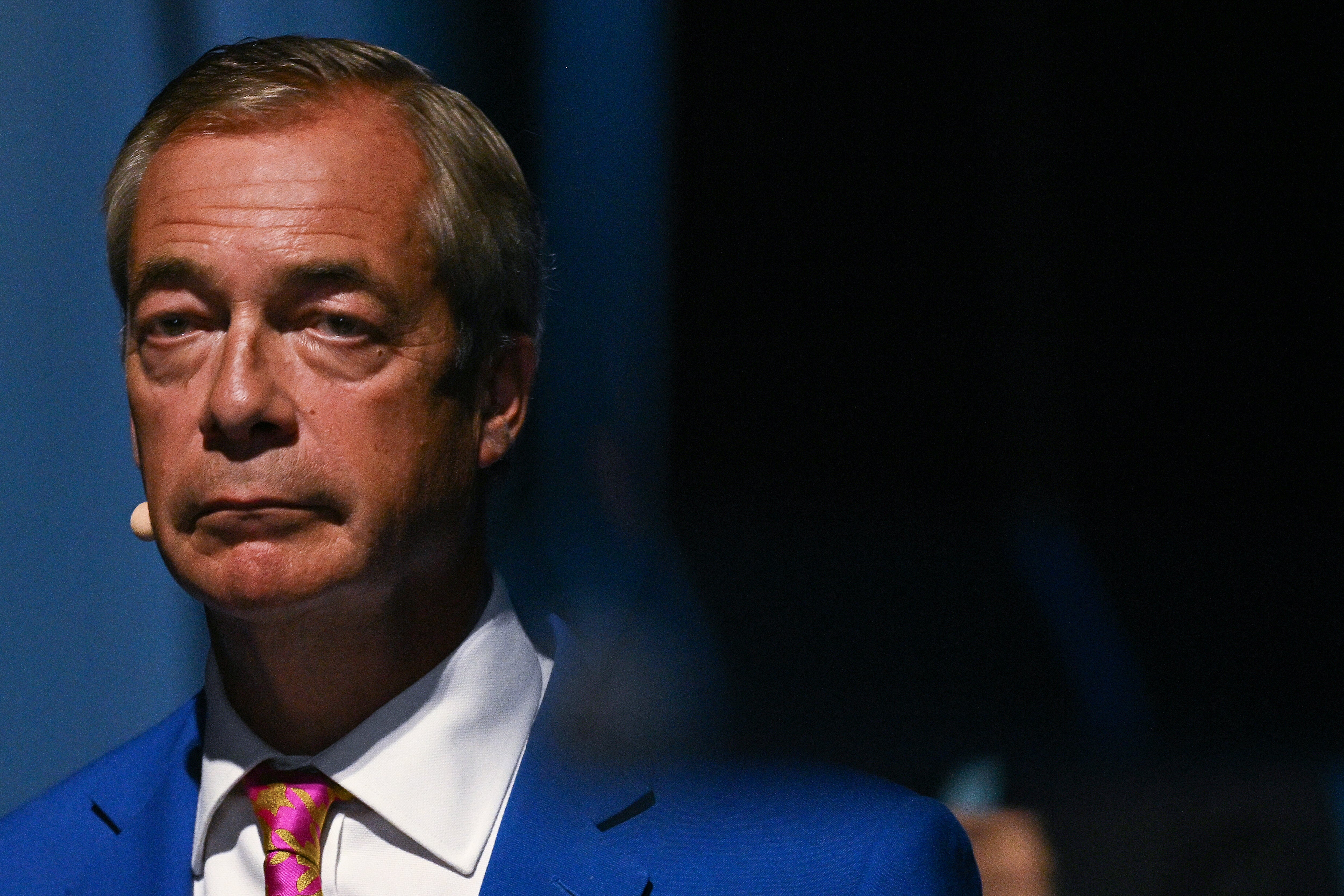
He also looks set to be without Dan Jukes, his fixer. Farage does a lot of his own press – a bit like Trump who, even now, sometimes answers his personal phone to random journalists – but, like any high-profile politician, he relies on a trusted aide to do a lot of his talking for him. For more than a decade, that has been Jukes.
But above all, there is the impression given by Reform of a party of rank amateurs run by people who are too rich, too arrogant and too self-absorbed even to run a party conference without long queues and chaotic delays.
It is not the potential illegality that will do for Farage. Ultimately, I do not believe that the British electorate will tolerate the incompetence.
Farage has one card to play. He played it this afternoon: an agreement with Jordan Bardella, who will be Marine lLe Pen’s prime minister if she wins next year’s French presidential election. In contrast to Reform’s policy on the small boats so far, which is the usual unworkable fag-packet nonsense, a deal with the French government to take back migrants is the one thing that could actually work.
But if a National Rally French government would offer that deal to a Reform British government, why would it not agree to it with Andy Burnham?
Maybe this is the game-changer that Farage needs, but it feels as if his chance to replace the Tory party has passed, and that the two parties of the right will fight it out again at the next election – to Labour’s advantage.