


Valve explains why it isn’t subsidizing the Steam Machine
‘It doesn’t align with our beliefs about how healthy ecosystems are built.’
‘It doesn’t align with our beliefs about how healthy ecosystems are built.’
by Jun 22, 2026, 5:02 PM UTC
If you buy something from a Verge link, Vox Media may earn a commission. See our ethics statement.

 Jay Peters is a senior reporter covering technology, gaming, and more. He joined The Verge in 2019 after nearly two years at Techmeme.
Valve finally announced the price of the Steam Machine, and like a lot of new gadgets these days, it’s not cheap: It starts at $1,049 for a 512GB model, and a 2TB model costs $300 more. Configurations with a bundled Steam Controller cost an extra $79 each.
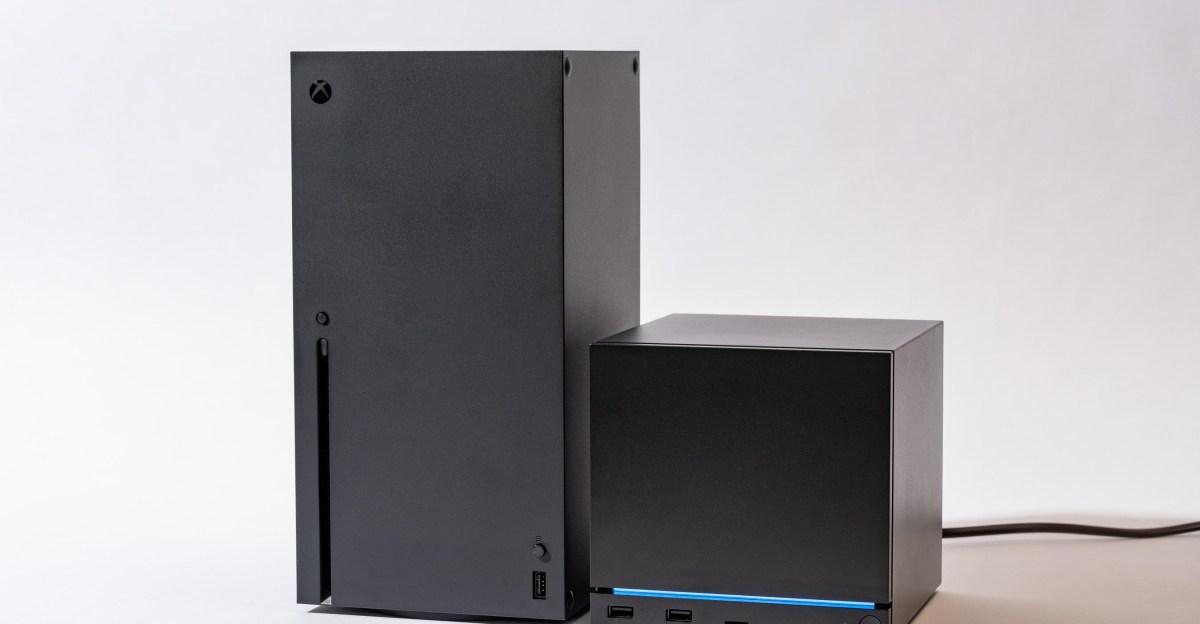
Despite Valve offering a console alternative with the Steam Machine — a compact piece of hardware that can easily hook up to your TV to play your Steam library — those prices mean the Machine is much more expensive than console counterparts like the PS5 ($599.99), Xbox Series X ($649.99), and PS5 Pro ($899.99) while performing similarly to a PS5. (Those console prices are also higher than what they were at launch due to the component crunch.)
While console makers sometimes subsidize their hardware to bring prices down, Valve is choosing not to do that with the Steam Machine. As Valve says in a blog post:
The traditional console model is to sell hardware at a loss and make up the revenue with subscription services or by selling games that are locked-in to the hardware. We think this can make sense for a single business in the short term but that open ecosystems are better for customers over the long term. PC gaming’s history proves this: The openness of the PC gaming space has enabled it to be the primary driver of hardware and software innovation for decades.
The strength of PC gaming is the ability to play the games you want on the hardware you want. Steam Machine is a solution to these problems (and we think it’s a great one), but it’s not the only solution, and we don’t want it to be.
Valve first announced the Steam Machine — and the Steam Controller, which is out, and the Steam Frame VR headset, which is not — late last year, right around when the component crisis began to feel real. At the time, Valve hadn’t shared pricing, but it initially intended to launch all three pieces of hardware in early 2026 — a target that it missed because of the memory and storage crunch.
Valve is essentially selling the Steam Machine at cost: “The cost of the product is basically the cost of the components and what it takes to make it,” Valve’s Lawrence Yang tells The Verge. And with the Steam Machine, Valve is also being even more aggressive on price than it is with the Steam Deck: “I would say that we’re being more aggressive with margins and things to be as close to cost as possible now,” says Valve’s Pierre-Loup Griffais.
The component crisis also affected Valve’s planned launch quantity for the Steam Machine, with Griffais saying that “we’re probably looking at around two-thirds of what we were planning.” Griffais adds that Valve, at one point, wasn’t convinced that it could build “any significant quantity.” So the fact that the Steam Machine is launching at all might be a small miracle in and of itself.
Correction, June 22nd: Changed the quoted text from Valve’s blog post, which differs from a version provided to The Verge ahead of publication.
Follow topics and authors from this story to see more like this in your personalized homepage feed and to receive email updates.