


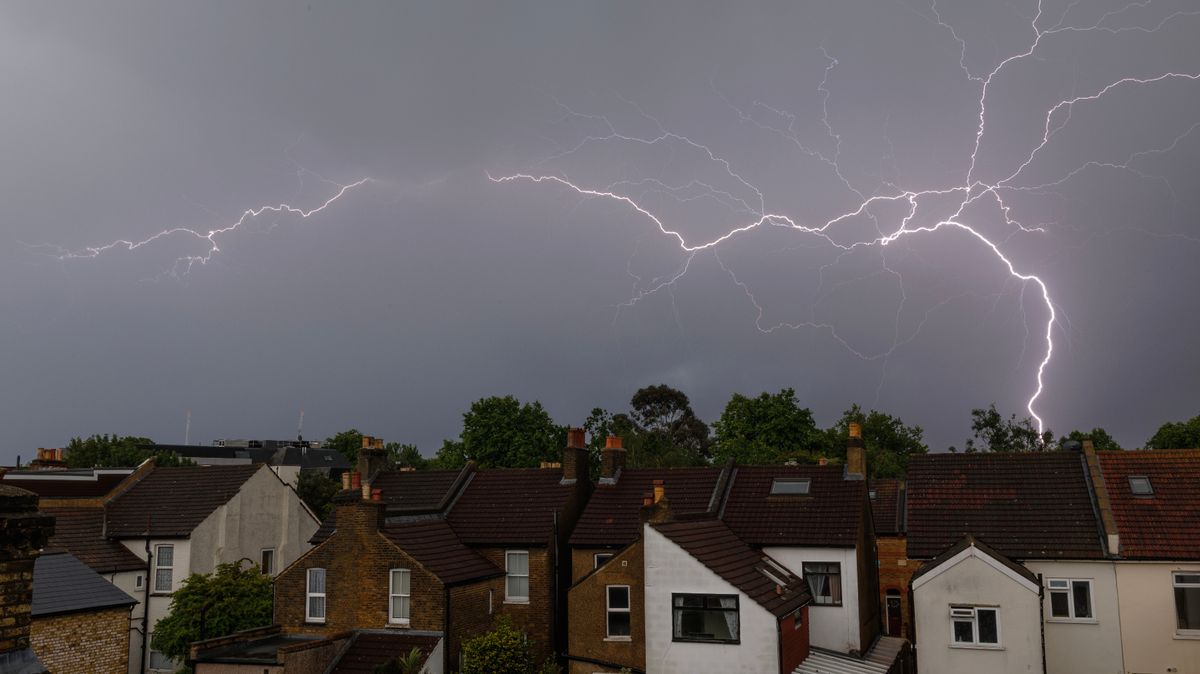
These striking weather maps show violent thunderstorms are to abruptly end the UK’s latest heatwave.
After days of scorching sunshine and temperatures climbing into the high 30Cs, forecasters say a plume of hot air will become increasingly unstable, triggering potentially severe thunderstorms capable of bringing torrential rain, frequent lightning, hail and even flash flooding.
Weather maps suggest the first signs of storm activity will emerge across parts of the Southwest of England and parts of Wales from around mid-afternoon on Sunday. The storms are then expected to intensify and spread north and east as the evening progresses, and they will return in the week.
In fact, the Met Office has tonight issued several weather warnings for storms, including for London and the Southeast of England and the East of England.
 View 5 Images
How the UK and Ireland will look on Wednesday afternoon
According to the latest charts, parts of Cornwall, Devon, Somerset and south Wales could begin to see thunderstorm activity from around 3pm on Sunday, with heavy bursts of rain developing rapidly in the warm and humid conditions.
By approximately 5pm to 6pm on Sunday, the zone of unsettled weather is forecast to expand into the Midlands and the Northwest of England. Cities including Birmingham, Stoke-on-Trent, Manchester and Liverpool could all be at risk of thunderstorms during the evening commute, potentially causing disruption on roads and rail networks.
 View 5 Images
Weather maps show the Northeast of England will see the worst of the storms on Wednesday night
Forecasters predict the storms will continue tracking eastwards through the evening. By around 8pm to 10pm on Sunday, parts of Yorkshire, the Humber region, East Anglia and the North East could experience intense downpours and lightning strikes.
London and much of the South East may not see the worst of the storms until later in the night, with weather maps indicating thunderstorm activity could arrive between 9pm and midnight before continuing into the early hours of Monday.
 View 5 Images
Weather maps show exact time each region faces violent thunderstorms
Parts of southern and central Scotland are also expected to be affected late on Sunday and into Monday morning as the unstable air mass moves northwards across the UK.
Forecasters understand Northern Ireland’s heatwave will end abruptly on Monday night — when the monster thunderstorm moves north over the nation.
Rain will be particularly heavy too, and linger into Tuesday morning.
The Met Office has warned that the breakdown of the heatwave could bring dangerous weather conditions in some areas.
A spokesperson for the Met Office said: “Temperatures will quickly rise on Monday and are forecast to reach 34C in southern parts of England. However, this brings with it the chance of thundery showers for some.”
Meteorologists have explained that the storms are being fuelled by a clash between exceptionally warm, humid air drawn north from continental Europe and cooler Atlantic air beginning to push in from the west. This contrast in temperatures creates atmospheric instability, significantly increasing the likelihood of sudden and intense thunderstorms.
 View 5 Images
How the UK will look on Tuesday evening with violent thunderstorms
Approximate thunderstorm timings by region according to current weather maps:
- South West England and Wales: From around 3pm on Sunday.
- Midlands: Between 5pm and 7pm on Sunday.
- North West England: From around 5pm onwards.
- Yorkshire and the North East: Between 8pm and 10pm.
- London and the South East: Between 9pm and midnight.
- Southern Scotland: Late Sunday evening into the early hours of Monday.
Forecasters say the thunderstorms should help bring an end to the most intense heat in many areas, although temperatures are still expected to remain above average for the time of year across much of the UK next week.
Article continues below
Looking further ahead, forecasters say Tuesday is expected to bring a more changeable picture across much of the UK, with sunny spells interspersed with showers and the risk of further thunderstorms in some areas as fresher Atlantic air pushes in. Temperatures are still expected to remain above average for the time of year despite the breakdown of the intense heat.