


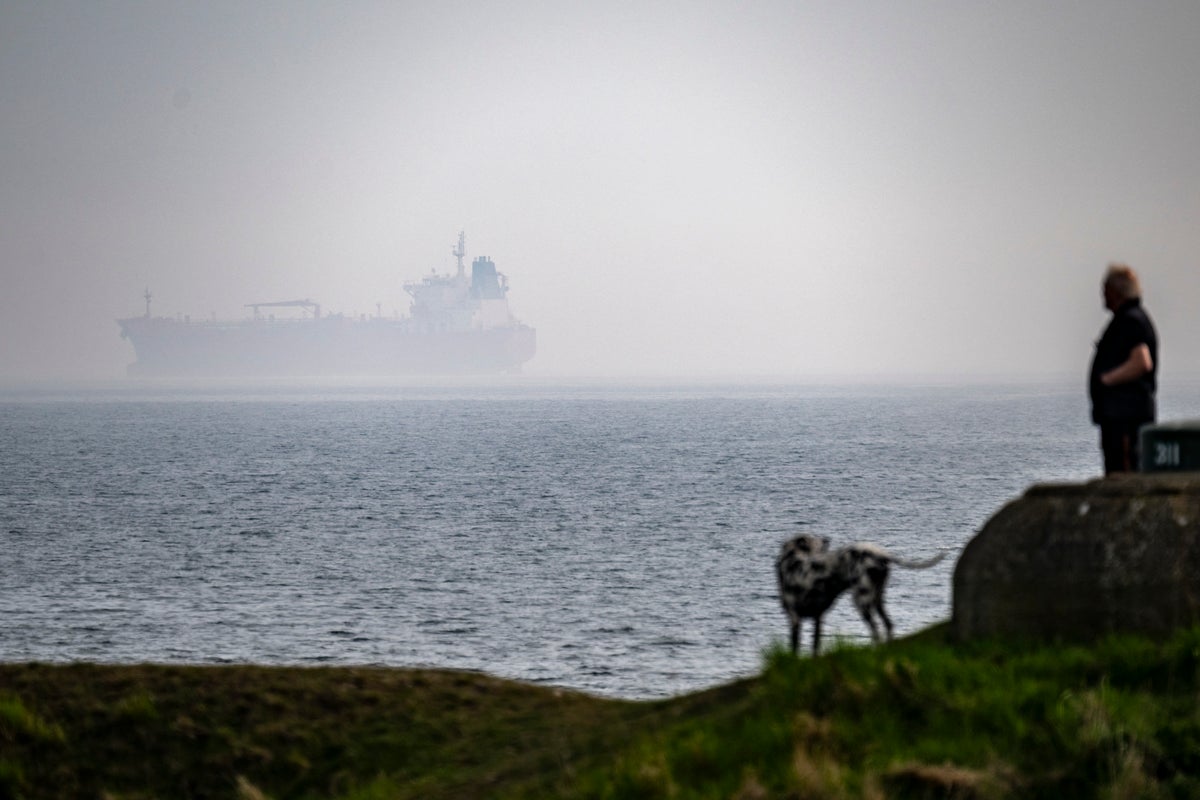
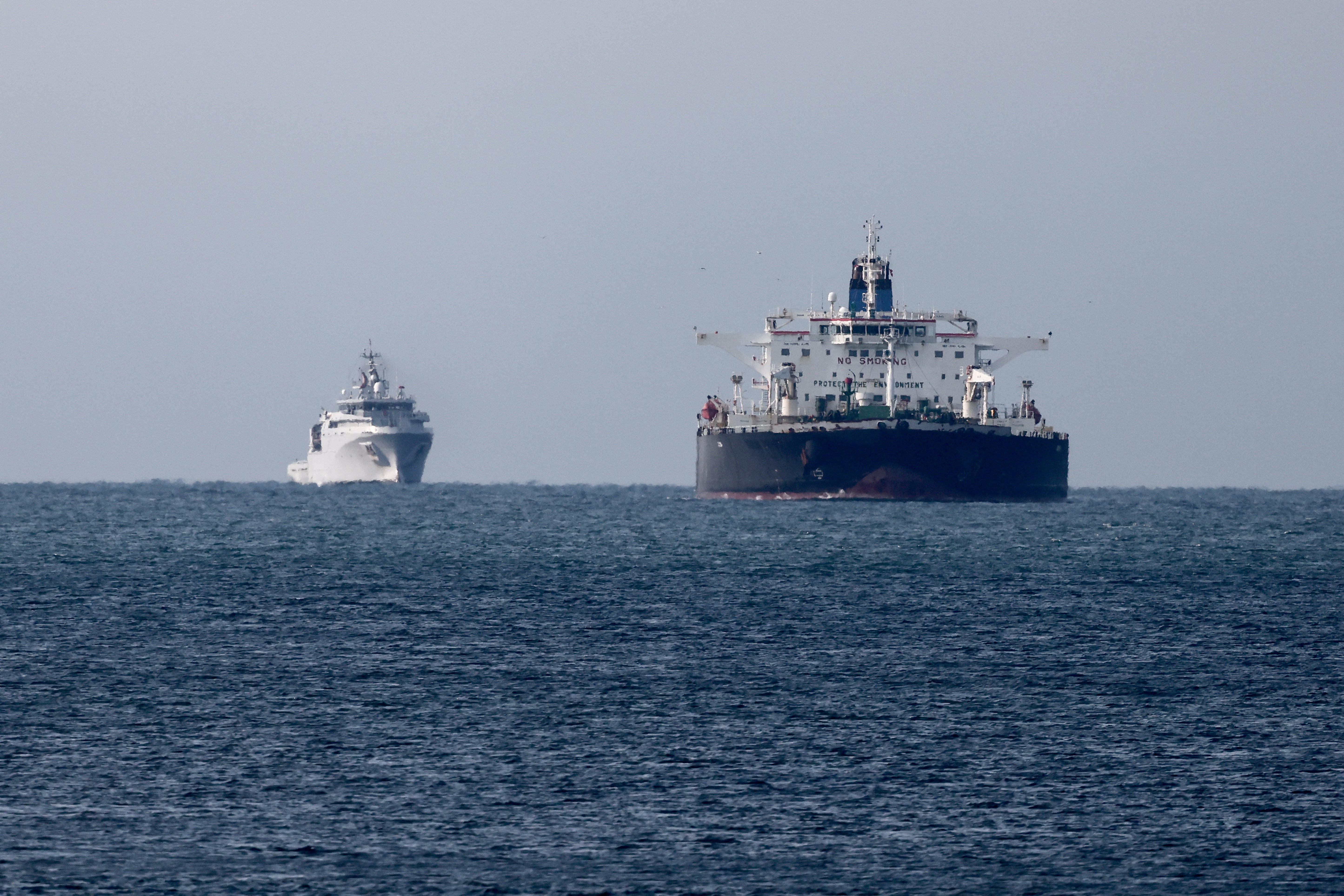
The British armed forces intercepted a Russian shadow fleet vessel in the Channel in the early hours of Sunday, Sir Keir Starmer said.
In the first UK-led operation of its kind, the Ministry of Defence (MoD) said Royal Marine commandos and specially trained law enforcement officers from the National Crime Agency boarded a sanctioned oil tanker during a six-hour operation.
The vessel Smyrtos will be provisionally moved to an anchorage off the south coast of England and be monitored for any environmental or safety concerns.
According to the MoD, the operation was supported by aircraft from the Maritime Air Group (Chinooks, Merlin Mk4 and Wildcat), an RAF P-8 aircraft, and HMS Sutherland and HMS Ledbury.
Sir Keir Starmer said in a statement: “This operation delivers yet another blow to Russia and reminds those fuelling (President Vladimir) Putin’s war in Ukraine that they cannot hide.
“I want to pay tribute to all those involved, including our armed forces and law enforcement officers who keep this country safe 24 hours a day, 365 days a year.”
Defence secretary Dan Jarvis said: “Operations like this require skill, professionalism and courage. I pay tribute to our armed forces personnel and all those involved.
“Russia relies on its shadow fleet to fund their conflict in Ukraine and our interdiction delivers a blow to Putin’s illegal war.”
Britain and other European nations accuse Russia of using foreign-flagged oil tankers to export oil, allowing Moscow to continue benefitting from its lucrative energy trade despite international sanctions.
 open image in gallery
The shadow fleet vessels typically have blurry ownership structures and are often poorly regulated, ageing tankers prone to spills, mechanical failures and leaks.
The vessels have several tricks to avoid identification and accountability, and continues to grow as blacklisted vessels are replaced with cheap, older ships.
The fleet uses tactics like ship-to-ship transfers in international waters, where there is less monitoring from port control authorities. This makes it easier to slip under the radar and avoid sanctions.
They also use falsification, including fake ship identification numbers, intentionally spoofed location data, and using flag countries with less oversight, according to Lloyd’s List Intelligence and Finland’s Coast Guard.
Most of the tankers are owned by shell companies, with newly formed companies rapidly buying and selling on ships to make it even more difficult to prove accountability.