


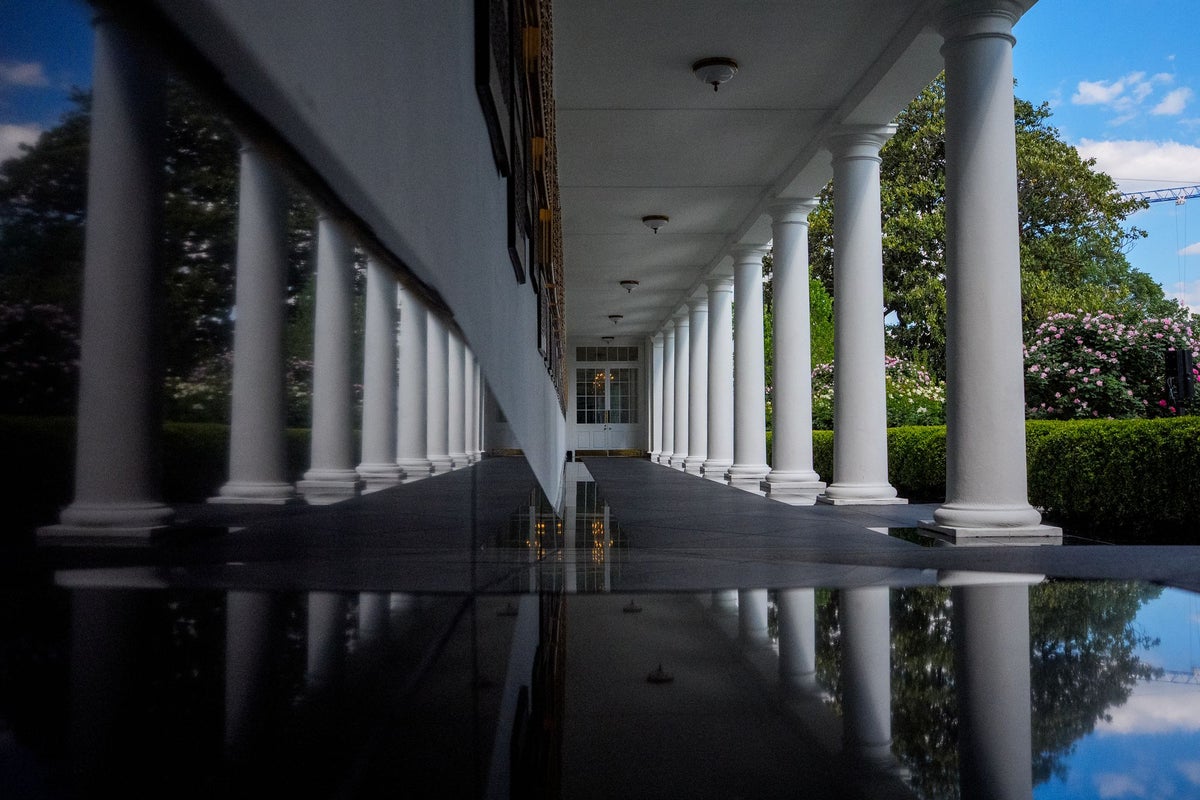
Donald Trump reportedly used nearly $700,000 in taxpayer funds designated for the National Park Service to replace a White House walkway, despite publicly claiming he paid for the renovations himself.
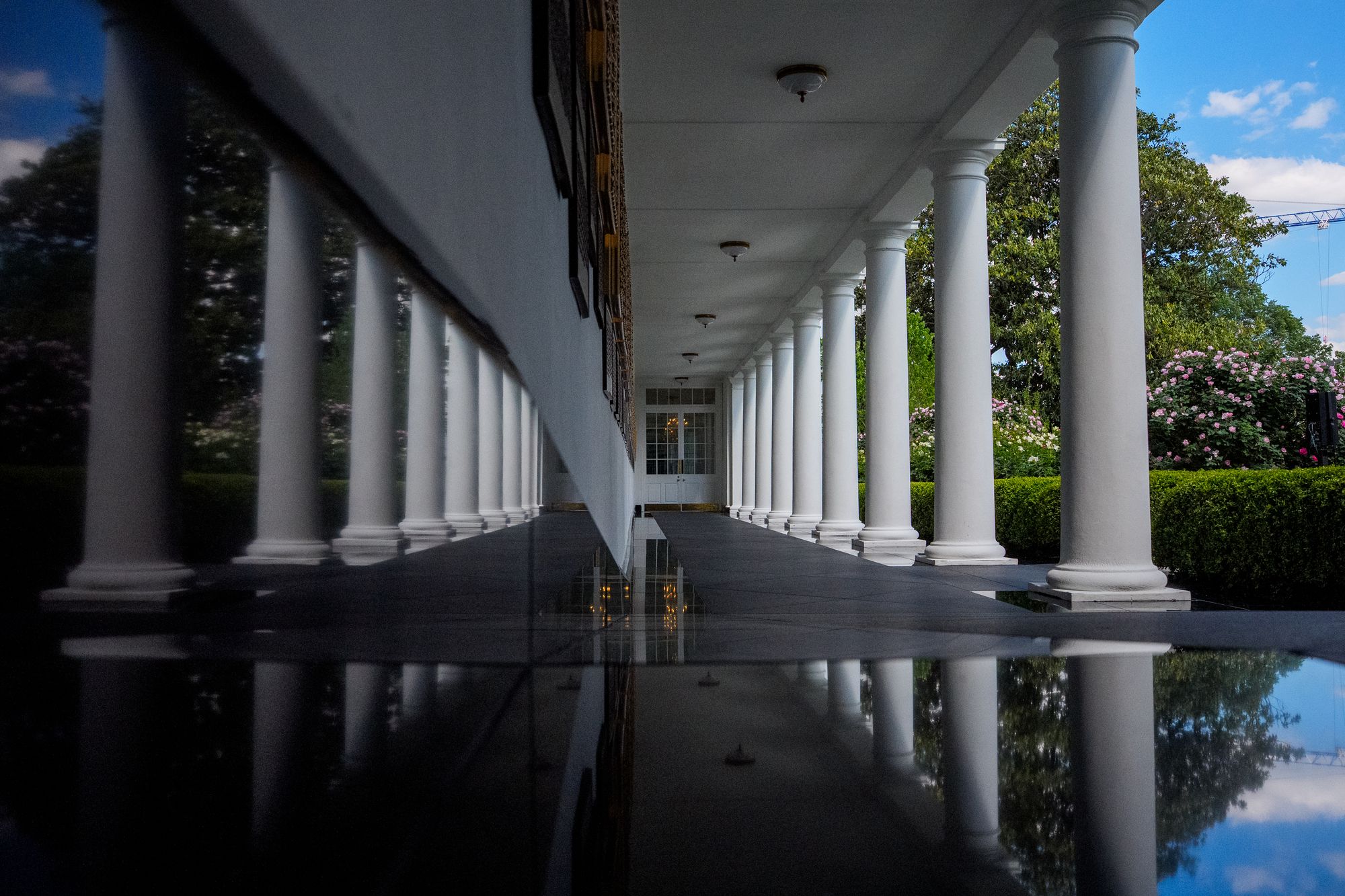
Internal budget documents obtained by The Atlantic reveal that the pathway connecting the executive residence to the Oval Office cost taxpayers $689,232 to upgrade. The renovation replaced the historic Tennessee flagstone with polished, Italian-carved African granite featuring a specialized flamed-finish stripe.
When questioned by reporters in March regarding the funding source for the path, Trump stated it was “paid for by me.”
However, records show the walkway overhaul was part of a larger $1.3 million project covering adjacent masonry repairs and new door hardware. The documents also disclosed a separate $347,503 “rush project” requested by the president a year earlier to replace stucco on the colonnade wall, which enabled the installation of gold frames and plaques criticizing past administrations.
This spending represents a broader redirection of federal resources. Taxpayer funding for projects in the National Capital Region surged by 92 percent over the last year, drawing from revolving maintenance accounts and more than $100 million in fees collected from national parks across the United States.
 open image in gallery
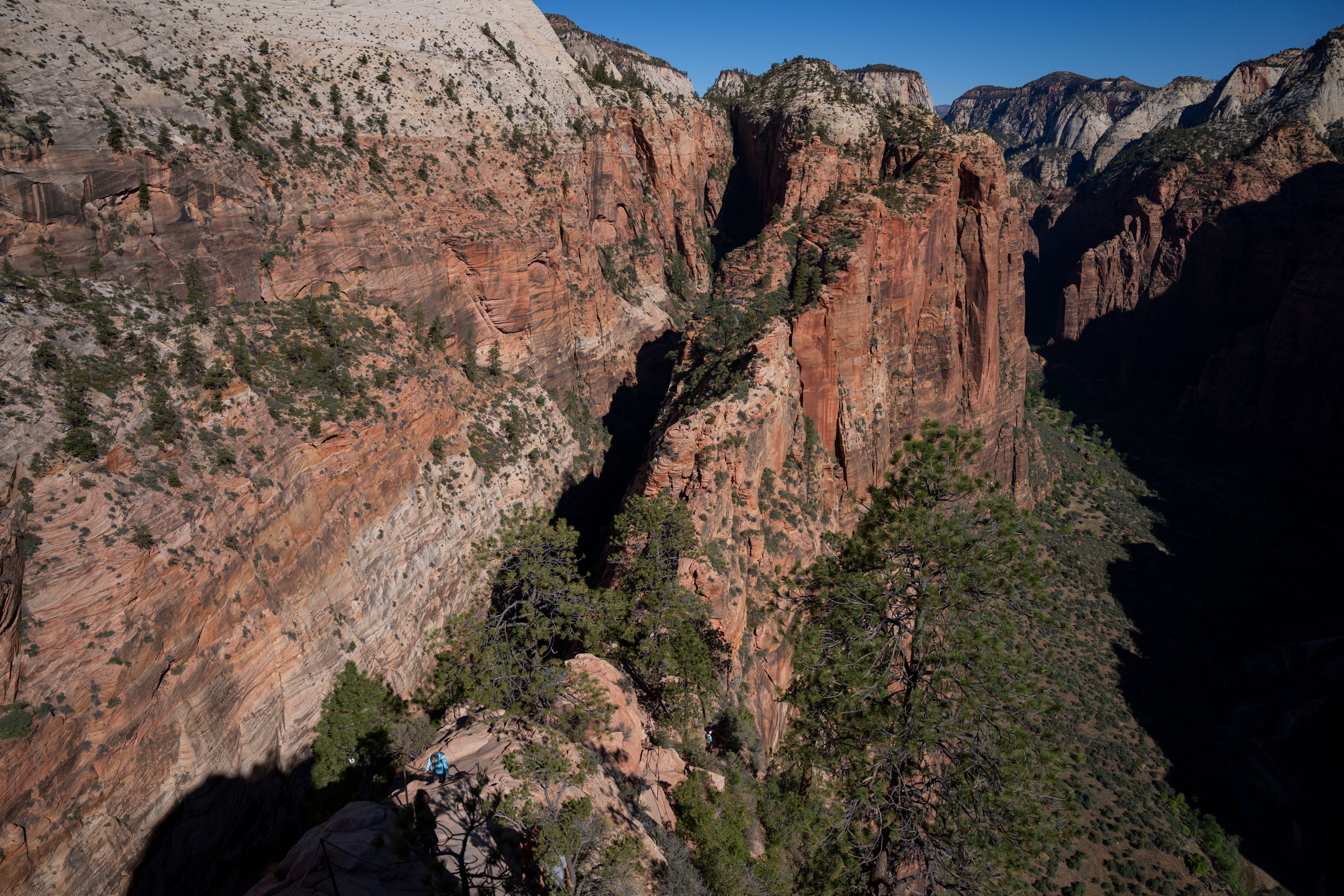
Around the same time, spending on park projects outside the Washington area dropped by $854 million — a 68 percent decline — during the first eight and a half months of fiscal year 2026 compared to the previous full fiscal year. Regional cutbacks included a $254 million reduction for Intermountain Region parks like Yellowstone and a $235 million drop for Pacific West parks like Yosemite.
As a result, more than 900 projected park maintenance efforts nationwide lost expected funding. Defunded items included a $1.5 million roof replacement at the Yellowstone Center for Resources to stop leaks and pests, a $3 million free-bus system at Acadia National Park and a $424,000 guardrail replacement at Black Canyon in Colorado’s Gunnison National Park.
“The president is prioritizing D.C. at the expense of parks throughout the country,” Emily Douce, a lobbyist for the National Parks Conservation Association, told The Atlantic. “There is $24 billion of maintenance needs throughout the National Park Service system, and adding these new vanity projects just adds to the need.”
These funding shifts come as the National Park Service faces severe staffing shortages. The agency has already lost nearly a quarter of its workforce since 2025 through terminations, early retirements and federal buyouts. Trump’s proposed 2027 budget would cut an additional 3,967 full-time employees — a 31 percent drop compared to 2025 levels.
 open image in gallery
Remaining regional staff face temporary reassignments. Internal memos from March distributed on behalf of Parks Director Jessica Bowron warned employees of an “all-hands-on-deck approach” for upcoming semiquincentennial events, noting that “resource sharing across parks and regions will be essential.”
Documents show that approximately 450 personnel from more than 200 parks have been redeployed to Washington for the nation’s 250th anniversary celebrations. Under agency policy, local home parks continue covering standard wages for these absent employees, while separate service accounts cover travel, lodging and overtime costs.
An anonymous Park Service employee told The Atlantic that some parks had up to 70 percent of anticipated project funds pulled back, meaning “signage and exhibits won’t be improved, youth programs can’t be offered, that a trail is not improved.”
The administration’s capital initiatives extend beyond the walkway. Ongoing costs include $32,095 approved in March to maintain statues Trump placed in the Rose Garden.
 open image in gallery
Larger structural overhauls are also underway, most notably a project to demolish the East Wing for a new ballroom. This month, the White House budget office transferred $351.6 million to the Secret Service following congressional refusal to grant $1 billion for East Wing security enhancements, Roll Call reported.
White House spokesperson Davis Ingle told The Atlantic that the East Wing project was “inextricably tied to the security of the President” and confirmed that Trump and his allies would provide roughly $400 million in funding.
Future capital plans include a new South Lawn landing pad designed to prevent newer Marine One helicopters from scorching the grass. Budget documents show this specific $5 million project will be covered via a donation from defense contractor Lockheed Martin.
The Independent has contacted the White House for comment.