


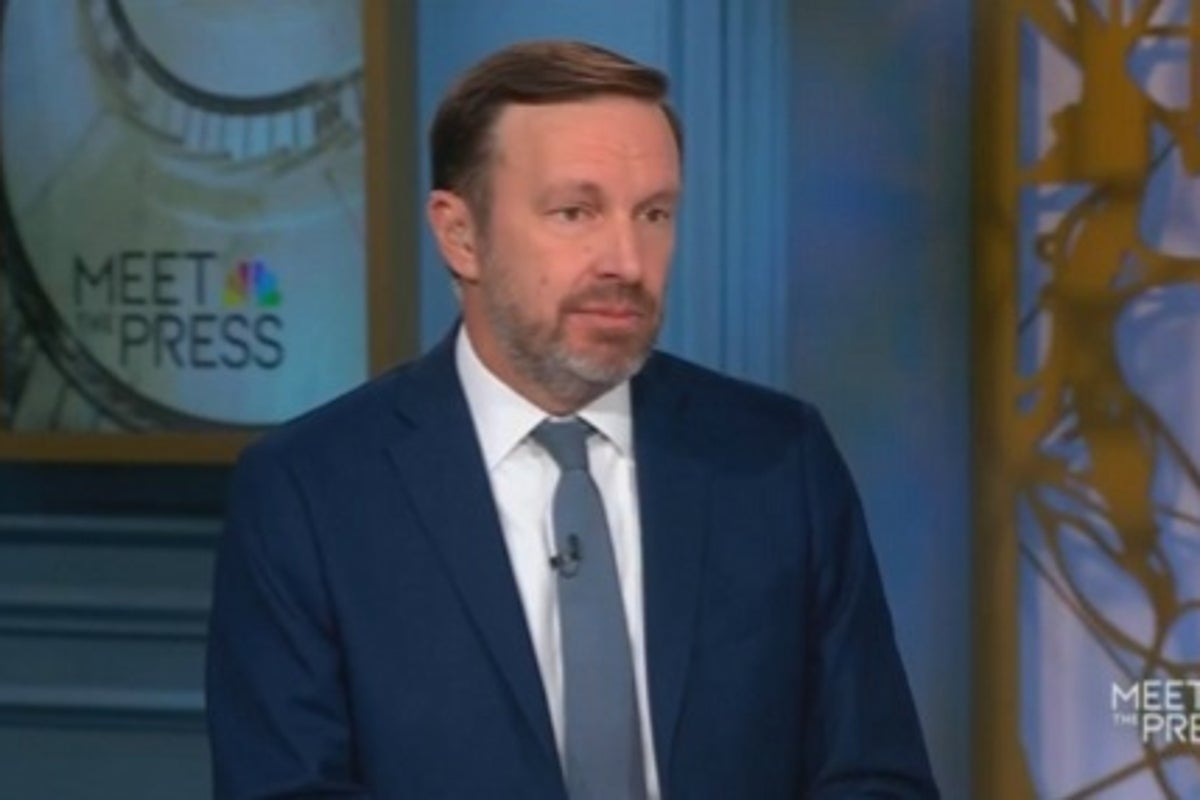
Connecticut Sen. Chris Murphy tore into Donald Trump’s ongoing inability to reach an agreement to permanently end the war with Iran on Sunday and said that it was increasingly obvious that Trump would be forced to take a “bad” deal to extract the U.S. from the conflict.
But Murphy, speaking on NBC’s Meet the Press on Sunday, told host Kristen Welker that he’d support any effort to end the war at this point — even a “terrible-bad deal” — as traffic continues to be heavily restricted through the Strait of Hormuz and the U.S. has so far been unable to pressure Iran to accept any deal reopening the strait and addressing its nuclear program.
His remarks come as the Wall Street Journal reported on Sunday that the president is considering what would be essentially a concession of defeat on one of his main military objectives — the securing of an agreement to destroy Iran’s remaining nuclear material and put legal restrictions on Iran’s enrichment and development abilities for years to come.
Instead, the Journal reports that the president has privately floated to aides that he is even considering walking away with a deal to reopen the strait that leaves the nuclear issue unaddressed. Murphy said on Sunday that such a defeat has already occurred.
“So Donald Trump has lost this war. America is weaker. Iran is stronger,” said Murphy.
 open image in gallery
“The price to reopen the Strait increases by the day. The supposed deal that’s on the table right now would pay Iran $100 million, excuse me, $100 billion a year, in order to reopen the Strait. That is one third of Iran’s entire economy,” the senator added, referring to the agreement which the two sides walked away from as hostilities resumed in July.
The senator went on to say that he and other Democrats should support a so-called “bad” deal if it meant lessening economic pain for America in the short term, and said that the Trump administration had proved unable to deliver more favorable terms.
“I will support a deal to end this war and reopen the Strait. I am prepared to support a bad deal, to end this war and reopen the Strait, because the only deal that is available, at this point in time, is a terrible bad deal. But the war needs to end because every day that the war continues, America gets weaker, Iran gets stronger, and people here in the United States get screwed, as prices go up, and up, and up,” he said.
 open image in gallery
 open image in gallery
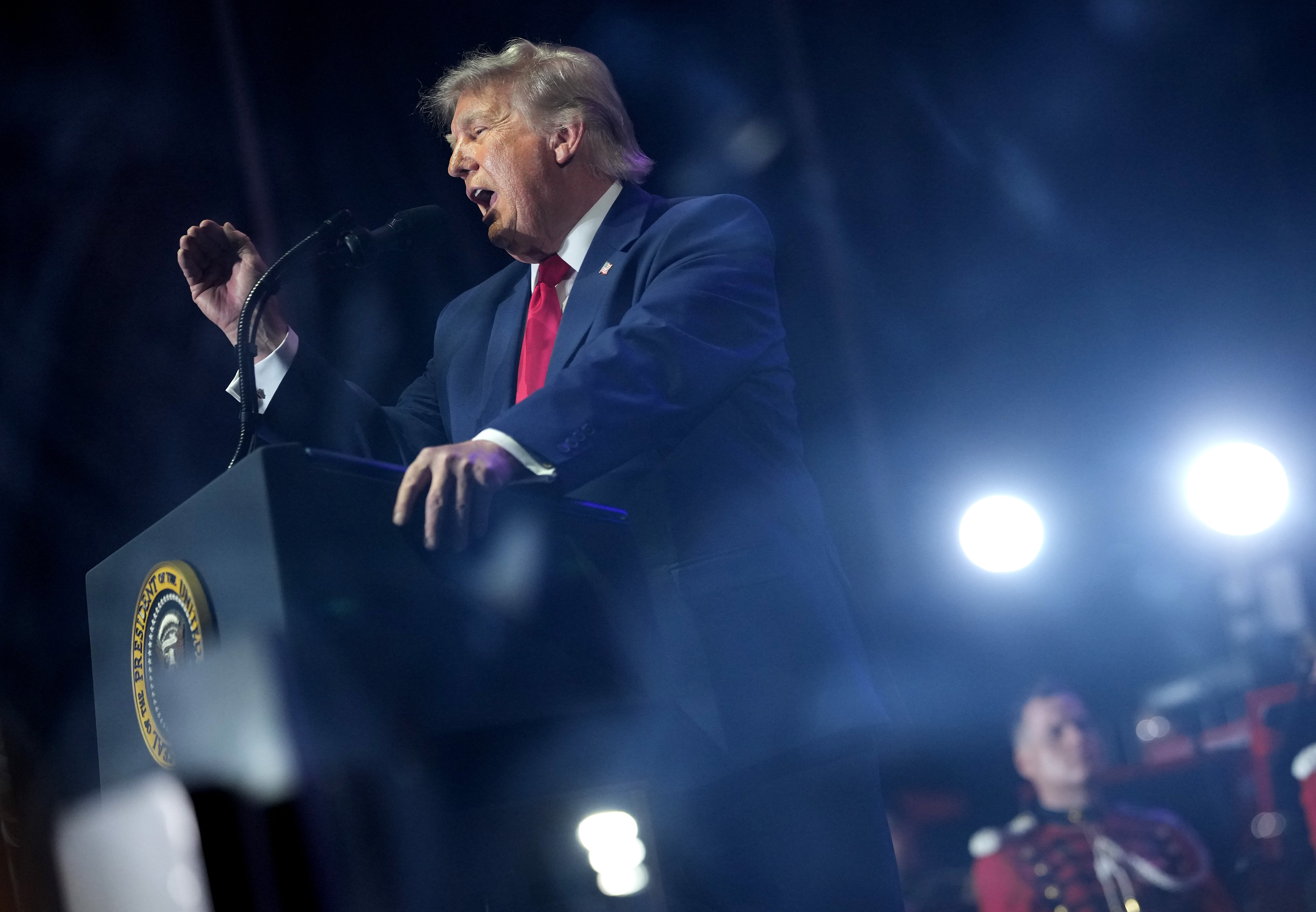
The president has sought to use U.S. military victories as a means of boasting to American voters about the successes of his White House, and often treats audiences to descriptions of his administration’s raid on Venezuela, which resulted in the capture of Nicolas Maduro, and rants about how Iran’s military capabilities have been decimated by U.S. warfighters.
But at the same time, the U.S. and its naval forces have been unable to guarantee safe passage through the Strait of Hormuz, an international waterway and key shipping route for global energy traffic. The Iranian military and Revolutionary Guard forces continuously mine the strait and deploy drone and rocket munitions to attack tankers and other vessels that do not travel through approved Iranian-set shipping lanes, leading to chaos and a sharp drop in traffic following the resumption of hostilities last month.
Trump has put much of his focus on the strait and declared at one point in July that the waterway was open and clear for safe passage. Ten days later, a tanker exploded after striking a mine, illustrating the dangers that remain in the region caused by both current and previous military actions.
The restriction in traffic traveling through the strait has caused oil and gas prices to jump considerably, and the national gasoline price average now sits more than a dollar higher than it was before the conflict began in late February. The high fuel prices blunted the summer travel season in the U.S. and around the world, while also driving up food costs and other consumer prices for Americans.
Republicans have sought an exit ramp for the president in regards to the war for months, but Trump has been unable to extract himself from a conflict he once said would be over in a matter of weeks as Iran continues to play hardball and resist his demands for total capitulation.