


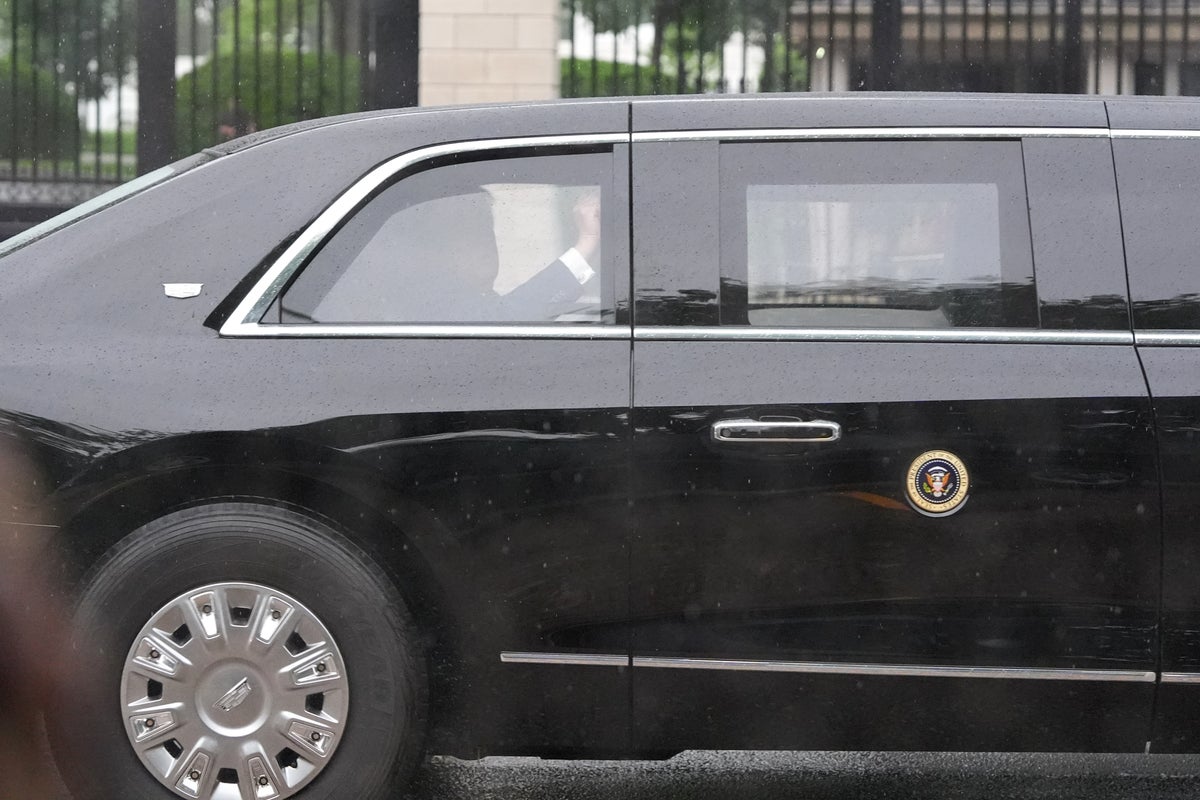
President Donald Trump visited Walter Reed National Military Medical Center for his second checkup since October as Americans continue to express doubts about his mental fitness ahead of his 80th birthday.
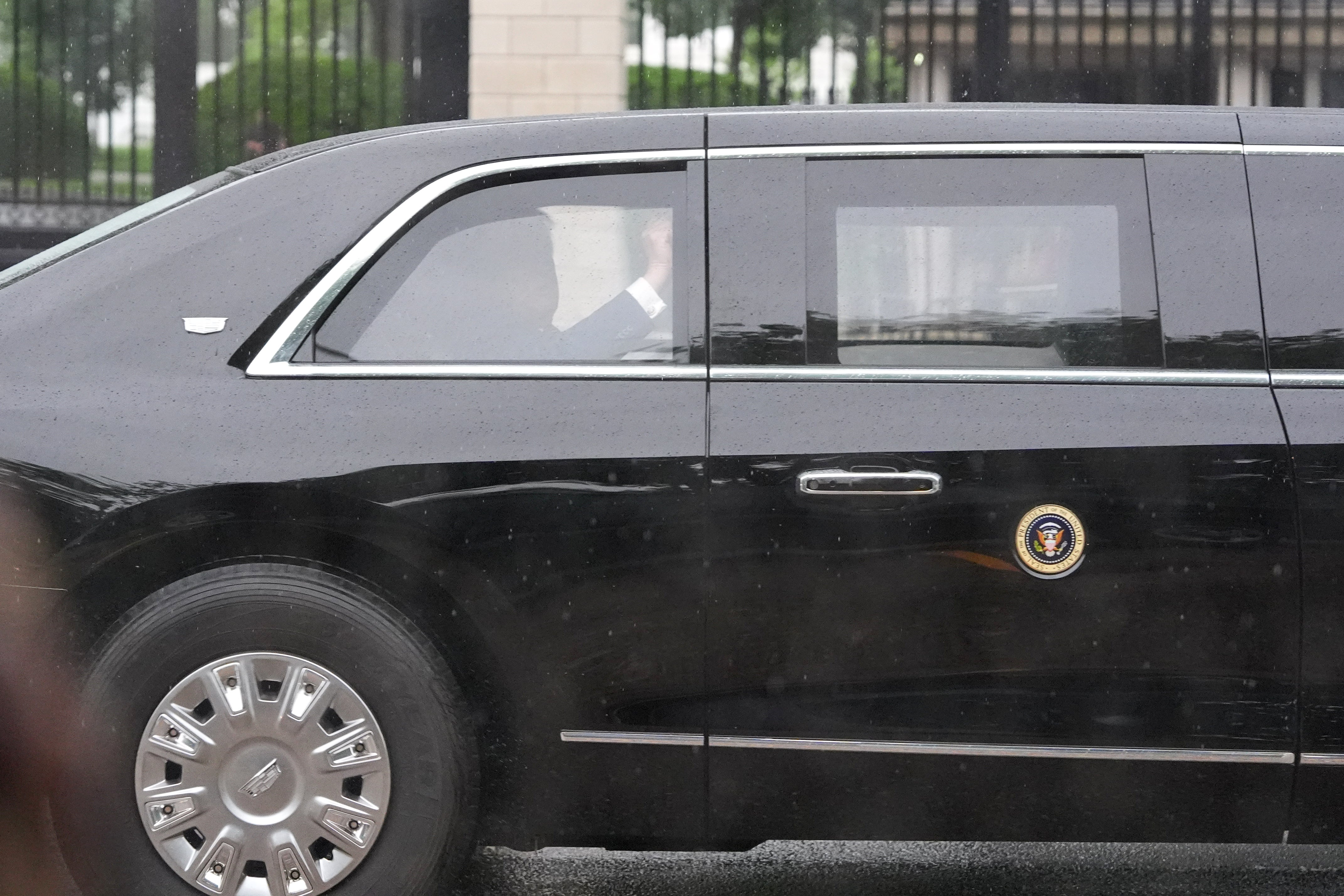
Trump arrived at the Bethesda, Maryland facility at 8:52 am on Tuesday for what the White House described as “his annual dental and medical evaluations” as well as visits with military personnel while there.
He left for the return drive to the White House after roughly three and a half hours of what he described as a “six-month physical” in a Truth Social post in which he declared that “everything” had “checked out PERFECTLY” during the checkup.
The medical exam was Trump’s third publicly disclosed checkup with his U.S. Navy physician, Dr. Sean Barbabella, since October 2025 — and his fourth since returning to the White House last January.
He previously visited Walter Reed for the first time in his second term for an annual physical in April 2025, after which the White House claimed he was in “excellent health” and weighing in at 224 pounds — a fully 20 pounds lighter than what he weighed five years earlier.
 open image in gallery
Trump then underwent an evaluation by Dr. Barbabella in July 2025 after photographs of his swollen ankles raised health concerns, followed by what the White House called a “semi-annual physical” in October after which the White House disclosed that he’d had a CT scan to rule out cardiovascular issues.
His latest examination comes amid rising scrutiny over his mental and physical condition as he nears the start of his ninth decade and as Americans express increasing doubts over his fitness to serve as president after regular episodes of falling asleep during public events, bizarre and often erratic behavior and evidence of physical decline.
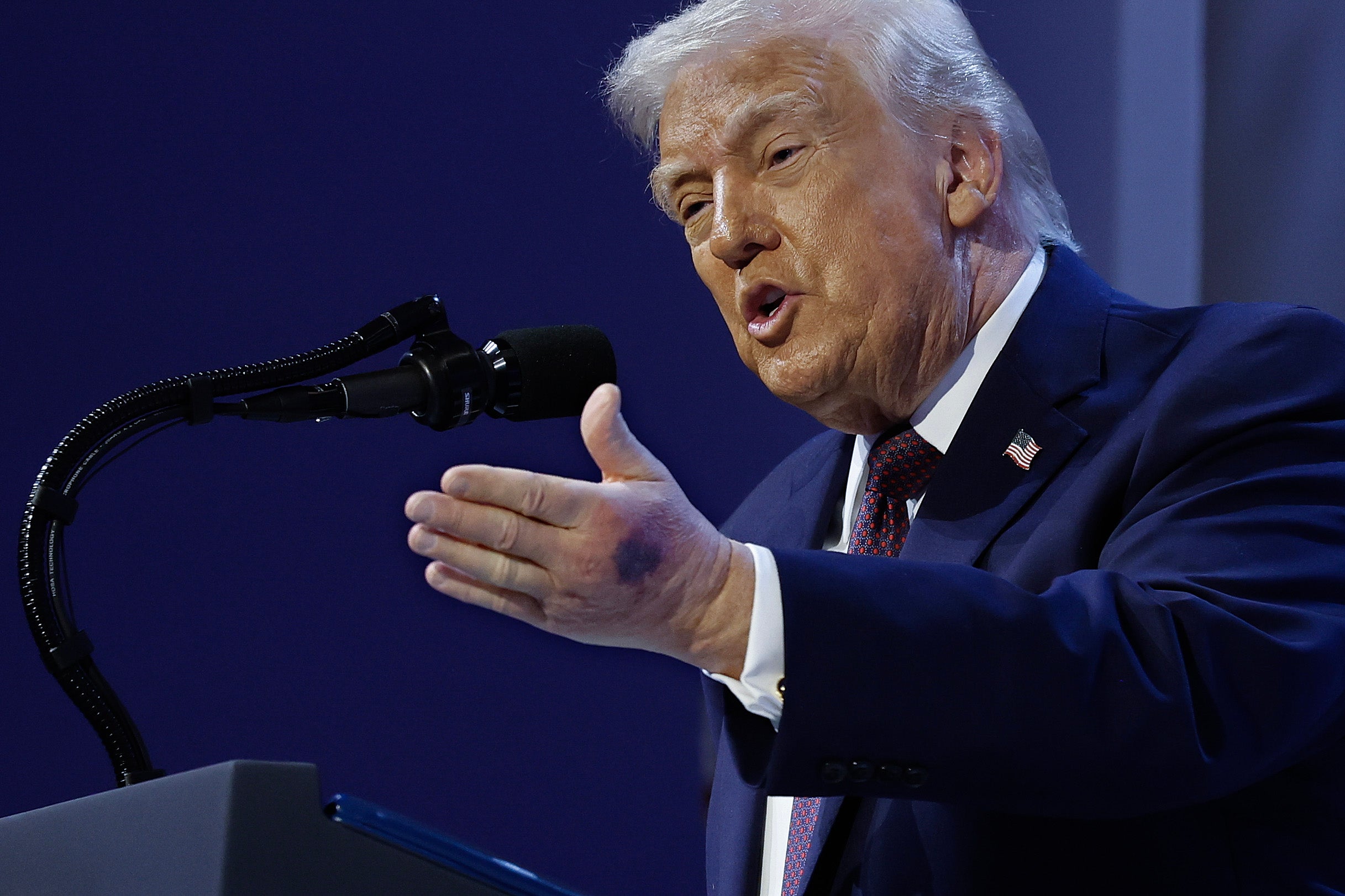
Since the start of his second term, photographers have routinely spotted visible bruising on both of Trump’s hands that he attempts — unsuccessfully — to conceal with makeup.
The White House has repeatedly claimed that the bruising is the result of frequent and constant handshaking while carrying out official duties combined with the side effects of a high daily dose of aspirin, with White House Press Secretary Karoline Leavitt telling The Independent last year that the Oval Office under Trump is “like Grand Central station” since Trump returned to the presidency.
Yet no explanation has been offered for the similar bruising on the back of Trump’s left hand, which is not generally used for shaking hands.
 open image in gallery
After photographs of the president revealed visibly swollen ankles last July, Dr. Barbabella penned a memorandum stating that Trump was suffering from Chronic Veinous Insufficiency, which he described as a “common” vein condition that was benign and not evidence of more serious disease.
Barbabella separately acknowledged that Trump was using “a preventative skin treatment” to address a dermatological issue he did not describe further after photographs emerged of a blotchy red rash around Trump’s neck during an event earlier this year.
The U.S. Navy Captain has described the president’s “cardiac age” — a metric used by physicians to describe cardiovascular vitality as approximately 14 years younger than his chronological age. And Leavitt said the CT scan of Trump taken during his exam last October indicated that he is “exceptional physical health.”
Yet Trump’s condition is increasingly being questioned after he has appeared to fall asleep during several meetings, including a during a cabinet meeting late last year.
A Reuters/Ipsos poll in April found that 51 percent of Americans believe that Trump’s mental faculties declined over 2025 and early 2026. That same poll found that only a quarter of Americans believe he is “even-tempered.”
The same month, a Washington Post/Ipsos poll found that just four in ten Americans now believe that Trump has the mental sharpness required for the presidency, a drop of seven points in that category from several months ago. That poll also found that worries about Trump’s physical health were increasing as well.
Yet Trump frequently boasts about his cognitive condition — including his ability to pass a routine screening used to detect dementia.
During an Oval Office event in late March, he claimed to be the “only president that ever took a cognitive test.”
“I took it three times. It’s actually a very hard test for a lot of people. It wasn’t hard for me. But it’s a cognitive test,” he said.
“It starts off with an easy question. And by the time you get to the middle, it gets tougher. By the time you get to the end, very few people can answer those questions. They get very tough mathematical equations and things.”