


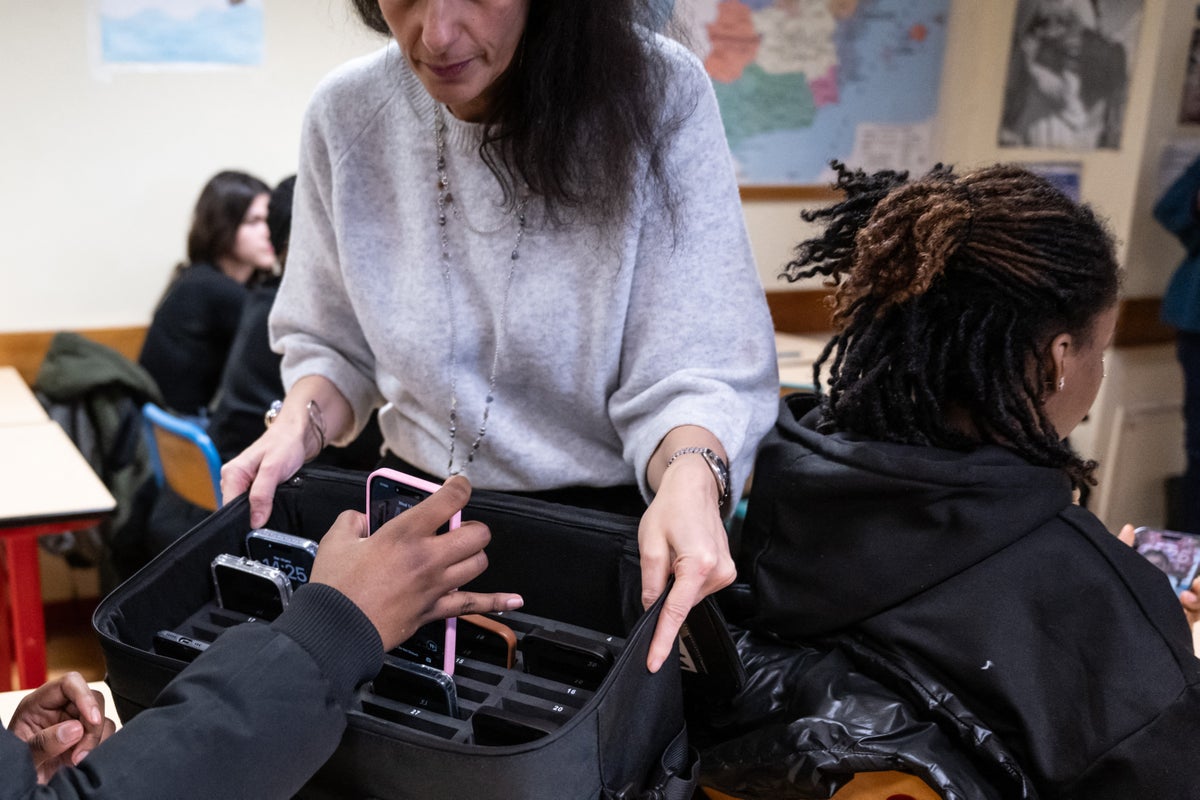
This week, schools have reopened for the new academic year tasked with a huge responsibility – keeping children off their mobile phones.
Bans and restrictions on smartphones have been commonplace across schools for years as teachers grapple with keeping classrooms distraction free. But from Tuesday 1 September, new guidance from the government means every school must now have a policy in place to stop children accessing their phones during the school day.
For those in charge, the key question is how to do this effectively. Some have enforced “no see no hear” policies, which tell children to keep phones out of sight and earshot during the school day.
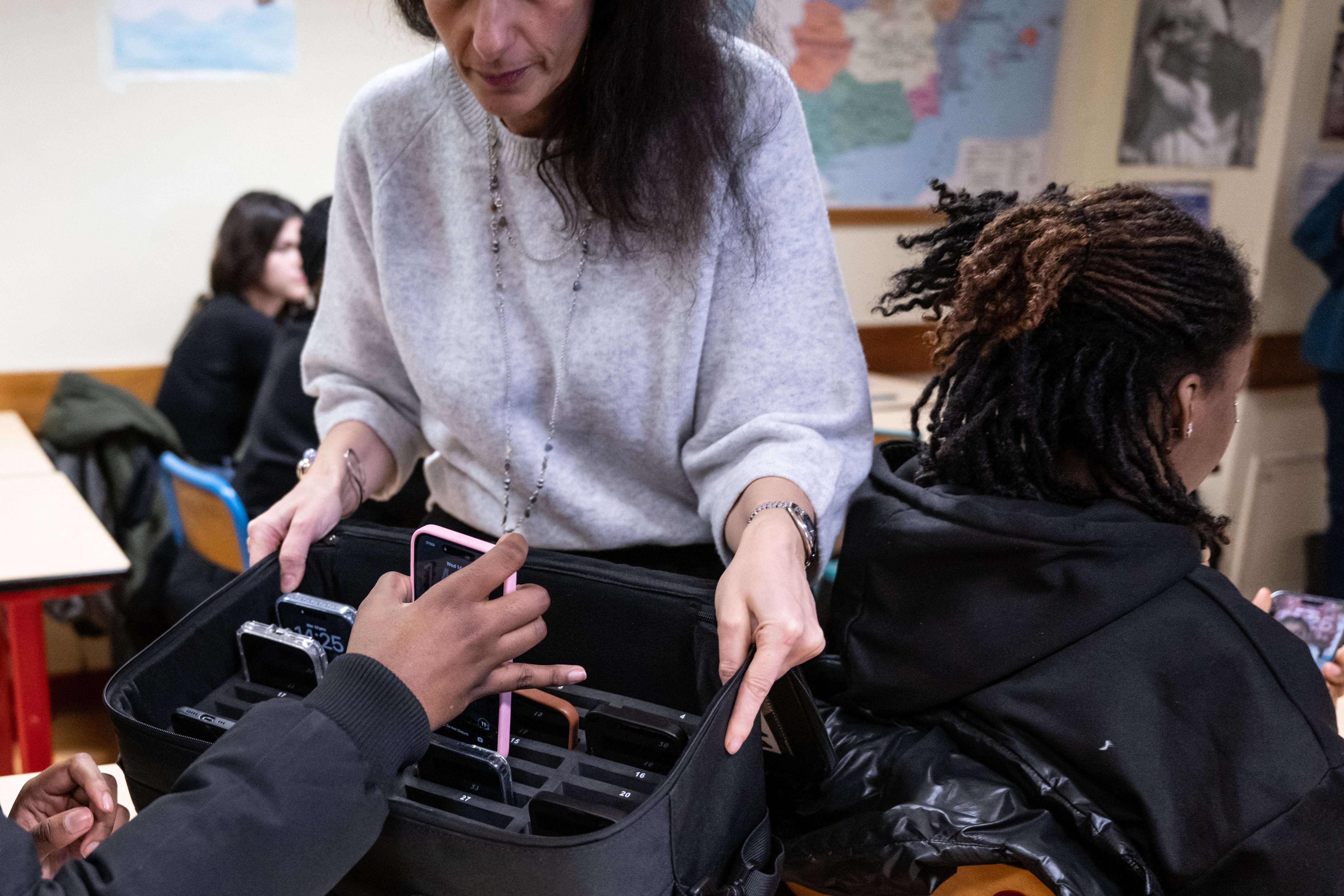
Some have purchased specially designed pouches, like those made by Yondr, which seal with a powerful magnet that can be placed at the school gates and typically cost around £20 to £25. Others are telling parents to only send their children to school with a brickphone, cutting off access to the internet and social media entirely.
Helen Newbery is deputy head at Manor High School in Leicestershire. She said the school has had a “no see no hear” policy for years, but told The Independent that the new statutory guidance encouraged them to “reflect” and bring in phone pouches from the start of this academic year.
 open image in gallery
For her, the real work started last term, when teachers embarked on a long period of conversation and debate with pupils to help them understand why they were introducing the pouches.
“We want students to understand why decisions have been made so it doesn’t feel as if it is punitive,” she explained. “A big priority for us is that students feel part of the decision-making and how the school is run. We wanted them to know it’s not just because the government have told us we need to do it. It’s because we believe that this is absolutely the right thing to do to give them the best chance of being an excellent person.”
Despite only being a couple of weeks into the new school year, Ms Newbery said pupils have responded: “really effectively”. She believes students are already spending less time on their phones and focusing better in lessons. It has been an investment for the school of nearly 1,000 students, which has bought the pouches with its own funds. But Ms Newbery said she believes the returns will be worth the spend.
Other schools have gone one step further and introduced a full smartphone ban, or brickphone-only policy for students. At Putney High School in southwest London, pupils up to Year 8 are not allowed to bring smartphones into school at all. Older pupils are given phone pouches to lock their devices away during the day.
“We found for the younger ones in particular who can’t moderate their use, they need to learn how to use this device and that this has had a positive knock-on effect,” headteacher Jo Sharrock explained.
.jpeg) open image in gallery
open image in galleryThe school’s Yondr pouch policy was introduced in September 2024 after months of conversations with pupils about their concerns and thoughts: “We didn’t face a lot of resistance,” she said.
“I think at the beginning the key thing was them understanding this wasn’t about being draconian. It wasn’t about a lack of trust. It was about you’re here to learn. We want you to be present.”
Initially, there was work involved. Some pupils damaged the pouches by trying to get into them, or insert dummy phones as a decoy, so teachers had to be vigilant and deploy inspections.
But two years later, she said staff hardly need to inspect the pouches because pupils have “bought into” the benefits. She too has noticed better focus in lessons, and even more girls playing together at break times.
“It might be hard at the beginning, but it’s worth every second to be honest,” she said. “I think we all feel liberated”.
Early studies have suggested there is some evidence that phone pouches are effective. Researchers from King’s College London examined smartphone pouches in Northern Ireland last school year, tracking behaviours and attitudes before the pouches were introduced and at follow-up points through the year.
Results showed they successfully reduced mobile phone use in schools, and teachers reported a reduction of classroom disruptions and improved social interaction amongst students. But teachers also outlined challenges with damaging the pouches and the practicality of enforcing the policy.
But not everyone agrees. Guy Holder, a teacher in southwest London, believes phone pouches are a “scandalous” waste of precious school money.
“Not only are schools paying for the pouches, but teachers actually have to make the pouch system work,” he said. “They need to check it is actually their phone, not a dummy phone, that has gone in the pouch. Then they have to do spot checks on the pouches during the day.
“Then you’ve also got the issue of kids trying to break the pouches. So in other words, the pouch system only really works if the teachers are really working hard to enforce it, which they can do with a No See No Hear policy.”
He believes brickphone-only policies are more effective because they can take pressure off parents, who are worried about socially isolating their children by not buying them a smartphone.
A Yondr spokesperson said its pouches create a “simple, visible daily routine, rather than asking teachers to police phones throughout the day” and that the cost reflects a “durable product developed over more than a decade”.
Ms Sharrock told any schools that are reckoning with a new phone policy this September to “hold the faith”.
“You’re doing the right thing,” she said. “We have never regretted it.”
A Department for Education spokesperson said: “This government is restoring childhood to the safe and happy time it should be, with less time scrolling, and more time for learning and play – enabling children to benefit from the best of technology, while protecting them from the worst of it.
“Banning mobile phones in schools doesn’t sit alone. We’re giving children the skills to navigate the online world safely, introducing the first-ever screen use guidance for parents, banning social media proven to harm under-16s, supporting safe AI tutoring tools, and updating the curriculum so every child can spot misinformation and build real media literacy.”