


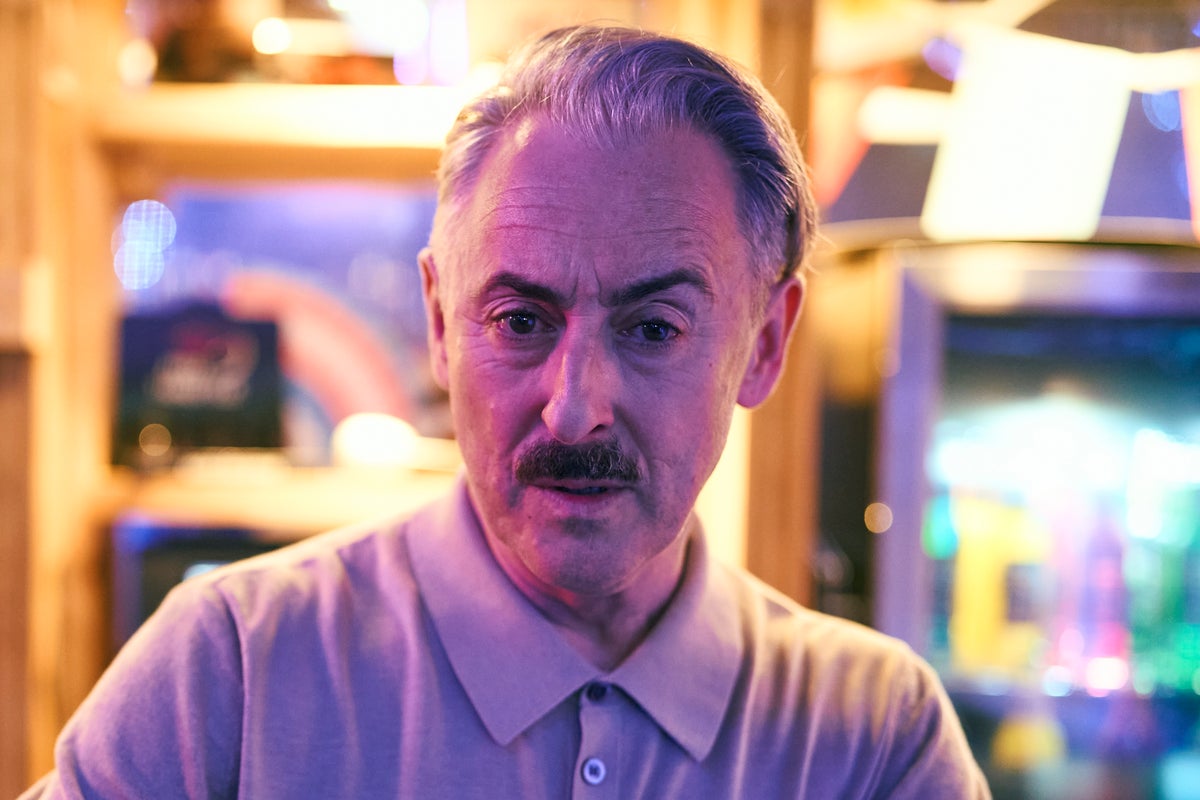
Tragedy looms like a plummeting meteor from the opening shots of Russell T Davies’s Tip Toe, the camera crawling over prosaic Mancunian suburbia to reveal a man hanging, lifeless, from a lamp post. The victim, we soon learn, is Leo Struthers (Alan Cumming), the owner of an LGBTQ+ bar in Manchester’s gay village. Channel 4’s punchy state-of-the-nation drama depicts the buildup to what we come to understand is a lynching, as it examines the homophobia and bigotry that are, Davies suggests, undergoing a dangerous resurgence in Britain today.
When we first meet Leo alive, he is running out of his house in his pants, chasing vainly after a casual hookup who has made off with his laptop. He ends up locked out of his own home – there’s a metaphor there, you might think – and is forced to seek refuge at his electrician neighbour Clive’s house, pasty legs poking out of pink boxers. Clive, played with rotten, rageful repression by David Morrissey, is an unhappily married man with two children – ripped 25-year-old Saul (Joseph Evans), who makes money masturbating over webcam, and George (Jackson Connor), a closeted 16-year-old. Clive is, naturally, oblivious to these facts.
Over the course of Tip Toe’s five episodes, secrets come spilling out, as Leo’s life becomes increasingly enmeshed with the lives of his neighbours. Some of this could easily be avoided: much of the drama springs from his unlikely decision to hire the already antagonistic Clive to do some work on the electrics at his bar. Morrissey is terrific and terrifying across these five episodes, but Cumming is the star, a charismatic, complicated and subtly sad figure who transcends the broadness of Tip Toe’s plot.
Davies has made landmark queer television before, most notably the 1990s series Queer as Folk and the recent It’s a Sin. Folk took more of a corrective approach to what was then TV’s wilful blindness to the queer community – presenting the richness and normality of the queer experience to a British viewing audience that hadn’t really seen it on screen before. It’s a Sin was a sadder undertaking, focusing on gay life during the Aids crisis.
Tip Toe takes a far grimmer approach, proposing that not only is life still hard for queer people in the UK, but things are moving backwards, and that the hatred is reaching a deadly breaking point. At one point, a queer character played by Paul Rhys muses that straight society “let us all come out, so now we’re standing in the open ready for them to shoot us down”.
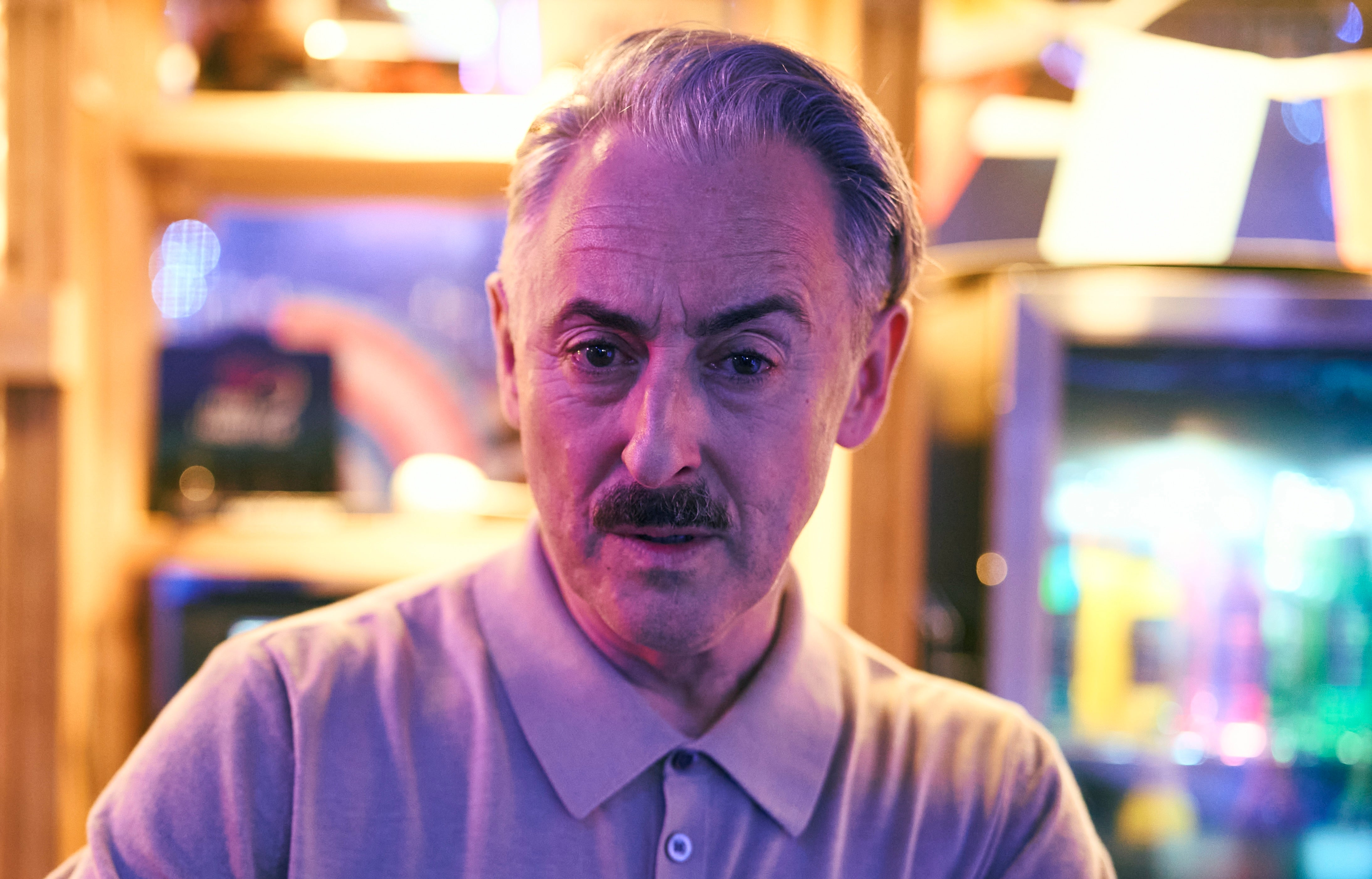
While this series is a fiction, and one that makes its arguments with sledgehammer grace, it is sadly not absurd, or abstract. Hate crimes and anti-LGBTQ+ violence are on the rise; it is hard to watch Tip Toe and not think of Brianna Ghey, the trans teenager who was murdered by two 15-year-olds just three years ago. (Transphobia, too, is a specific and recognised evil in Tip Toe, largely seen through the character of Zee, a trans girl, played compellingly by Iz Hesketh.)
For all its bleakness and anger, there are many moments of community and humanity in Tip Toe – scenes of what is often described as “queer joy”. The cheer and solidarity among the gays and dolls at Leo’s bar provide a stark counterpoint to the heteronormative misery of Clive’s life. It’s significant, too, that these men are neighbours. For bigots like Clive, it literalises the fact that queer people exist and live in the same society as him. For people like Leo, it’s hatred, and danger, that sleeps just a few metres down the road.