


Tinubu demands affordable credit for businesses after bank recapitalisation
September 8, 2026 7:15 pm

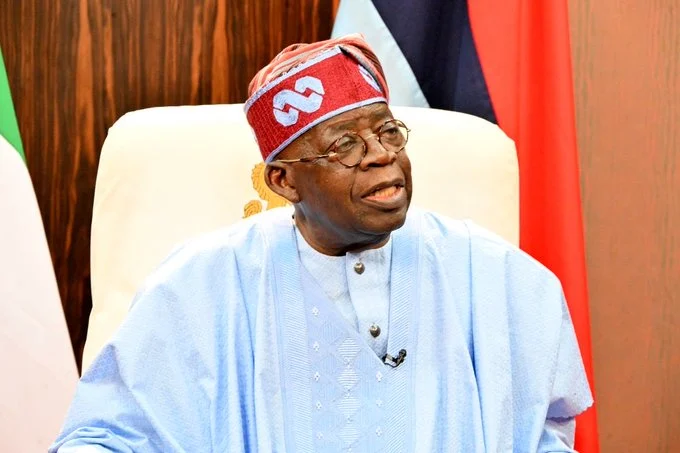
FILE: President Bola Tinubu
By Sami Tunji
President Bola Tinubu has asked Nigerian banks to translate the recently concluded recapitalisation exercise into affordable credit for businesses, warning that bigger balance sheets would have limited economic value if productive sectors remain starved of finance.
Tinubu spoke on Tuesday at the 19th Annual Banking and Finance Conference of the Chartered Institute of Bankers of Nigeria in Abuja.
Represented by the Minister of Finance and Coordinating Minister of the Economy, Taiwo Oyedele, the President said the financial sector must shift from merely financing government to supporting businesses, investment and job creation.
“A resilient banking system cannot exist indefinitely where businesses cannot obtain affordable credit, manufacturing that is struggling cannot expand, and millions of productive MSMEs remain outside of the formal financial system,” Tinubu said.
He added, “The recently concluded bank recapitalisation must produce more than bigger balance sheets. It must translate into capital formation in the real economy, financing Nigerian businesses as they expand across Africa and pursue our ambition of a trillion-dollar economy.
“A bigger bank that does not finance a more productive economy is a sub-optimal outcome.”
Tinubu said the government was expanding guarantees, risk-sharing, blended finance and credit enhancement mechanisms, with the National Credit Guarantee Company at the centre, to reduce risks associated with lending to productive sectors.
He also called for a gradual shift away from government securities towards private-sector lending.
“For too long, attractive returns on government securities have made lending to the productive economy comparatively less compelling. As fiscal conditions improve, government will progressively create space for more private sector credit,” he said.
According to the President, stronger fiscal discipline should reduce government financing pressure, while lower inflation should support cheaper credit and stimulate investment, production and employment.
He acknowledged that recent improvements in macroeconomic indicators had yet to fully translate into improved living standards.
“Stability has returned. Credibility is rising. Prosperity is coming. These improvements matter, but we must not mistake macroeconomic stability for economic prosperity. Stability is the foundation. Prosperity is the destination,” Tinubu said.
Chairman of the Body of Bank CEOs and Group Managing Director/Chief Executive Officer, United Bank for Africa Plc, Oliver Alawuba, said the recapitalisation exercise had strengthened banks’ ability to finance the economy.
He said banks raised N6.4 trillion during the exercise, improving their resilience, risk-management capacity and ability to support large projects.
“Our task now, as banks, is how to convert this strong capital and smart systems we have built into affordable, productive credit to MSMEs, agriculture, manufacturing, infrastructure and exports, so that the banking industry resilience becomes national prosperity,” Alawuba said.
Delivering the keynote address, the World Bank Country Director for Nigeria, Mathew Verghis, who was represented by the Senior Private Sector Specialist at the World Bank Nigeria office, Bertine Kamphuis, said credit remained concentrated away from sectors responsible for significant employment.
He said domestic credit to the private sector was about 13 per cent of GDP, while MSMEs received around one per cent of credit and agriculture about six per cent.
“Credit is thinnest where job intensity is highest. MSMEs receive around one per cent of credit only. Agriculture gets about six per cent. This is where the jobs are,” he said.
Verghis added that fewer than one in 20 MSMEs could access bank credit, despite three to four million young Nigerians entering the labour market annually.
The President and Chairman, Council of CIBN, Dr Dele Alabi, said 33 banks had met the revised minimum capital requirements as of March 2026, raising about N4.65tn, with approximately 72 per cent coming from domestic investors.
“Banks in Nigeria clearly now have the capacity to contribute more to the economic growth of this country through targeted lending to the real sectors of the economy,” Alabi said.
CBN Governor, Olayemi Cardoso, represented by the Deputy Governor, Economic Policy Directorate, Philip Ikeazor, said the recapitalisation exercise demonstrated the depth of Nigeria’s domestic capital market.
He, however, acknowledged concerns over when improving macroeconomic conditions would reach ordinary Nigerians.
“The question that remains on everyone’s mind is, when will the common man feel the full benefits? That is on its way,” Cardoso said.
Chairman of the Senate Committee on Banking, Insurance and Other Financial Institutions, Senator Mukhail Abiru, said recapitalisation had provided banks with stronger buffers to expand real-sector lending and withstand shocks.
Lagos State Governor, Babajide Sanwo-Olu, represented by the state Commissioner for Finance, Abayomi Oluyomi, also urged financial institutions to channel capital to SMEs, manufacturers, farmers and entrepreneurs.
“The real test of our financial system is not simply the strength of its institutions, but what that strength enables in the wider economy,” Sanwo-Olu said.
Sami Tunji is a Senior Business Correspondent at Punch Newspapers with about five years of experience in data-driven reporting. He covers finance, ICT, and broader macroeconomic issues, combining analytical insight with clear storytelling. Sami’s work reflects strong editorial judgment, professional development, and a commitment to accurate and informative business journalism.
All rights reserved. This material, and other digital content on this website, may not be reproduced, published, broadcast, rewritten or redistributed in whole or in part without prior express written permission from PUNCH.
Contact: [email protected]