


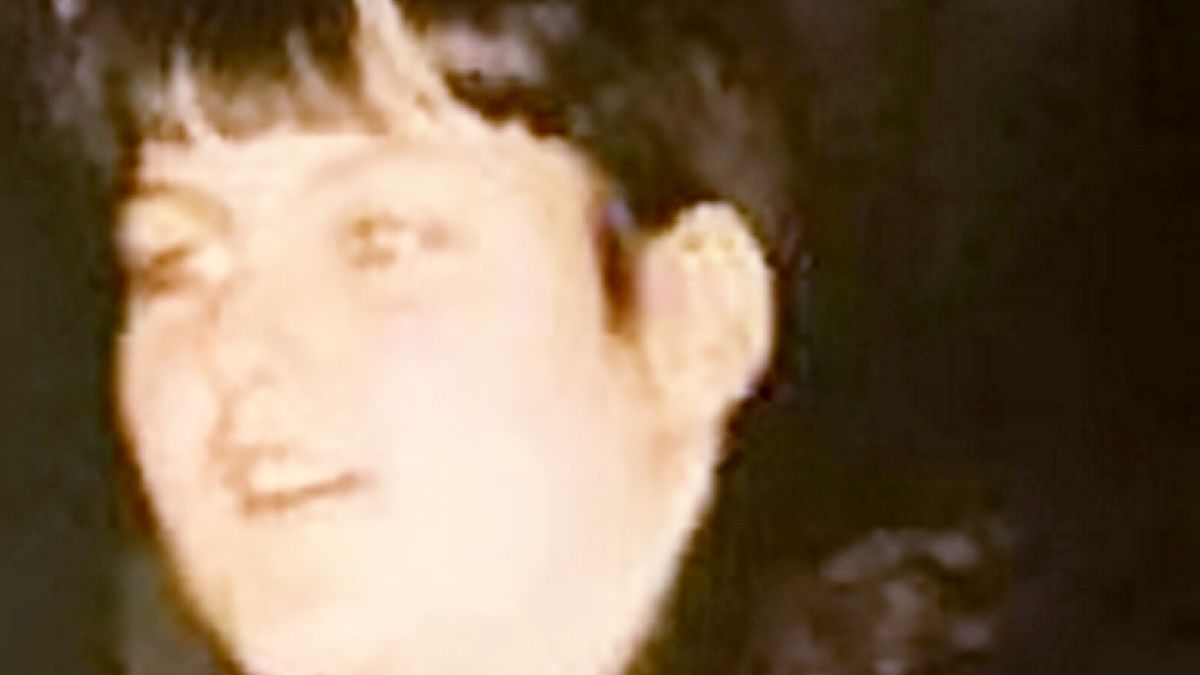
It was a case that shocked Scotland. A vulnerable young woman goes missing and no one seems to know where she is or even care.
As the months turned to years, nobody saw fit to report that 19-year-old Margaret Fleming appeared to have vanished off the face of the earth.
It was not until October 2016 that a missed appointment for a benefits review finally alerted the authorities. Changes to the benefits system meant Margaret was required to reapply for disability payments.
It was then discovered that no one from social services had been in contact with Margaret for 17 years. The records showed that she had been living with two carers Edward Cairney and Avril Jones. in a five bedroom cottage called Seacroft in Inverkip, near Greenock.
 View 9 Images
(Image: geo wright/Wrightmedia)
Police Scotland visited the couple’s home and were told she she had run off following a row. However Jones had just completed an application form for new benefits on Margaret’s behalf which raised alarm bells.
Detectives then discovered that the last independent sighting of her had been on 17 December 1999, when she had accompanied Cairney and Jones on a visit to Jones’s brother. But the following week, when the family met up for Christmas dinner, there was no sign of her.
The only explanation later offered by Jones to her own mother was that the teenager had “run off with a traveller” early in the New Year. Meanwhile, Margaret’s benefits continued to be paid, unchallenged, into Jones’ account.
After her father died in 1995, Margaret had gone to live with Cairney and Jones, whom he had named as her guardians in his will. They became her full-time carers, with Jones managing Margaret’s disability benefits.
Jones said that she had been going to attend the new benefit assessment with Margaret , who had refused to go and instead run away. Margaret’s DNA profile was compared against a number of unidentified bodies and body parts across the UK but there was no match.
Police began a detailed search of Seacroft on 1 November, 2016, which was packed with junk. Cairney and Jones were hoarders who did not throw anything out. A mobile laboratory was set up in the garden so that items could be processed and prioritised.
Once each room was emptied it was examined from floor to ceiling with luminol, which highlights blood invisible to the naked eye, for any signs that an attack had taken place.
 View 9 Images
(Image: David Wilson/Drone Dog/SWNS.com)
Margaret’s attic room was found to have no bed or carpet and the walls had been knocked down. Everything police officers found pointed to the fact that only two people were living in the house.
There were just two chairs, for example, both of which were facing the TV. Of the thousands of pictures seized from the house, fewer than ten featured Margaret .
A study of Jones’ diaries and calendars proved significant as the last reference to Margaret was in January 2000. The search operation, including a full excavation of the garden, took six months but also found no trace of Margaret or her DNA.
Divers also searched the area of seawater next to the house without success.
 View 9 Images
(Image: Crown Office /SWNS.COM)
Officers took the rare step of launching a proof-of-life investigation as they looked to build a case that would prove Cairney and Jones had murdered Margaret. They contacted every police force, health board, doctor’s surgery and local authority in the UK in an attempt to find any evidence that she might still be alive.
Banks and financial institutions were also contacted to establish if Margaret had applied for credit. Experts also found no evidence of phone calls or texts between Margaret and her carers.
Officers also discovered a Christmas card book in which Jones marked down cards sent and received. There was a tick against Margaret’s name in 1997, 1998 and, for the last time, in 1999.
Other discoveries reinforced the fact that the couple had repeatedly lied to cover up the £182,000 in benefits paid directly into Jones’ account over a period of almost 17 years.
 View 9 Images
(Image: James Chapelard / SWNS.com)
During the seven-week trial, the prosecution painted a bleak picture of Margaret’s life before she disappeared. An only child, she was brought up in the town of Port Glasgow, Inverclyde, and faced challenges from an early age.
Margaret struggled with reading and writing, and she continued to require additional support into her teens. In January 1993, her parents Derek and Margaret divorced after 20 years of marriage.
After he died in 1995 Margaret moved in briefly with her mother before going to live permanently with Cairney, then a hotelier, and Jones. Margaret’s mum later told a jury that she had received a letter from her daughter saying she wanted to cut off all contact.
In October 1999, Margaret saw her GP, for the last time. Further attempts to contact Margaret to arrange another appointment were unsuccessful.
 View 9 Images
(Image: Crown Office /SWNS.COM)
Cairney and Jones appeared at the High Court in Glasgow in April 2019, charged with murder. The prosecution case alleged that Fleming was killed by the couple between 18 December 1999 and 5 January 2000, that the murder had been concealed and that Jones had continued to receive Fleming’s benefits.
Cairney, then 77, and Jones, 58, were both convicted of killing Margaret and of perverting the course of justice. They were each given a life sentence, to serve a minimum of 14 years before being able to apply for parole.
Jones was also convicted of fraud and ordered to pay back £182,000 of benefits which had been claimed in Fleming’s name. To date no trace of Margaret’s body has ever been found.
Cairney died in HMP Edinburgh on 15 October 2023, aged 82.
 View 9 Images
(Image: Daily Record)
 View 9 Images
(Image: Daily Record)
Former Detective Supt Joe Jackson knows what it takes to solve a murder without a body. He led the inquiry which led to three men convicted at the High Court in Glasgow in 1989 of the murder of Bristol drug dealer Paul Thorne whose body was buried on the Fenwick Moor outside Glasgow and whose remains have also never been found
Mr Jackson, who retired in 1992, said:”If you’ve not got a body you have a big problem, I know. “The first thing you need to look at is the background of the victim with regards to where the person lived stayed and who knew them.
“From that you build up a picture of the victim before they went missing. “Trying to build up a case where you don’t have a body you need to work from different angles.
“In the case of Margaret Fleming who were the last people to see her and had the neighbours seen her. “The carers were supposed to be looking after her well being. But if they are not doing that, then why not and where is she?”
 View 9 Images
(Image: daily record)
A Police Scotland spokesperson said: “Whilst there has been a conviction for Margaret Fleming’s murder, we will continue to act on any information we receive about where her body is, and would encourage anyone with any information to speak to the police, so that we can ensure Margaret is given the funeral she deserves and that her family are able to pay their respects to her.”