


AdvertisementUS-China relationsOpinionWorld Opinion
.jpg?itok=DJ5XFWbm&v=1754450193)
OpinionHao Nan
The security-obsessed global economy needs its own Helsinki process
4-MIN READ4-MIN Listen
Hao NanHao Nan is a Susan Strange Associate Fellow with the Helsinki Geoeconomics Society, and a Nuclear Futures Fellow with Ploughshares Fund & Horizon 2045. Published: 8:30pm, 26 Aug 2026
Forty years ago, the Stockholm Document turned the political promise of the 1975 Helsinki Final Act into a more practical system of confidence-building. Amid the Cold War, Europe’s East and West did not disarm, abandon deterrence or begin to trust one another. Instead, they agreed that military competition could be made safer through prior notification, observation, information exchange and verification. The lesson was modest but durable: adversaries do not need trust to reduce uncertainty.
That logic is now needed beyond the military sphere. Today’s world is not divided into Cold War-style military blocs. Yet in trade, technology, artificial intelligence, critical minerals and supply chains, increasingly security-oriented economic networks are forming around the United States and China. Export controls, sanctions, investment screening, industrial policy and resource restrictions are turning interdependence into a potential source of vulnerability.For three decades, globalisation rewarded concentration. Firms sourced from the cheapest producer, countries specialised and supply chains were designed around “just in time”. That system lowered costs, but it also created chokepoints.
Once governments began to regard dependence as a national security risk, the organising principle changed. Efficiency gave way to resilience; “just in time” increasingly became “just in case”.
Some redundancy is rational. Gulf states amid the Iran war have built oil pipelines that can bypass vulnerable maritime chokepoints. European governments are trying to restore domestic capacity for critical medicines and pharmaceutical ingredients. Countries are stockpiling food, energy and strategic materials, while firms diversify suppliers and duplicate production. These measures buy security, but at a price.
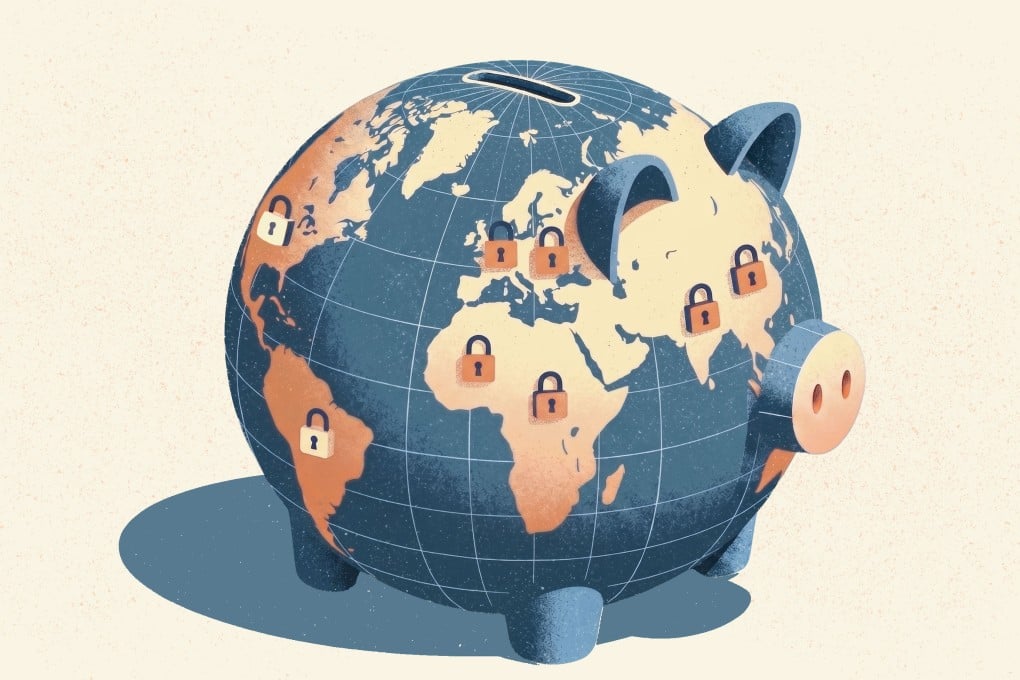
The problem is that one country’s resilience can look like another country’s preparation for decoupling. The second country then localises production, restricts exports or builds alternative networks, confirming the first country’s original fears. Each step may be rational in isolation; collectively they create a geoeconomic security dilemma in which everyone pays more to insure against everyone else.
AdvertisementSelect VoiceSelect Speed00:0000:001.00x