


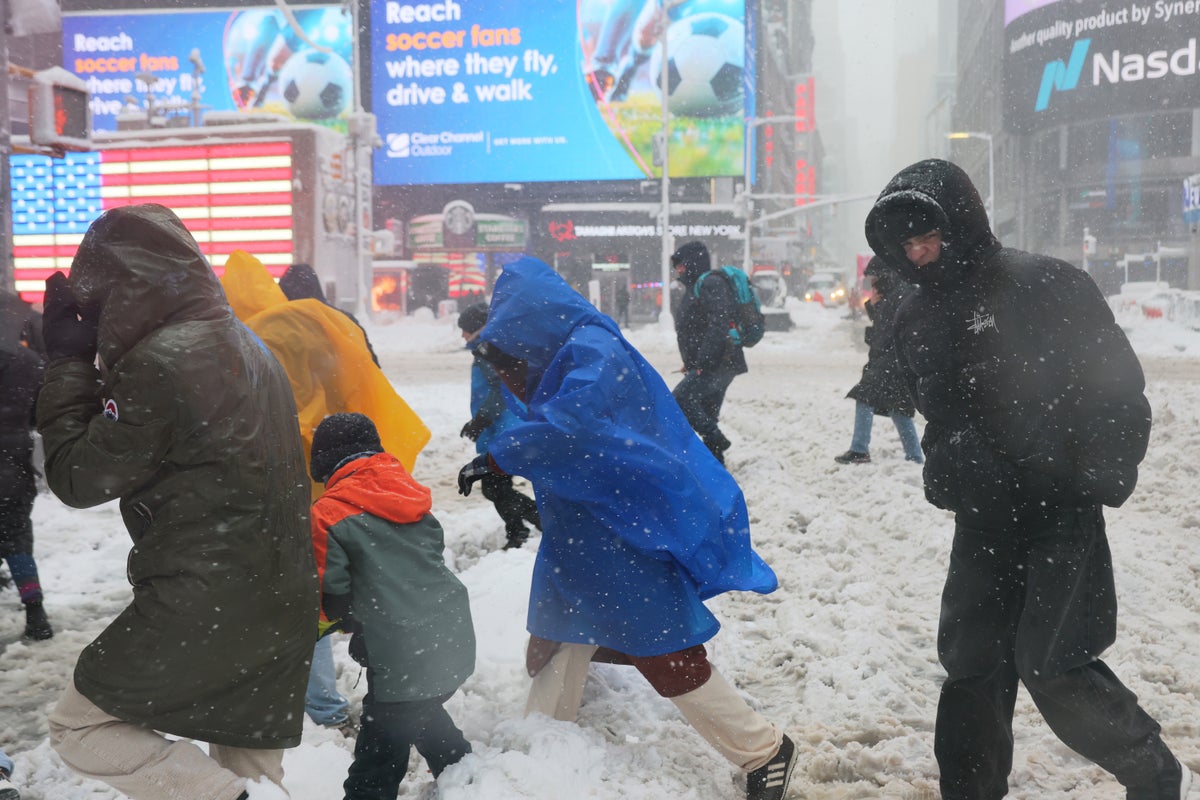
This winter is looking mild for most of the U.S., according to the Old Farmer’s Almanac’s new winter forecast.
Temperatures should be around average or near average for much of the country, the predictions released Friday show. That’s consistent with the burgeoning El Niño climate pattern.
But that doesn’t mean there won’t be any cold weather or snow for people hoping for a more typical winter.
“And remember: ‘Above normal’ is relative,” the Almanac said. “While it won’t be as cold as usual, it’s still winter!”
 open image in gallery
The Ohio Valley and Hawaii
Colder temperatures than normal are expected from New England through the Ohio Valley, while the forecasters predict that the tropical islands of Hawaii may also see cooler temperatures than usual.
The Ohio Valley could see a wetter eastern region with multiple rounds of snow throughout the season.
Rainfall on the Hawaiian islands may also be above normal, especially in the east later in the winter.
The South and West
The wettest weather is projected in the West, South and Midwest, while drier conditions are anticipated in the Southwest, East and Plains.
The Deep South should see warmer-than-normal temperatures, with a few chances of snow in the north.
Snow could also be near-to-below normal in the colder Upper Midwest, though there are “many chances for flakes to fly in the new year.”
Warmer and wetter winter weather are also forecast for the Intermountain West and Pacific Northwest, with above-normal snowfall that could complicate holiday travel.
The Northeast and Alaska
 open image in gallery
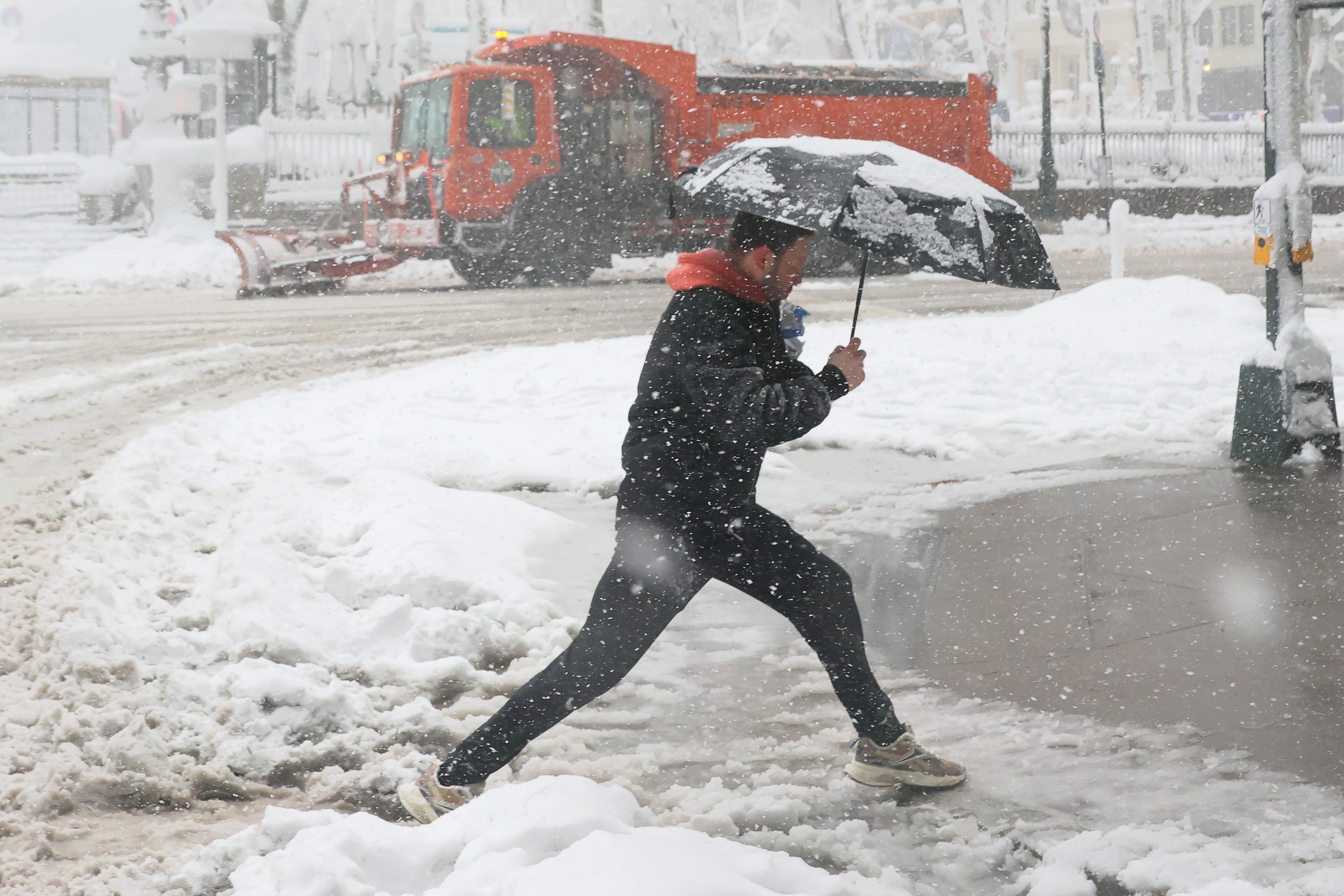
For those looking for a White Christmas, you may have to head to the Northeast and Appalachians, although Alaska could also see flakes fly.
That’s even the case with above-normal temperatures in the 49th state.
“A snowier-than-normal winter is expected from central New England through the Appalachians, in the Intermountain region and Pacific Northwest and in Alaska,” the Almanac said.
The southern Northeast’s winter is forecast to be “more difficult” due to above-normal snowfall and below-normal temperatures.
Climate connection
 open image in gallery
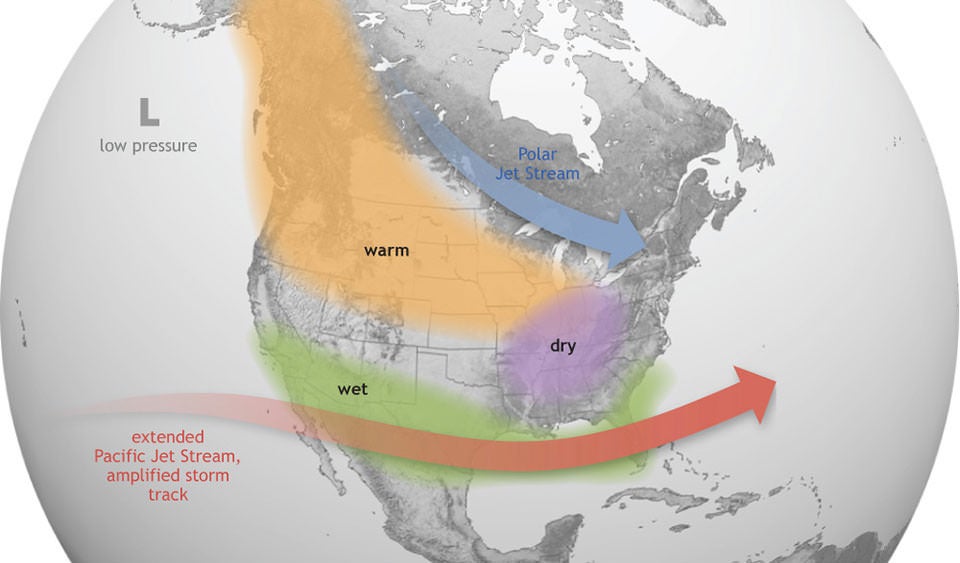
The findings are driven by the coming super El Niño climate pattern, which brings warmer waters to the Pacific Ocean and can impact weather around the world.
This warmer water has already supercharged storms in the region, including Hurricane Lala that flooded Hawaii earlier this month.
In winter, El Niño typically indicates milder temperatures, with wetter weather across the West and South.
“Those tendencies are also reflected in parts of our 2026–2027 forecast, but El Niño is only one piece of the winter puzzle,” the Almanac forecast says.
The polar vortex, a swirling pool of Arctic air, may shift southward from the North Pole this winter, and a pattern in the Indian Ocean could strengthen the Pacific jet stream, a fast river of air circling the globe that influences temperature.
 open image in gallery
 open image in gallery
Accuracy
Boasting an 80 percent accuracy rate, the Almanac says its predictions are based on a blend of solar science, climatology, and meteorology, incorporating solar activity, historical weather patterns and climate data.
Notably, researchers have previously said the accuracy of the almanac forecasts is just above 50 percent and how far meteorologists can forecast in the age of AI is a moving target.
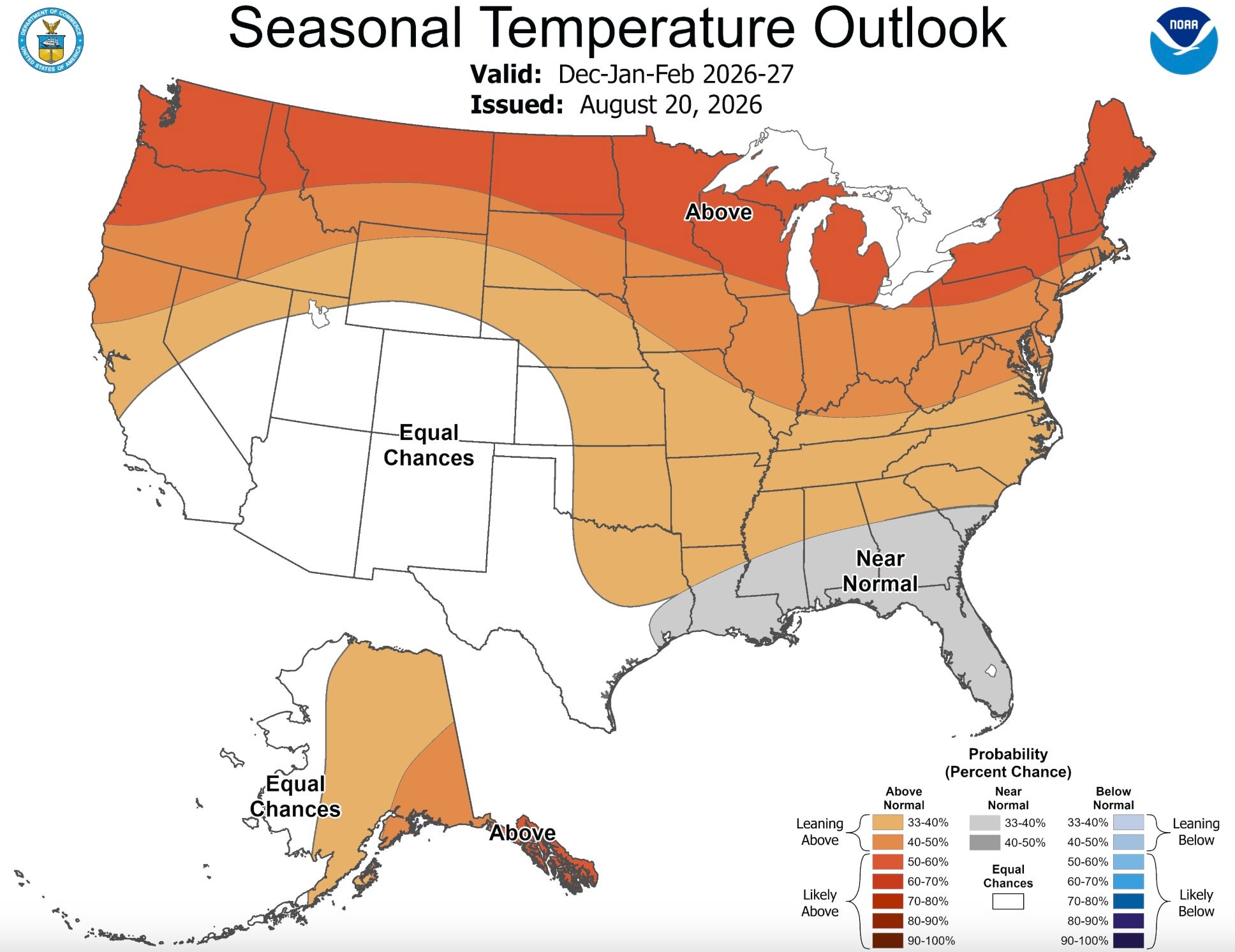
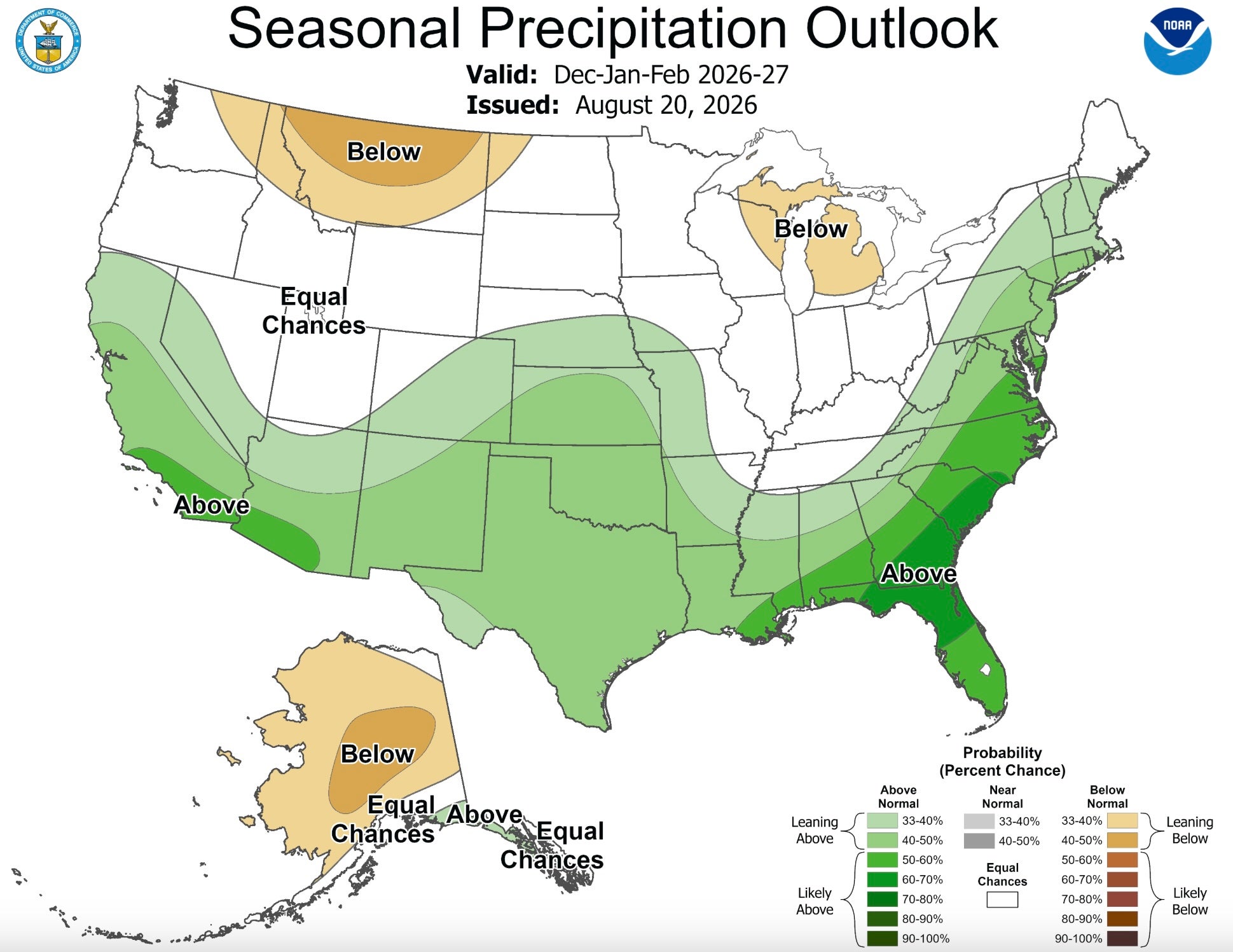
Still, the almanac’s forecast has similarities to the National Weather Service Climate Prediction Center’s December 2026-February 2027 outlook.
The federal outlook forecasts above-normal to near-normal temperatures in most of the U.S.