


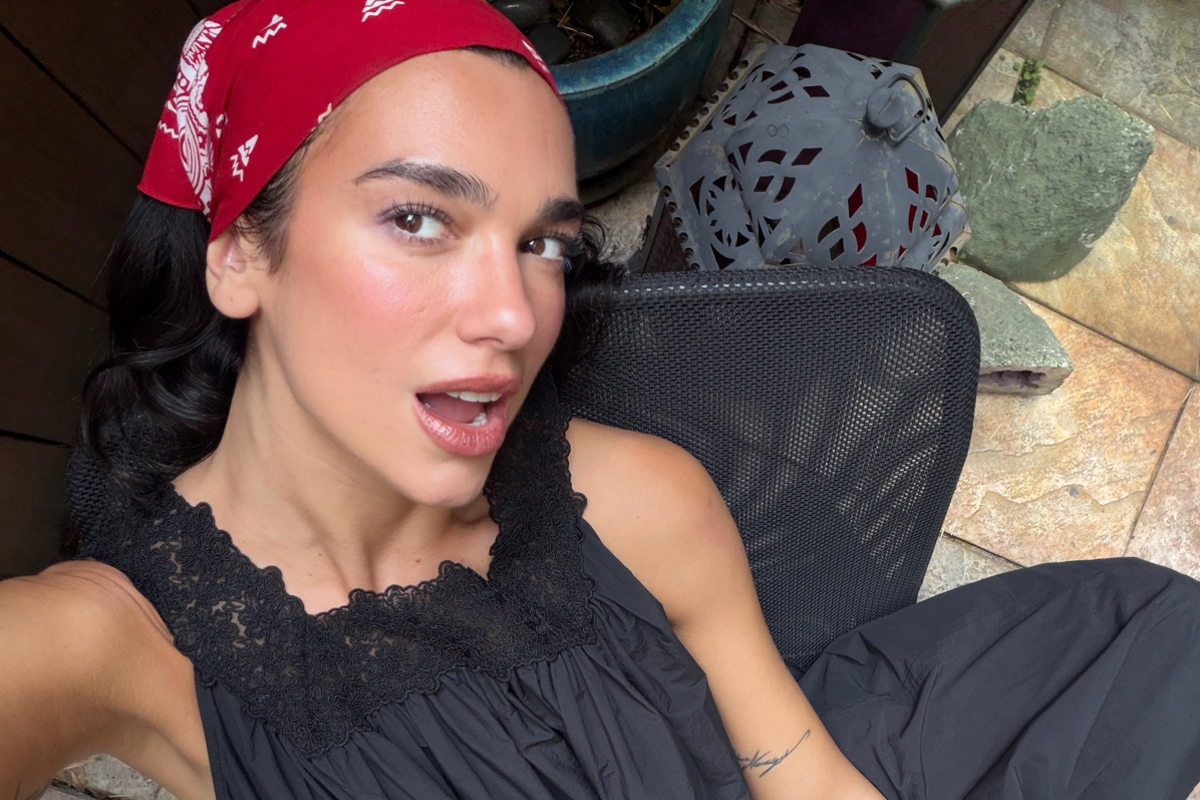
The chicest way to shield your head from the sun’s rays during this blazing summer? It’s the humble bandana.
This simple square – or triangle – of fabric, knotted at the nape of your neck or tied with those flimsy little strings, last had its moment during the Nineties and early Noughties. For me, it’s so quintessentially of that time that I can remember getting one free with the S Club 7 official magazine (a golden age for style and print media, truly).
Those with slightly more sophisticated fashion reference points, though, might remember them being sported by Destiny’s Child, Aaliyah, SJP-as-Carrie-Bradshaw and “Dirrty”-era Christina Aguilera (as well as *Nsync-period Justin Timberlake – the less said about that one, the better).
But as the trend cycle continues to relentlessly bring back styles last seen in the mainstream about 20 years ago – see also ballet flats, low-rise jeans, Ugg boots and waistcoats, to name just a few – it was only ever going to be a matter of time before the bandana had its moment (and of course, for some people, they never really went away).
 open image in gallery
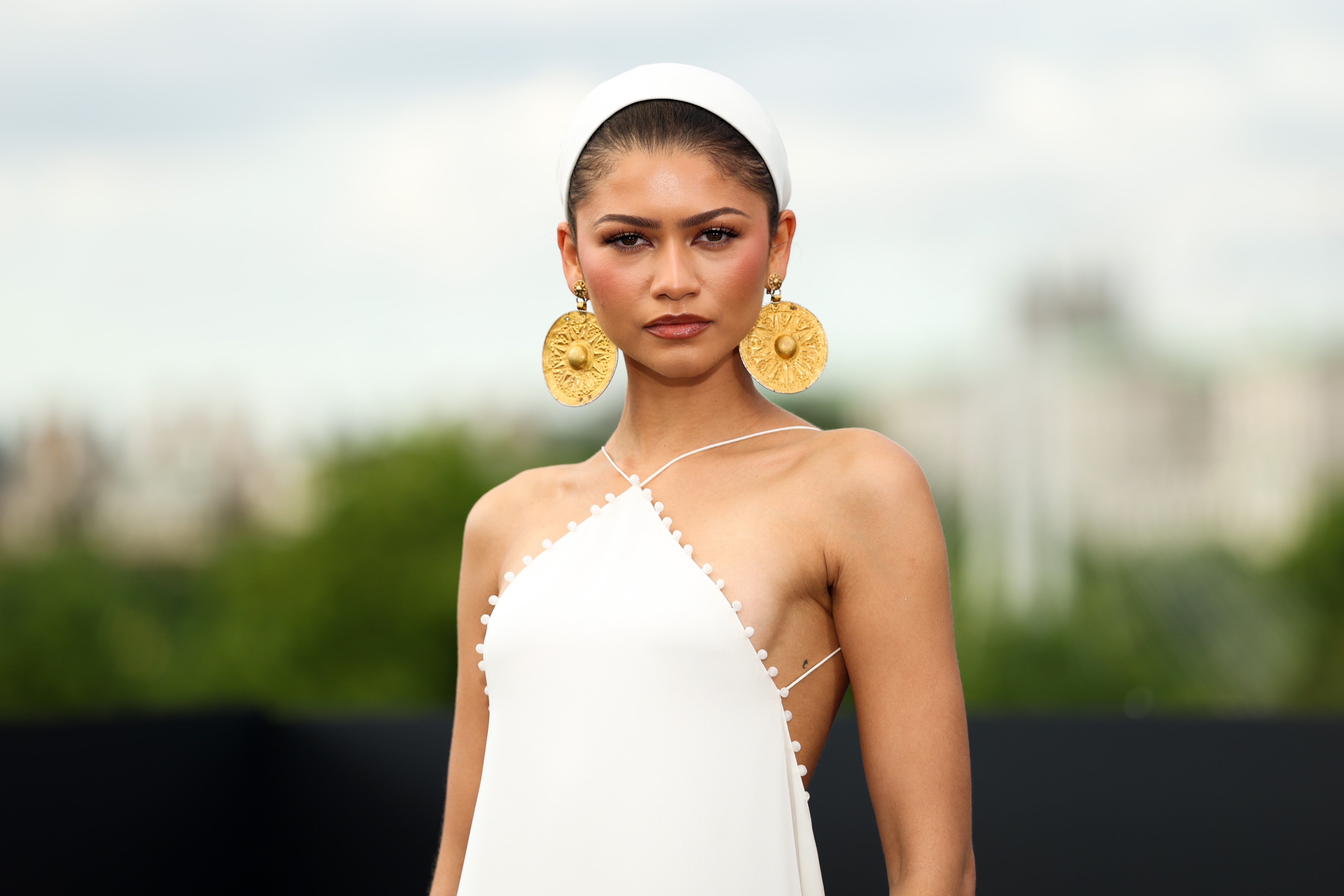
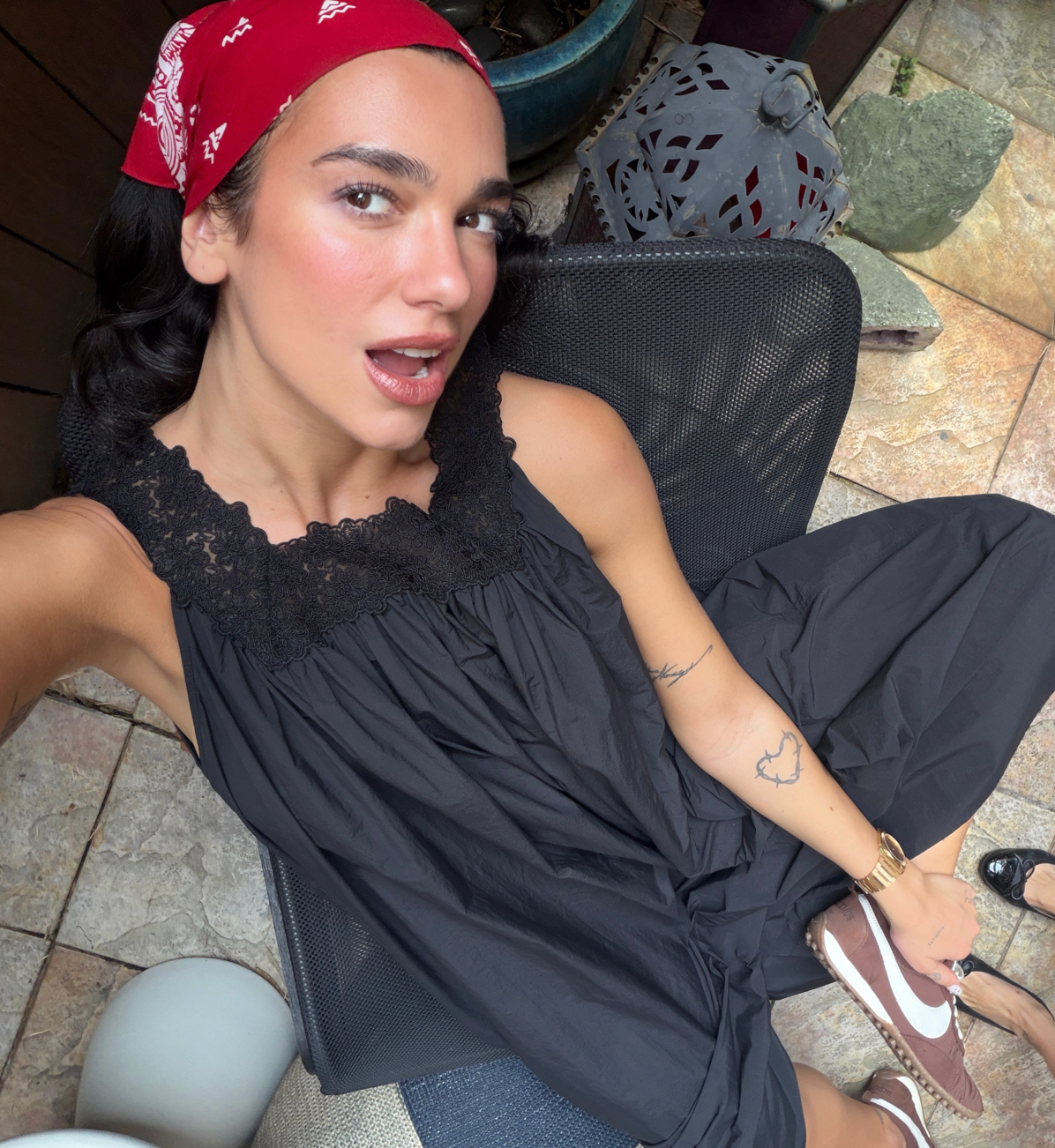
Leading the bandanaissance this summer is Dua Lipa, who has been sporting a classic red design while she embarks on yet another one of her seemingly endless holidays. So too is Zendaya, who wore a minimal white scarf to offset her Jacquemus gown for a photocall for The Odyssey, in a clever spin on Grecian-style drapery – though she faced some backlash for matching her bandana with a pair of earrings made from Iranian artefacts dating back to 700BC.
She has also been spotted wearing more casual patterned styles, most recently while hanging out in London with husband Tom Holland.
Priyanka Chopra Jonas donned one for Wimbledon earlier this summer, while the likes of Kendall Jenner, Bella Hadid, Elle Fanning and Gracie Abrams are all well-documented bandana fans (fandanas?) too, with the latter lending her seal of approval to the trend during her Glastonbury set last year.
 open image in gallery
And it’s not just one for celebs sunning themselves in the south of France. As I started writing this in a café in the centre of Liverpool, a Gen Z girlie serendipitously sat down nearby wearing a brown and blue polka-dotted version from ASOS with her oversized sportswear – and she looked great. I hope she enjoyed two wizened millennials (aka my friend and I) accosting her to tell her exactly that.
The bandana is an accessory with plenty of history. It’s thought that the word comes from the Hindi verb “bandhna”, meaning “to tie”, and the “bandhani” tie-dye technique, which originated in South Asia and involves tying up sections of a cloth with fine thread to stop the colour from penetrating certain parts, creating an intricate pattern.
Bandanas were imported to England by the Dutch and English East India trading companies in the 18th century, and initially gained popularity for less than glamorous reasons. Snuff takers, with their not-so-appealing habit of inhaling ground-up tobacco through the nostrils, liked them because the colourful patterns did a better job than a classic white handkerchief when it came to obscuring the yellowy-brown stains that cropped up when they blew their noses.
Over in America, meanwhile, bandanas would be printed with maps and political slogans; one of the most famous was commissioned by Martha Washington, wife of George, who asked the printmaker John Hewson to design a scarf featuring her husband on horseback, hailing him as “protector of America’s liberty and independence”.
 open image in gallery
Since then, they’ve been embraced by countless subcultures, worn by cowboys and immortalised in western movies, and used by women to sweep their hair back while working on the factory assembly lines during the Second World War, as immortalised by the image of Rosie the Riveter.
They’ve been adopted by the queer community and associated with gang affiliations. They’ve been a symbol of solidarity in the US labour movement and celebrated in hip-hop culture
They’ve been adopted by the queer community and associated with gang affiliations (Los Angeles’ Bloods and Crips would wear red or blue respectively). And they’ve been a symbol of solidarity in the US labour movement and celebrated in hip-hop culture.
So, then, they’re pretty versatile – and that’s a big part of the appeal. A more minimalist, plain or block-coloured style looks great for the city in the summertime. A patterned silk version feels very Jackie O in Greece. Broderie or crochet scarves bring a nice touch of whimsy to proceedings.
 open image in gallery
I’ve found myself eyeing up Damson Madder’s offering in magenta gingham, which matches one of their checked dresses, although I’m very conscious of the fact that, as a white woman with long blonde hair and little-to-no edge, I could end up looking more like I’ve escaped from the Little House on the Prairie, or like I’m trying to soft-launch a tradwife Instagram account.
Admittedly, this is something that’s really holding back my bandana wearing – the line between embracing Scandi street style and resembling someone who’s about to drop a sick new quilt block design inspired by the latest village barn raising can be a fine one.
But for an affordable update to your holiday wardrobe – that’ll also multi-task by protecting your hair from getting sun-frazzled and stopping your scalp from acquiring that distinctly un-chic lobster red burn – the bandana still seems hard to beat. Just maybe don’t wear it while you’re reading your obligatory beachside copy of Yesteryear – that might be a little bit on the nose.