


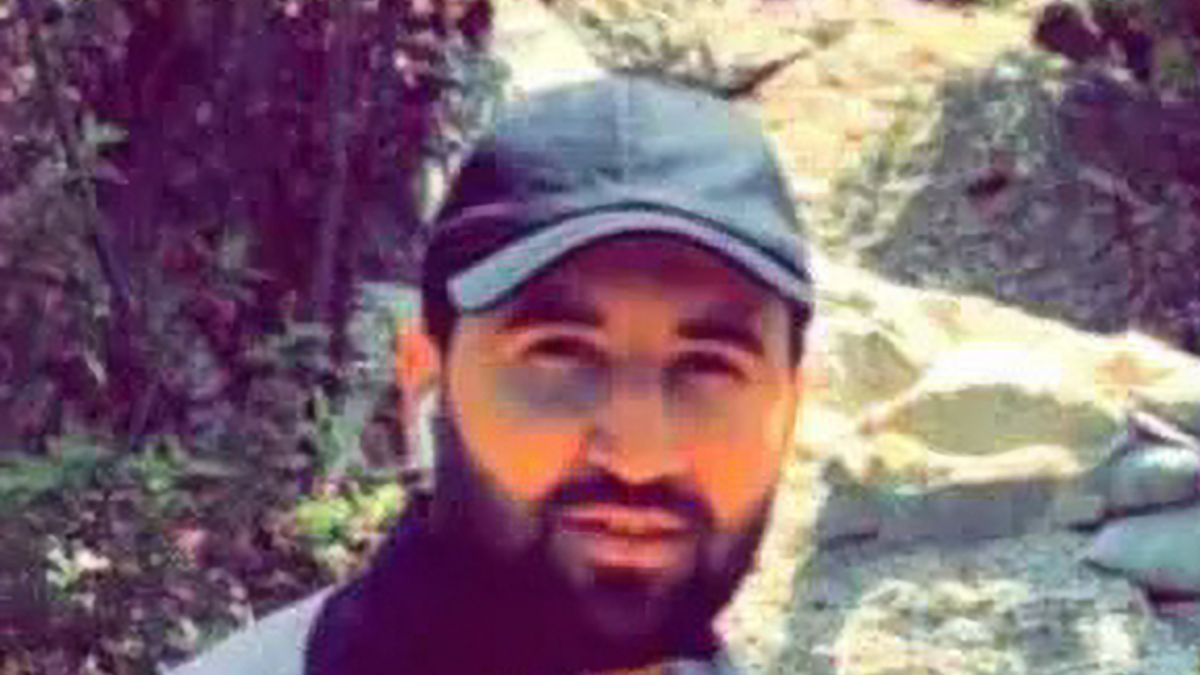
A man accused of directing antisemitic attacks in the UK over FaceTime allegedly met the supreme leader of Iran just days before he was killed.
US court papers reportedly allege Mohammad Baqer Saad Dawood al-Saadi used Apple’s FaceTime app to direct a number of fire-bombings against Jewish targets in London, as well as retaliatory strikes against the West.
“Saadi was close with Khamenei,” the US indictment, which was obtained by the Sunday Times, says. “Approximately three days before the Iranian military conflict began [on February 28] and Khamenei was killed, Saadi met Khamenei in Iran.”
 View 4 Images
Saadi is now in the custody of the US in New York
Khamenei was killed when the US commenced strikes on Iran in February. The claims the ayatollah met with Saadi in the days before his death are reported to be credible, according to reports citing Western intelligence officials.
The US accuses Saadi of plotting at least 18 attacks in the UK and Europe. The Department of Justice claims Saadi tried to “carry out attacks in the United States, including against a synagogue in New York” in what they say was “in or about” March and April this year.
The release also says Saadi on April 30 tried to “find someone in the United States who could carry out a terrorist attack and kill or injure individuals”.
Saadi was detained the next day.
Saadi was arrested in Turkey this month – US prosecutors say in a press release he was detained on May 1 – following an alleged attempt to recruit someone he thought was a member of the Mexican drugs cartel but turned out to be an undercover FBI agent, according to reports citing the indictment.
On May 14, Saadi was transferred into the custody of the FBI and taken to New York.
In all, Saadi is charged with eight counts under the indictment. They are as follows:
- Conspiring to provide material support to Kata’ib Hizballah, a foreign terrorist organisation
- Conspiring to provide material support to the IRGC, a foreign terrorist organisation
- Conspiring to provide material support for acts of terrorism
- Providing material support for acts of terrorism, which carries a maximum penalty of 15 years in prison
- Attempted acts of terrorism transcending national boundaries
- Conspiring to bomb a place of public use, which carries a maximum penalty of life in prison
- Attempted destruction of property by means of fire or explosive
- Financing terrorism
As part of the counts, Saadi accused of recruiting petty criminals to carry out attacks for Iran for thousands in cryptocurrency.
The indictment says he waived his right to a lawyer following his arrest and that he confessed he had high-level contacts to the FBI.
He said he was like “a son” to the former leader of the IRGC Qasem Soleimani, who was killed in Baghdad by the US in 2020.
Saadi has asked to be treated as a “prisoner of war”, according to his US lawyer Andrew Dalack.
According to reporters, the 35-page indictment says Saadi purportedly directed operations from a bunker in neighbouring Iraq, attacks that are alleged to be part of a campaign of “psychological warfare” by proxies sympathetic to the Iranian regime.
Prosecutors allege: “The defendant participated in FaceTime calls with attackers as they were carrying out certain [sic] of the European terrorist attacks in real time; filmed those attacks as they were being conducted; helped create and disseminate propaganda videos of the attacks; discussed with a Kata’ib Hezbollah member the need to engage in ‘psychological warfare’, and the timing to carry out certain of the attacks.”
The arrest comes after one recent attack in which the group Harakat Ashab al-Yamin al-Islamiya (HAYI) claimed responsibility for a number of ambulances set ablaze in Golders Green.
American prosecutors claim HAYI is a front for Kata’ib Hezbollah, considered to be one of the most powerful militias in Iraq and backed by Iran’s Islamic Revolutionary Guard Corps (IRGC). Reports of the indictment say that a copy of the HAYI “charter” was located on Saadi’s phone after he was captured.
“From today, we declare clearly: the United States, the Israeli Zionist regime and anyone who co-operates with them at any level will not be secure,” the charter says.
 View 4 Images
Flags and portraits of slain Ayatollah Ali Khamenei, Tehran(Image: Morteza Nikoubazl/NurPhoto/Shutterstock)
The US indictment also alleged Saadi told an associate to post footage of the stabbing on HAYI’s social media channels. The shooting appears not to have occurred and it is not clear where it was supposed to have taken place.
“If God grants us success tonight, there will be a shooting at a restaurant,” Saadi is said to have told the same associate the same day.
HAYI also claimed responsibility for the stabbing of two men in Golders Green on April 29, although reports say police think such claims were opportunistic.
 View 4 Images
Burned ambulances in Golders Green in March(Image: AFP via Getty Images)
The day after the Golders Green stabbing on April 29, the UK Government raised the terror threat from “substantial” to “severe” the following day. Under this definition, an attack is “highly likely”.
Article continues below
The Joint Terrorism Analysis Centre announced the decision at the end of April. The Home Office said it is not solely a result of the Golders Green attack, but that the terrorist threat level in the UK has been “rising for some time, driven by an increase in broader Islamist and extreme right-wing terrorist threat from individuals and small groups based in the UK”.
It also comes against a backdrop of “increased state-linked physical threats which is encouraging acts of violence, including against the Jewish community”, it added.
The Mirror has contacted the Home Office for comment.