


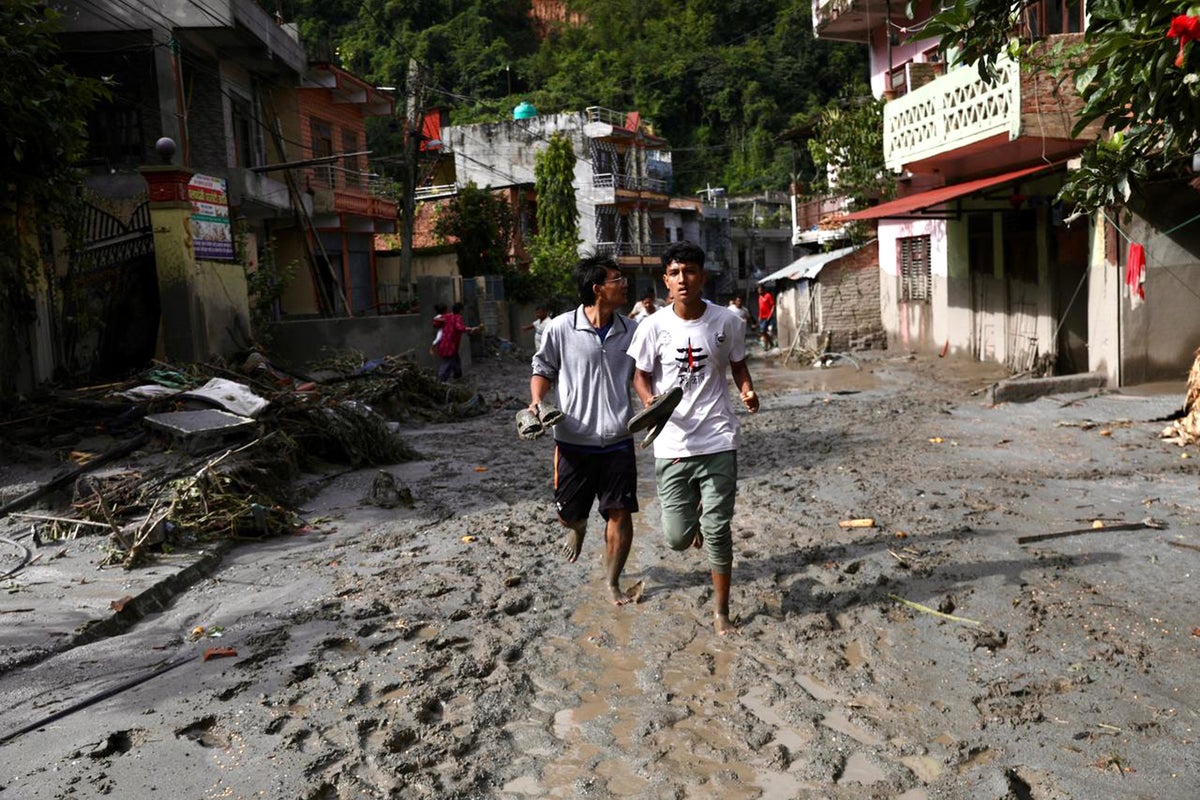
When Rajendra Dhungana felt the ground shake beneath his feet on Wednesday morning, he thought an earthquake had struck the Himalayan country.
The chief customs officer in Nepal’s Rasuwa district ran outside and what he saw coming towards the local Timure bazaar stopped him in his tracks.
It was not an earthquake but a wall of water and debris.
 open image in gallery
“It was the flood, rising like a wave nearly 100m high and sweeping through the market,” Dhungana told the local Kathmandu Post newspaper. “Within moments, the market was gone.”
Dhungana and dozens of others fled into a nearby forest. Behind them, more than 300 vehicles and trucks waiting at the customs checkpoint were swept away. There had been almost no warning.
The flood struck at a time when people were going about their ordinary routines in settlements along the Bhotekoshi river. There had been no rainfall in the area to signal the danger.
 open image in gallery
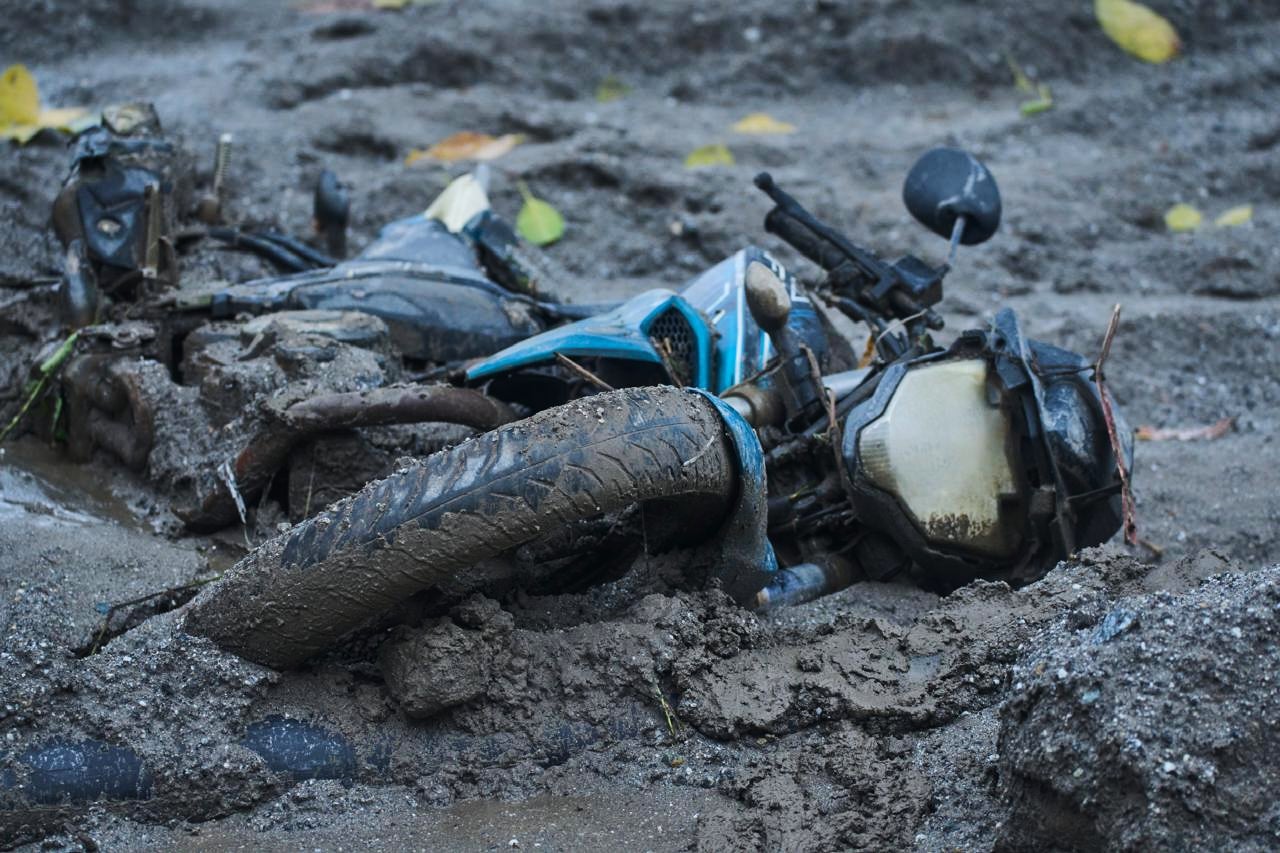
Within hours, homes, roads, bridges and businesses had disappeared.
“There was no rain in Nepal, so we were not expecting anything like this,” Narendra Pariyar, the chief district officer of Rasuwa, said.
At least 162 people are dead, with hundreds more missing, including over 500 foreign tourists, pilgrims and security personnel.
For those caught directly in its path, there was no escape.
 open image in gallery
Keshav Prasad Baral, 68, was at home when he saw what he described as a “huge gush of mud”. He told Reuters it was “coming straight towards us”.
Mr Baral tried to grab his wife’s hand as the flood entered their home, but she was swept away, he said. The mud eventually reached the top floor of the house.
Several hours later, a helicopter came to rescue him.
“My wife is still somewhere beneath the mud. She’s gone,” he told Reuters. For others, survival came down to pure luck.
 open image in gallery
Bibek Kumal, a 24-year-old labourer, was digging a toilet pit outside a newly built house when he heard a strange hissing sound. His co-workers shouted at him to get out.
“I started running. Then a wall of water came thundering down as if it was an earthquake,” he told Reuters from his bed at Kathmandu’s National Trauma Centre, his brother Dinesh sitting beside him.
The torrent swept him downstream amid mud and debris, but “luckily I was stuck up in a mango tree”.
“Had there been no mango tree, I would have been washed away.”
 open image in gallery
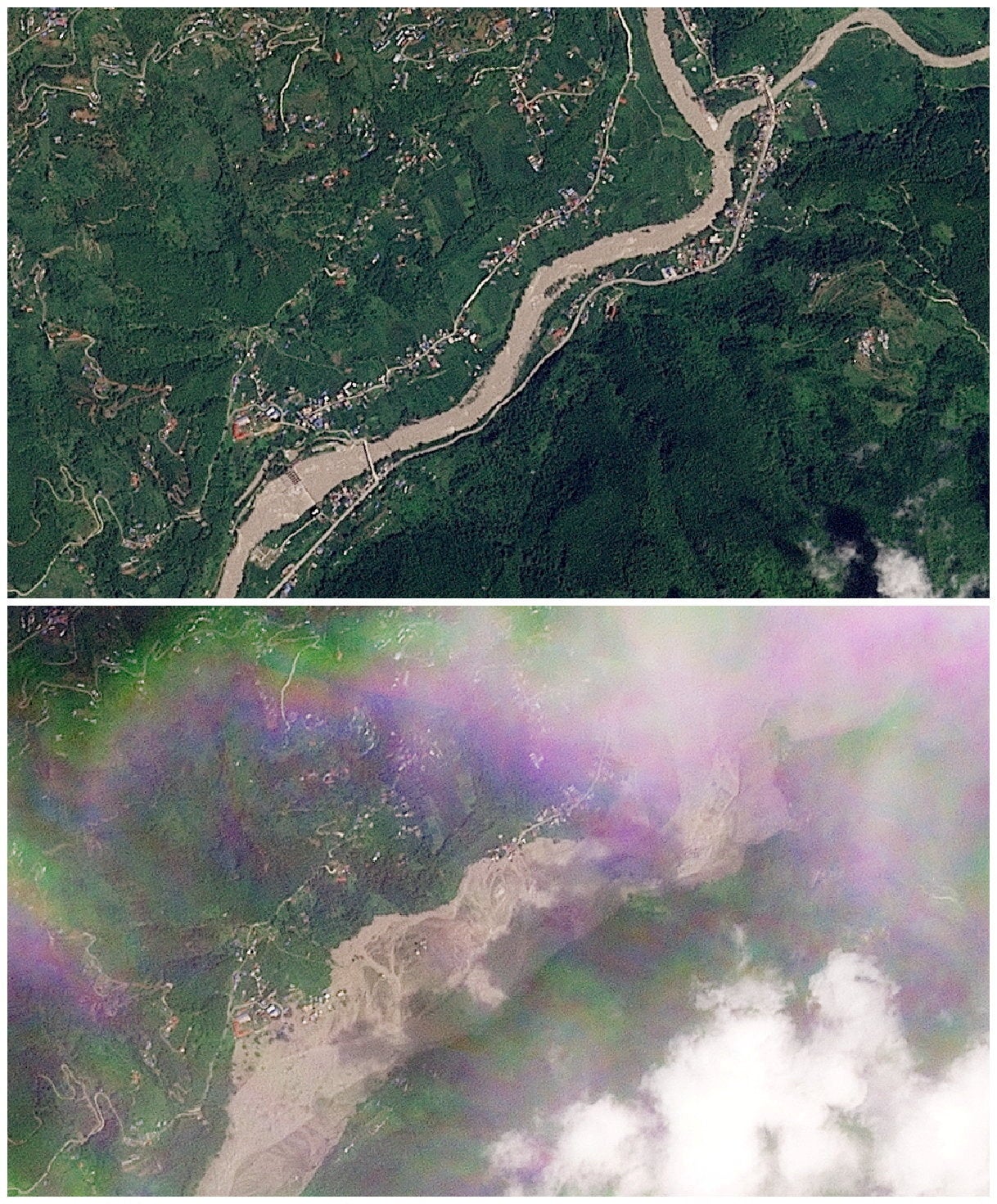
Initial assessments by geologists and glaciologists suggested that a huge chunk of ice, possibly 2,000ft wide, broke away from a glacier at an altitude of 17,000ft and plunged thousands of feet into the river valley below.
As it fell, the ice avalanche shattered into a torrent of ice and rock, unleashing a destructive force that swept away everything in its path.
“The bottom looks like a bomb exploded – it’s just deposits from the broken-up glacier,” Daniel Shugar, a geologist at the University of Calgary in Canada who studied satellite imagery of the disaster zone, told The New York Times.
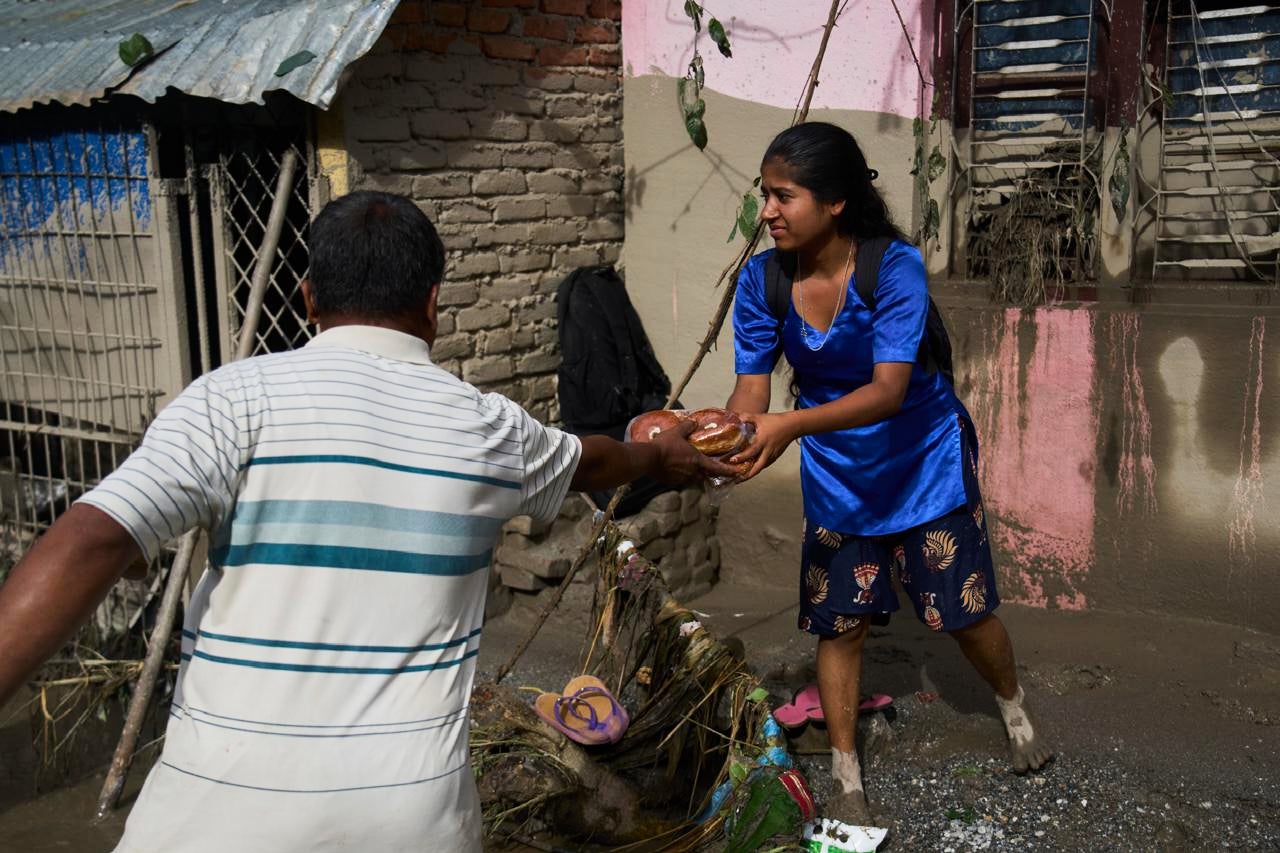
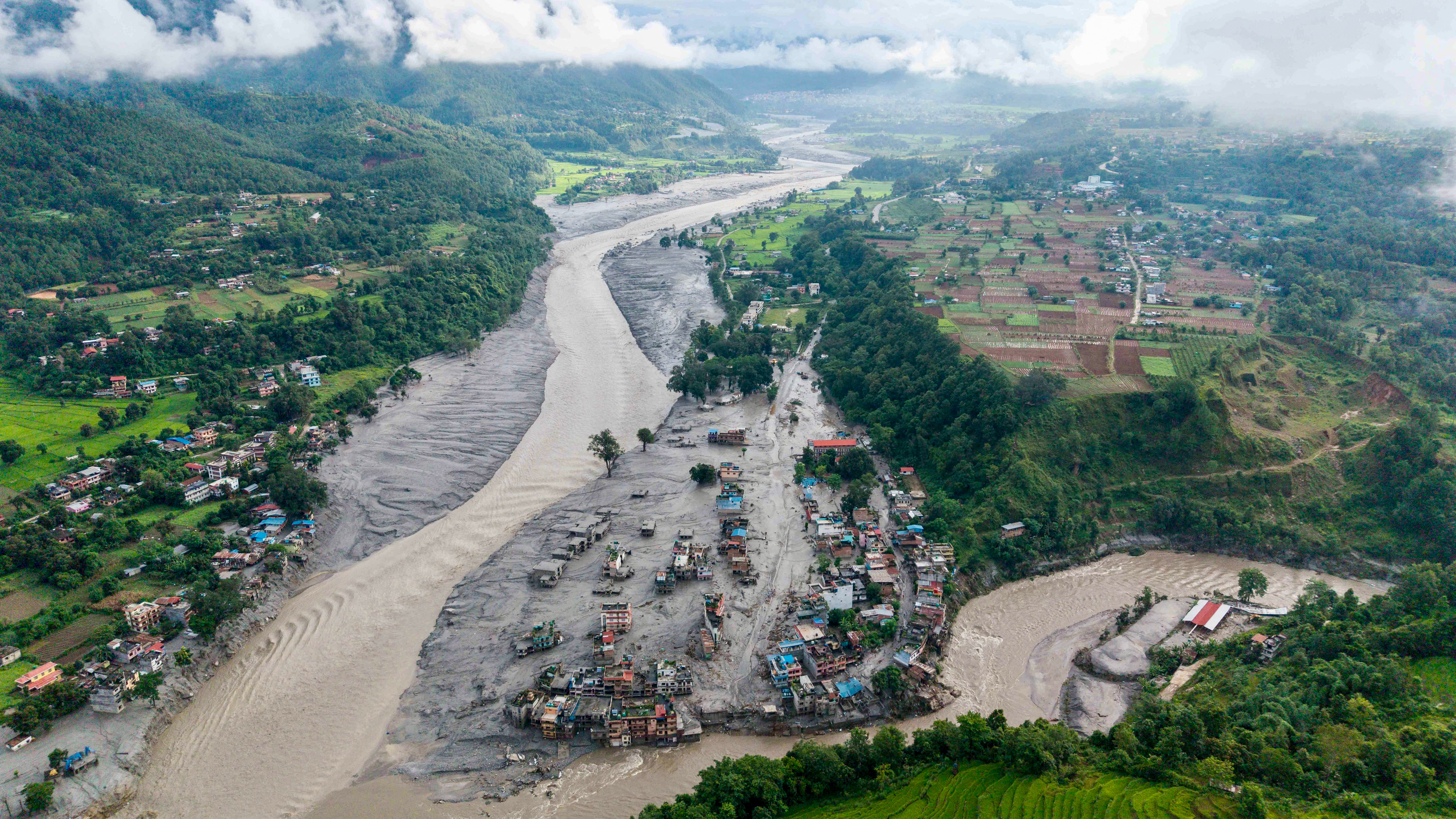
After tearing through Timure, the flood travelled down the Bhotekoshi river towards Syaphrubesi and communities farther south. People, animals, vehicles, public infrastructure – it took all.
 open image in gallery
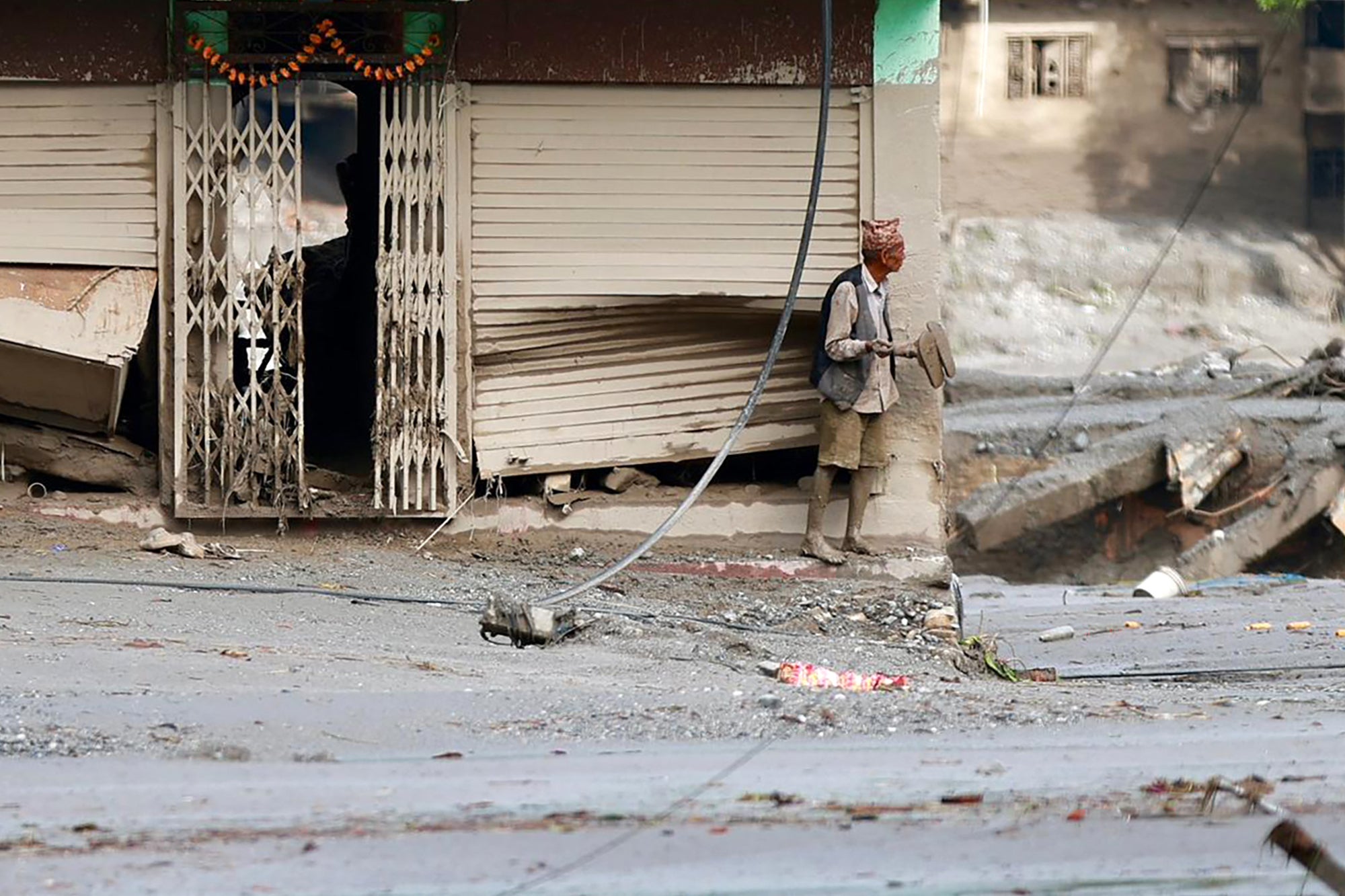
Ravindra Nepal, the ward chair of Bidur Municipality-7, said hundreds of houses had been flattened between Sole and Akkare Bazaar.
“I have been stranded at the municipal building since early morning,” he told the Kathmandu Post. “There is no road or bridge left to get home.”
Gokarna Adhikari, a resident of Dandathok Tupche, said almost nothing remained in his village.
“Even the houses that look intact from a distance are completely covered in mud and debris.”
The destruction was not confined to homes.
 open image in gallery
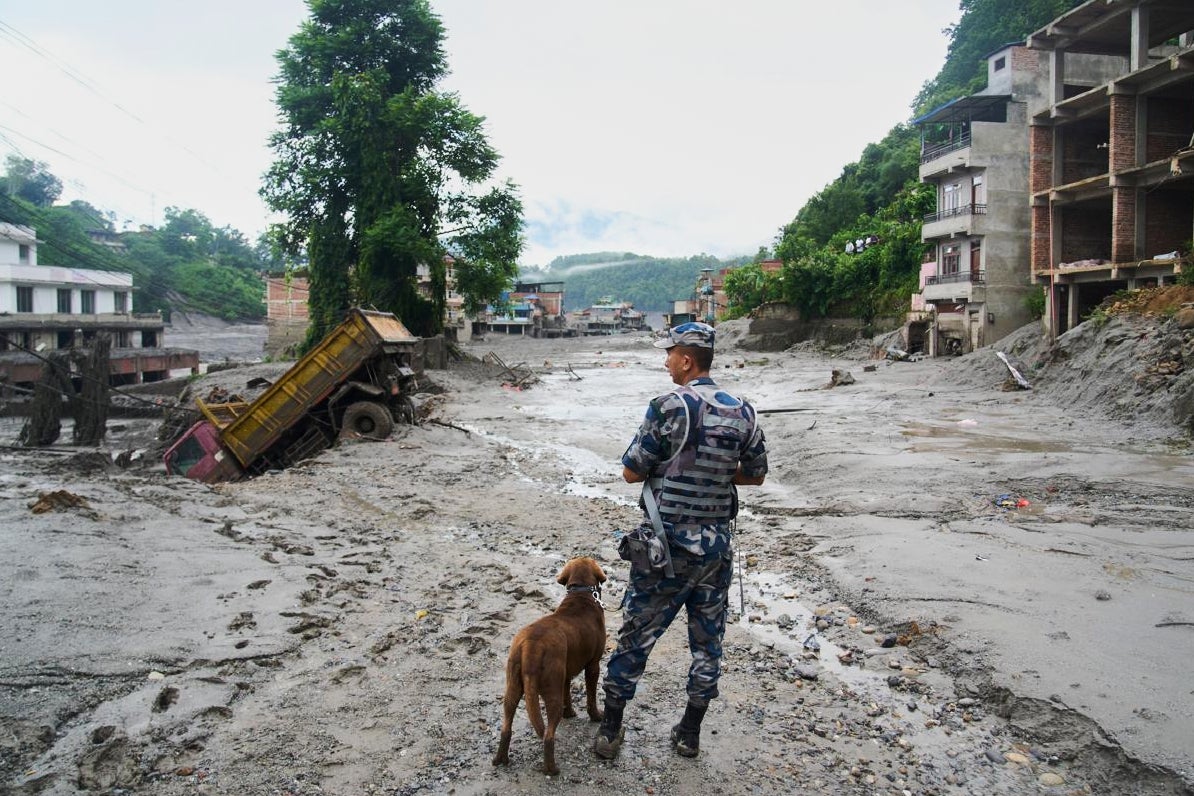
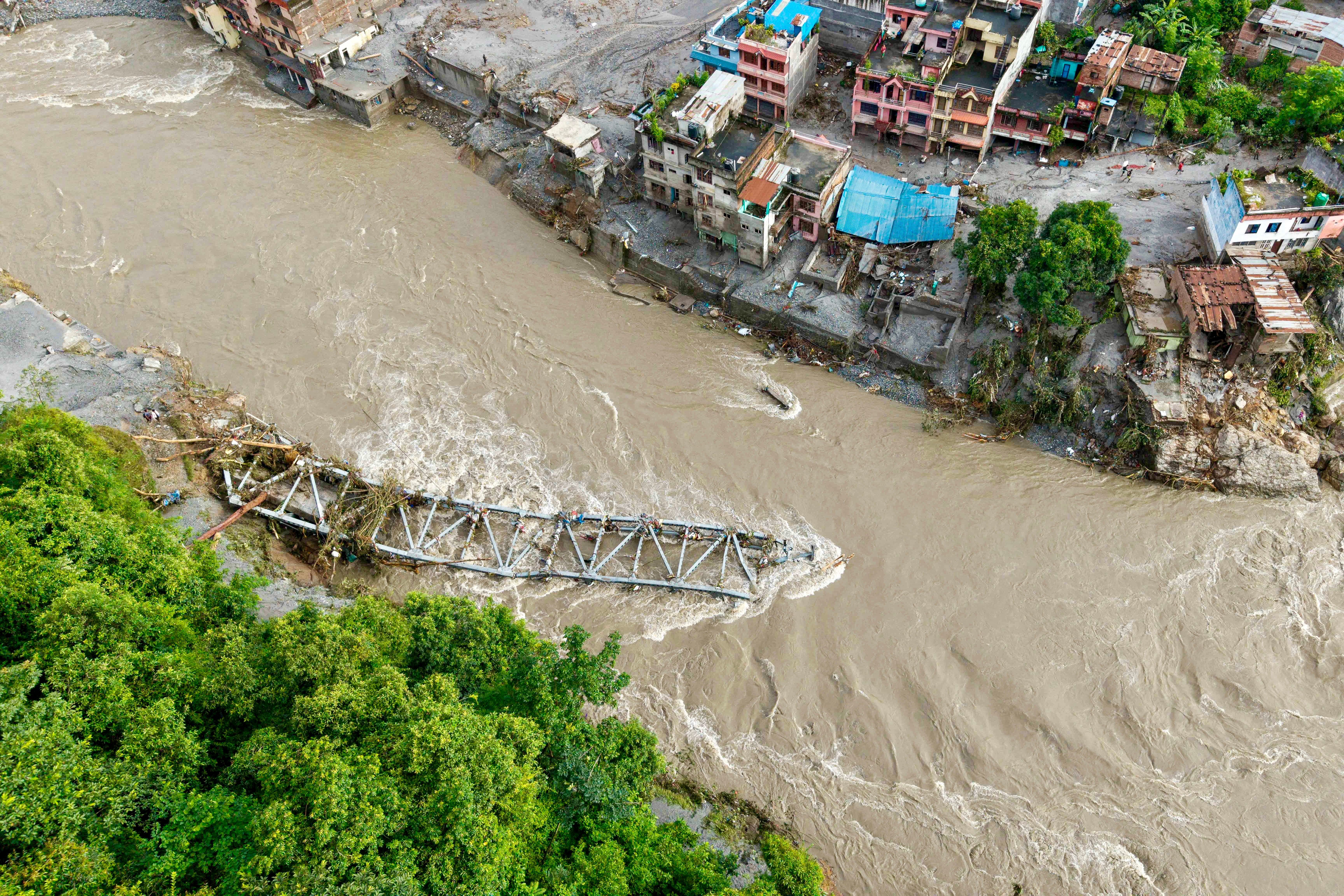
Nine hydropower projects and nine commercial bank branches were destroyed, while a preliminary assessment found that 19 motorable bridges and about 40 kilometres of highway had been swept away.
The flood-monitoring stations installed along the upper reaches of the Bhotekoshi were also destroyed.
According to Binod Parajuli, a senior divisional hydrologist at Nepal’s Flood Forecasting Division, information about the flood reached officials at 8.56am. Four minutes later, a warning was sent to downstream areas.
But by then, the flood had already reached large parts of Rasuwa. “None of the stations was able to send us an alert,” Mr Parajuli said.
 open image in gallery
The stations normally send automatic warnings when river levels rise. But this flood came with such speed and force that the equipment itself was swept away before it could transmit an alert. Mr Parajuli said warnings sent farther downstream may nevertheless have saved hundreds of lives.
“We failed in Rasuwa,” he said. “But we sent warnings to Nuwakot and downstream areas, and possibly several hundred people were able to save their lives.”
The flood originated in the Lhende tributary, on the Chinese side of the border, before entering Nepal. Officials had no advance information that a huge mass of ice, rock and debris was moving towards the river.
 open image in gallery
Farther downstream, the warning appears to have come too late for some communities.
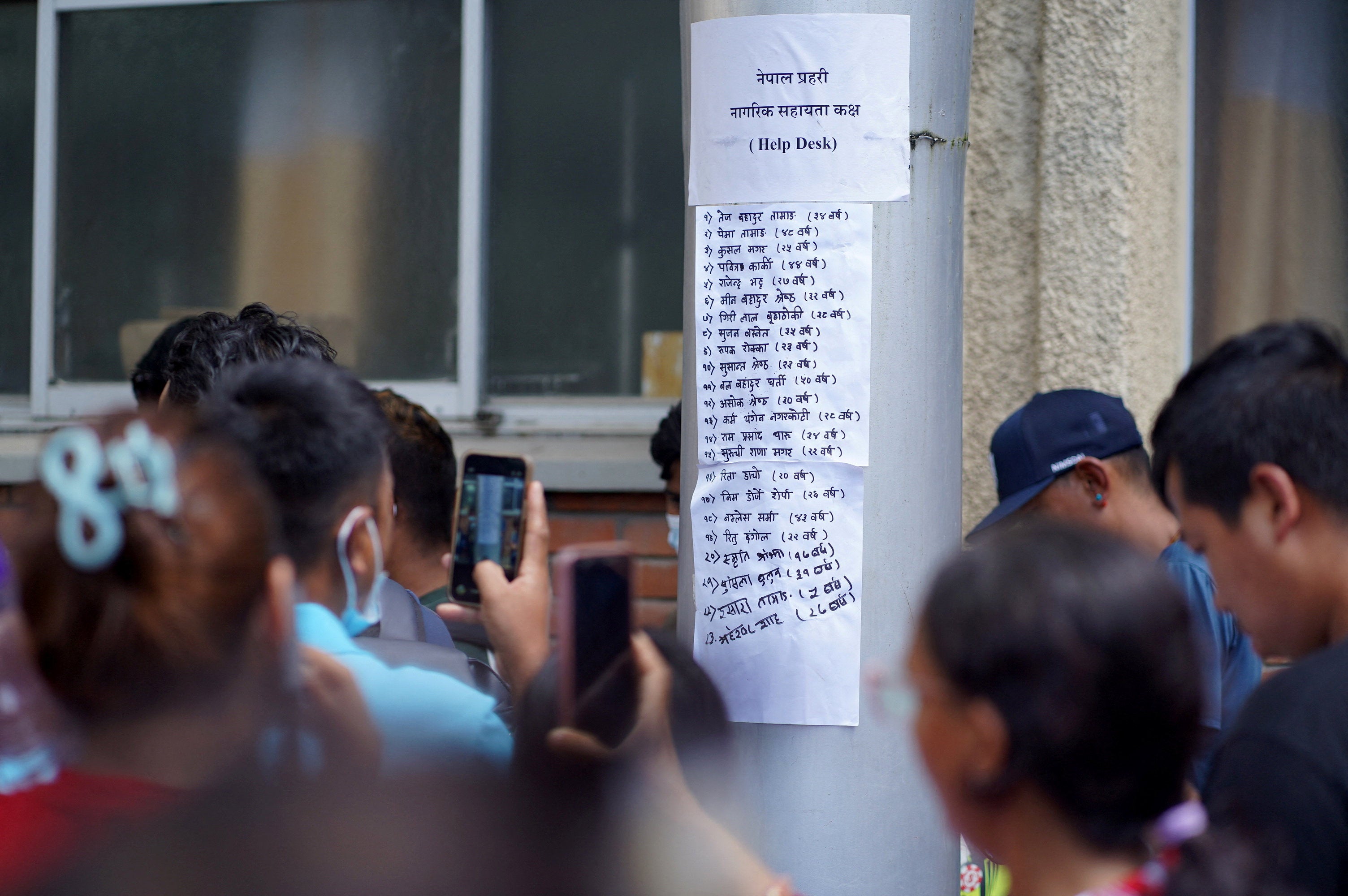
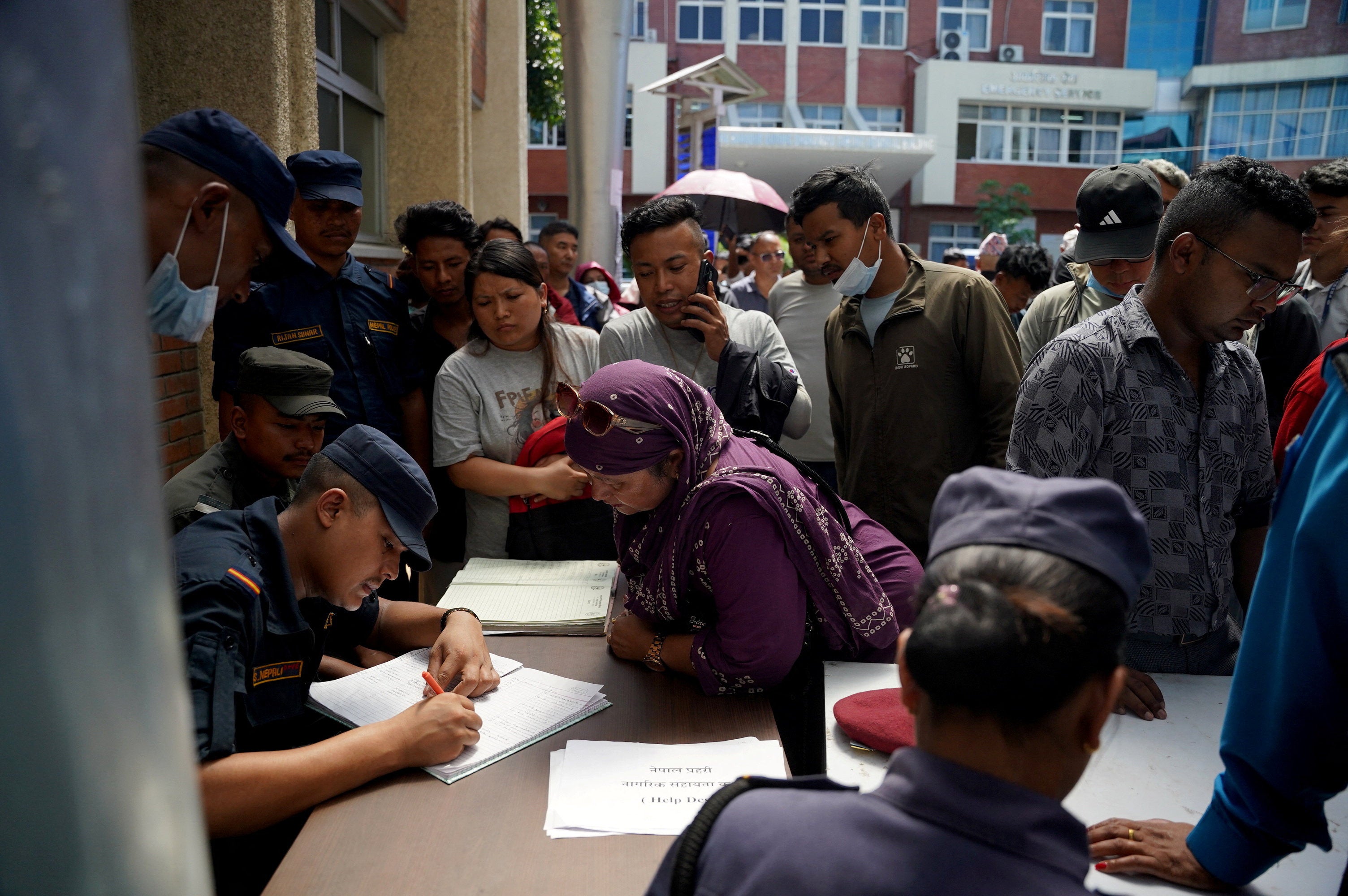
The markets at Betrawati and Sole were also swept away. At hospitals in Kathmandu, the catastrophe became a long list of missing names.
Families waited for relatives who had travelled towards Rasuwa. Some had received a final phone call or message, others had heard nothing at all.
The missing included hundreds of foreign tourists and pilgrims travelling towards Tibet, including people from India, the UK, Australia, the US and Canada.
 open image in gallery
On 8 July last year, flooding in the Lhende river killed at least 11 people and washed away sections of road, including the Miteri Bridge linking Nepal and China. The communities along the river had not fully recovered when the latest disaster struck.
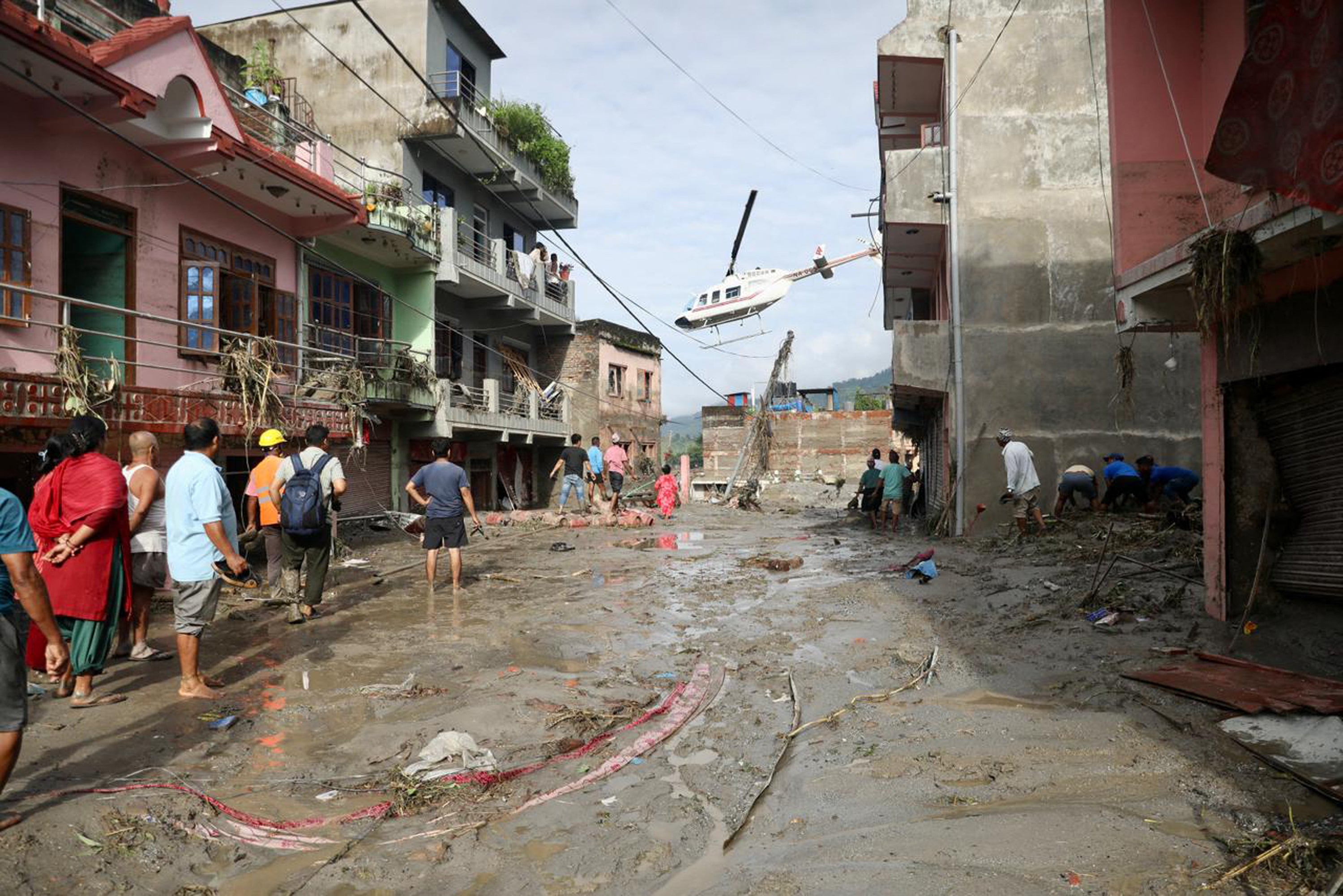
By Thursday, rescue teams were returning to areas that had been inaccessible overnight.
 open image in gallery
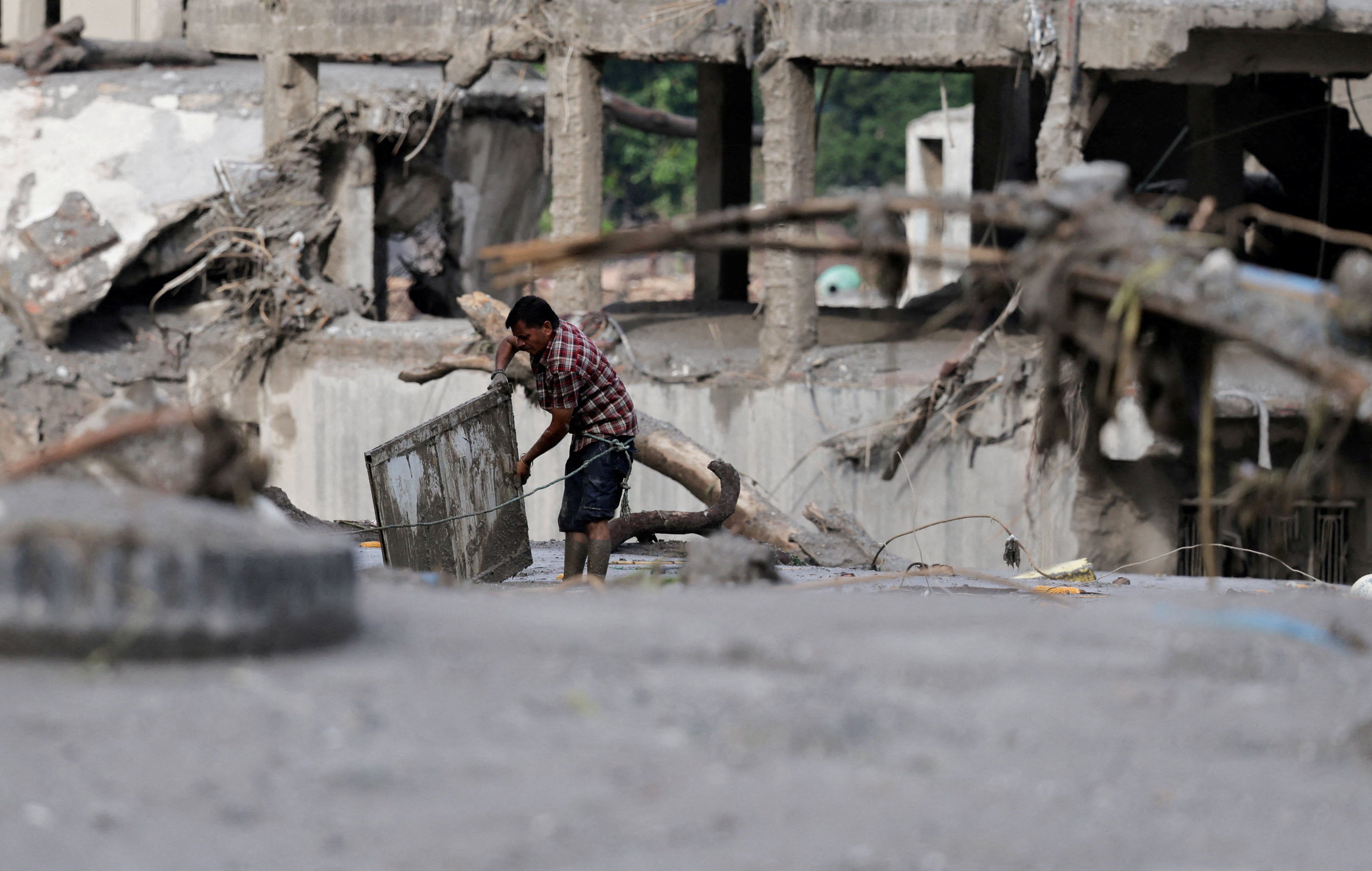
Helicopters carried survivors to hospitals, while the Nepal Army and other emergency teams searched through mud and debris.
“This is one of the most devastating floods I can remember seeing in this region,” Tenzing Chogyal Sherpa, an expert in atmospheric and water processes at Utrecht University in the Netherlands, was quoted as saying by the NYT.
He said the disaster was a “brutal reminder” that climate change means “events like this may happen again”.
“The destruction is immense,” a local school teacher Somlal Dangol told local media.
“We cannot even begin to comprehend what has happened.”