


Stephen Colbert’s Late Show finale was a bittersweet, star-packed goodbye
Paul McCartney, Elvis Costello, Bryan Cranston and Tig Notaro were among the guests to see off both host and talk show in an 80-minute finale
Series finales for late night shows are, by their nature, a little odd and also exceedingly rare; usually it’s the host’s final episode, and not the entire show’s, as franchises like The Tonight Show or Late Night continue on with someone new at the wheel. But CBS made the, ah, visionary decision to cancel the Late Show, the talkshow it created in 1993 as a new home for David Letterman after he failed to score the Tonight Show job over at NBC. In Letterman’s hands, and eventually Stephen Colbert’s, the show became an institution and the first real, sustained Tonight Show competitor in years.
Indeed, the CBS Late Show leaves the air as the No 1 show in network TV late night, with that 11.35pm real estate immediately and ignominiously rented out to Byron Allen’s longtime syndication seat-filler Comics Unleashed. It’s a stunning streaming-era abdication that will for ever be tied with US president Donald Trump, even as the network has insisted (as echoed by a dolphin in a finale gag) that the decision was purely financial, not political. (Naturally, the show has received plenty of promotion on its way out the door, as if it were just going on its merry way.) Colbert himself has had nearly a year to come to terms with the decision, and was far past using his platform to rail against the corporate dolts on his cheerful (if unavoidably bittersweet) final instalment.
With plenty of strong choices for last guests already sorted – David Letterman, Bruce Springsteen and Jon Stewart had already dropped by – the supersized 80-minute finale made a running gag out of a delayed reveal. Throughout the first half-hour, Bryan Cranston, Paul Rudd, Tim Meadows, Tig Notaro and Ryan Reynolds interrupted various usual Colbert bits, mostly with the mock assumption that they might be the unnamed final guest. Instead, Colbert welcomed Paul McCartney, highlighting the show’s occupation (and CBS’s impending abandonment) of the refurbished Ed Sullivan Theater, where McCartney famously performed back in 1964 with the Beatles. In retrospect, this was tipped early on when, after a clever montage of talkshow history stitched together to “introduce” Colbert, the episode was advertised as featuring “Hello, Goodbye”.
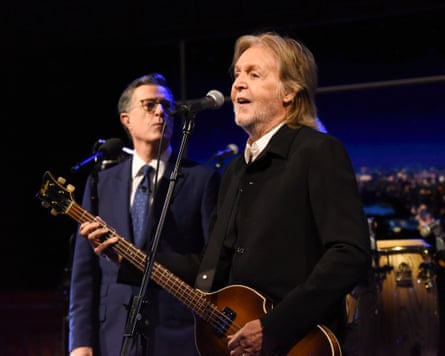
An 83-year-old rock star, even when he’s a legend with a new record to promote, might seem like an odd choice for a last interview. As warm and attentive as Colbert remains as an interviewer, and blessedly sharp as McCartney seems, it wasn’t exactly a deep dive. McCartney offered some vague memories of his Sullivan Show performance; Colbert talked a bit about accepting change; McCartney joked about resisting his iPhone updates. (Relatable.) Their multiple segments together were largely talkshow business as usual (albeit on the stronger end of that spectrum, as Colbert tended to be) – until they were interrupted by a well-placed runner from throughout the episode, where an eerie green light kept glitching into view. Colbert put his deadpan into practice; the very first instance, it did, however briefly, play as a genuine technical error.
Eventually, these repeated interruptions led into a mysterious green portal, and seemingly prerecorded moments with a returning Stewart, as well as the other members of the “Strike Force Five” – the network talkshow hosts Jimmy Fallon, Jimmy Kimmel and Seth Meyers, plus Colbert’s fellow Daily Show refugee John Oliver. They bantered about the wormhole about to swallow Colbert’s show and mused abstractly about the collapsing network model and encroaching government interference (“At some point, this may come for all our shows”). When Colbert finally surrendered to the void, he revealed how he wanted to end his show: performing with Elvis Costello on an obscure B-side demo track called Jump Up.
Colbert actually called this shot over a decade ago. In a 2012 interview with NPR’s Fresh Air, well before he was hosting the Late Show, Colbert spoke at length about his love for this relatively obscure track: “I love the song because it’s sort of a satirical song … I’ve always loved that line ‘it’s a two-horse race, and he changes bets like it was another brand of cigarettes.’ And back, long before I did political satire, I thought, yeah, isn’t that interesting, there are only two choices, and people flip back and forth as if it doesn’t matter, when there should be bold lines between these two people.”
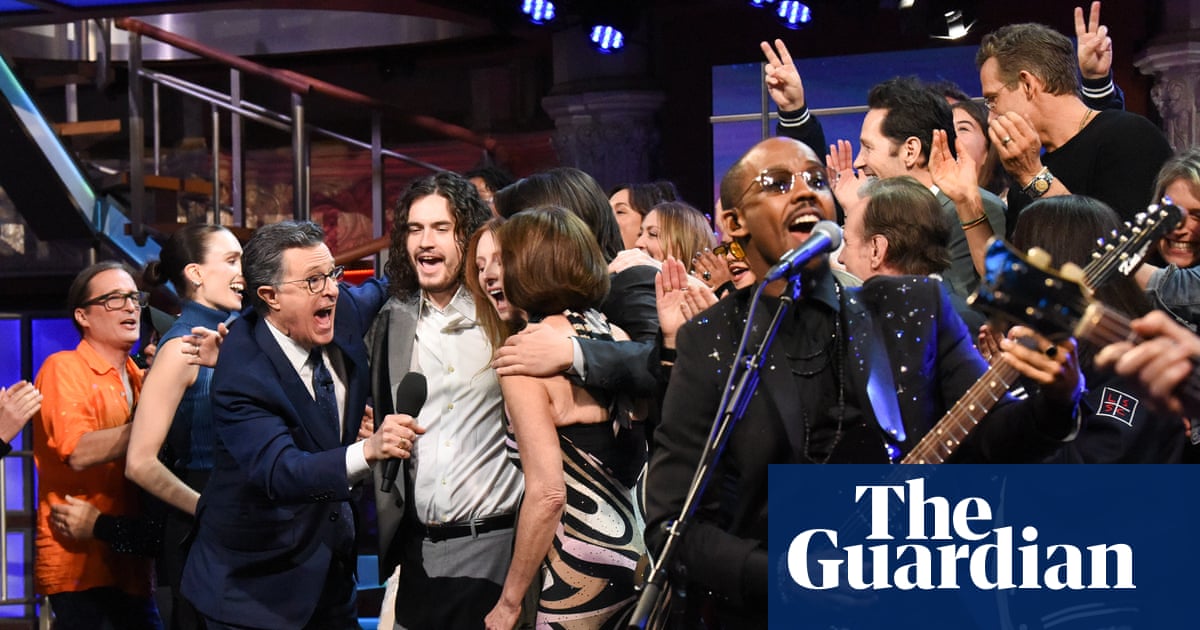
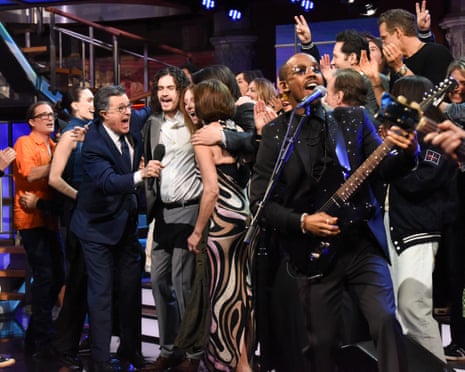
The show didn’t entirely surrender its talk-variety format; as promised, it came back to McCartney, along with Colbert and Costello and the rest of the studio audience, singing Hello, Goodbye, and then in another prerecorded bit, the host and the Beatle shut the lights off.
By the end, Colbert’s insistence on doing the more-or-less usual talkshow monologue and an additional compendium of Weekend Update-y news items via his Meanwhile segment made more sense, even though most of the jokes were pretty standard late-night chatshow stuff. Plenty of viewers would be tuning back into the show for this last hurrah, and its dissolution makes more sense from within the format, rather than breaking from it completely.
At the very top of the episode, Colbert spoke to his in-studio audience and his at-home viewers simultaneously, describing his approach as not doing a show for them, but “doing the show with you”. He was more than owed a bit of meaningful self-indulgence with that Costello song, but he wanted to bring the audience along with him. His goodbye hit hard, a reminder of what so many will miss with the Late Show gone: the nightly hello.