


Want to bookmark your favourite articles and stories to read or reference later? Start your Independent Premium subscription today.
`;
document.body.appendChild(modal);
modal.addEventListener(‘click’, () => {
document.cookie = ‘mos-plan-select=; Max-Age=0; path=/; expires=Thu, 01 Jan 1970 00:00:00 UTC;’;
});
modal.querySelector(‘.subscribe-link’)?.addEventListener(‘click’, (e) => {
e.preventDefault();
document.cookie = ‘mos-plan-select=; Max-Age=0; path=/; expires=Thu, 01 Jan 1970 00:00:00 UTC;’;
setTimeout(() => {
window.location.href = ‘https://www.independent.co.uk/subscribe?regSourceMethod=Bookmarks’;
}, 500);
});
});
The state pension is set to rise by 3.9 per cent next April, according to new figures.
Data published by the Office for National Statistics (ONS) on Tuesday showed weekly wages grew by 3.9 per cent between May and July.
The triple lock guarantee means the government will increase the state pension by whichever figure is highest out of wage growth, inflation, or 2.5 per cent.
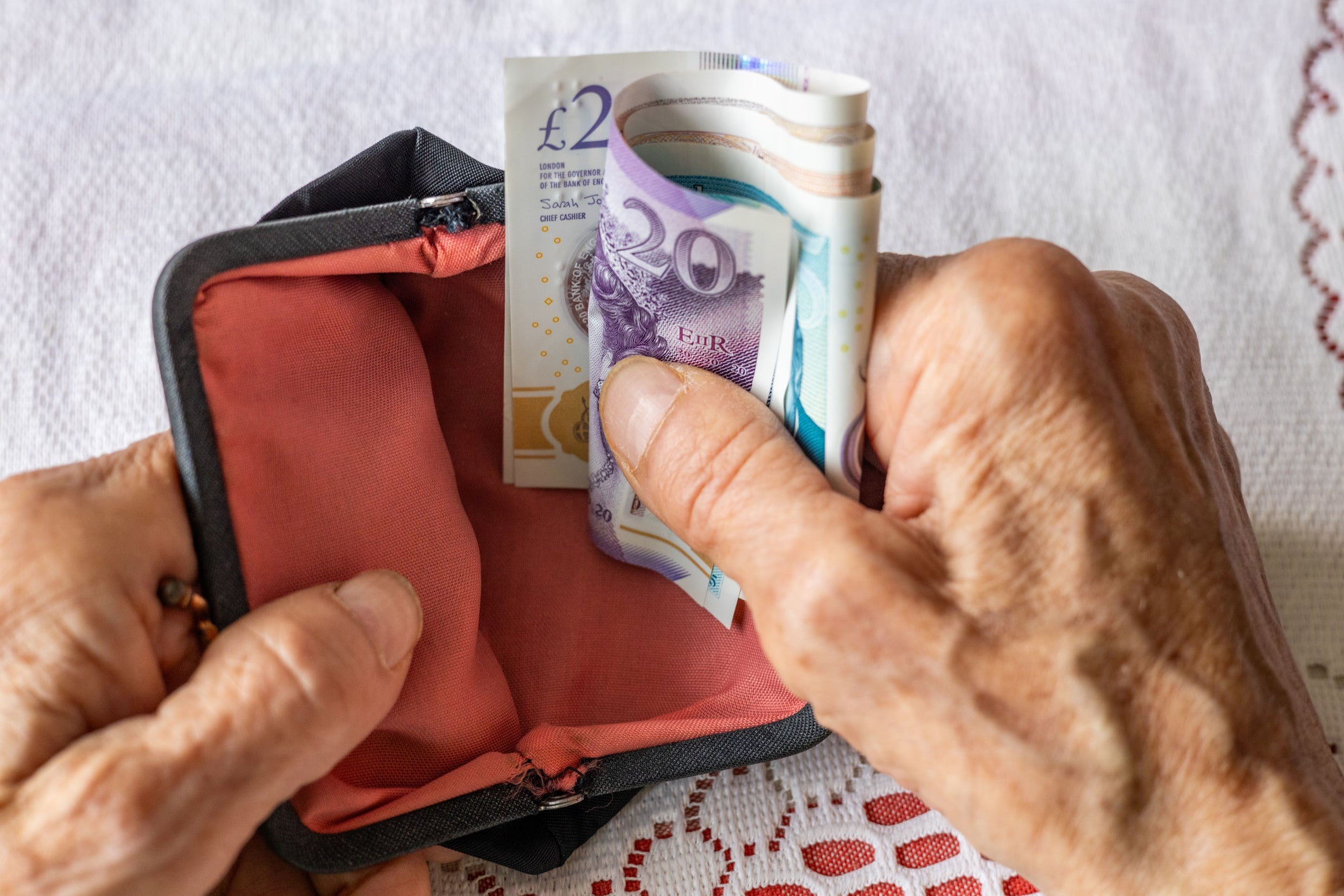
If confirmed, a 3.9 per cent increase will raise the full new state pension by around £9.40 a week, lifting payments from £241.30 to approximately £250.70 per week.
Because Consumer Price Index (CPI) inflation is projected to remain below the 3.9 per cent wage benchmark over the key September measurement period, earnings growth is expected to determine the final rate.
The Bank of England forecasts inflation will peak at around 3.2 per cent later this autumn, well below the three-month wage growth average.
Official September CPI inflation figures, which serve as the alternative threshold in the calculation, will be published on 21 October.
Therefore unless inflation experiences an unexpected spike, the 3.9 per cent increase will see the full new state pension rise, providing a boost to millions of pensioners across Britain.
The Department for Work and Pensions will formally confirm the revised payment rates during the Autumn Statement after the data is finalised next month.
Across a full year, that would lift someone on a full state pension from £12,547.60 to £13,036.40, meaning for the first time, it would surpass the personal allowance of tax-free income.

Get a free fractional share worth up to £100.
Capital at risk.
Terms and conditions apply.
ADVERTISEMENT
Get a free fractional share worth up to £100.
Capital at risk.
Terms and conditions apply.
ADVERTISEMENT
For pensioners whose sole source of income is the state pension, an exemption has been declared so that they will not pay any tax at all on it, even though it surpasses the threshold.
However, for those who have any additional sources of money besides the state pension, they will pay back a small portion in tax.
The personal allowance is £12,570, meaning £466 of a full state pension would be above that figure and liable to tax – so £93 for a basic-rate taxpayer. In reality, the figure would actually be slightly lower if a portion of the first week of pension payments are paid at the previous year’s figure.
David Brooks, head of policy at leading independent financial services consultancy Broadstone, suggested the latest lift and paying tax on pension income will inevitably lead to further discussion over a change of policy – perhaps reducing to a “double lock” rather than the triple lock currently in use.
“The full new State Pension now exceeds the Personal Allowance, a landmark that will inevitably draw further attention to the impact of frozen tax thresholds and the substantial increases we have seen in the State Pension over recent years,” he said.
“The increase will sharpen the question of whether the triple lock remains affordable over the long term given the UK’s precarious public finances. It is important not to throw the baby out with the bathwater as protecting pensioner living standards remains vital, but the system also has to be fair and financially sustainable across generations.
“Transitioning to a double lock that protects increases in line with working-age benefits would seem the most likely compromise given it is today’s workers who ultimately fund the State Pension.”
Helen Morrissey, head of retirement analysis at Hargreaves Lansdown, urged those still working to not fall into the trap of thinking the state pension, while rising, would be enough to see them through retirement.
Adding funds to workplace pensions or SIPPs, even in small amounts, would significantly boost their chances of having the retirement lifestyle they imaged, she added.
“HL’s Savings and Resilience Barometer shows only 43 per cent of households are on track for an adequate retirement – the state pension will get you some of the way, but not all of it,” she said.
“If you want more from your retirement, you need to take your pension planning into your own hands.
“If you have a gap between what you have and what you need then taking small actions, such as boosting contributions every time you get a pay increase or promotion could have a big impact over time. If your employer is willing to increase their contribution if you increase yours – known as the employer match – then this can also make a big difference. This steady drip feed of contributions invested over the long term can transform your retirement.”