


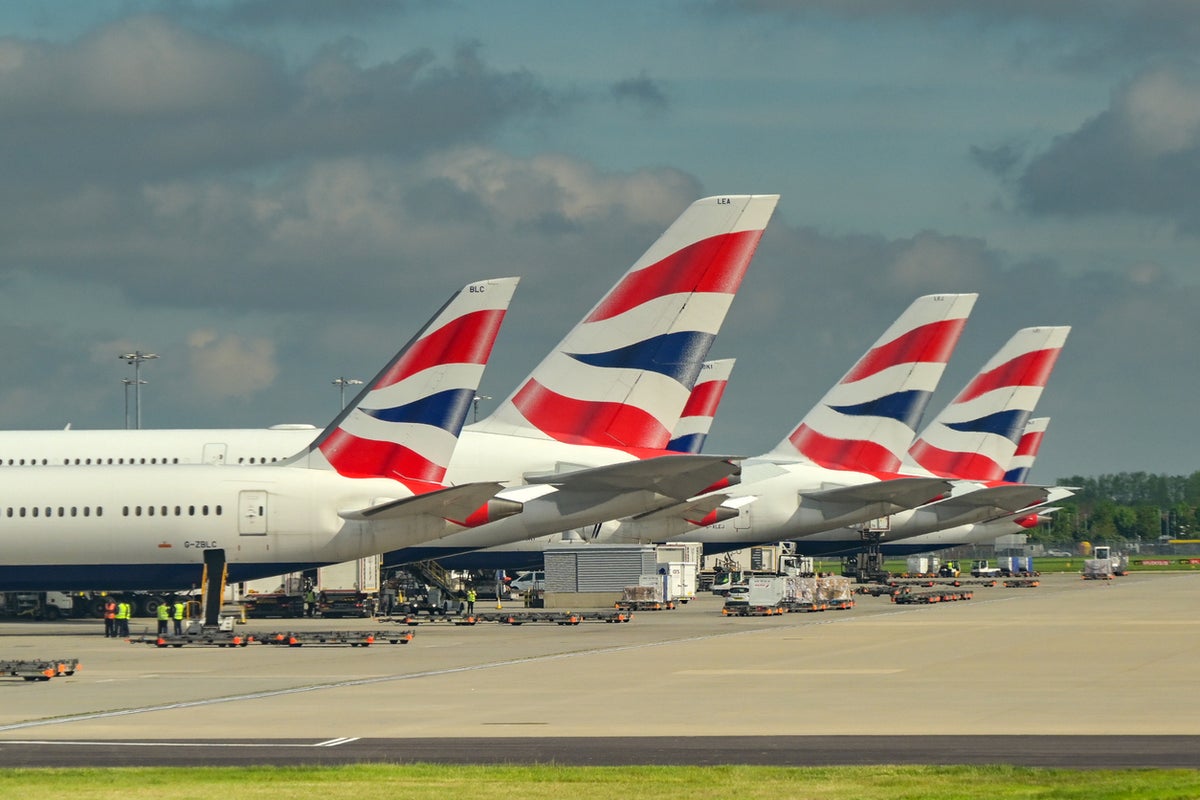
A passenger’s smartphone caught fire aboard a British Airways flight preparing to depart Tokyo‘s Haneda Airport for London on Thursday, forcing the aircraft to return to its stand while crew extinguished the blaze and safety inspections were carried out.
No injuries were reported among the 211 passengers and crew on board, according to Japanese transport officials, but the incident has renewed attention on the growing number of fires linked to lithium-ion batteries carried in aircraft cabins.
The aircraft had begun taxiing towards the runway shortly after 1pm local time when smoke was reported coming from a passenger’s baggage, according to Japan’s transport ministry and the Tokyo Fire Department, reported NHK News.
Air traffic controllers were alerted and instructed the aircraft to return to its parking position. Cabin crew used an onboard fire extinguisher to tackle the source of the smoke before firefighters boarded the aircraft to inspect the cabin.
Officials later determined that the smoke originated from a passenger’s smartphone.
Following safety checks, the London-bound flight departed approximately an hour behind schedule.
The Independent has reached out to the British Airways for comments.
The incident came just days after another British Airways flight experienced a cellphone-related fire, this time while crossing the Atlantic.
Pilots operating flight BA271 from London to Las Vegas sought emergency assistance before landing after a mobile phone ignited in the cabin. Air traffic control recordings captured the crew’s efforts to manage the situation as the aircraft approached Nevada.
“We’re currently on an emergency arrival into Las Vegas,” a pilot told controllers, reported the People. “We’ve had a fire in the cabin.”
The crew later clarified that “it was a mobile phone” and that it had “scorched the inside of the cabin”.
As the aircraft prepared to land, the pilot requested “maximum assistance” from emergency services waiting on the ground.
“Once we get to the stand, if you could have, please, all the personnel that you have available to help us deplane the aircraft in an orderly manner,” the pilot said. “We’re trying to keep the panic to a minimum in the cabin, obviously.”
The plane landed safely and no injuries were reported. The US Federal Aviation Administration subsequently opened an investigation.
British Airways said after the Las Vegas incident that “the safety of our customers and crew is the highest priority”.
The aviation authorities worldwide have become increasingly concerned about fires involving rechargeable electronic devices.
Lithium-ion batteries, found in smartphones, laptops, power banks, e-cigarettes and many other consumer electronics, can overheat and enter a chain reaction known as thermal runaway. The process can occur suddenly and may be triggered by physical damage, manufacturing defects, overheating, water exposure, overcharging or improper storage.
The risks have become significant enough that aviation regulators increasingly view battery fires as a major cabin safety concern.
In the United States, the Federal Aviation Administration recorded 82 lithium battery incidents during 2025, with power banks and vaping devices accounting for the largest share. By mid-June this year, the agency had already logged 40 incidents.
Because of those dangers, international aviation rules generally require passengers to carry rechargeable electronics in hand luggage rather than checked baggage, allowing crew to respond quickly if a device overheats or catches fire.
Earlier this year, Japan’s transport ministry tightened restrictions on portable batteries following a series of incidents involving power banks and other rechargeable devices.
Passengers are now limited to carrying two power banks on flights, while the use and charging of such devices onboard has effectively been prohibited.
The measures follow several high-profile battery-related incidents across Asia.
In January last year, a fire severely damaged an Air Busan passenger aircraft at South Korea’s Gimhae International Airport. All 176 passengers and crew escaped, although 27 people suffered injuries. Investigators later focused on an area near an overhead luggage compartment where the remains of a power bank were discovered.
Japan has also experienced several battery-related emergencies. A portable battery caught fire aboard a Hawaiian Airlines flight bound for Tokyo’s Haneda Airport in April last year, while smoke was reported from a battery on an All Nippon Airways flight travelling from Okinawa to Tokyo six months later.
Those incidents prompted Japanese airlines to urge passengers to keep power banks within sight rather than storing them in overhead lockers, where signs of overheating may go unnoticed.