


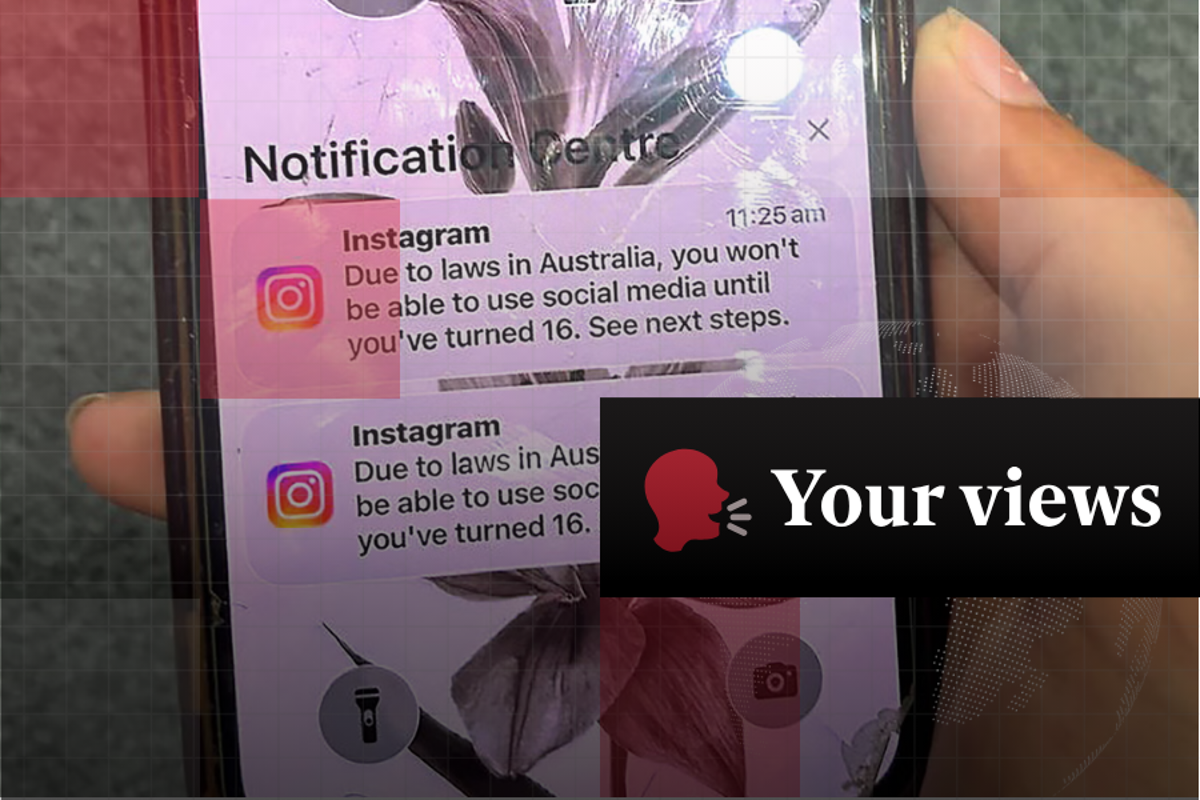
Independent readers responding to Sir Keir Starmer’s social media ban for under-16s were split between those welcoming tougher regulation and those warning it could be impractical and overly intrusive.
The prime minister announced the ban, which includes platforms like TikTok and Snapchat, during a Downing Street press conference on Monday, with the plans expected to come into force by spring 2027.
Some strongly backed the move, arguing tech companies have failed to protect children. One parent said a ban was “the best of poor solutions”.
Others called for even stricter action, with one commenter arguing companies should be treated like publishers and held legally accountable for algorithm-driven harm, saying “the mental health of our children… is far more important than corporate greed”.
But critics warned the policy could be hard to enforce. One reader cautioned it could pave the way for “mandatory ID” and wider surveillance, while another said under-16s would likely bypass restrictions anyway using VPNs and fake accounts.
Overall, readers were divided: supportive of the need to tackle social media harms, but split on whether a ban is workable or the right approach.
Here’s what you had to say:
Government overreach
Yet more restrictions on civil liberties wrapped up in the usual disguise of ‘protect the children’ pearl-clutching.
This is not about child safety or mental health, it’s about normalising governmental overreach and it’s about making life outside of school/work less enjoyable to incentivise hard work. The government sees how many young people aren’t in work or education and the effect that’s having on the economy, and their answer is: ‘let’s make it too boring not to work hard’. It starts with the easy target of groups who can’t vote – under 16 – but it will extend beyond that eventually.
Laws shouldn’t exist to enforce how anyone – children or otherwise – spend their free time. Nor should the government be managing children’s screen time – that’s the job of parents.
The more we normalise this kind of governmental overreach, the quicker we slide down the slippery slope towards a communist dictatorship. Expect fewer and fewer civil liberties moving forward if we tolerate this.
‘The best of poor solutions’
I am no fan of police states and overreach – but this has to fall into ‘the best of poor solutions’.
I have grown up with the early era of social media, back to the glorious days of MySpace et al, and it is WAY overdue there is a step like this taken – it really is the wild west out there and I know enough ‘informed adults’ who clearly need to remove themselves from certain echo chambers, let alone ‘the youth’.
This is not perfect but something is needed, parents have the ultimate responsibility to change, but support against this tsunami is needed.
Slippery slope towards digital surveillance
While I understand the reasoning behind this, I feel this is a slippery slope. Government should leave parenting to the parents.
The only way to effectively enforce this is through biometrics, facial recognition, uploading ID / passports etc. We’ve already seen major breaches where people’s private data has been shared, and this is after the companies had said ‘we don’t track your ID’.
This is opening up the road for everybody having to provide ID for every single thing, and private companies (and governments) being able to trace every single thing you do or say. People will use VPNs, and the government will probably try to ban that too under the guise of ‘protecting the children’. And before you know it, you can’t buy a house because they saw something on your digital footprint that the government didn’t like and put you on a blacklist (ala China).
This isn’t the same as a physical product that’s faulty. In those cases the product gets removed.
Also imagine you have to submit a facial scan and ID scan (that’s saved against your digital record) every time you buy a beer or bottle of wine. And then when you go to hospital a few years later they check your digital ID and say ‘oh you bought quite a few beers – maybe we won’t treat you because you damaged your own liver’. Or perhaps ‘you bought way too many sweets – we won’t cover your dental cover’, or ‘oh, so you subscribed to person X and Y on YouTube and they are critical of the government – no mortgage for you’.
Be careful what you wish for.
A generational reset
I never thought an all-out ban would work until I heard an Australian politician talk about the ban on a podcast. He spoke about it as a circuit breaker. Yes, the young generation now who are used to having social media will find a way around the ban. Maybe some of their younger siblings will be helped to get around the ban.
Over time, fewer and fewer young people will have access to social media. Future 12-year-olds will be deprived of these platforms and, just like the 12-year-olds of the 1990s didn’t miss TikTok et al, these future generations of young kids will not miss them either.
Currently, we are dealing with a unique group of young people: those who have grown up using social media. It is not a group to measure future young people by.
Ban it all
Snapchat, TikTok, YouTube, Instagram, Facebook and X are among the platforms affected – but not WhatsApp and Signal, the government says. Good luck with that, parents.
‘A full ban is the right choice… I am not prepared to compromise on the safety and happiness of our children,’ the Prime Minister says in a televised statement. I think the safety of us all and our happiness is equally important, Prime Minister – ban it all and while you’re at it ban the use of tobacco, you’d only lose about £10 billion a year, ditto alcohol.
The internet made the world worse
The world definitely got a lot worse after the invention of the internet, and in particular social media and smartphones… especially for kids. It seems to have crushed creativity. The problem is if someone wants to create something original, perhaps you want to try your hand at art, or make some music etc… you go online and are immediately bombarded with people telling you exactly how to do it. At best this makes everything boringly similar, but at worst it means young people are constantly comparing themselves to others… and often realise they can’t compete with all the unrealistic slick presentation… so don’t bother and just end up feeling depressed and bad about themselves.
There are similar reasons behind why kids don’t want to socialise in the real world any more… they are worried they can’t live up to the high expectations of others. Doing something stupid in front of your peers has a massive social cost now and might be recorded and repeated forever. Unfortunately the downsides of the internet age are massively outweighing the positives. We need to help young people find a way back to just having fun in the real world without all this pressure.
Tech giants need to be accountable
When the UK government announced plans to ban under-16s from social media, the predictable corporate pushback began. Critics lined up to brand the policy ‘unenforceable’, a restriction on ‘free choice’, or an unfair ‘burden on business’.
This defence is spectacularly weak. We do not abandon speed limits or age restrictions on alcohol simply because some teenagers find a workaround. A legal boundary establishes a vital societal norm, shifting the burden of compliance away from exhausted parents and directly onto the tech giants.
For decades, Silicon Valley has hidden behind outdated liability shields, claiming to be passive conduits for information. Yet their algorithms are deliberately engineered to curate, amplify and push addictive, harmful content to minors to maximise ad revenue. They are making explicit editorial choices.
Consider the double standard: when a physical product causes harm, we act. When Huawei posed a theoretical security risk, it was banned swiftly. Yet when we face a mountain of empirical evidence that social media algorithms inflict psychological harm on a generation, we are told regulation stifles innovation. If a car has a faulty airbag, the fleet is recalled. If a traditional publisher prints unchecked defamation or harmful misinformation, they are sued into oblivion.
Social media companies want to be the modern public square, but they refuse the legal responsibilities of a publisher. A ban creates the necessary floor, but treating these platforms as publishers is the ultimate game-changer. Only when their bottom line is at risk will the corporate incentive to profit from harm finally evaporate.
The mental health of our children, the social cohesion of a country, is far more important than corporate greed, always.
Some of the comments have been edited for this article for brevity and clarity.
Want to share your views? Simply click ‘log in’ or ‘register’ in the top right corner to sign in or sign up. Once registered, you can comment on the day’s top stories for a chance to have your opinions showcased.
Want your voice to stand out? Independent Premium subscribers enjoy priority for featured comments. Subscribe here.
Make sure you adhere to our community guidelines, which can be found here. For a full guide on how to comment, click here.