


More than 5,000 years ago, the Hongshan culture emerged in what is now northeastern China, leaving behind jade artefacts, ritual sites and a sophisticated belief system. Today, scholars say its values of harmony, inclusiveness and exchange continue to offer insights into how civilisations interact and evolve.
On 5 August, Chinese and international scholars gathered in Chaoyang, Liaoning province, for an academic seminar to discuss the core values of Hongshan culture from the perspective of mutual learning among civilisations. The seminar was part of the 2026 Conference on Hongshan Culture, held from 5 to 6 August, with the theme “Hongshan Culture: A Dialogue Between Eras and Civilisations”.
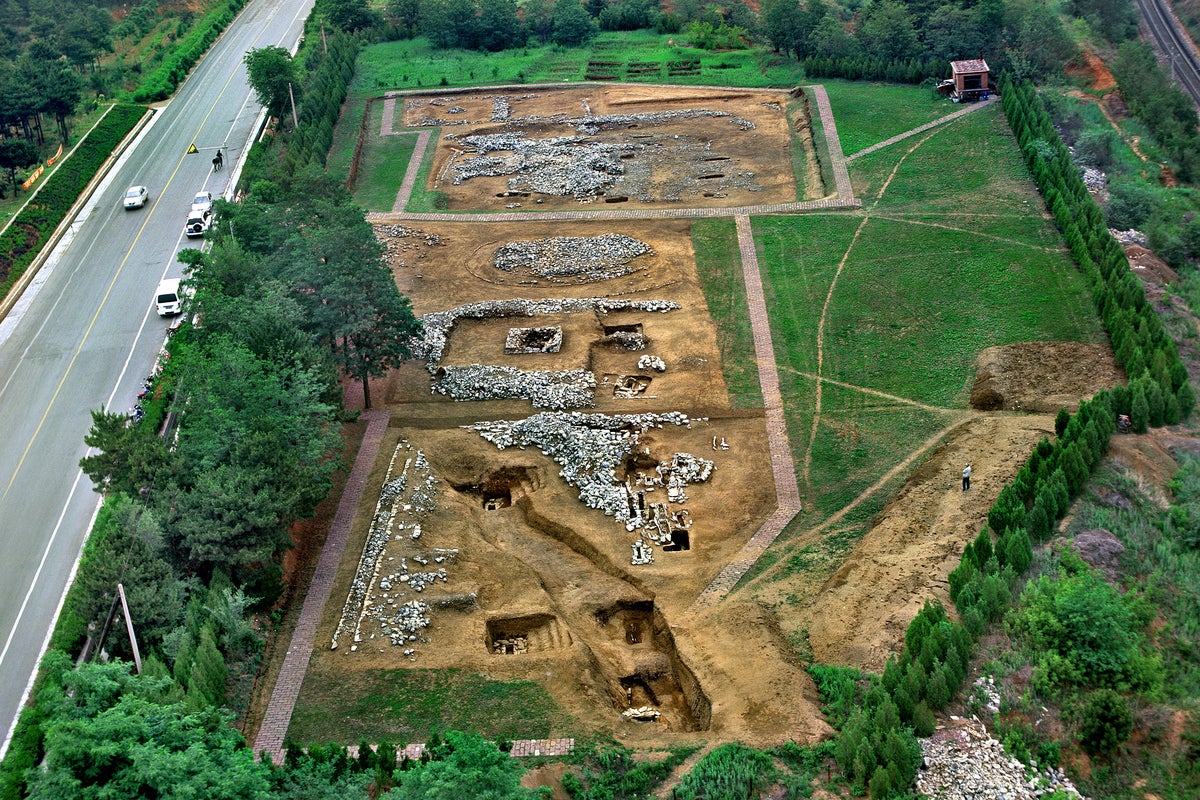
Guo Dashun, a renowned archaeologist and honourary director of the Hongshan Culture Research Institute, who participated in excavations at the Niuheliang site in Chaoyang, said Hongshan serves as a typical representation of the origins and characteristics of Chinese civilisation. The site, dating back some 5,000 to 5,800 years, is a core site from the peak period of Hongshan culture.
“Its exchanges with diverse cultures reflected the inclusive nature of Chinese civilisation and contributed to its enduring continuity,” Guo said.
Building on this perspective, Wang Wei, a member of the Chinese Academy of Social Sciences, said archaeological discoveries related to Hongshan culture provide important evidence for understanding the more than 5,000-year history of Chinese civilisation.
He added that cultural elements associated with Hongshan culture, including its jade ritual system and dragon imagery, shaped the spiritual world of early China and continue to influence Chinese civilisation today.
Looking beyond its role in the development of Chinese civilisation, international scholars also highlighted Hongshan culture’s significance in the broader history of human civilisation.
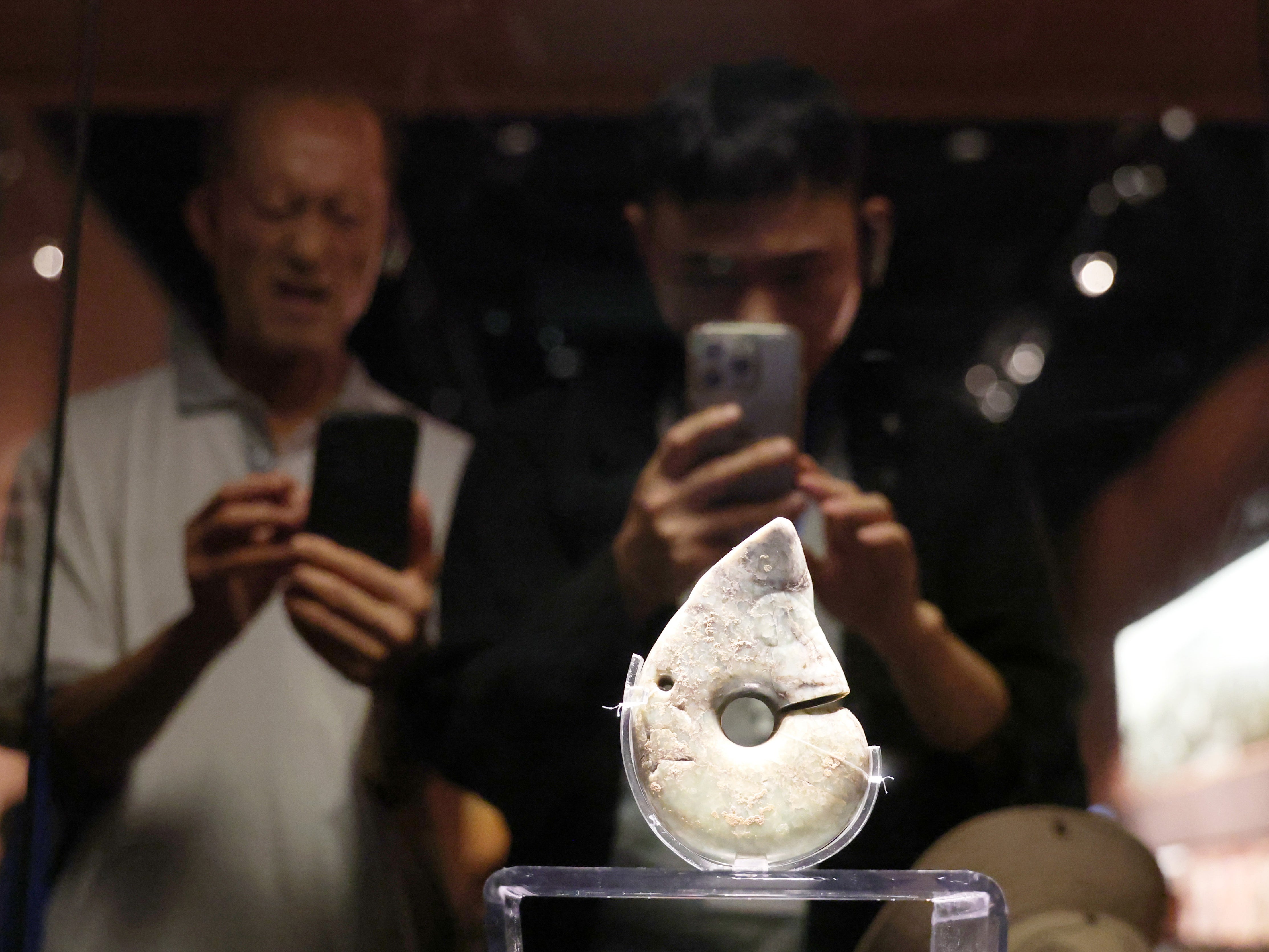
Elizabeth Childs-Johnson, a Sinologist from the United States, described Hongshan culture as a “cultural miracle”, highlighting its importance in the study of prehistoric civilisations worldwide.
She said Hongshan culture is one of the few Neolithic cultures known archaeologically to have documented a complex society transitioning from a hunting-and-gathering society to an agrarian one.
“It also represents one of the earliest examples of a highly developed and standardised system of ancestor worship and ritual practices,” Childs-Johnson said.
Lyu Xueming, a professor at the School of History at Renmin University of China, said elements such as ritual architecture, spatial planning and ceremonial pathways formed a regional cultural system that attracted and connected people from distant areas.
Such ritual traditions, according to Li Xinwei, director of the Chinese School of Classical Studies at Athens, a Beijing-backed research institute based in Greece, reflected a unique worldview that shaped later approaches to governance and political organisation.
Alexey Kovalev from the Institute of Archaeology of the Russian Academy of Sciences found similarities between a circular ritual structure discovered in the Munkh-Khairkhan culture and ritual architecture at the Niuheliang site. He suggested that the northern culture originating near Lake Baikal may have inherited certain traditions connected with Hongshan culture.
“The significance of Hongshan culture extends beyond archaeology. It reminds us that civilisations have never developed in complete isolation,” said Gor Sargsyan, foreign director of the Confucius Institute at Yerevan Brusov State University in Armenia.
He added that studying Hongshan culture is not only about exploring China’s ancient heritage, but also about creating opportunities for dialogue and mutual learning among civilisations. Other scholars also shared their perspectives on the ancient culture, emphasising its enduring value in promoting dialogue, understanding and cooperation among civilisations.