


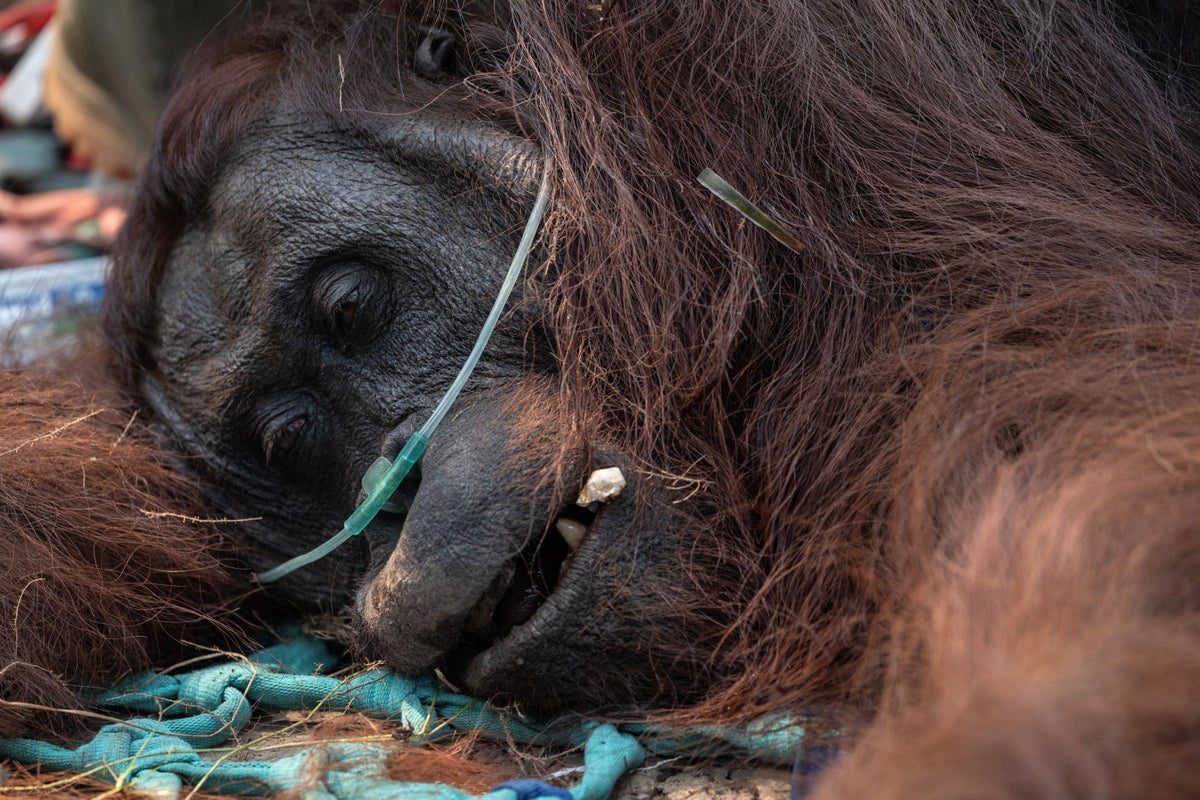
The raging wildfire on Indonesia’s Borneo island is leaving orangutans writhing on the ground, fighting to even breathe, as air quality reaches hazardous levels and haze spreads into neighbouring countries.
On Tuesday, air quality ranged from “very unhealthy” to “hazardous” in much of Borneo and several parts of the Philippines, according to the Swiss monitor IQAir.
In neighbouring Malaysia, according to the country’s environmental department, six areas of Sarawak state recorded hazardous air quality.
The smoke has forced thousands of schools in Indonesia and Malaysia to move classes online since the fires broke out on 22 July in Ketapang district, home to one of the largest orangutan populations in the world.
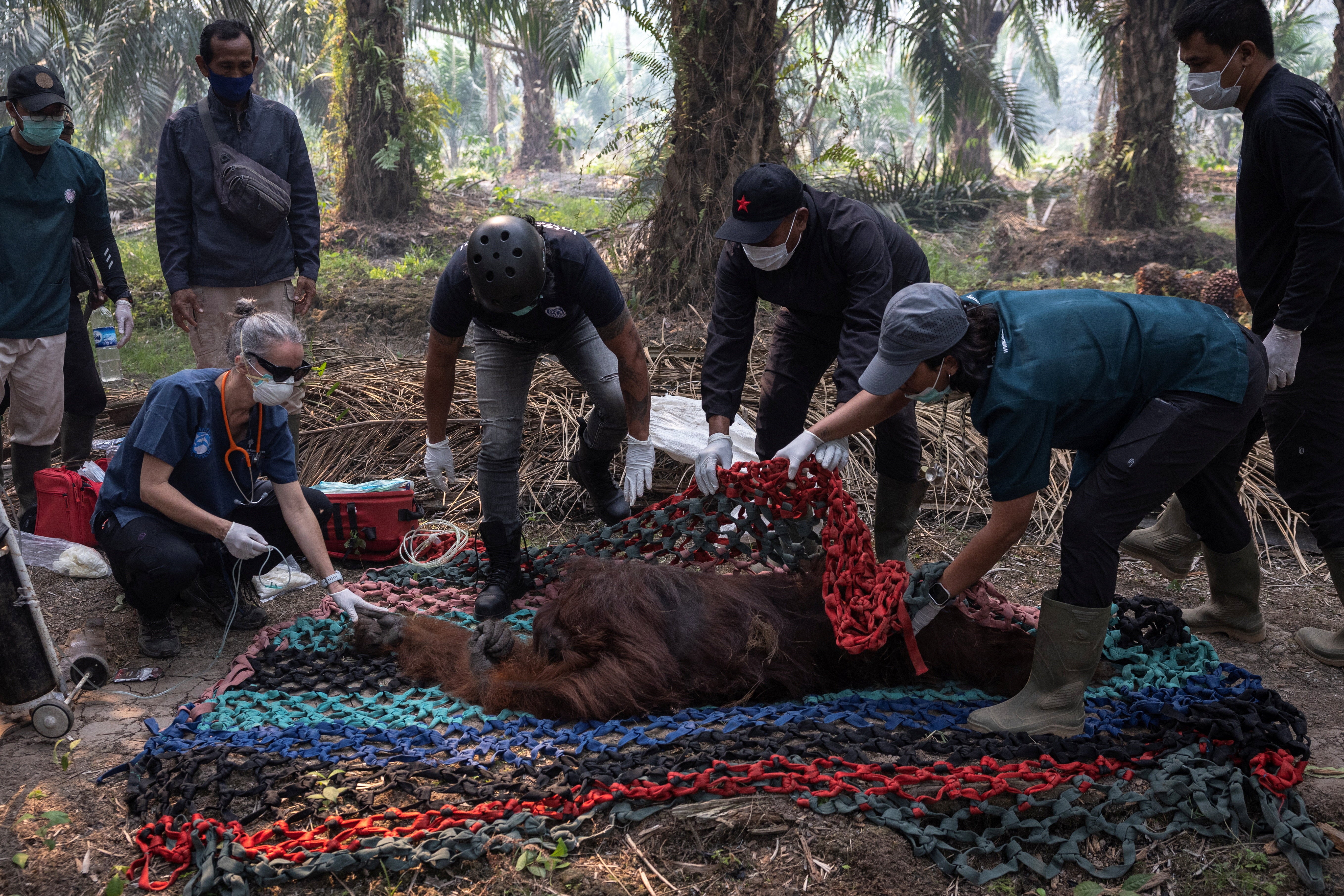
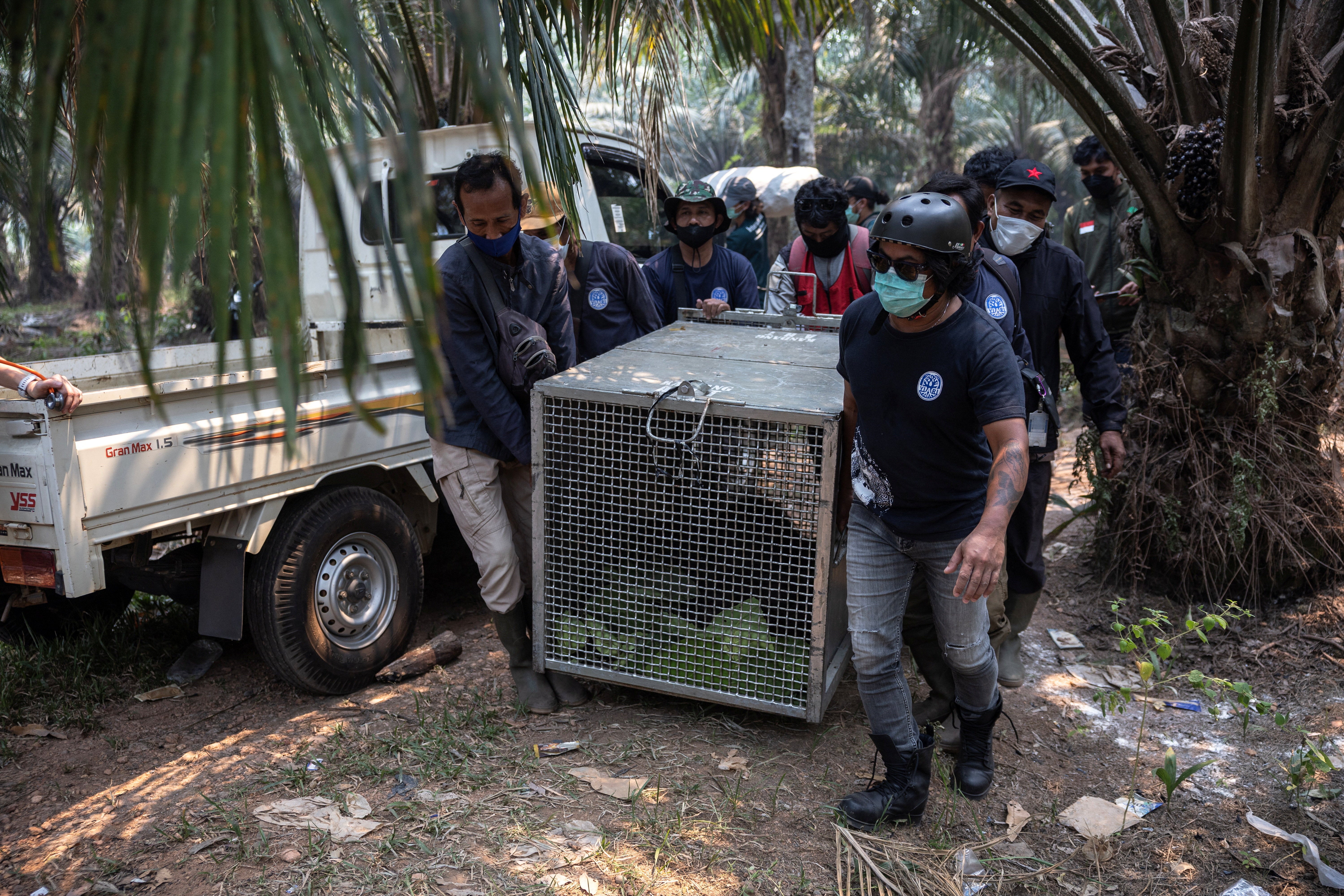
On Sunday, a farmer in the Ketapang area in West Kalimantan found an orangutan in need of rescue on a palm-oil plantation near the wildfire.
“It was very weak and I gave it water,” the farmer, identified by his first name Jais, told Reuters.
The incident occurred less than three weeks after flames came within metres of a rehabilitation centre housing more than 60 critically endangered Bornean orangutans rescued from illegal wildlife trade and habitat loss. The facility is run by a nonprofit called Yiari.
.jpeg) open image in gallery
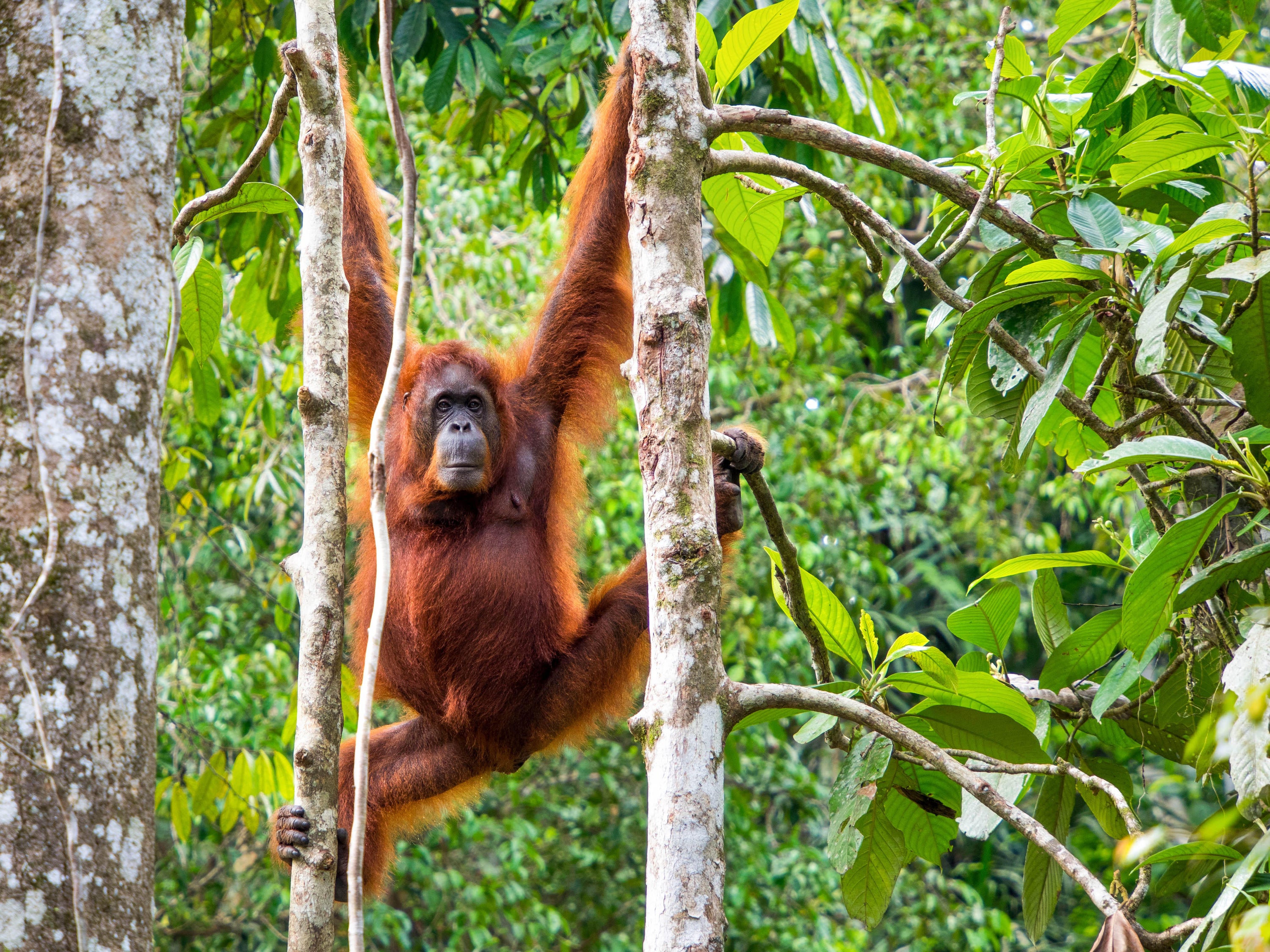
open image in galleryThe Bornean orangutan is a critically endangered species. Its population has declined by more than 50 per cent over the past 60 years and its habitat has been shrunk by at least 55 per cent over the past 20 years, largely due to hunting and logging.
There are only about 120,000 Bornean orangutans remaining in the wild, according to the World Wildlife Fund.
The primates are now found exclusively on the island of Borneo, which is held in part by Indonesia, Malaysia, and Brunei.
The orangutan is known for the shaggy red or orange coat that covers nearly its whole body, though its face, ears, palms, and soles of the feet are without hair.
 open image in gallery
In addition to Borneo, satellite images show intense forest and landfires burning on Sumatra.
The smoke caused over 50,000 cases of acute respiratory infection across seven Indonesian provinces between July and August, Andi Saguni, a health ministry official, said, adding that winds could carry the haze into areas with no active fires of their own.
Authorities said they were on alert as they worked to contain the damage and avoid a repeat of 2015, when raging fires caused widespread devastation in the archipelago.
 open image in gallery
The ape helped by the farmer was named Sampurna after the village it was found in. It had fainted due to the lack of oxygen.
“The orangutan got hypoxia because of the very thick smoke in the area,” Karmele Llano Sanchez, chief executive of Yiari, said.
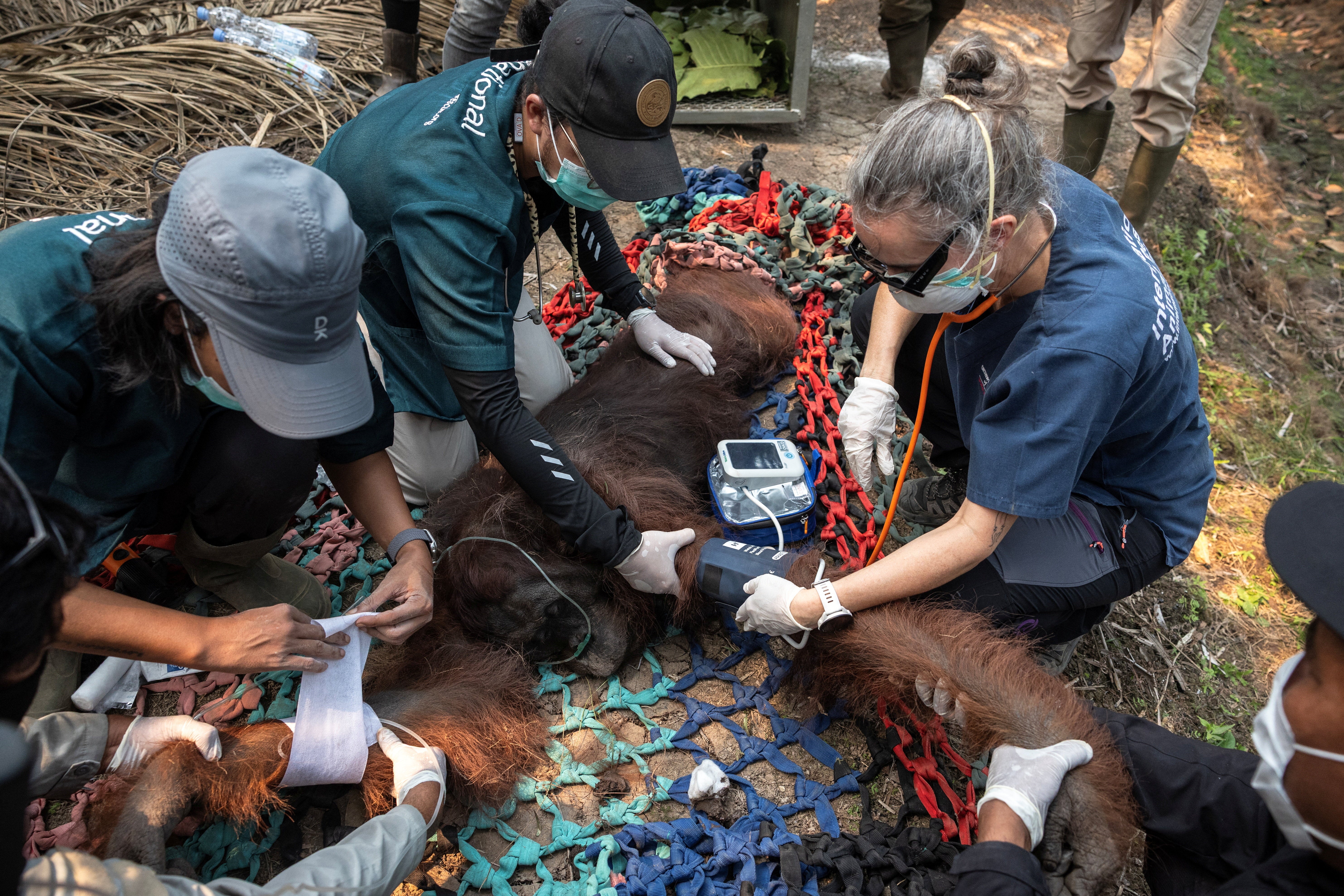
The orangutan, estimated to be 20 years old, did not get any severe burn-related injuries, Komara, a veterinarian who tended to the ape, told Reuters.
“We suspected it was suffering from an acute respiratory infection.”
 open image in gallery
The veterinarian gave the orangutan oxygen through a small tube placed in its nose and fluids through intravenous drip, with a makeshift infusion bag hanging from a palm-oil frond.
It will be moved to the rehabilitation centre for further treatment and released back into the wild after its recovery.
A few days earlier, a mother orangutan named Mama Yuni and her two offspring were evacuated from a community plantation in Tanjungpura village after flames disrupted their usual habitat and movement routes. Wildlife rescuers said they had treated seven orangutans affected by the fires this year.
Silverius Oscar Unggul, chairman of the Indonesian Nature Rehabilitation Initiative Foundation, said repeated fires were compounding habitat loss and increasingly pushing orangutans into community plantations in search of food.
“The situation is quite critical,” Ms Sanchez from Yiari told Reuters, adding that the fires were “leaving them without any food or water”.
She said the government should not only focus on containing the fires, but prepare for the long-term effects on public health, forests and wildlife.
 open image in gallery
In August, after the fires had burned for a few weeks, thick smoke blanketed the area near Yiari’s rehabilitation centre and its workers fought for hours to stop the flames from reaching the facility.
“The fire reached the boundary of the rehabilitation centre’s land,” Ms Sánchez told Mongabay. “If we hadn’t responded quickly, part of our rehabilitation center might already have been destroyed by the fire.”
In July, conservationists had rescued a male orangutan, named Wak, after he wandered into a fruit plantation at Kuala Tolak village near Ketapang.
“This orangutan came out because its habitat has been disturbed,” a villager identified only as Morsali said. “There has been a lot of land clearing, and now it’s the dry season, with fires everywhere. It came looking for a safe place to find food and shelter because its habitat is no longer safe.”
Fires are also threatening wildlife elsewhere in Indonesia. A blaze at Way Kambas National Park in Lampung, Sumatra, burned around 673 hectares last month before being brought under control by roughly 250 personnel, with a weather modification operation deployed between 26 and 30 August to help extinguish it. Animals at the park’s Elephant Conservation Centre were reported to be safe.
Indonesia’s forestry ministry recorded more than 202,000 hectares burned nationwide between January and July, around 107,000 hectares in June alone. West Kalimantan, where the orangutan rescues took place, recorded the largest area affected of any province.
 open image in gallery
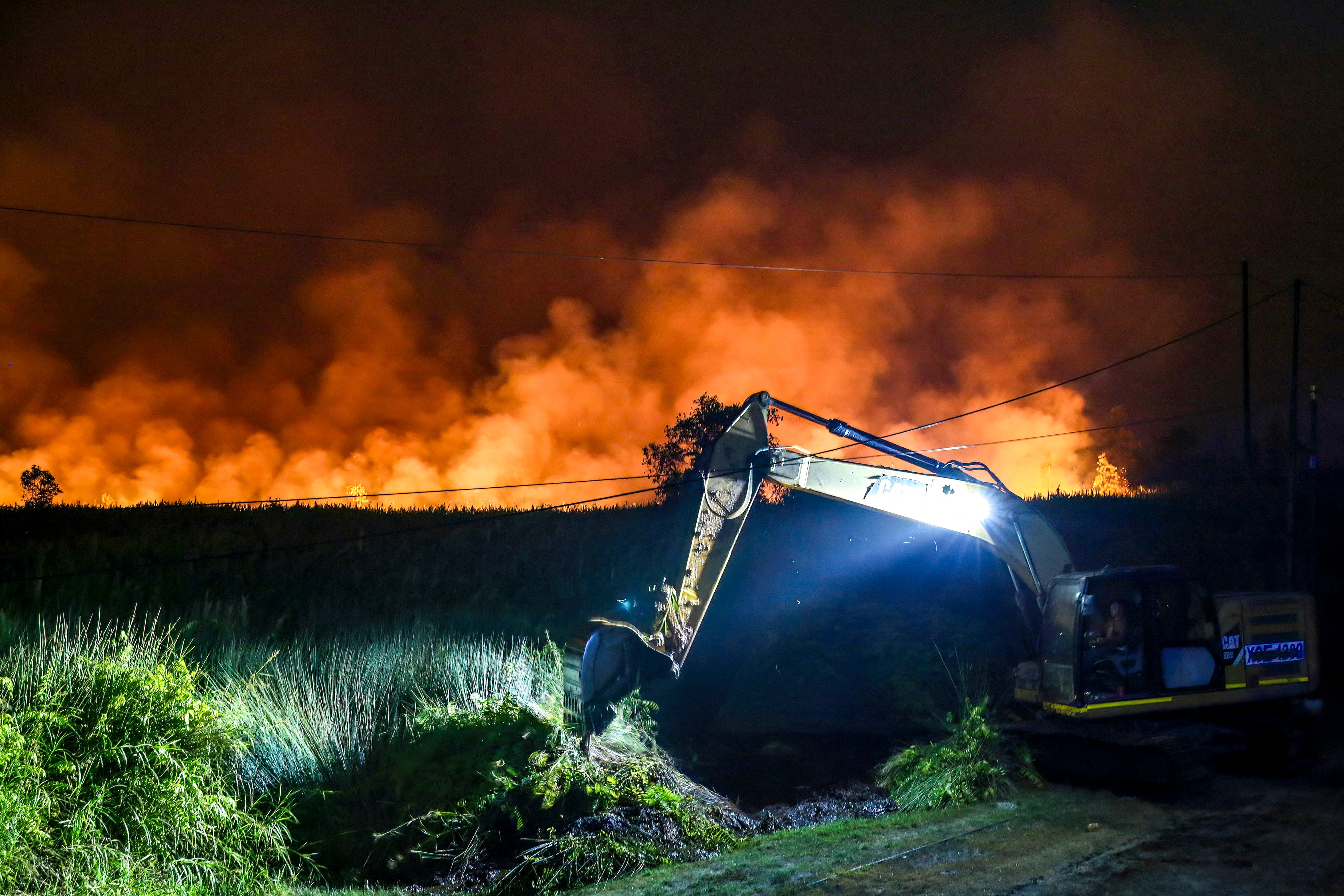
In a renewed attempt to curb the fires and prevent the smoke from spreading, authorities deployed cloud-seeding and firefighting planes across the five provinces of Borneo, home to vast stretches of fire-prone peatland.
Indonesia’s forestry minister, Raja Juli Antoni, said many of the fires had been deliberately set, by individuals or companies clearing land for agriculture and other economic activity, a practice that remained common despite periodic government crackdowns. He said September was expected to be the peak of this year’s El Niño, which would make the fires harder to control as hot, dry conditions would allow them to spread faster.
Wildfires destroyed nearly 95,000 hectares of land across Indonesia in July, nearly doubling the damage done over the previous six months, as average temperatures for the month rose to their highest in 35 years.
Hotspots crossed over 9,000 in August, far higher than the 5,077 in the same month in 2015, though still well below the all-time monthly high of 17,302 in October of that year, according to the forestry ministry’s fire-monitoring service Sipongi.