


Resist foreign scrutiny over 33-year-old allegations against Tinubu, Buratai tells Nigerians
August 23, 2026 10:11 am

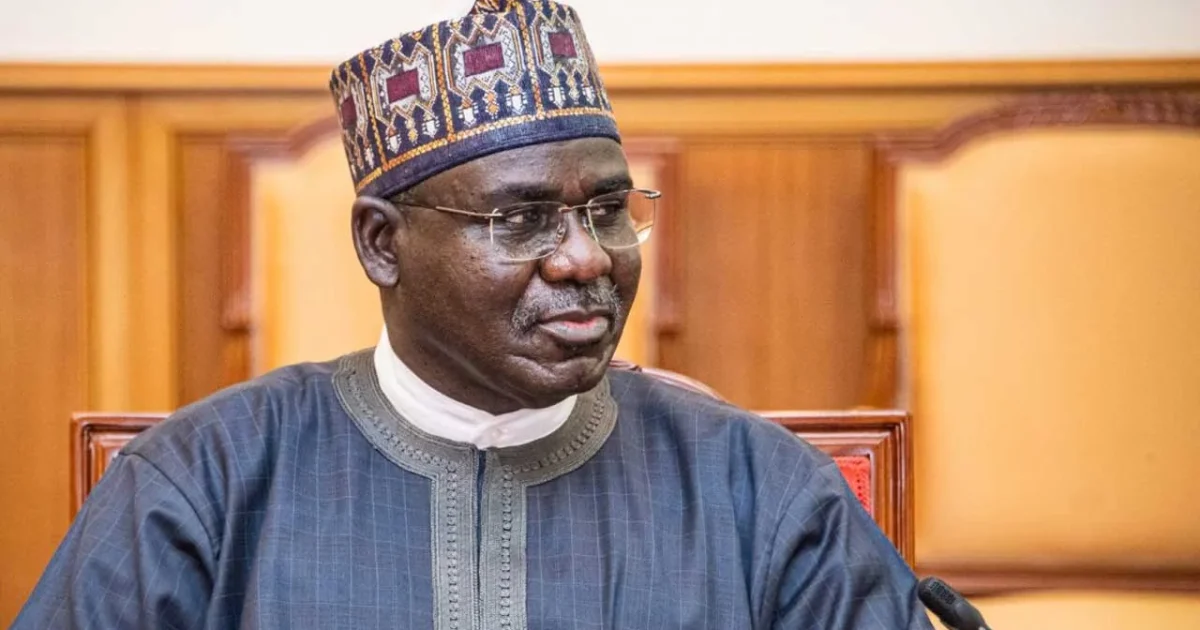
Former Chief of Army Staff, Lt. Gen. Tukur Buratai (retd.)
Former Chief of Army Staff, Lt. Gen. Tukur Buratai (retd.), has urged Nigerians to resist what he described as foreign interference in the country’s affairs, following moves to release documents allegedly linked to drug-trafficking investigations involving President Bola Tinubu more than three decades ago.
Buratai made the call in a position paper titled, “Nigeria First: A Case for Protecting National Sovereignty and Dignity – A Patriotic and Non-Partisan Perspective,” which he posted on his verified Facebook page on Sunday.
The former Army chief argued that the controversy surrounding the President should not be allowed to damage Nigeria’s international image or undermine the country’s sovereignty.
A United States District Court for the District of Columbia had reportedly given Tinubu, the Federal Bureau of Investigation and the Department of Justice until August 28, 2026, to oppose the release of documents relating to the alleged investigations.
Buratai said the development had gone beyond the personality of the President, insisting that the possible disclosure of the documents could have wider implications for Nigeria and its citizens.
He stated, “This is not merely about Bola Tinubu— it is about 250 million Nigerians whose national pride, economic prospects, and global standing hang in the balance.”
He argued that Nigerians should be concerned about the potential consequences of international media coverage of the allegations, saying the country’s image could suffer if the documents were released.
He said, “When the world reads headlines about a ‘Nigerian president’ linked to drug allegations, they do not separate the man from the nation. They see Nigeria. They see Nigerians.”
Buratai maintained that the allegations, dating back about 33 years, should be considered in the context of the time they allegedly occurred, rather than being used to define Tinubu’s entire political career.
He asked, “Can any Nigerian honestly claim that they are the same person they were 33 years ago? Can any nation claim that its leaders should be judged exclusively by the actions of their youth rather than by their decades of subsequent service?”
The retired general said Tinubu’s political career, including his tenure as governor of Lagos State and subsequent role in national politics, should also be considered in assessing his character and contribution to Nigeria.
He argued that the country’s reputation should not be allowed to suffer because of allegations concerning events that allegedly occurred decades ago.
The former Army chief also questioned the implication of a foreign court determining the character of a sitting Nigerian President, arguing that such a development raised broader issues about national sovereignty.
“Does the United States have the right to determine the reputation of Nigeria’s head of state? Should a foreign court be the arbiter of character for a man elected by millions of Nigerians?” he asked.
According to Buratai, Nigerians have domestic institutions and democratic processes through which questions about their leaders should be addressed.
“We did not elect an American court to vet our leaders. We did not ask the FBI to determine the character of our president,” he stated.
He urged political leaders across party lines to avoid turning the matter into a partisan controversy, insisting that national interest should take precedence over political affiliations.
Buratai further warned that the disclosure could have economic consequences, particularly if international investors interpreted the controversy as an indication of political instability.
He identified foreign direct investment, international development partnerships, diaspora remittances, tourism and the international operations of Nigerian businesses as areas that could potentially be affected by a reputational crisis.
“These are not abstract concerns; they are concrete threats to the livelihoods of everyday Nigerians,” he said.
The former Army chief also linked the controversy to the 2027 general elections, arguing that the timing of any disclosure could influence Nigeria’s democratic process.
He said the release of the documents ahead of the election could give foreign actors “an unprecedented influence over the outcome of Nigerian elections,” adding that Nigerians should be wary of any development capable of undermining the country’s political sovereignty.
Buratai, however, stressed that his position should not be interpreted as a call for leaders to be shielded from accountability.
“This does not mean that leaders should be immune from accountability. It means that accountability must be pursued in ways that respect the dignity of the office and the nation,” he said.
He called on the Federal Government to engage the United States diplomatically over the matter and urged Tinubu’s legal team to deploy all available legal arguments against the release of the documents.
He also advocated national solidarity, public education, engagement with Nigerians in the diaspora and the development of a communication strategy in the event that the court eventually orders the disclosure.
According to him, Nigeria must also strengthen its domestic institutions so that questions concerning the conduct and accountability of its leaders can be properly addressed within the country.
Buratai concluded that Nigerians should defend the country’s dignity without necessarily turning the issue into an unconditional endorsement of any political leader.
“This is not about defending Tinubu the individual; it is about defending Nigeria,” he said.
The retired general added, “We will not allow foreign courts to determine our leaders’ legacies. We will not allow foreign legal proceedings to dictate our national narrative. We will not sacrifice 250 million people on the altar of a 33-year-old case.”
Buratai urged Nigerians to approach the development “not out of fear, but out of conviction—the conviction that our nation’s pride is not for sale, our dignity is not negotiable, and our future will not be determined by a foreign court’s judgment on a distant past.”
All rights reserved. This material, and other digital content on this website, may not be reproduced, published, broadcast, rewritten or redistributed in whole or in part without prior express written permission from PUNCH.
Contact: [email protected]