


Power costs biggest threat to hotel businesses – Panama Hotel CEO
September 13, 2026 12:01 am

By Anozie Egole
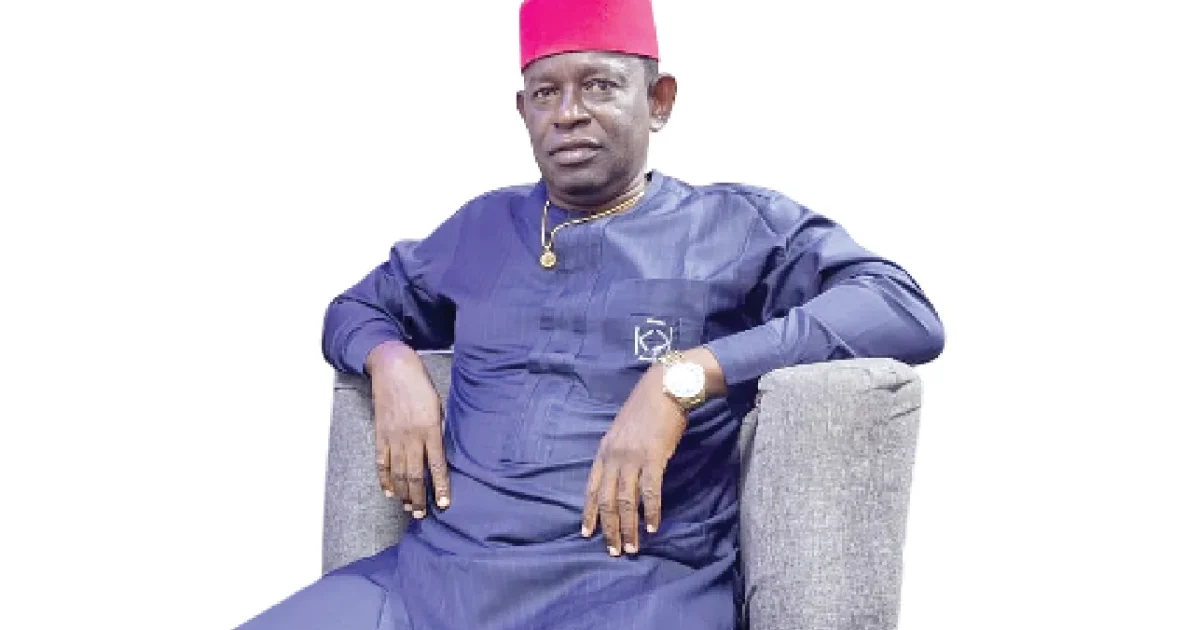
The Chief Executive Officer of Panama Hotel and Suites/Chairman of Nedu Logistics Solution, Kelvin Okechukwu, discusses the challenges confronting hotel owners in Nigeria and the way forward in this interview with ANOZIE EGOLE
How has inflation affected Nigeria’s hospitality industry, particularly in terms of operating costs and value?
It has affected it adversely because input costs are rising quickly, while customers are not willing to pay for higher services; they don’t have the money. You now need to provide quality service at a very low cost. So, it has been adversely affected. For instance, diesel costs have gone up drastically, but we cannot increase the cost of services because people don’t have the purchasing power to pay for the increase.
What impact has the naira devaluation had on the importation of equipment?
Yes, when we started this business, the exchange rate was still low. The cost then and the cost now, you cannot compare the two because, at that time, the equipment was so cheap in terms of naira. It was cheap, but now you cannot even replace some of them when they are getting old because the costs have skyrocketed. Some of the equipment has doubled in price. Like this air conditioner we are looking at now, when we started, we bought them for N300,000 each, but now it’s N500,000. So, when you are replacing them now, these are things that you have to replace because if you don’t replace them, the cost of maintaining them will be very high. So, when it’s time to replace them, it will be very difficult. So, it’s a challenging situation. The hotel is two years old.
To what extent has power supply affected the hotel’s running costs and overall financial performance?
Yes, seriously. Because the major input in the hospitality industry, like this hotel we are running now, is diesel. Yes, because that is the major input. Fifty per cent of our general cost is on diesel. So, if there is no electricity, you spend so much on diesel and also on maintaining the generator itself. And mind you, the generator has wear and tear; they are getting older, they are becoming more problematic. So, you need to change them sometimes. So, running a generator is also expensive. Many hotels are shutting down because of the cost of electricity. Because the electricity is not stable, a generator is not cheap at all.
Has the decline in purchasing power affected hotel occupancy and demand for services?
Yes, it has. People want the cheapest room here, which is N30,000; the cheapest room is always occupied. You need to book it like two weeks in advance to have it. But the bigger ones, sometimes, in two weeks, no one comes for them. The big rooms, those of N55,000, are always vacant. They are always vacant; they are always empty. Because people don’t have purchasing power, they go for the cheaper rooms.
What percentage of the hotel’s revenue is spent on energy?
I am telling you, as much as 50 per cent of our entire expenses is on diesel, and it is like that because we still augment it with solar. We have solar power here. Some hotels that don’t have solar electricity spend more than 50 per cent of their investment on diesel, which is so expensive now. You can’t run for 24 hours without diesel. There’s no way in Nigeria you have electricity 24 hours. In this area, we have an average of three hours a day. Some days you don’t have any at all. You can run for three or four days without any grid power.
Have rising interest rates affected your plans to invest or expand your business?
You can’t borrow from a bank and do business in Nigeria and recover. People who borrow from banks, I don’t know how they manage. Because the interest rate is as high as 30 per cent. It is very difficult to see businesses in Nigeria that you do and make a 30 per cent profit in a year after paying everything you need to pay. So, if you borrow at 30 per cent, what businesses are you going to invest in that will give you 40 per cent? Because at least you need a business that will give you 40 per cent profit in a year.
Except for those businesses that are still maybe new that people have not discovered. Because in Nigeria, things are so difficult that once a new business comes in, people find out that there is money in it, a lot of people will jump into it and crash the business. It’s only a new business that people have not discovered that can give you that money. In the hospitality industry, if you borrow to run it, I don’t think with the cost of diesel you can pay back the bank if you borrow to run it. So, some of us will take money from our main business and invest in the hospitality business. We don’t go to borrow from the bank to do it. For instance, what we have here, this little thing we have here now, costs more than N700m. So, if you borrow N700m, how much interest will you be paying to the bank monthly? How are you going to cover it?
Have taxes and levies significantly reduced the profitability of hotel businesses in Nigeria?
Taxes are not the problem; we pay our taxes. Nigerian tax regime is high, but it’s not too high. If you have infrastructure, you will not even feel it. For instance, if you have 24 hours of electricity now, what we pay in taxes is insignificant when compared with what we spend on diesel. For instance, in this little place now, sometimes in a month, I spend more than N8m on diesel alone. How much do I pay in tax? On average, I don’t pay more than N200,000 to N300,000 in tax every month.
So, tax is insignificant compared with the cost of diesel. So, if the government can give me 24 hours of electricity and charge me N1m every month for tax, most of us will pay it happily; that is the truth. Because electricity is cheaper than diesel, that is the truth. All over the world, we know that it is cheaper. The problem with solar is what is it called: forced investment. That forced investment is very heavy. For instance, if you want a solar system that can power this place, 24-hour electricity with solar, you will be talking about N200m.
Now, if you borrow N200m from a bank and install such a solar system that will be giving you free electricity or something close to free electricity, then you will be paying like N60m in interest every year. So, you see that it’s not even cheap. The interest rate makes it very difficult. Because if it is a country where you run on a single-digit interest rate, somebody like me, I would say, okay, let me go and borrow from a bank and put in a solar system that will carry this place 24 hours of electricity. Then it will be meaningful.
To what extent have rising food prices affected your pricing?
We have a restaurant here also. Yes, it has affected us because some lodgers want to eat here. But when the cost of food is high, it affects the amount you charge the customers. And some customers will prefer to go outside and eat, or bring their own food or find an alternative because food is very expensive. When we started, the food was cheap, and we made it affordable for customers. But when food inflation came in, we had to factor in a lot of things. And then we added money. And now it reduces demand. It’s normal; once you increase the price of things, the demand will reduce.
Has the country’s economic situation ever made you consider downsizing?
No. My hotel is still new; it’s two years old. I have not thought of that, but we look for alternatives. When I thought about that, I quickly took some money from my main business and invested in solar, so that it would not affect my running costs. So, I didn’t think of downsizing. Because of the number of workers we have here, if you downsize, it will affect the quality of services. For instance, there are two bartenders; you now said one should go. If one goes, can one person run 24 hours a day for seven days? It’s not possible. So, since there are two, there must be two. If there are not two, then we have to shut down that segment of the hotel; it doesn’t make sense.
What strategies have you adopted to remain profitable amid high inflation and other economic challenges?
The strategies we adopted were not to increase prices, because we tried this some other time. We increased the price of our services. If you increase the price, for instance, you increase the rooms from N30,000 to N35,000, you will think that you are making more money. At the end of the day, you are not making more money because patronage will reduce. So, at the end of the day, you see that you are still in the same place.
If you are making, for instance, N1m every month, and you say, let me increase the price so that I will make N1.2m, you find out that you are still making that N1m, or even less, because patronage will decrease. So, it’s not a good strategy. As I told you before, the strategy I use is to invest in solar. I just took money from my main business and invested in solar, and I think it pays off because it reduces the cost of diesel by as much as 40 per cent. So, that’s the strategy I use to survive.
Can you give us figures for your power expenses, including how much you previously spent on diesel and how much you spend now?
The analysis will not be easy, but I will give you some rough estimates. Because now, in this place, we don’t run on solar because it is not big enough to run for 24 hours. We use solar for like 8-10 hours, depending on the sunlight and the room’s capacity. Because I don’t have money to make it last 24 hours. But it paid off, because I know I used to spend up to N10m monthly on diesel before now. But with the introduction of solar, it’s come down to what I told you before, between N6-7m monthly. So, I think the solar gave me savings of almost N3m monthly.
What factors does the hotel consider when setting room rates during inflation?
It’s based on calculations. You calculate the number of rooms you have, the occupancy rate, the services you render, and also the demand and supply. Because if you increase it too much, the tonnage will reduce. And if you bring it down too much, you won’t be able to pay for the services; you won’t be able to pay workers, buy diesel, and do maintenance. So, it’s a very delicate balance that you must maintain. Go too far to the left, you have a problem; go too far to the right, you have a problem. If you stay in one place, you have a problem.
To what extent have insecurity, poor infrastructure and transportation challenges affected patronage?
Yeah, it has affected patronage because movement is also key to hospitality. For instance, somebody wants to come from Ikeja to patronise the hotel, but if the roads are not good and there is traffic on the road, the person will turn back and look for an alternative or even stay at home. So, people come to the hotel to relax, not because they are travellers. In fact, almost 50 per cent of our patrons here are not travellers. They are people who live around; they just want to come to the hotel and have a good environment. But when the roads are bad, they will stay back in their house.
What is the biggest economic challenge facing hotel owners in Nigeria?
It’s the electricity. I will tell you that one for sure; I will take that one to the bank. Any hotel owner will tell you the biggest challenge is electricity. If you have electricity 24 hours in Nigeria, the cost of renting a hotel will reduce. Even the room rate will reduce because most of the input is on diesel and generator maintenance.
What economic policy or intervention would help hotel owners improve profitability?
One is that the government should work on insecurity because there are so many Nigerians abroad who want to visit the country. But when they hear cases of kidnapping, killing, stealing, and all those things, they become afraid to come to Nigeria. And when they come to Nigeria, they patronise our hotels. When tourists are not coming, hoteliers are feeling the impact. Like, my hotel is far from the airport, but I am telling you for sure that a lot of people that patronise the hotel are people that are coming from abroad. So, if they don’t come, the patronage will be low. So, the government should work on insecurity. They also have to work on electricity. We need it for our economy to bounce back.
How do you balance your logistics and hospitality businesses as a trucker and hotel owner?
To me, hospitality is an investment. My main business is transportation. I just decided to invest in something else, something that won’t take too much of my time but can bring in income.
Anozie is a Chief Correspondent at Punch Newspapers with over 13 years of experience covering entertainment, maritime, and transport sectors. He specializes in producing insightful, engaging stories that provide clarity and depth across his beats. Anozie’s work reflects substantial newsroom experience and a strong commitment to accurate and compelling journalism.
All rights reserved. This material, and other digital content on this website, may not be reproduced, published, broadcast, rewritten or redistributed in whole or in part without prior express written permission from PUNCH.
Contact: [email protected]