


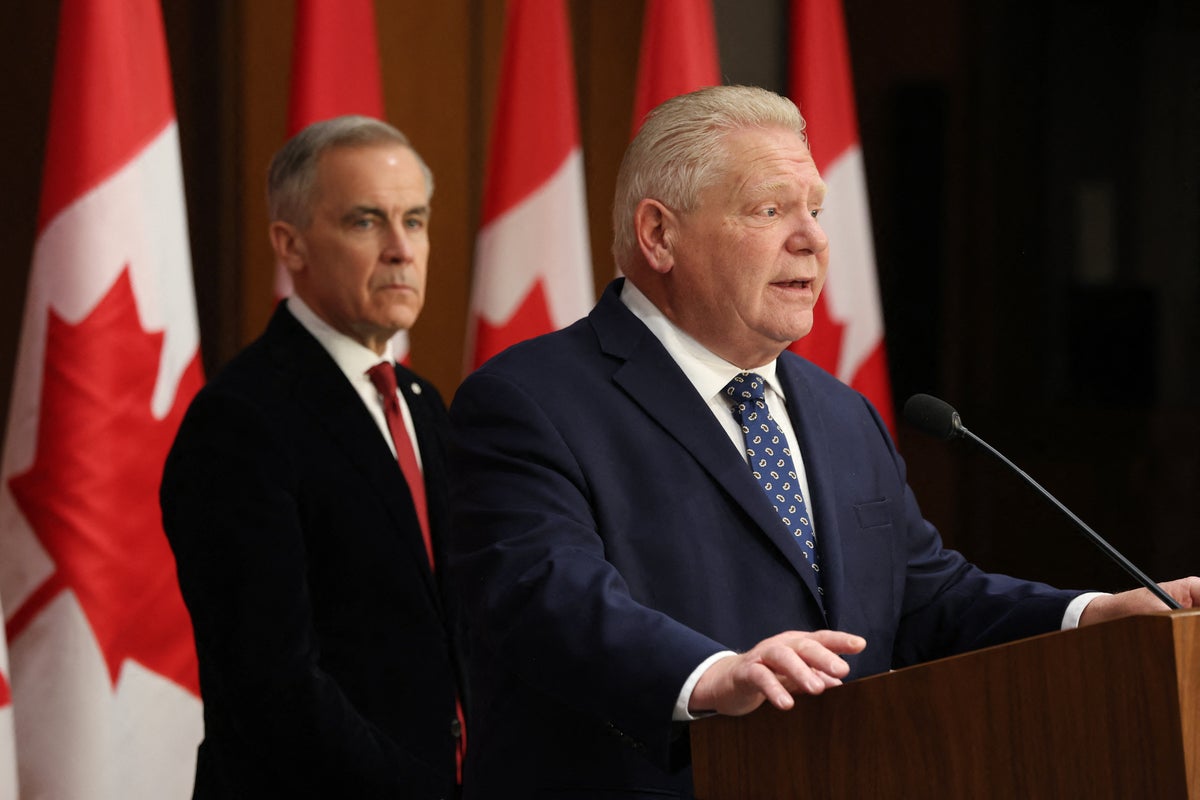
Ontario Premier Doug Ford unleashed a verbal attack on President Donald Trump, calling him a “dictator” and “the king of bankruptcies” after the United States imposed a 50 percent tariff on a range of Canadian goods.
At a press conference Monday, Ford was asked about a Truth Social post by Trump from earlier that day. In the post, the president dismissed Ford as a blustering “flunky” and reaffirmed his tariff strategy, declaring that the U.S. had been “carrying Canada for decades, but no longer!”
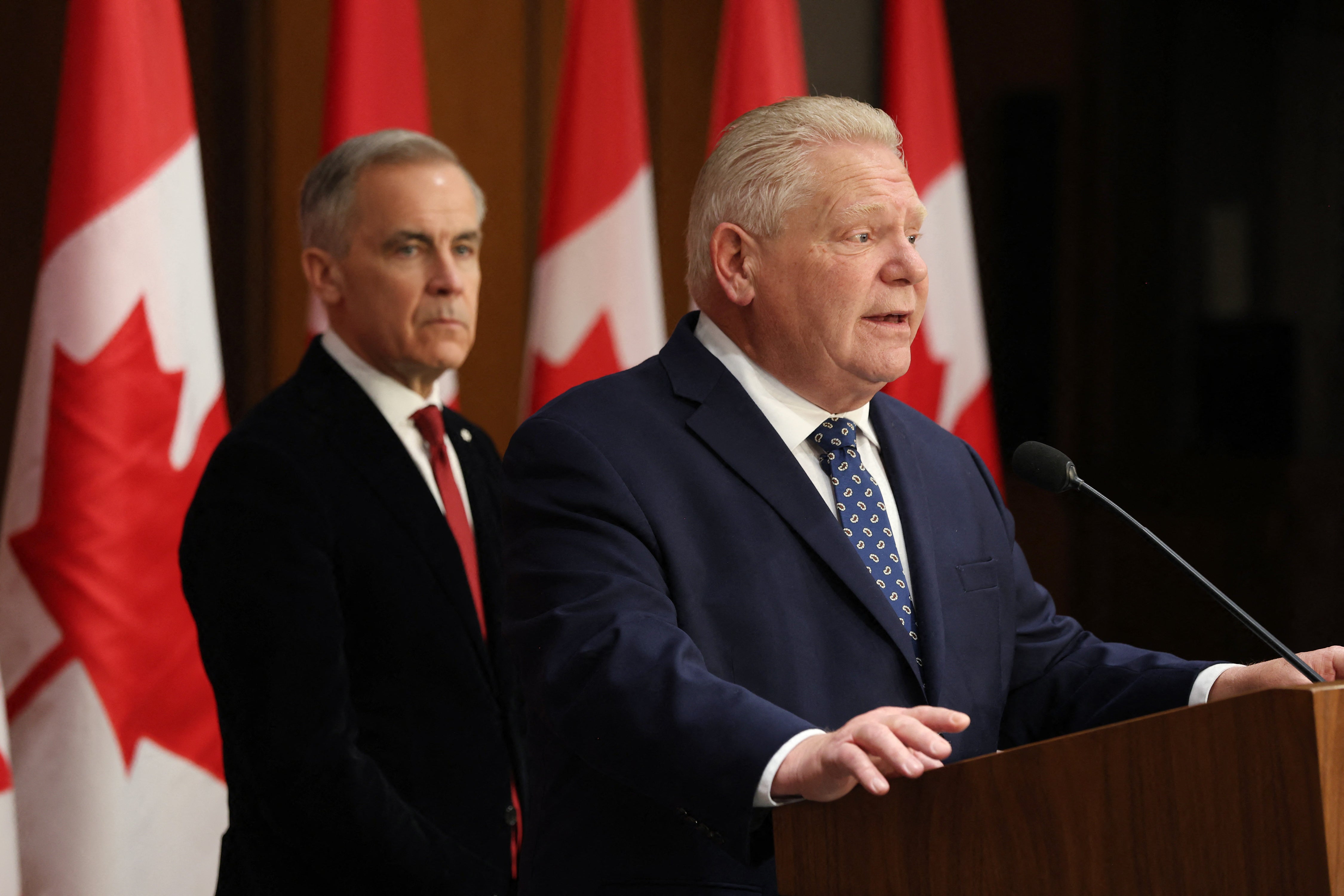
“I don’t respond to a dictator like President Trump, a bully like President Trump,” Ford replied. “I’m not gonna take any advice off a guy that’s the king of bankruptcies.”
Ford had previously told Trump to “kiss my a**” in a radio interview, and he made clear at Monday’s press conference that he stood by the remark.
 open image in gallery
“I have a lot of real estate on my a**, so he has a lot of room to kiss my a**,” he said, laughing. “I’m a big dude, what can I say?”
Ford, the brother of the late, scandal-hit Toronto Mayor Rob Ford, also accused Trump of damaging the U.S. economy with his hostile trade policy. He urged Americans to vote against the president’s allies in the upcoming midterm elections.
“He’s actually tariffing his own people, taxing his own people,” the premier said. “When it comes to the midterms, I have a message to the Americans: don’t vote in a person that’s gonna kill your jobs…If I was allowed to, I’d be down there door-knocking.”
Ford’s comments capped a tumultuous week in U.S.-Canada relations, which had already been strained by Trump’s expanding array of tariffs and his repeated threats to make Canada the “51st state.”
On Saturday, a 50 percent tariff on $20 billion Canadian imports took effect after last-minute negotiations between Ottawa and Washington collapsed. The levies are expected to affect a broad range of products, including hockey sticks, wine, honey, agricultural goods, clothing and cameras.
Washington and Ottawa each blamed the other for the breakdown in talks.
 open image in gallery
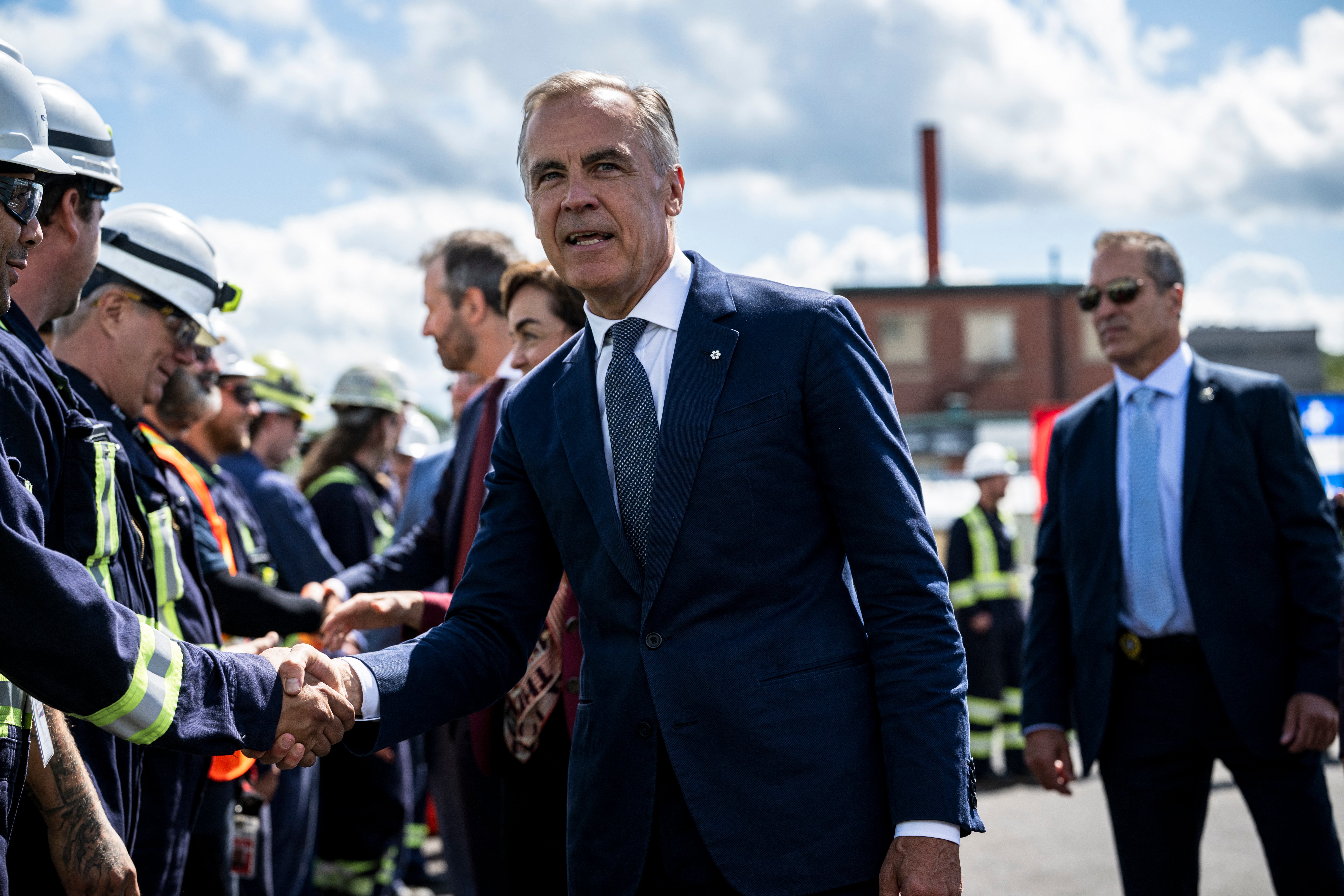
On Saturday, Canadian Prime Minister Mark Carney likened Trump’s actions to an act of armed aggression. “You’re at war when you get attacked. We got attacked,” he said.
Carney said his government would match the U.S. tariffs “dollar for dollar” with retaliatory levies set to take effect September 8.
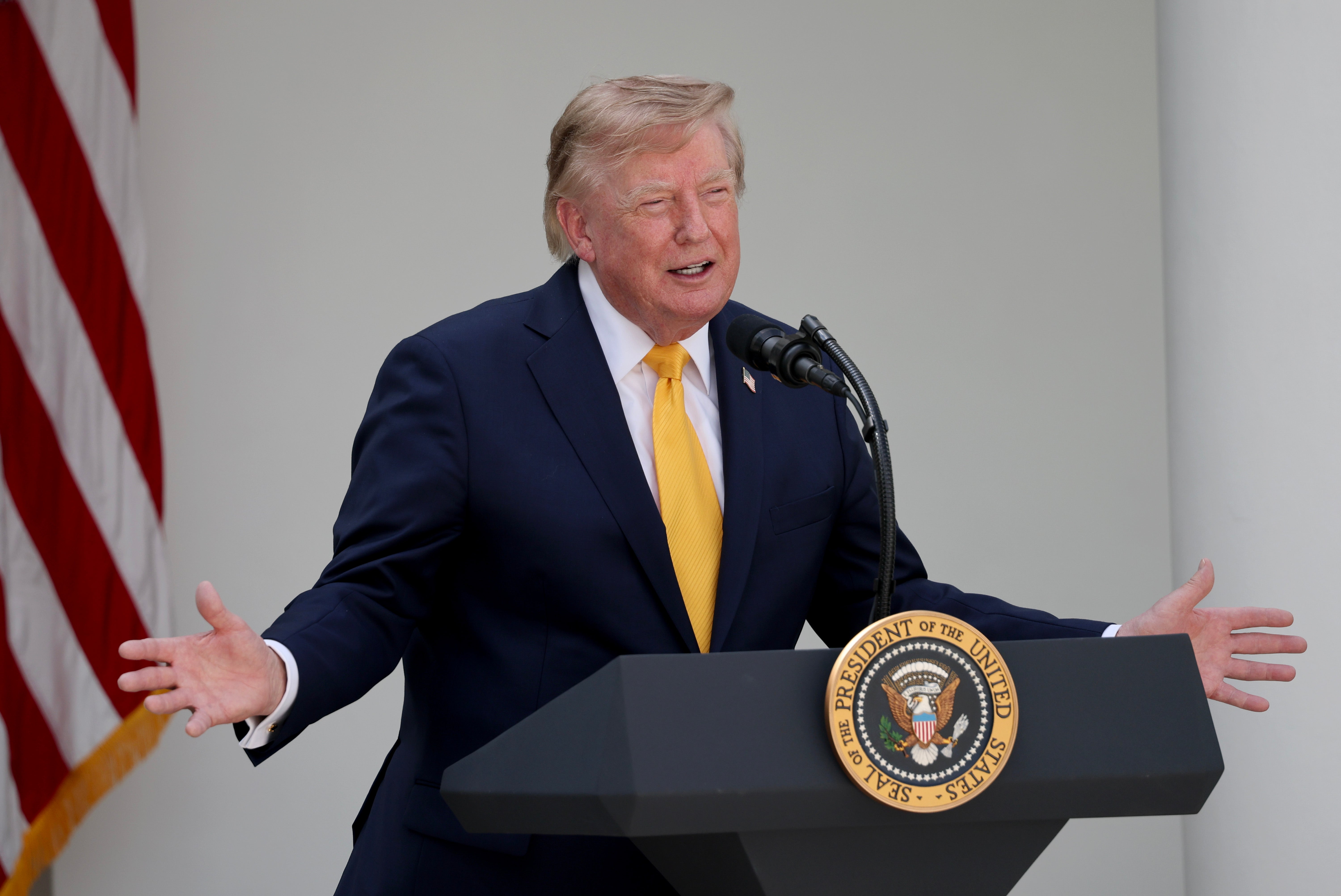
On Monday, Trump announced yet another round of tariffs targeting Canada, one of America’s largest trading partners and its longtime ally.
“On January First, 2027, Tariffs on all Cars, Trucks, both large and small, Automotive Parts, and Steel, will be increased to 50%,” Trump wrote on Truth Social. “Build in the U.S. and there are ZERO TARIFFS.”
 open image in gallery
Speaking at a press conference later Monday, Carney said Trump’s escalation did not come as a shock.
“It’s not a surprise, for us, that the U.S. would take some form of reprisal to our response to their unjustified tariffs, which was on top of other unjustified tariffs,” the prime minister said.
“But what message does that send to the workers in Michigan and Ohio and Kentucky and Alabama who rely on Canadian demand?” Carney asked, noting that Canada is the largest foreign buyer of U.S. automobiles.
President Trump’s tariffs are collected from U.S. importers, the American companies that bring foreign products into the country. Those firms can opt to pass that cost increase on to consumers through higher prices. A January study concluded that American consumers had paid for “nearly all” of Trump’s tariffs.
According to a Pew Research Center survey released in February, a majority of Americans, 60 percent, disapprove of Trump’s substantial tariff increases, while 37 percent approve of them.