


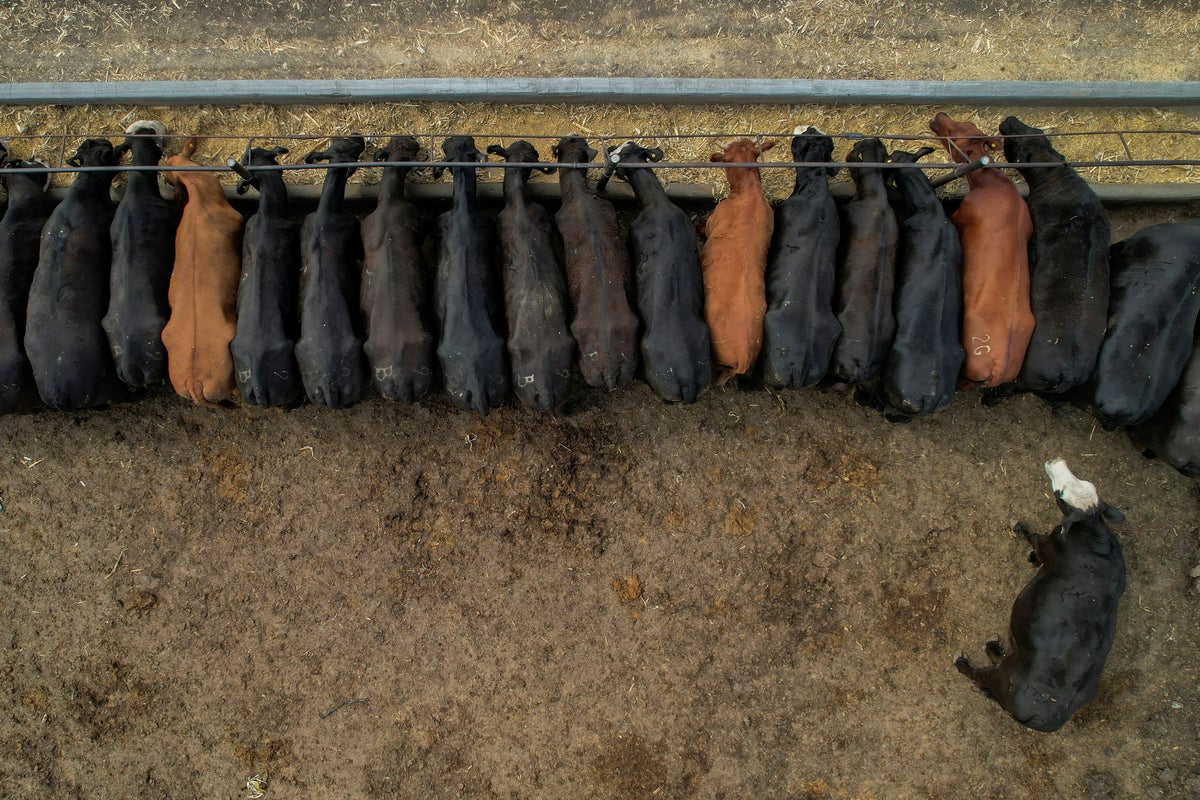
Texas Gov. Greg Abbott has voiced significant concern over delays in constructing a new facility crucial for combating the New World screwworm fly, whose flesh-eating larvae pose a renewed threat to the nation’s $113 billion cattle industry.
The governor warned on Friday that the factory, designed to breed sterile flies, is not expected to commence operations for over a year, a timeline he deems unacceptable given the recent re-emergence of the pest.
Abbott pledged Texas’s full support to the U.S. Department of Agriculture (USDA) to expedite the $750 million breeding facility’s construction near Edinburg, Texas, approximately 20 miles north of the U.S.-Mexico border.
He indicated the state is prepared to commit its own funds to ensure construction proceeds “24 hours a day, seven days a week.” During a news conference in Austin, Abbott stressed the urgency, stating, “Without greater sterile fly production… We cannot make it through a second summer.”
The USDA confirmed an infestation of New World screwworm fly larvae this week in a three-week-old calf in La Pryor, Texas, marking the first confirmed case in the state since 1966.
This location is about 100 miles southwest of San Antonio and 50 miles from the Mexican border.
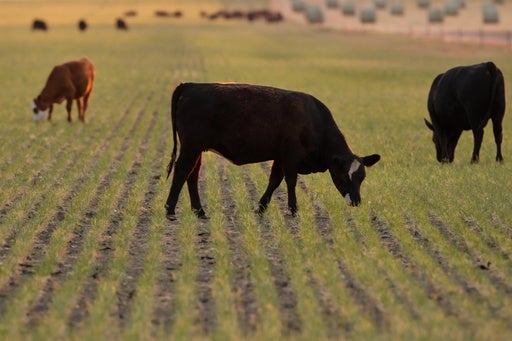
The new Texas factory is one of two USDA-funded fly-breeding facilities, with the other being a converted site in southern Mexico, which is expected to begin producing 100 million flies weekly next month.
The Texas facility, projected to be the size of two Costco stores, aims for a weekly output of up to 300 million flies.
Officials believe both factories are essential for the complete eradication of the screwworm fly from the U.S., Mexico, and Central America.
Rear Admiral Michael Schmoyer, a member of the USDA’s screwworm response team, noted that the federal government has already significantly shortened planning and construction timelines.
U.S. Agriculture Secretary Brooke Rollins expressed hope that the facility would be operational sooner than its planned November 2027 opening, though Abbott remains determined to accelerate the process further, warning that the fly “is going to spread over the course of the summer.”
While an untreated screwworm infestation can be fatal to an animal, federal and state officials have been quick to emphasize that the larvae, which feed on living tissue, do not infest meat or fruit.
“There’s a food production issue, but not a food safety issue,” Abbott clarified. Derrell Peel, an agribusiness professor at Oklahoma State University, suggested the beef supply is unlikely to be significantly affected unless cattle movement is severely restricted or infestations appear in concentrated areas like feedlots, which he doesn’t anticipate.
He concluded, “It’s probably not a major market issue.” Consumers are currently facing record beef prices due to a tight cattle supply, and Peel expects prices to rise further as ranchers rebuild herds, but he stated the screwworm’s arrival “doesn’t change the supply fundamentals.”
The New World screwworm fly was a persistent threat to U.S. cattle ranchers from the 1930s through the 1960s.
However, the strategic release of sterile flies from planes successfully eradicated the pest from the U.S. by the early 1970s, with only brief outbreaks in the Florida Keys in 2016 and a case involving a Maryland man who traveled to El Salvador last year.
Female screwworm flies mate only once in their month-long lives, and if they breed with sterile males, their eggs will not hatch after being laid in open wounds or mucous membranes of warm-blooded animals, including livestock, wildlife, pets, and humans. Following past eradication efforts, most fly-breeding facilities were shut down, leaving only one in Panama, capable of producing about 117 million flies weekly.
However, Schmoyer noted that previous eradication campaigns required approximately 500 million flies per week.
To combat the current threat, Schmoyer estimated that the USDA has already dispersed 130 million flies in Texas since January, primarily from planes, with current drops at about 4 million per week. An additional 4 million pupae (flies in the stage between larvae and adult) are being released on the ground weekly. Schmoyer explained that the USDA must be strategic in its dispersal, utilizing scientific models to predict the fly’s movement.
“In essence, it’s not where the flies are today, but where they could be weeks from now,” he said. Texas State Veterinarian Bud Dinges confirmed that traps have been deployed up to 120 miles from La Pryor to monitor the fly’s spread.