


North divided over UK travel advisory, trade blames for insecurity
August 25, 2026 2:17 am

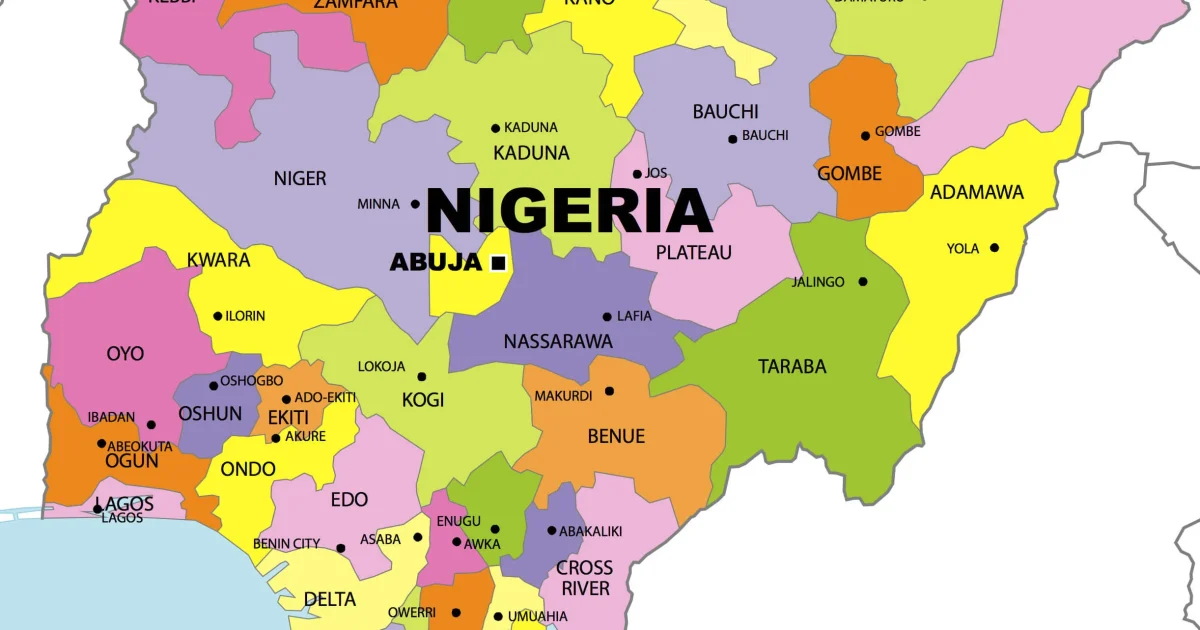
Nigeria map
Godwin Isenyo, John Charles, James Abraham, Maiharaji Altine, Salisu Kabuga, Toheeb Omotayo, Chima Azubuike, Kasim Isah Muhammad, Tukur Muntari, Umar Sani, Isah Ojo and Collins Agwam
The United Kingdom’s latest travel advisory on Nigeria has triggered a fresh regional debate, with governments, opposition parties, civil society groups, traditional leaders, security experts and residents divided over whether the warning reflects the prevailing security situation or unfairly paints the North with one brush.
While opposition parties in Kwara backed the advisory as evidence of worsening insecurity under the state government, officials and residents in Kano, Gombe, Jigawa, Yobe and Kaduna rejected the assessment, insisting that their states remained relatively peaceful and accessible.
In Benue, the stakeholders expressed concern that the advisory could affect foreign humanitarian support for thousands of internally displaced persons, while some stakeholders in Zamfara said the state had little or nothing to lose from the restriction because of the limited economic presence of British nationals.
The Coalition of Northern Groups, however, cautioned against interpreting the advisory as a verdict that the entire North was unsafe, urging governments to confront genuine security threats while engaging the British authorities over what it described as broad classifications.
Meanwhile, Nasarawa, emerged as the only state in the North-Central geopolitical zone excluded from the latest advisory, a development the state government attributed to its sustained efforts to maintain peace and strengthen security.
Arewa PUNCH reports that the UK Foreign, Commonwealth and Development Office, in its updated Nigeria travel advice published on August 20, 2026, warned British nationals against all travel to parts of several Nigerian states and against all but essential travel to a wider group of states because of concerns including terrorism, kidnapping, violent crime and intercommunal violence.
The advisory has raised concerns over its possible implications for foreign investment, tourism, business travel, humanitarian operations, education and international development partnerships across the affected states.
The warning came against the backdrop of persistent insecurity across parts of Northern Nigeria and the Middle Belt, where communities have suffered attacks by terrorists, bandits and other criminal groups, alongside kidnapping, communal violence and displacement.
The crisis has disrupted farming, education, transportation and commercial activities in several communities, while states affected by displacement continue to require humanitarian assistance.
Our correspondents further reports that foreign investors, development agencies and humanitarian organisations routinely consider travel advisories when deciding whether to deploy personnel or invest in locations classified as high-risk.
Consequently, stakeholders fear that the British warning could have implications beyond British citizens if other governments, investors and international organisations rely on the assessment in making decisions about their activities in the region.
However, a lecturer at the Abubakar Tafawa Balewa University, Bauchi, Aminu Makama, said the advisory should be viewed as a risk assessment rather than an indictment of the entire region.
“The security situation in Maiduguri is not necessarily identical to that in Bauchi; the situation in Zamfara cannot automatically be used to describe Kano; and insecurity in one local government area does not necessarily mean that every part of a state is equally dangerous,” Makama said.
He called for greater differentiation between states, local government areas and major transport corridors.
“Travel advisories are ultimately a symptom. The real problem is insecurity. If Nigeria succeeds in reducing attacks, kidnapping and violent crimes, foreign travel advisories will eventually change,” he added.
Nasarawa only state excluded
Reacting to the development, the Chief Press Secretary to the Nasarawa State Governor, Ibrahim Addra, said the state government received its exclusion from the advisory with “humility and gratitude to Almighty God.”
According to Addra, the development reflected the collective efforts of the state government, security agencies, communities and other stakeholders to promote peace and security.
He said the state remained grateful to the federal government under President Bola Tinubu and security agencies for their efforts in addressing insecurity across the country.
“We recognise it as an encouraging reflection of the collective efforts to promote peace and security in our state,” Addra said.
He added that the administration of Governor Abdullahi Sule had deliberately strengthened security, supported security agencies and promoted closer collaboration with communities and other stakeholders.
“In Nasarawa, this positive outcome is also a reflection of the deliberate measures taken by the administration of Governor Abdullahi Sule to strengthen security, support security agencies and foster closer collaboration with communities and other stakeholders,” he said.
The governor’s aide, however, stressed that the administration would not become complacent, urging residents to remain vigilant and provide security agencies with timely and credible information.
The development contrasts sharply with reactions from other North-Central states.
Kwara opposition backs warning
In Kwara, opposition parties backed the British advisory, describing the inclusion of the state among those under the “all but essential travel” category as evidence that insecurity had attracted international attention.
The state Publicity Secretary of the Peoples Democratic Party, Olusegun Adewara, described the development as an indication of governance failure.
“This is a clear indication that the failure of the AbdulRazaq-led administration to effectively manage security and other core responsibilities of governance is now being magnified beyond Nigeria’s borders,” Adewara said.
He alleged that attacks on rural communities had continued despite complaints by residents.
“I can tell you that bandits are still attacking our people, particularly in rural communities. The situation has become so alarming that thousands of rural dwellers are migrating to other parts of the country they consider safer,” he said.
Adewara cited recent attacks in Kwara South, alleging that two communities were attacked and relatives of traditional rulers abducted.
“These disturbing developments do not project Kwara as a safe destination before the international community, and it is deeply unfortunate that our state has been brought to this point,” he said.
Similarly, the state Publicity Secretary of the African Democratic Congress, Kabir Basambo, backed the UK assessment, saying the protection of lives and property remained the primary responsibility of government.
“Unfortunately, the current realities on ground suggest that this fundamental duty is not being met,” Basambo alleged.
“In the last few months, we have witnessed a rise in kidnappings, armed robbery, and attacks on farming communities across several LGAs in Kwara.”
He urged the state government to strengthen intelligence gathering, provide greater support for security agencies and improve collaboration with traditional and community leaders.
“What Kwara needs now is not denial, but urgent, sincere action: better intelligence gathering, proper funding and equipping of security agencies, collaboration with local communities and traditional institutions, and a clear security plan that covers both urban and rural areas,” he said.
A public affairs analyst, Abdulrasaq Olanrewaju, however, said the advisory did not suggest that every part of Kwara was unsafe.
“While the UK’s ‘all but essential travel warning should be taken seriously, it does not necessarily mean Kwara is unsafe everywhere, but that the overall risk has risen,” he opined.
According to him, the assessment was likely influenced by security incidents within the state, its proximity to high-risk areas and insecurity in neighbouring states.
“It is a warning light, not a political insult, and the government should treat it accordingly,” Olanrewaju said.
Efforts to obtain the reactions of the Kwara State Government were unsuccessful as calls and messages sent to the Commissioner for Communications, Bolanle Olukoju, and the Senior Special Assistant to the Governor on Communications, Ibraheem Abdullateef, were not answered as of press time.
Kano residents dismiss advisory
In Kano, residents dismissed the advisory as baseless, describing it as an attempt to create fear among Nigerians and foreign nationals.
Abubakar Abdullahi recalled that the US and UK had issued similar warnings during the peak of the Boko Haram insurgency under former President Goodluck Jonathan.
“So, this is not the first time the US and UK are issuing similar travel advisories, but in the end, nothing happened at all,” Abdullahi said.
Another resident, Lawan Yahaya, linked the latest warning to the approach of the 2027 elections.
“This is not the first time the UK or US is giving such warnings. They issued similar travel advisories to their citizens before the 2015, 2019 and even 2023 general elections, and nothing happened afterwards,” Yahaya observed.
“Again, now that the 2027 general election is approaching, they have started again. It’s an empty warning and nothing will happen by the grace of God.”
The Kano State Commissioner for Information and Internal Affairs, Ibrahim Waiya, insisted that the state remain safe.
“Kano State is safe and secured. Even recently, the Institute for Security and Strategic Studies honoured Governor Abba Kabir Yusuf with an Award of Excellence in Security Governance, in recognition of his administration’s initiatives in community-based security, youth rehabilitation and peace-building across Kano State,” Waiya said.
He urged foreign governments to consult Nigerian security agencies before issuing state-specific travel warnings.
“Even though the UK or any foreign country has the right to advise its citizens against travelling to some parts of Nigeria, it is important for them to consult various security agencies in getting credible information on the security situation in the states,” he said.
Jigawa fears economic fallout
In Jigawa, stakeholders faulted the advisory, arguing that the state had largely been spared the level of insecurity experienced by some neighbouring states.
A senior government official, who spoke on condition of anonymity because he wasn’t authorised to speak to the media officially on what he called “the sensitive issue,” said the government was surprised by the inclusion of Jigawa.
“Jigawa is peaceful. We have no record of kidnapping of foreigners and our security architecture is working. The advisory is misplaced and it paints all of us with one brush,” he lamented.
A traditional title holder, Dan-Madamin Maigatari, Alhaji Abubakar Isa, said the advisory failed to distinguish Jigawa from its troubled neighbours.
“No doubt, Katsina and Yobe are battling serious security challenges, but Jigawa has been a safe corridor. We host thousands of visitors during Durbar and our borders are well policed,” he stressed.
A rights activist, Gambo Gumel, described the warning as “timely in intent but wrong in scope.”
Gumel maintained, “The UK is right to warn about the region. Bandits move across borders. But to lump Jigawa with others without context will hurt ordinary people who depend on trade.”
A member of the Jigawa Chamber of Commerce, Industry, Mines and Agriculture, Aliyu Sani, disclosed that some foreign business partners had already postponed planned visits as a result of the UK travel advisory.
“We have British partners in agro-processing. Two of them called last week to postpone visits. If this continues, it will affect jobs and foreign direct investment,” Sani cautioned.
A retired Assistant Commissioner of Police, Danladi, urged security agencies to increase patrols along the state’s borders with Katsina and Yobe.
“There is a drastic need for increased patrols along Jigawa borders with Katsina and Yobe. There is no threat in Jigawa at the moment, but more needs to be done to keep it that way,” he advised.
Gombe stakeholders protest
In Gombe, stakeholders also faulted the advisory, arguing that the state remained relatively peaceful compared with other parts of the North-East.
The Chairman of the Gombe State Network of Civil Society, Ibrahim Yusuf, urged the government to investigate the intelligence behind the warning.
“Its impact is chasing away investors who have the intention of coming to the state to invest, especially in our Buhari Industrial Park and the new abattoir, grains market and cattle market,” Yusuf said.
A public affairs analyst Daniel Zoro described the warning as a sweeping assessment.
He posited, “This is more of a sweeping statement. Gombe among the North-East states is the most peaceful. I wonder where such report emanated from?”
Yobe govt rejects UK warning
The Yobe State Government also rejected the advisory, insisting that all 17 local government areas remain accessible.
The Director-General, Press and Media Affairs to Governor Mai Mala Buni, Mamman Mohammed, said residents and visitors could move freely across the state.
Mamman assured, “Let me tell you, as I am speaking to you, all the Yobe State LGAs are accessible. We do not have any security concerns here. Yobe is one of the most peaceful states.”
He added, “Yobe is ready to accommodate everyone from every part of the world. We are open to visitors, investors and people who want to come into the state for legitimate activities.”
But a human rights activist, Bello Adamu Jana, disagreed with the government, saying insecurity remained a concern in some parts of the state.
“Yes, the UK is right to warn its citizens because we are not completely secured here,” Jana said.
He cited Gujba, Tarmuwa and Geidam as areas where Boko Haram and ISWAP remain a threat.
“There is a difference between saying that the situation has improved and saying that there are no security concerns at all,” he clarified.
A commercial driver, Ibrahim Sani, observed that the security situation differed from one location to another.
“The government has improved security, but the threats have not disappeared entirely. So, I understand why some foreign governments may issue warnings to their citizens because they have to consider the safety of their people,” he said.
Borno calls advisory familiar pattern
In Borno, the state government described the UK advisory as a familiar development, saying foreign missions had issued similar restrictions in the past.
The Commissioner for Information and Internal Security, Usman Tar, told Arewa PUNCH that the advisory reflected foreign governments’ perception of the security situation.
“This is a familiar pattern. Many embassies have emplaced such restrictions due to their perception of insecurity here,” Tar noted.
A public affairs analyst, Abubakar Kareto, faulted the blanket restriction, arguing that Borno’s security landscape had changed considerably.
He said the state had moved from widespread territorial insurgency into a post-conflict stabilisation and reconstruction phase.
“Maiduguri recently hosted the who-is-who in the humanitarian arena in Nigeria and global figures, heads of the UN, World Bank, ambassadors, ministers and many others. The city is relatively safe, markets and businesses are bubbling, and flights are operating,” Kareto said.
He observed that the advisory failed to distinguish relatively secure urban centres from areas still facing security threats.
Thus, Kareto urged the UK Government to adopt a localised risk-assessment model based on real-time intelligence.
“The UK government should serve as a partner of progress, not a partner in the unnecessary creation of situations of fear,” he said.
Benue fears aid disruption
In Benue, stakeholders expressed concern that the advisory could affect international humanitarian assistance to displaced persons.
The immediate past chairman of Mzough U Tiv Worldwide, Ochetoha K’Idoma and Omn’Igede, Iorbee Ihagh, a retired Comptroller of Prisons, said foreign donors might reconsider visits to the state.
“We have hundreds of thousands of displaced persons across the state and support from some of the foreign donors, but with the development, the possibility of some of these foreign donors, UK and beyond, will think twice before visiting the state,” Ihagh said.
A human rights activist, Edward Abeger, also warned about the possible impact of the advisory on humanitarian intervention.
“The state has enjoyed support from foreign donors in terms of humanitarian assistance in healthcare and other areas, but with the restrictions, some donors, not necessarily from the UK but other foreign countries, may likely run away from the state as a result of insecurity,” he said.
Plateau reactions mixed
In Plateau State, reactions were mixed.
The Special Adviser to the Plateau State Governor on Policy and Governance, Yiljap Abraham, said the state government had not been briefed on the details of the advisory.
“I have not seen a copy of the advisory,” Abraham said.
The Executive Director of the Civil Liberties Organisation, Steve Aluko, urged the federal government to analyse the warning with a view to reviewing its security strategy.
“Like other similar travel advisories we got from other countries, I think it is an opportunity for the government to rethink how they are fighting insecurity in Nigeria,” Aluko said.
He urged authorities to ensure that citizens in Plateau and other conflict-affected areas were adequately protected.
Zamfara: ‘Little to lose’
In Zamfara, however, some stakeholders said the state had little or nothing to lose from the restriction.
Security expert Mainasara Ruwan-doruwa said British nationals were rarely seen in the state.
“You hardly see Britons in Zamfara State apart from those looking for gold and other mineral resources without paying anything to the state government,” he said.
“So, it will not in any way affect us if the UK restricts its citizens from visiting the state because we are not benefiting from them.”
An activist, Muktar Bala, described the warning as an “empty threat.”
“Let them not come here, we don’t want them because we are not benefiting from them,” he said
Kaduna: No cause for alarm
In Kaduna State, a government official who spoke on condition of anonymity said there was no cause for alarm, stressing that the security situation had improved considerably.
The official recalled that Kaduna had previously faced stringent travel restrictions following escalating banditry and attacks in parts of the state.
He said the Kaduna State Government’s engagement with international partners and its security interventions had contributed to improved stability.
“Unlike in the past, the state remains safe under the administration of Governor Uba Sani. With the Kaduna Peace Model, all are welcome to the state,” he invited interested parties.
CNG: Don’t label North unsafe
The Coalition of Northern Groups cautioned against interpreting the UK advisory as a verdict that the entire North was unsafe.
Its National Coordinator, Jamilu Charanci, said Northern Nigeria was too vast and diverse to be characterised by a single security narrative.
“We strongly caution against interpreting this advisory as a verdict that the entire North is unsafe,” Charanci said.
“Northern Nigeria is vast, diverse and made up of hundreds of communities with significantly different security realities.”
He said the advisory should be risk-specific, evidence-based and subject to continuous review.
Charanci, however, warned governments against using regional stereotyping to avoid confronting insecurity.
“Where insecurity exists, the government must confront it decisively. The responsibility to restore confidence lies first and foremost with those entrusted with the protection of citizens,” he said.
He called for stronger intelligence gathering, protection of highways and economic corridors, dismantling of criminal networks and restoration of confidence in affected communities.
“Northern Nigeria must not be reduced to a security label. But neither should insecurity be normalised or politically defended. The North deserves security, investment and dignity—and the best way to challenge negative international perceptions is to deliver a safer North in reality,” Charanci said.
Makama, the Bauchi academic, said the UK advisory should neither be dismissed as an attempt to stigmatise the North nor accepted as evidence that the entire region was unsafe.
“Once a destination is officially classified as high-risk, potential visitors and institutions may become more cautious even when their particular destination is relatively peaceful,” he observed.
He noted that the advisory could affect conferences, research visits, business trips, tourism and humanitarian activities.
As a result, Makama urged Nigerian authorities to engage the British government diplomatically where they believed specific classifications were inaccurate.
“If the government believes that certain areas have been unfairly classified, the appropriate response is to engage the British authorities diplomatically, provide credible security data, demonstrate improvements and request a review of the classifications,” he said.
While maintaining that the fundamental issue remained insecurity, he pointed out,
“Travel advisories bulletins are ultimately a symptom. The real problem is insecurity. If Nigeria succeeds in reducing attacks, kidnapping and violent crime, foreign travel advisories will eventually change,” Makama said.
All rights reserved. This material, and other digital content on this website, may not be reproduced, published, broadcast, rewritten or redistributed in whole or in part without prior express written permission from PUNCH.
Contact: [email protected]