


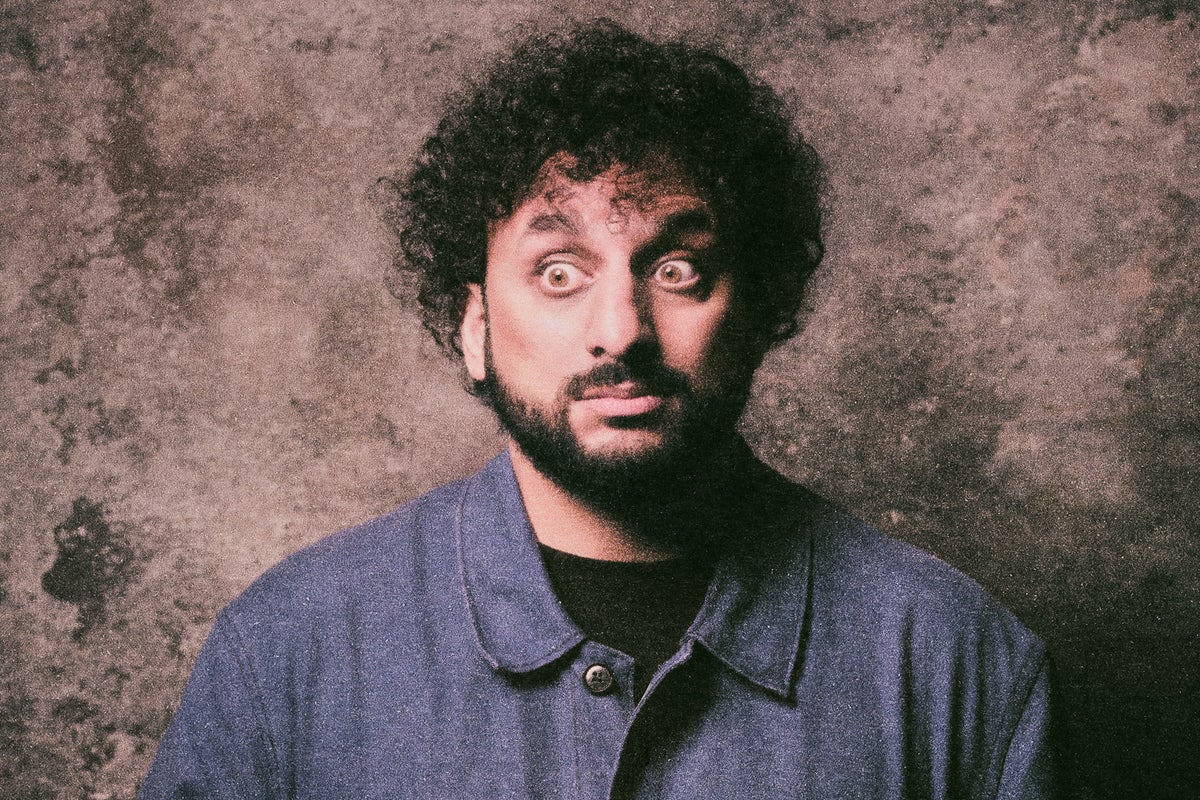
I think many people in my life wish I was less willing to slag off my co-workers,” says Nish Kumar, his face all fight and mischief. He’s being droll: “co-workers”, in this context, means fellow comedians. And sure enough, over the 70-odd minutes we spend together, the former host of The Mash Report will go on to badmouth a few of them by name. “People wish I kept my opinions to myself or kept people’s names out of my own mouth. I just, like… I don’t know,” Kumar grins, throwing his hands up. “I’m a d***. Like, I’m just a piece of s***. My agent once said to me, ‘At the end of the day, you love being annoying.’”
Then again, “annoying” isn’t really a word I’d choose for Nish Kumar. It’s really quite the feat to have the career he does and not overstay his welcome. Kumar, now 40 years old, has for years been one of those faces that seems to crop up all over the British media sphere, whether it’s on panel shows, standup tours, or “being a complete buffoon who kicked over a water cooler on Taskmaster”. It’s the sort of sustained exposure that can blunt a comedian’s edge, or make them seem rather establishment: again, with Kumar, that’s not really a problem.
It’s late in the afternoon when we meet, and he’s only just eating lunch. (“We’ve got to keep my blood sugar stable so I don’t libel anyone,” he says, between mouthfuls.) Kumar has a big, unkempt beard and hair like the nest of some disorganised owl. It’s been a bit of a mare of a day for him, thanks to Tube strikes: he’s spent hours in traffic, taxiing around town from his home to a podcast studio (to record an episode of his politics podcast, Pod Save the UK), and then to here, a cosy management office in central London. “When the Tube drivers have gone on strike, it’s always like… just give them whatever they want,” he says, exasperatedly. “This city is not traversable by road. It’s a rat hotel – so you have to traverse London like a little rat and go through underground tunnels. Please give them what they want. I beg of you.”
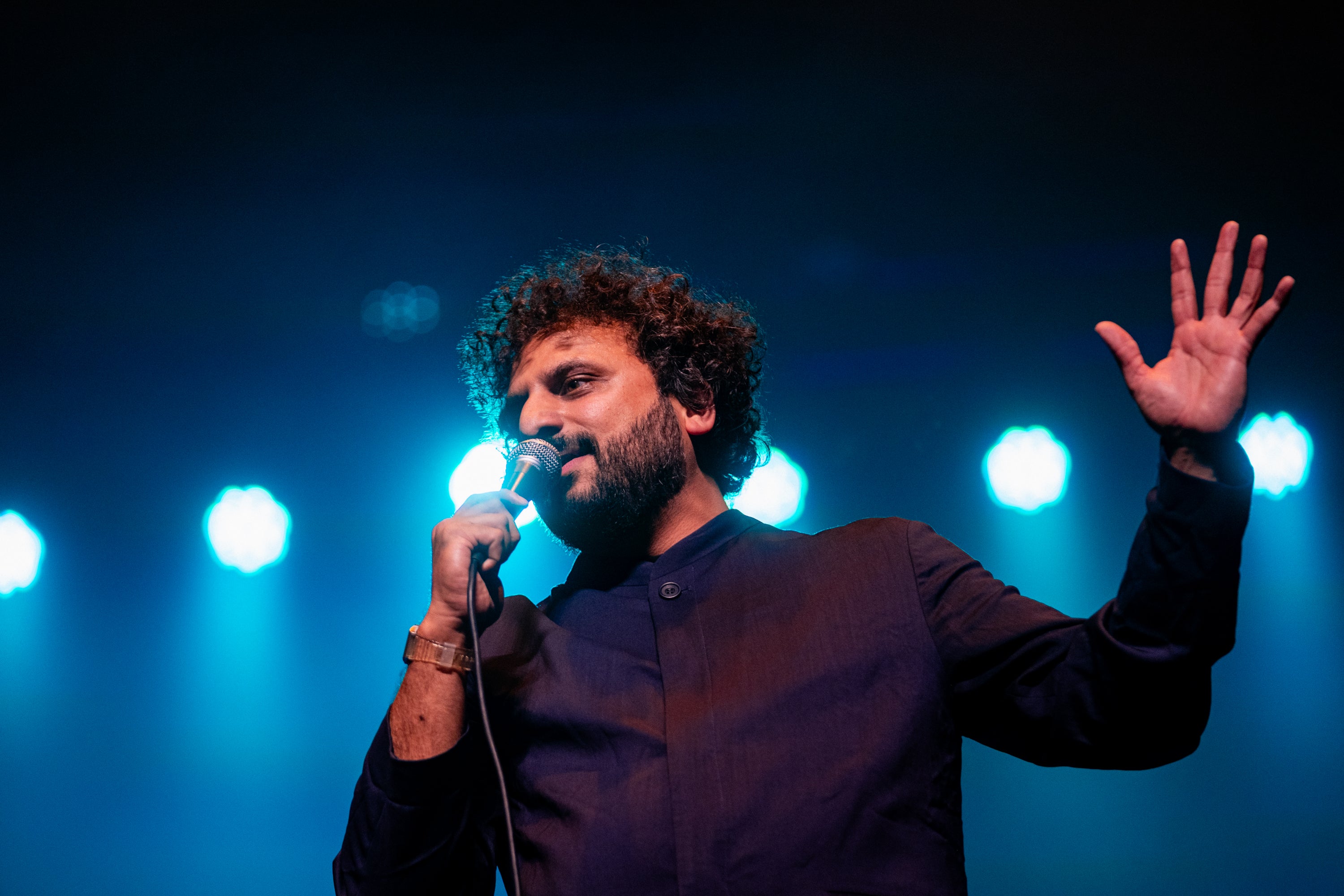
In a few months, Kumar will be off around the UK, touring his new standup show, Angry Humour from a Really Nice Guy. (His previous show, Nish Don’t Kill My Vibe, was recently added to YouTube in full.) The title, he says, is almost a placeholder, selected long before the routine comes together. (“You try not to box yourself into something too specific – you don’t want to promise an exhaustive history of irrigation or something.”) But it’s one that pretty aptly sums up Kumar’s appeal: he is a transparently nice guy, albeit one fizzing with a sort of righteous ire.
“I think sometimes when people write about progressive politics, there’s a sense that by describing it as ‘angry’ you kind of delegitimise it,” he says. “But it’s pretty hard to not be angry when you respond to the basic facts of the 21st century of politics. Anger is sometimes the only rational response to a lot of what’s going on.”
The problem, he adds, is that rage “has to be a catalyst for actual change. It can’t just be anger for anger’s sake. And there’s a lot of pointless anger.”
 open image in gallery
In his personal life, Kumar describes himself as a “people pleaser” – making it somewhat ironic that he’s chosen to do standup “about the most divisive subjects possible”. Inevitably, Kumar’s work butts up against the so-called “culture wars” – disputes over offensiveness, sensitivity and free speech that seem more prevalent in the world of standup than anywhere else. Why is it, I ask, that comedy has become such a lightning rod for these issues?
“Sometimes,” he says, “we need to be careful about assuming that things are happening for the first time. Standup in particular will always be the vanguard of any conversation about free speech, just because it’s just people giving their opinions.” He mentions the late comedians George Carlin and Lenny Bruce – both of whom were arrested on obscenity charges during their lifetime.
“There’s always been a stink of controversy around comedy,” Kumar continues. “In the past 15 years, the power and influence of comedy has grown exponentially. There are arguments to be made that comedian podcasters in America helped make Donald Trump president. I’ve always argued that comedy doesn’t really have the power to effect social change… but in the past two years, I’ve started to worry that I might be wrong – and the changes it’s making are for the worse.”
Some comedians don’t even realise the extent to which they’re just pawns in a power game
Nish Kumar
For whatever reason, arguments about offence in comedy have increasingly congealed around the issue of transphobia – with high-profile comics such as Ricky Gervais, Jimmy Carr, and Dave Chappelle making divisive jokes about trans people in their Netflix standup specials. “There’s this idea that comedy is always about punching up,” Kumar says. “It’s not. Comedy’s sometimes about punching down. It’s a more complicated artform than just one type of engagement with power. There’s always been this half of comedy that is bullied people taking agency of their narrative, and the other half has always been comedy for bullies. And this latest bout of transphobia is just the latest marginalised community to fall into the crosshairs of bullies.”
Believe it or not, much of our interview is pretty light and breezy. Kumar talks animatedly and intelligently about his love for the films of the Coen brothers; about the theatre; about our eerily similar obsessions with the band Big Thief. He is excellent company. But when he gets serious – as he is now, talking about transphobia – he speaks in a sturdy deluge, with the conviction of a seasoned pulpiteer (albeit one with a yen for ungodly language).
“Being charitable,” he continues, “I think a lot of these comedians are f***ing d***s. And some of them don’t even realise the extent to which they’re just pawns in a power game. They’ve deluded themselves into thinking that what they’re doing is somehow countercultural. How countercultural can it be if you share views on the transgender community with Donald Trump and Vladimir Putin?
 open image in gallery
“There are more important things than comedy. Social cohesion and the safety of minority groups is more important to me than whether or not Ricky Gervais or Jimmy Carr likes me. I couldn’t give a f***.
“Good to see him looking down on us,” he adds, glancing to the side, where a large poster of Last One Laughing hangs on the wall. Carr brandishes a referee’s card in the foreground with a look of shark-eyed, rictal mirth. Kumar directs a bow in his direction.
“No, I couldn’t give a s*** about that stuff,” he repeats. “If I think something is morally abhorrent, then I’m not able to stop myself. And, to be honest, that’s probably a failure on my part, and something I should be unpacking with my therapist.” Kumar says that his agent asked him to stop “slagging off” particular comics, because their fans send irate emails. (It probably doesn’t help when a Gervais-bashing routine goes viral years after the fact.) His response? To read out his agent’s letter on stage. (“I’m very lucky I have agents who don’t care about that stuff… they’re very happy for me to make merry hell.”)
“In the Seventies,” he says, “when my family first moved to this country, we were the target of those comedians. I don’t see a lot of difference between the racist and hostile jokes directed at my family by comedians in the Seventies, and the targeting of the trans community now. If you come from any sort of minority, marginalised background, we’ve all got to have each others’ backs. Prejudice is a contagion.”
Most of my regrets are just times I’ve been rude to people when I didn’t need to be
Nish Kumar
Kumar grew up in Croydon, south London, the child of Keralan immigrants. He went to school at St Olave’s, a boys’ grammar in Orpington. “I do think single-sex schools are weird,” he says, “and I think there’s something unnatural about segregating genders.” But it was also that school that imbued him with an appreciation of the performing arts, thanks to the influence of a few “loose cannon” teachers. “I graduated from school in 2003, when there was still space for oddballs to teach kids weird s***,” he laughs. “It’s important you have those people.”
He started doing comedy at Durham University, performing in the sketch comedy group The Durham Review. “There were points where I could have had a lot more fun in my twenties,” he tells me. “Not necessarily by taking a load of drugs or anything, but just being a bit less of a d*** to myself. Most of my regrets are just times I’ve been rude to people when I didn’t need to be.”
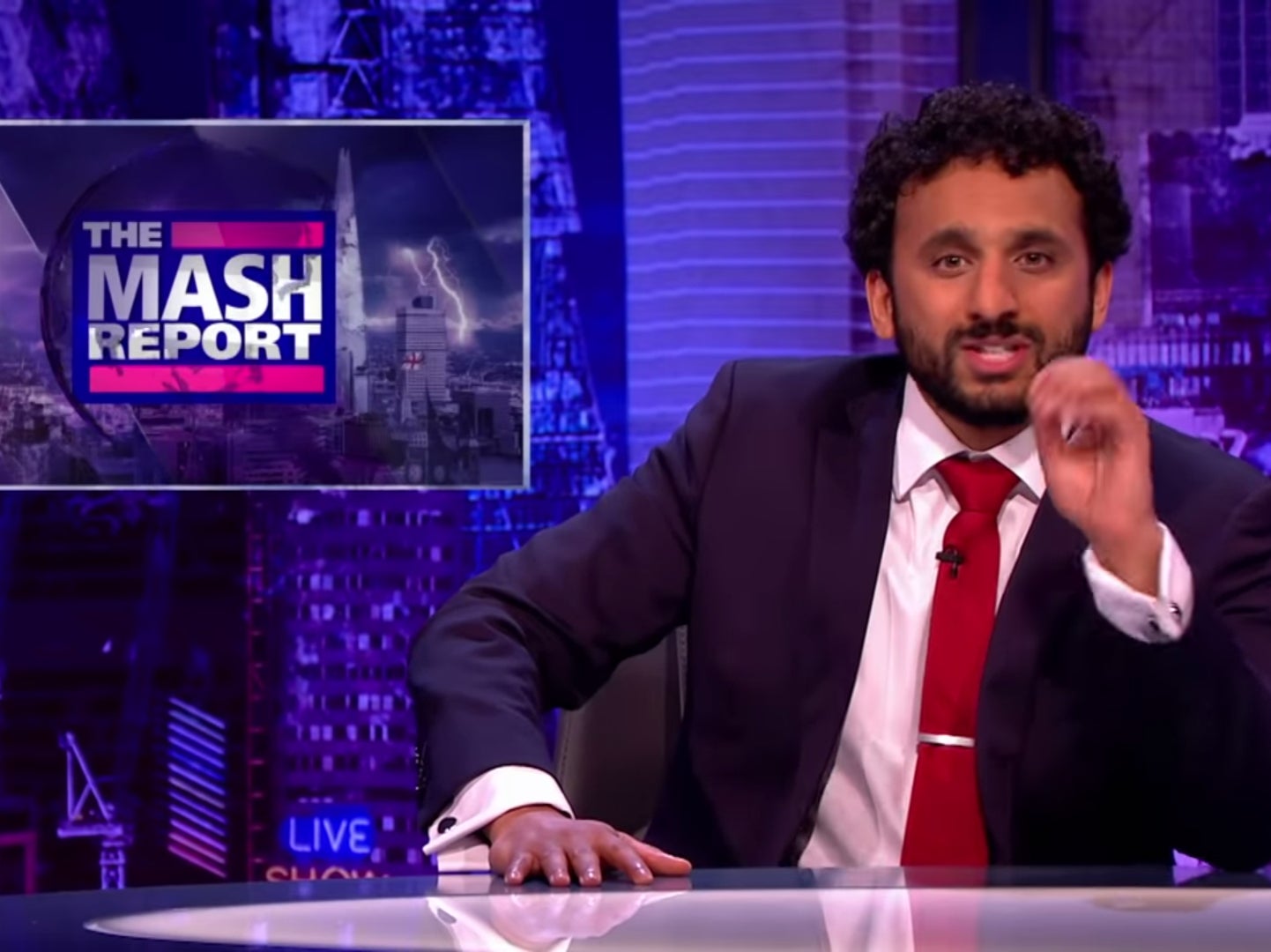
Kumar’s first standup show came in 2012; across the following decade, he enjoyed a steadily swelling fanbase, goosed by a glut of TV, radio and podcast appearances. In 2017 he began hosting the topical BBC comedy The Mash Report – it ran, to a strong reception, until 2021, when it was abruptly and contentiously cancelled. (He subsequently hosted a spiritual successor, Late Night Mash, on Dave.) “The ending of that show was so strange,” he remarks. “There’s still some sense of unfinished business that I have with that group of writers.”
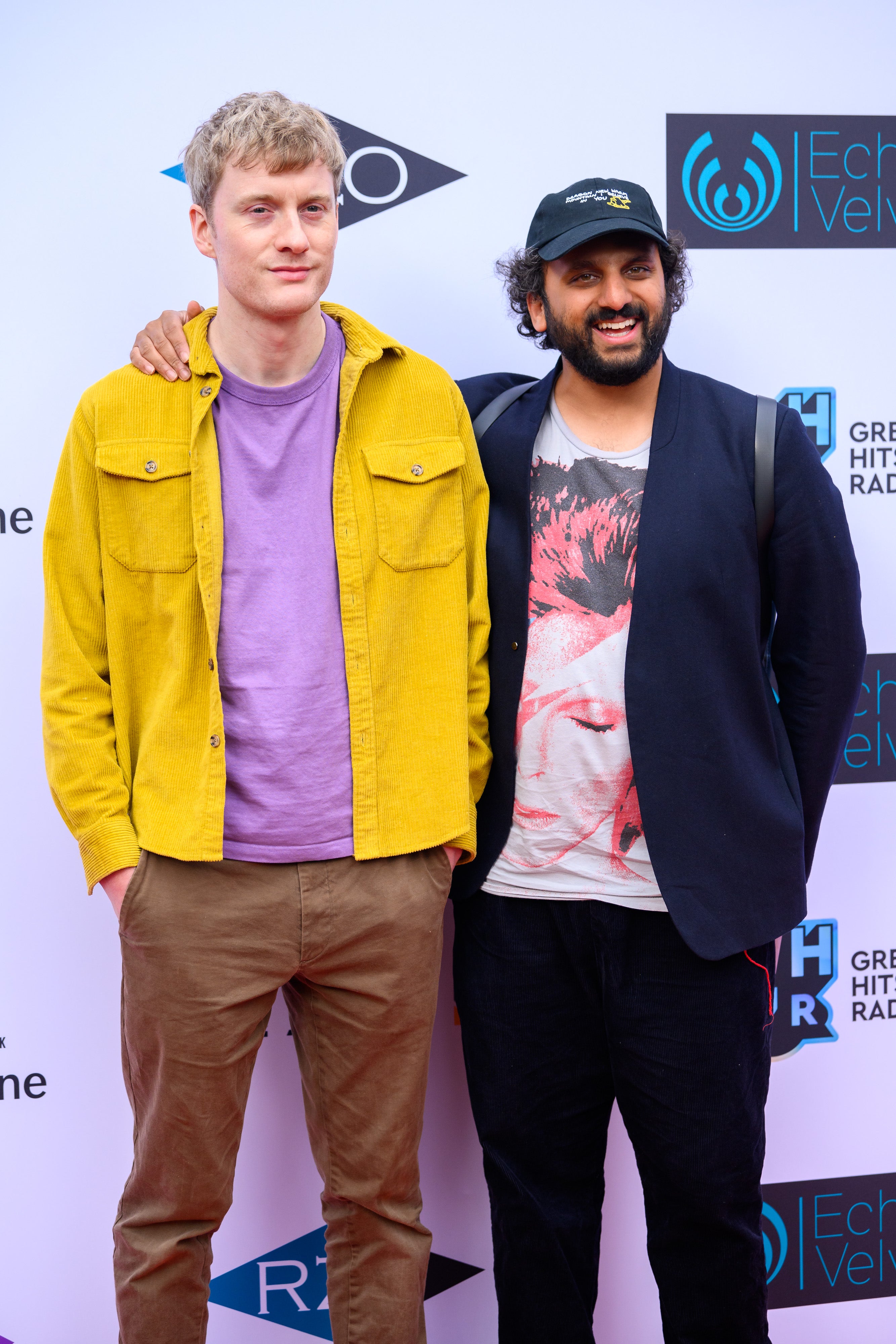
Swipes at Carr and co aside, Kumar is straight-facedly generous when talking about many of his peers. When he speaks about the comedian James Acaster, a friend of his, he is positively glowing. “I will admit this through gritted teeth, but I think a lot of those Acaster specials, people will still be talking about those shows in 20, 30 years’ time,” he says. “It will be [comedy] that people grow up with.”
 open image in gallery
On the subject of his own body of work, he’s less sure. “I’m very interested in the history of comedy, the legacy of it. The stuff that lasts and endures. I don’t know if anything I’ve done will last 30 years into the future,” he says, blithely.
“When we used to do history in school, you’d study Victorian Punch magazine cartoons. It wasn’t necessarily that the jokes lasted, but it was, in some ways, a window into what people found funny about political figures at the time. And maybe the stuff I’ve done…”
He pauses, furrows his brow.
“It sometimes feels so foolish to talk about people’s place in history when you’re like, we’re all going to die in a climate explosion. But… if there is any value in my comedy, maybe it will be as a sort of historical document, of what people were thinking about subjects at a certain point in time.”
He’s not wrong: Kumar’s brand of exasperated left-wing outrage vocalises opinions that many people in this country hold, but frustratingly few public figures articulate. If someone does encounter a Nish Kumar comedy special in the year 2056, among the jetpacks and flying cars – or maybe the armageddoned rubble of civilisation – they will surely be pleased to find exactly what is advertised. Angry humour indeed, from a really very nice guy.
Nish Kumar will perform ‘Angry Humour From a Really Nice Guy’ at the Edinburgh Fringe from 6 August until 30 August, and will tour the UK and Ireland from 9 September onwards